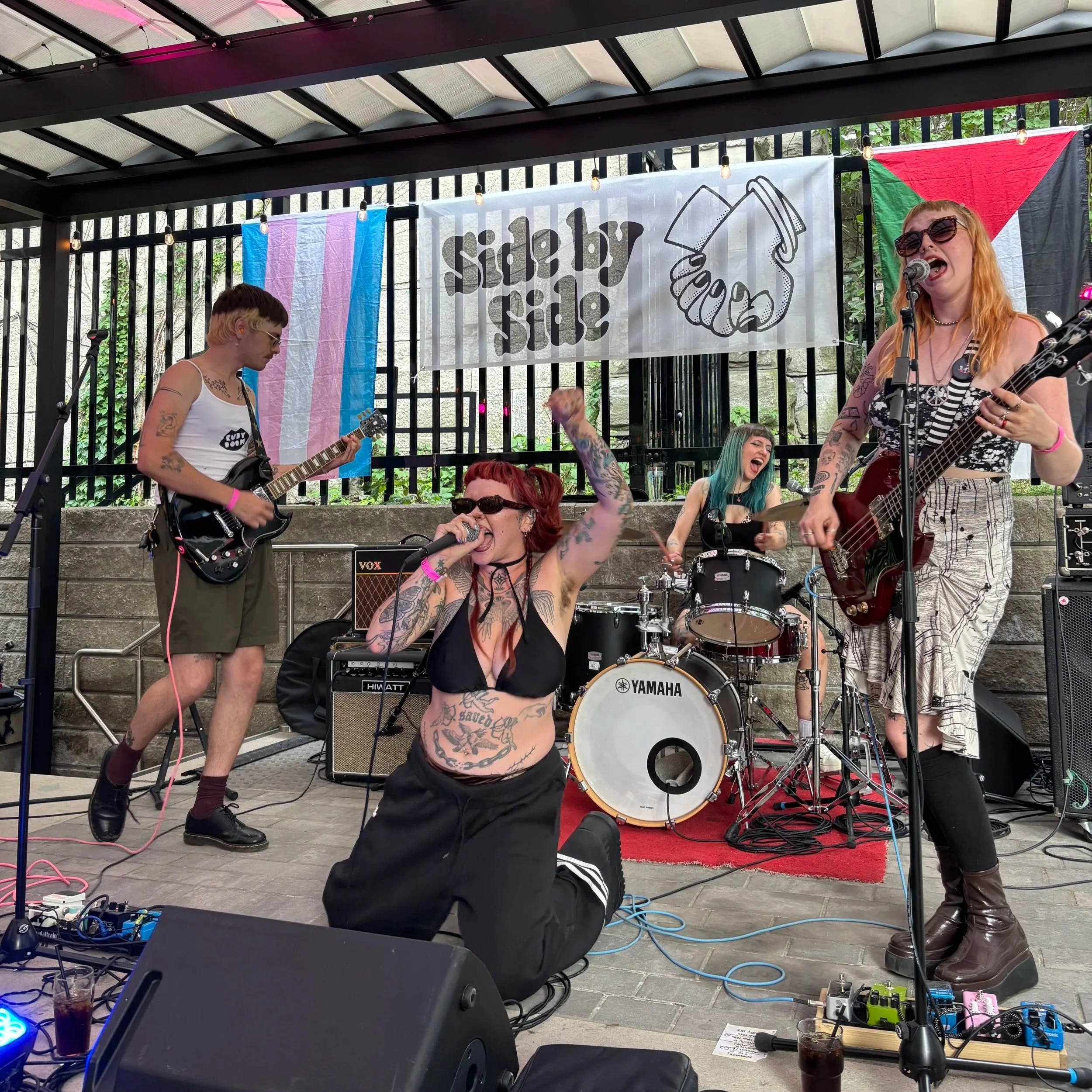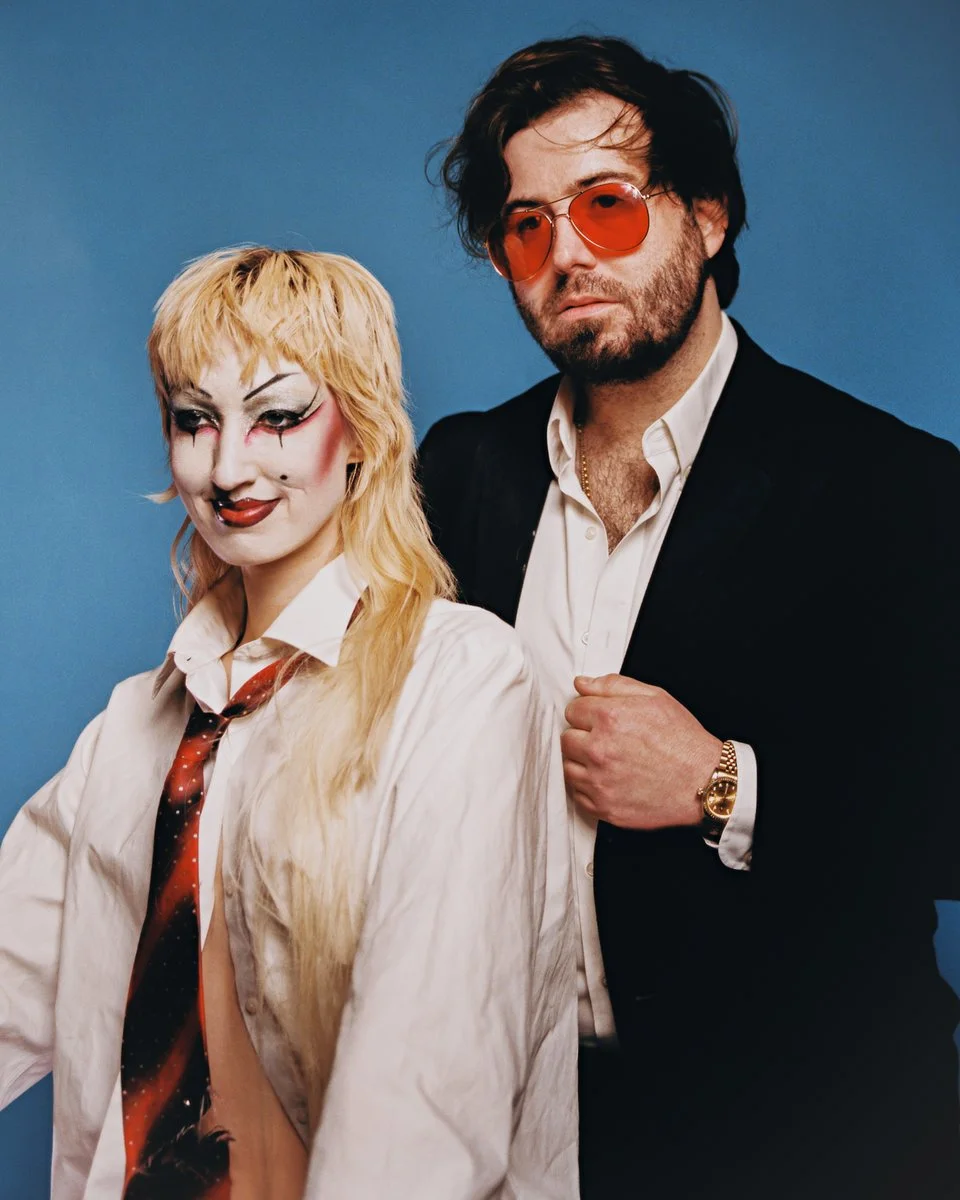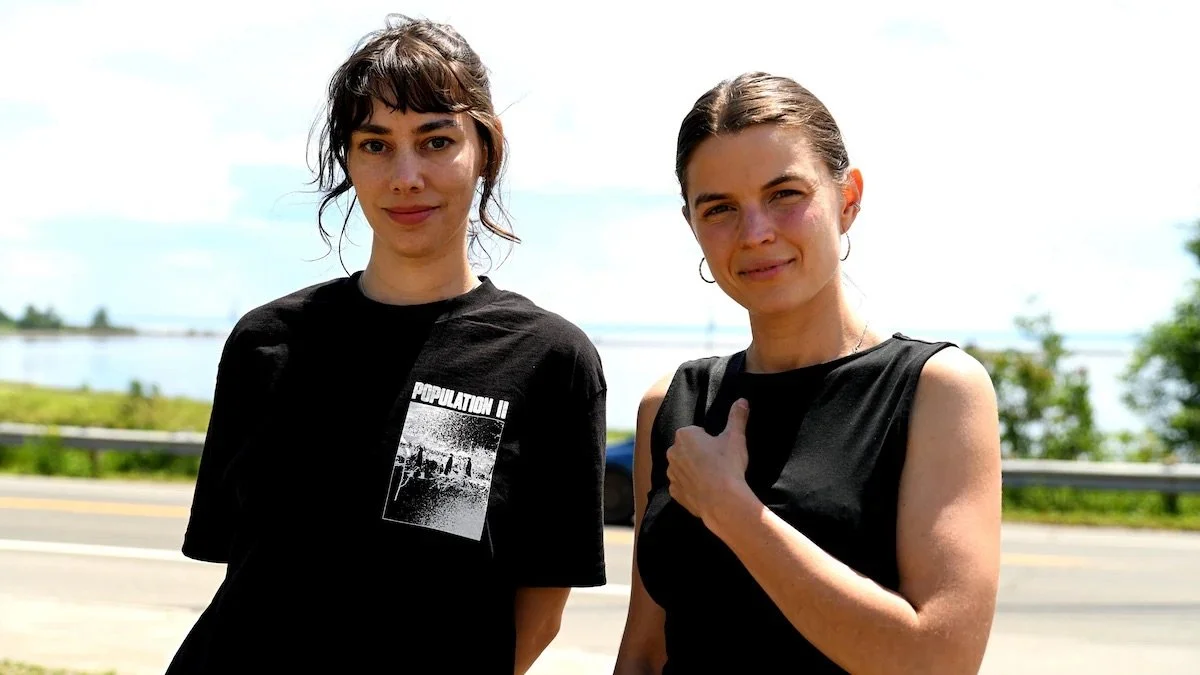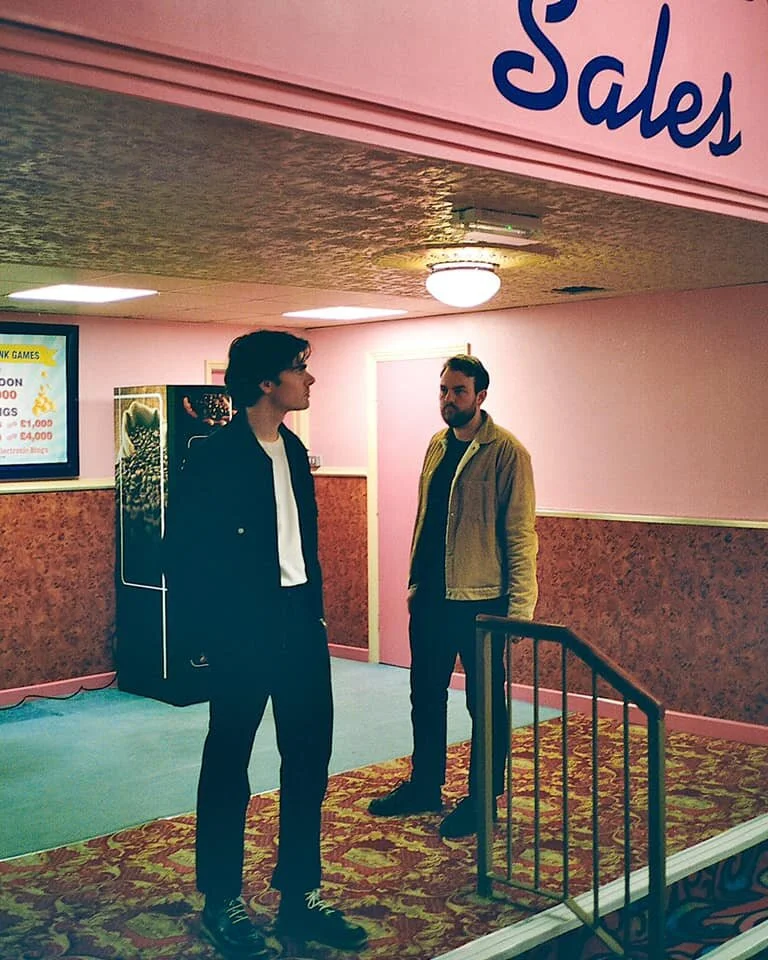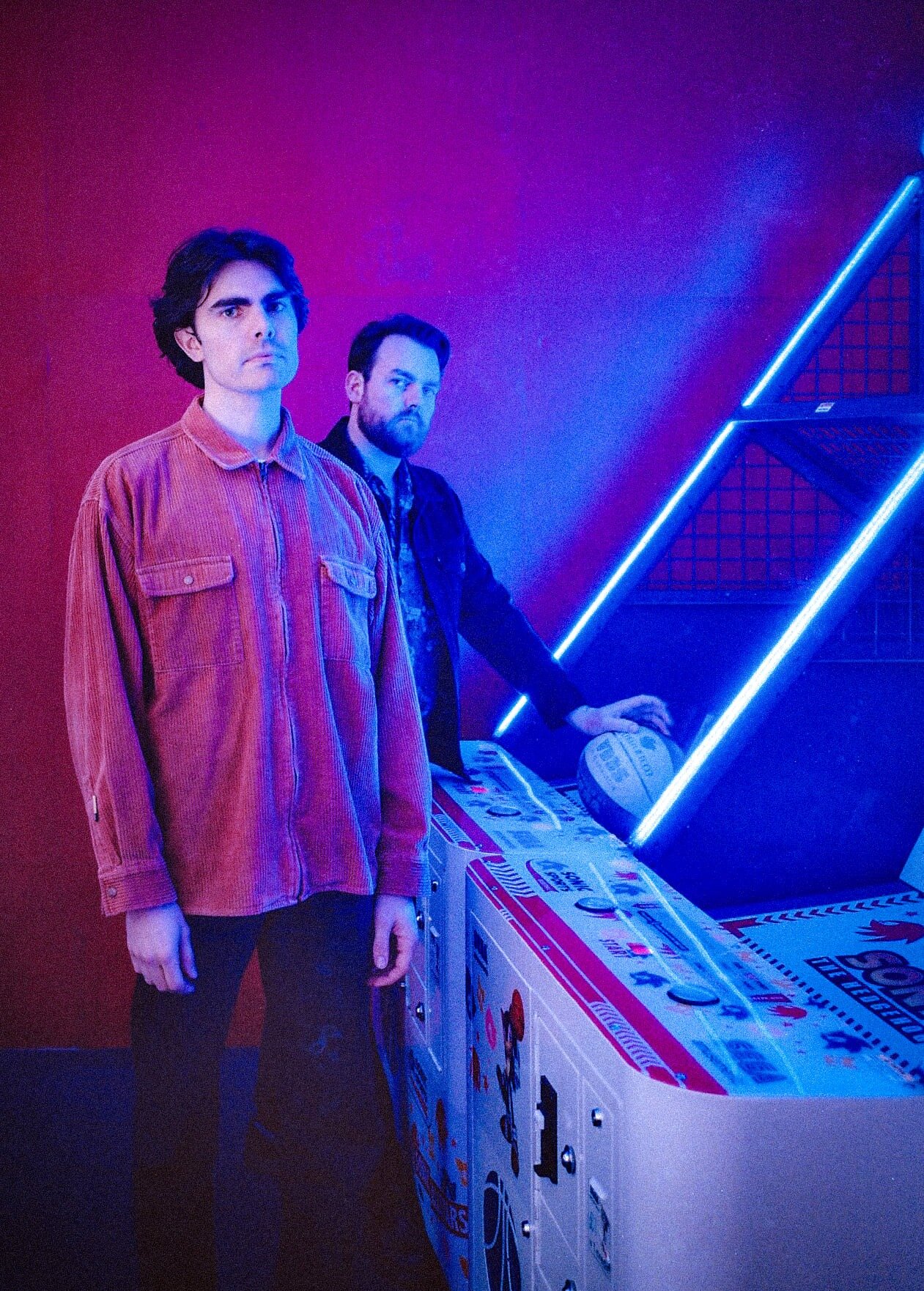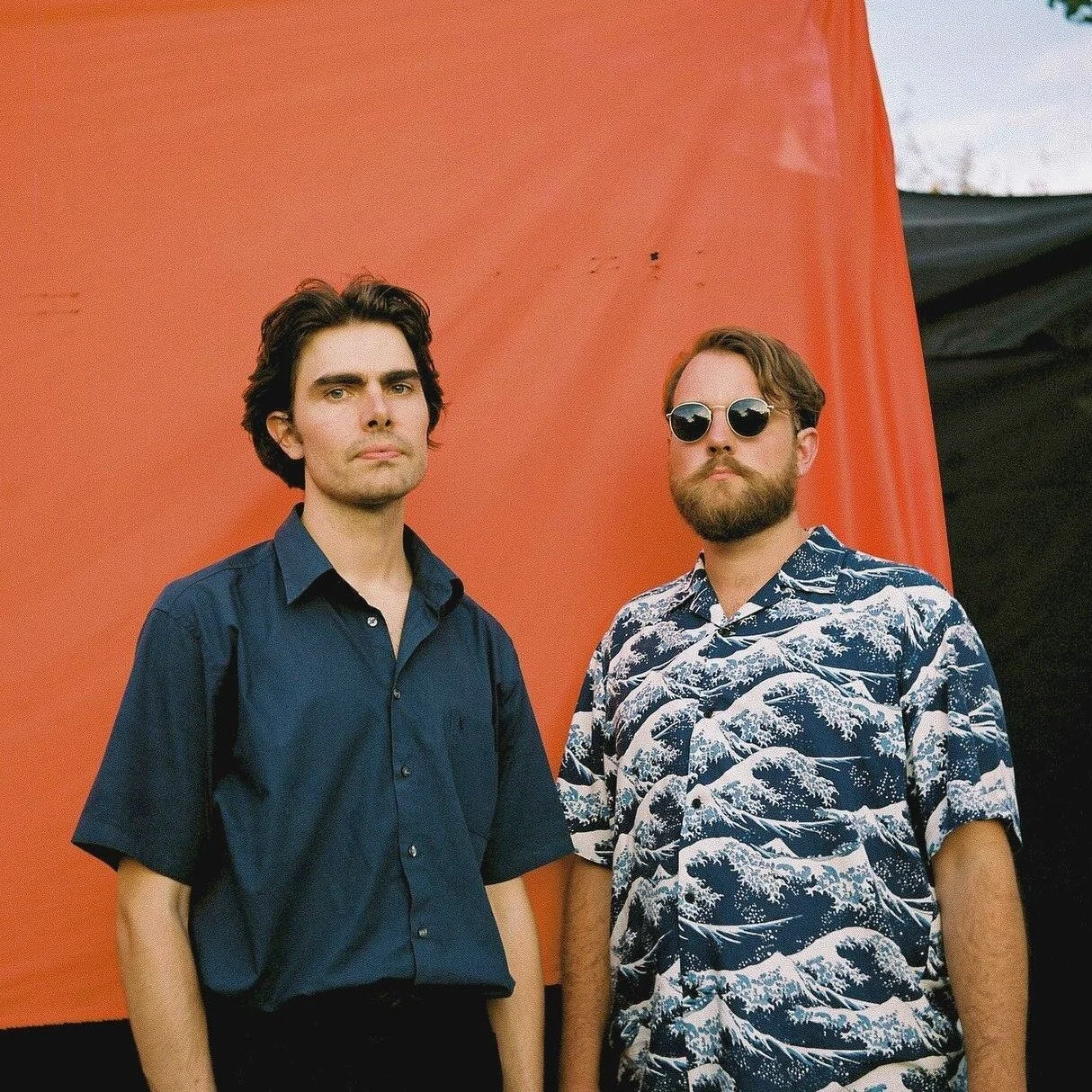
Halifax Escape Artists Century Egg Talk Embracing Change on New EP "Little Piece of Hair"


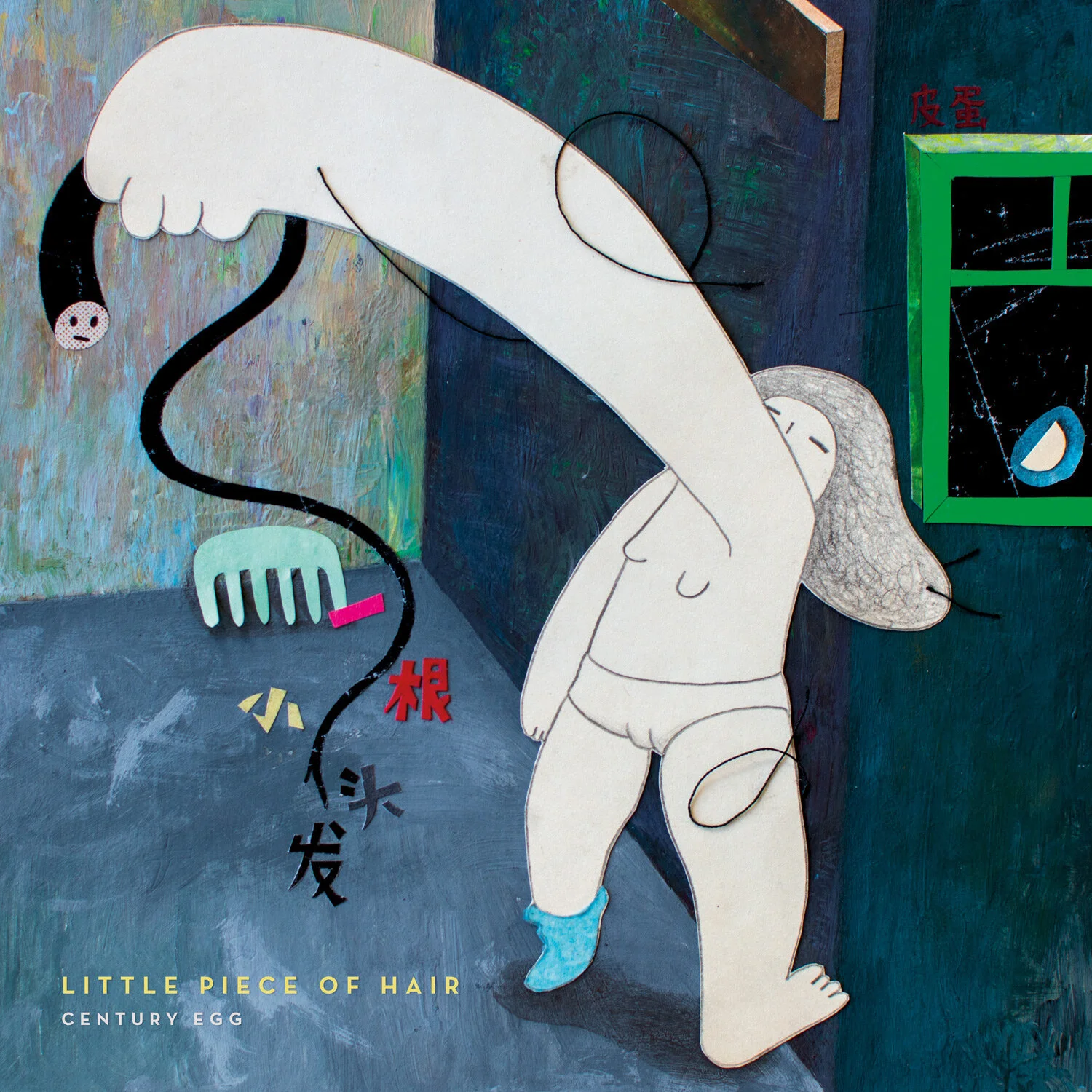
Halifax four-piece Century Egg are putting Atlantic Canada on the map with their beaming fusion of garage rock and mandopop. The band recently announced signing to hometown label Forward Music Group in anticipation of their EP Little Piece of Hair , out this coming Friday, May 7th, 2021. Just like their namesake, Little Piece of Hair is long-awaited, with the promise to delight and leave a lasting impression. Opening with blitzing pop-punk shaker “Do You Want To Dance?”, Little Piece of Hair reminisces shoulder-to-shoulder bopping at your favourite venue on a Saturday night.

Coming hot on the heels of their recent collaboration with Debaser's Mood Ring ("The world’s tiniest and most introspective music recommendation engine") and the We Can Play EP, Little Piece of Hair is the band’s loudest, clearest mission statement to date, marking another exciting addition to Forward Music's recent run of releases alongside Wolf Castle and Paper Beat Scissors. Boasting a new rhythm section of bassist, Matty Grace (she/they) and Meg Yoshida (she/her) on drums, Century Egg is a band reborn whilst still incorporating the dance-punk bliss of previous Egg outings, only bolder, brighter, and harder-hitting.

We got the chance to connect with Century Egg on the importance of creative outlets, managing band dynamics while writing songs over email, and their plans following the release of Little Piece of Hair. Read our full interview below!

Zoë Argiropulos-Hunter for Also Cool: Hey Century Egg! Thank you so much for chatting with Also Cool. To start, you've been described as escape artists: How do you achieve this way of being through your creative outlook and how did this come into play when producing Little Piece of Hair

Century Egg: We’re four individuals with full-time obligations, and the band is just one of our creative outlets. Our band gives us a chance to temporarily take a break from reality, but also reflect on it and bring something back to it. We are all artists in our own right, and the band is a way to collaborate and express our appreciation for each others’ art. 


Also Cool: In that vein, escaping isn't always about running away, right? It can also describe setting oneself free, or embracing change. On Little Piece of Hair, you've commented that the songs are about "finding yourself." What inspired that concept for this album, and how did it come together? 

Century Egg: When the songs arrived, they just spilled out. They can be coping mechanisms, they can be power fantasies, or else just about processing what’s going on right now.


AC: On that note of embracing change, you’ve introduced a new rhythm section in your latest lineup — during a pandemic no less! How have these additions impacted the project?  

CE: Different people bring different experiences to the band, and it is a much more collaborative process now. Each person brings something to the table that may not have previously been introduced due to our varied influences. Specifically our song “无路可退” (“Cornered”) was created over email. Matty (she/they) wrote the bassline first, before Megumi (she/her) added her drum parts, before Robert (he/him) and Shane (she/her) finalized the arrangement. This was done totally over email during the early days of the COVID-19 pandemic, and brought about a newer darker sound that may not have come forth if the circumstances were different.
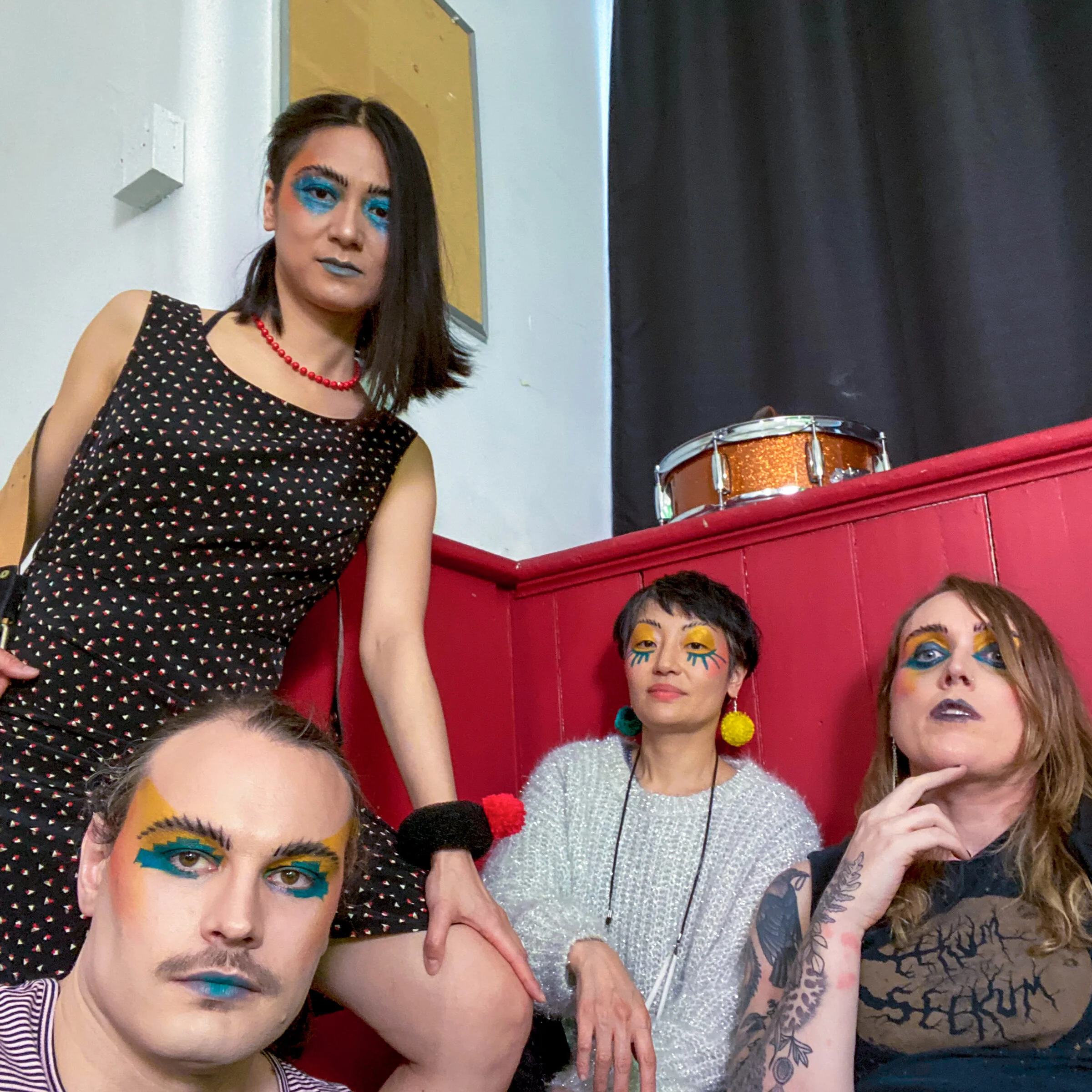
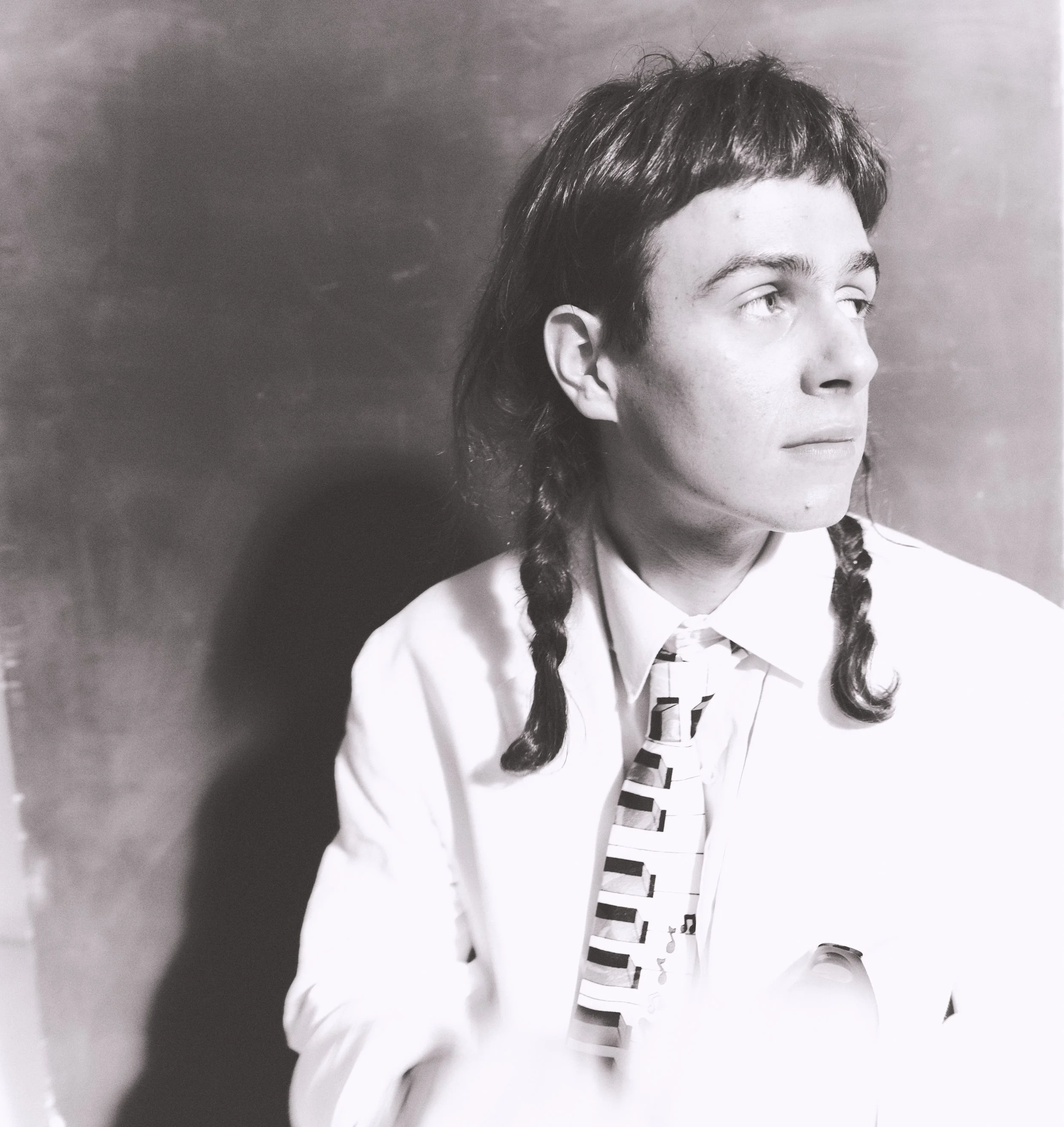
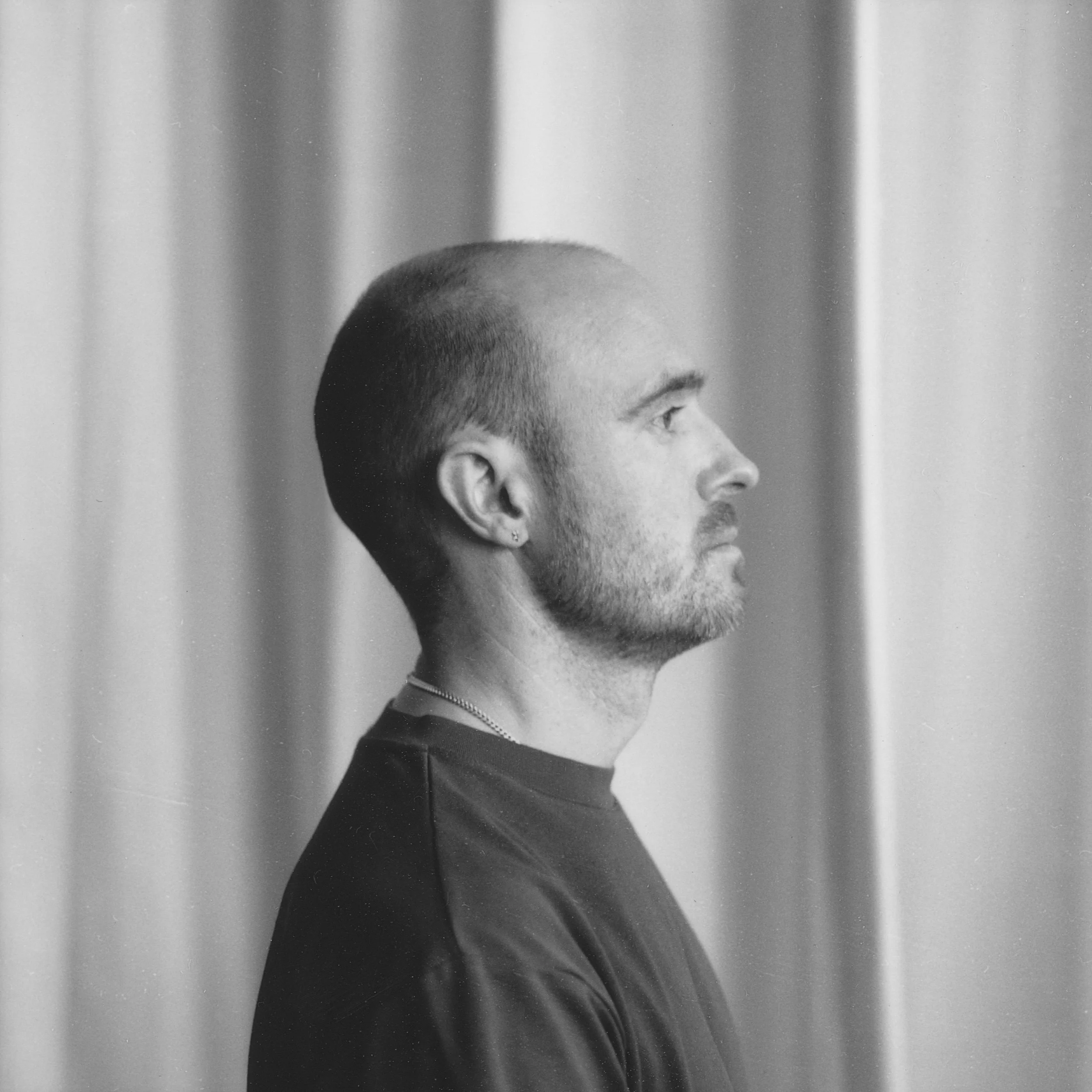
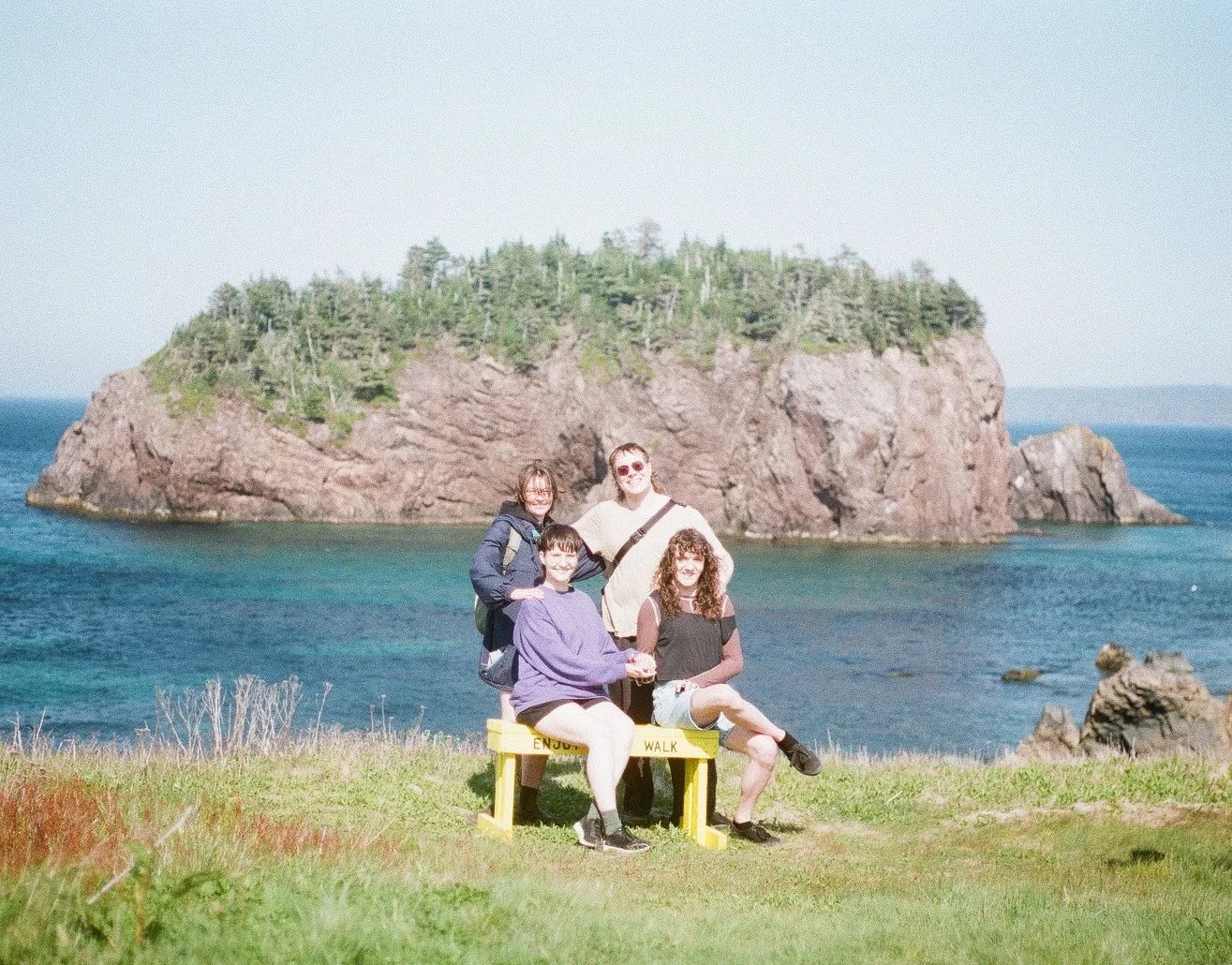
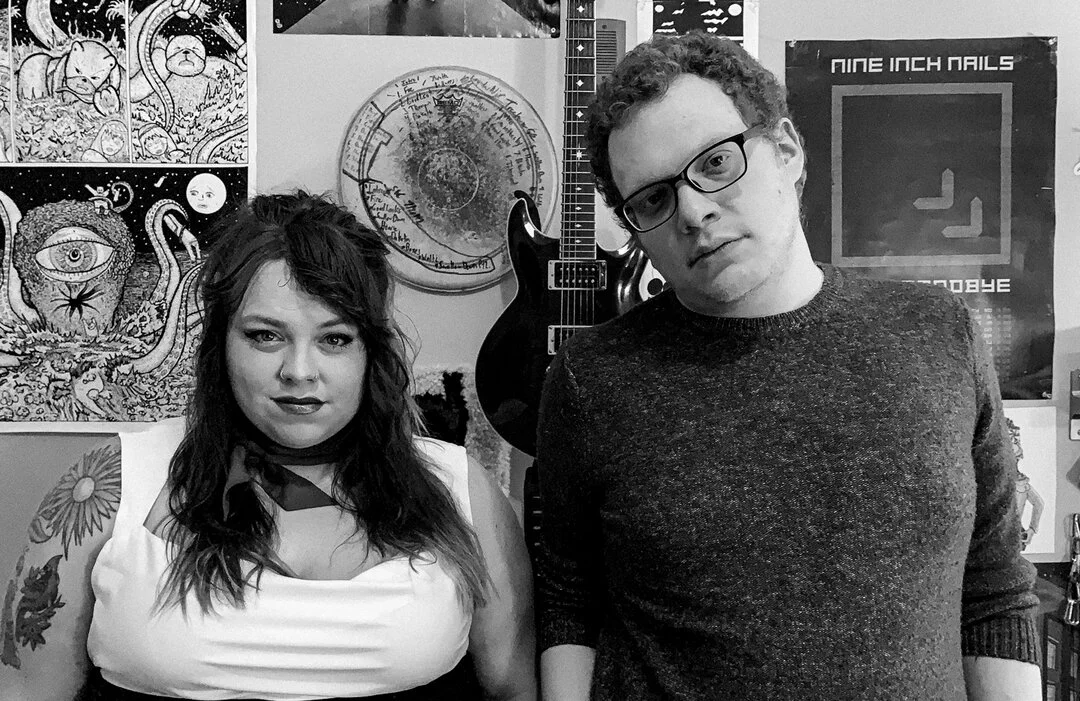
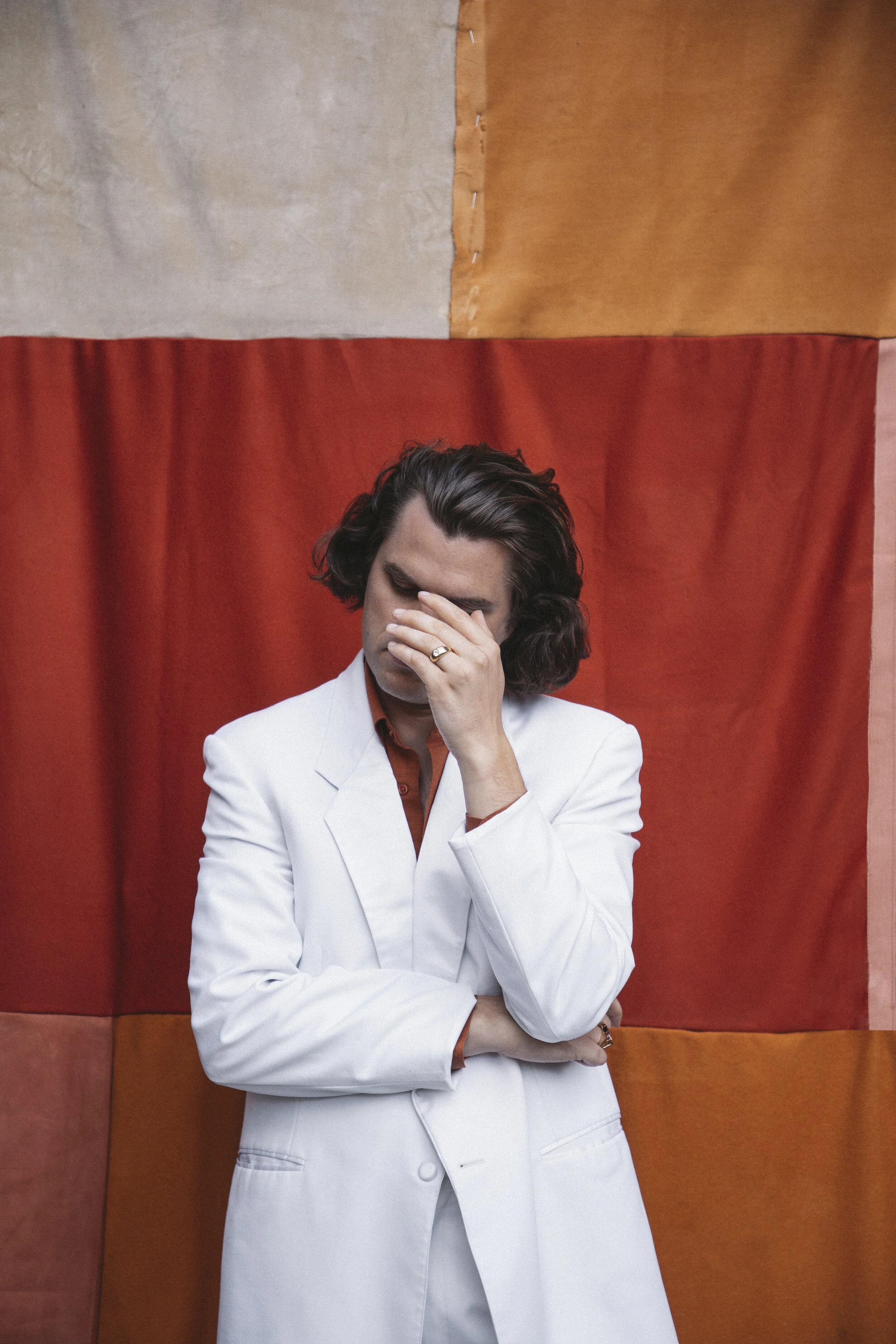
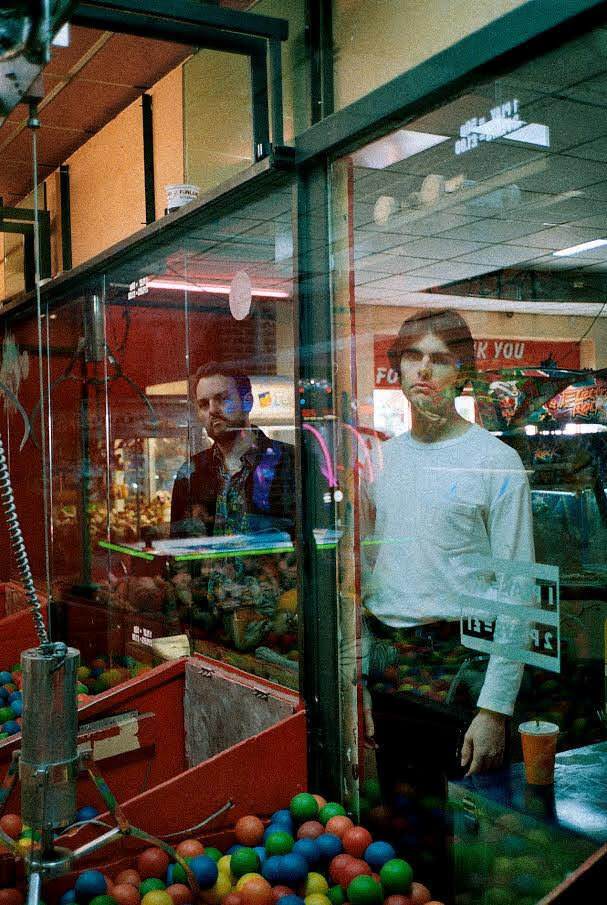
Century Egg, photo courtesy of the band

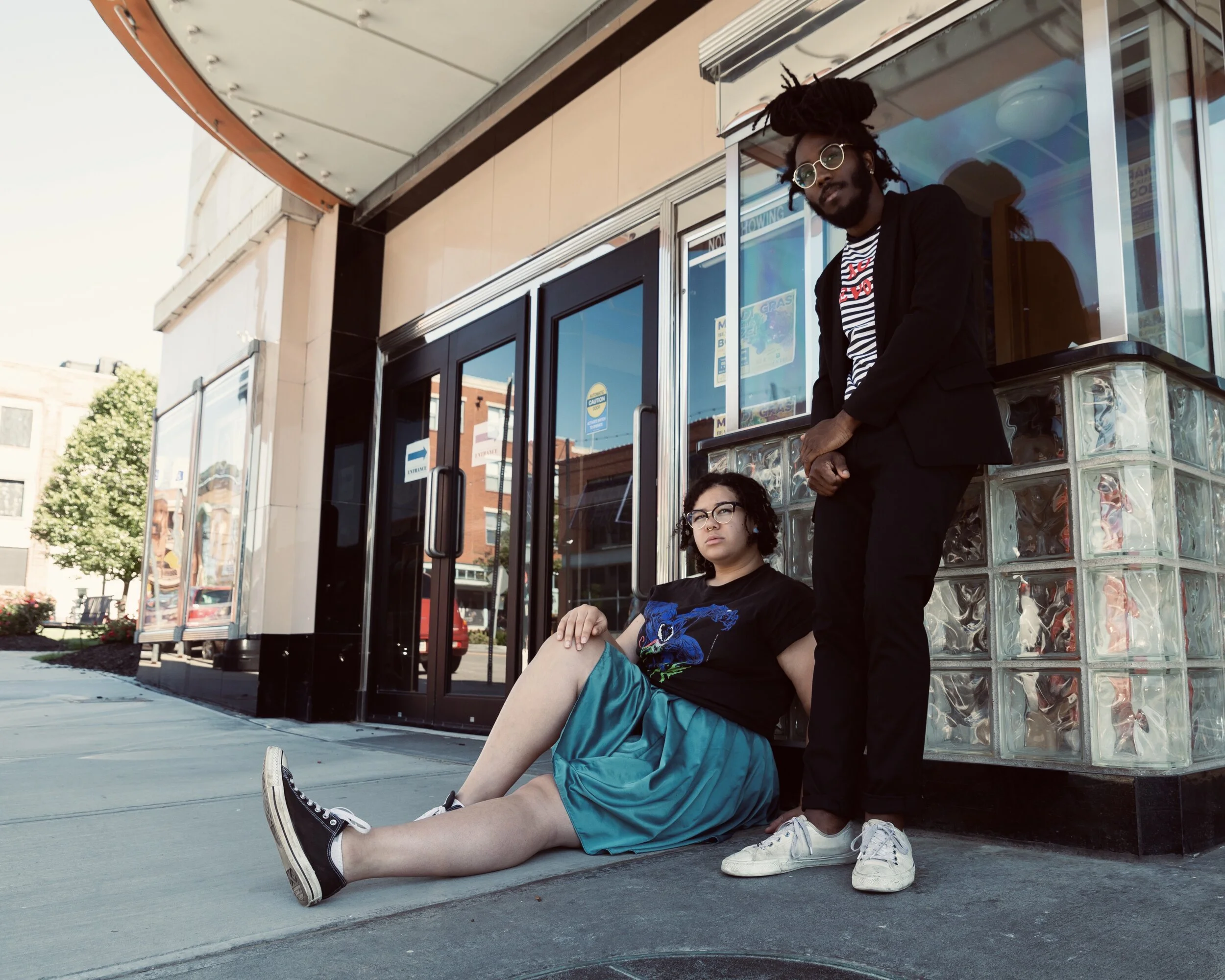
Century Egg, photo courtesy of the band

AC: Something I’m always curious to ask about is how artists are influenced by their physical environment and surrounding community. Has Halifax and it's music scene had any particular impressions on this album specifically? 

CE: Maybe not necessarily Halifax, but the global landscape and the state of the world have definitely had an impact on Century Egg as a band, and it has come through in our writing. Ultimately the Halifax music scene has been predominantly white, cis and straight. We are not that. We embrace our diversities and look to encourage this growth within our scene.


AC: To end off, how are you planning to celebrate this release, and what can we expect from Century Egg in the coming months? 

CE: For starters, we have two upcoming music videos that will be released in the coming months for “Do You Want to Dance?” and “Little Piece of Hair.” Sadly, we had planned a bit of a record release show — as we were invited to play Flourish Festival in Fredericton, New Brunswick — but now will be attending remotely via a pre-recorded live set, as our corner of the world has collapsed on itself a little bit. We are looking forward to playing shows the moment we can, but for the time being, we have to embrace and navigate our restrictions and look to plan for the future. This includes trying to reach new audiences via the internet and working on a full length LP that will hopefully see the light of day in 2022. Change was going to come one way or another anyway.


LITTLE PIECE OF HAIR

Out via Forward Music Group May 7, 2021
FMG091.jpeg

1. Do You Want To Dance?
2. I Will Make Up A Method
3. Ring A Bell
4. Little Piece of Hair
5. Riddle To Place
6. Cornered

Written by Century Egg:
Shane Keyu Song (she/her), Robert Drisdelle (he/him), Matty Grace (she/they) and Meg Yoshida (she/her)

Recorded by Franc Lopes at Ocean Floor
Mixed by Robert Drisdelle
Mastered by Dave Williams at Eight Floors Above


Century Egg

Instagram | Facebook | Bandcamp

Preorder Little Piece of Hair here

Zoë Argiropulos-Hunter (she/her) is the co-founder and managing editor of Also Cool Mag. Aside from the mag, she is a music promoter & booker, and a radio host & DJ.


Related Articles
 

Mitch Davis Writes Breakup Songs That Sound Happy On New EP "Bear The Cold"


There is something to be said for the way an artist’s debut is sometimes less about finding their voice, and more about setting it free. Such is the case for Montreal-bound songwriter, producer, multi-instrumentalist and DIY-enthusiast Mitch Davis, who shared the two first singles from his to-be-released full-length on Arbutus Records earlier this spring.


Davis has bounced from coast to coast across Canada throughout his musical career and has been involved with reputable acts like Faith Healer and Elle Barbara’s Black Space. While his interest in music was fostered at a young age, it has grown into way of finding community and exercising his passion for a unique craft that can be simply described as gear tinkering — but surely anyone involved in the world of sound production would tell you it is more than that. For Davis, it has been a means of bolstering his self-confidence as an artist to go solo with songs he’s kept in his back pocket since he relocated to Montreal from Edmonton a few years ago. 


With analog recording and production being something completely outside my comfort-zone, one of the first questions I asked Davis was about how he first picked up (what some consider to be) such a niche pastime in the age of digital mixing and mastering.

“I first got into learning about analog equipment when my own gear would break and I didn’t have the money to fix it,” Davis shares with a smile over our video call. “Getting to know my gear inside and out has been a great way of saving money, and the knowledge I have has been so important in terms of accessibility. For example, you can buy kits to make replicas of really expensive gear. I made a clone of a TR-808 for seven-hundred bucks, when it normally retails for five to six thousand.”

At the same time, Davis’ knowledge came in handy when moving to Montreal as a source of income, as someone who doesn’t speak much French.


When the pandemic hit, Davis found himself spending more time in his at-home recording studio — located in one of the many warehouses in Montreal’s abandoned textile district off of highway 40. Like many of us, Davis was confronted by self-reflection in isolation, which lit a creative spark in a new vein. 


“At one point, I had written this bassline, and I knew I wanted to make into something eventually, but it wasn’t until last March that I finally decided to figure it out and appropriate it into a song.”


After some one-on-one time with said bassline, Davis produced Bear the Cold, a bright EP that acts as a teaser for his debut record of exclusively “breakup songs that sound happy,” set to release later this year.

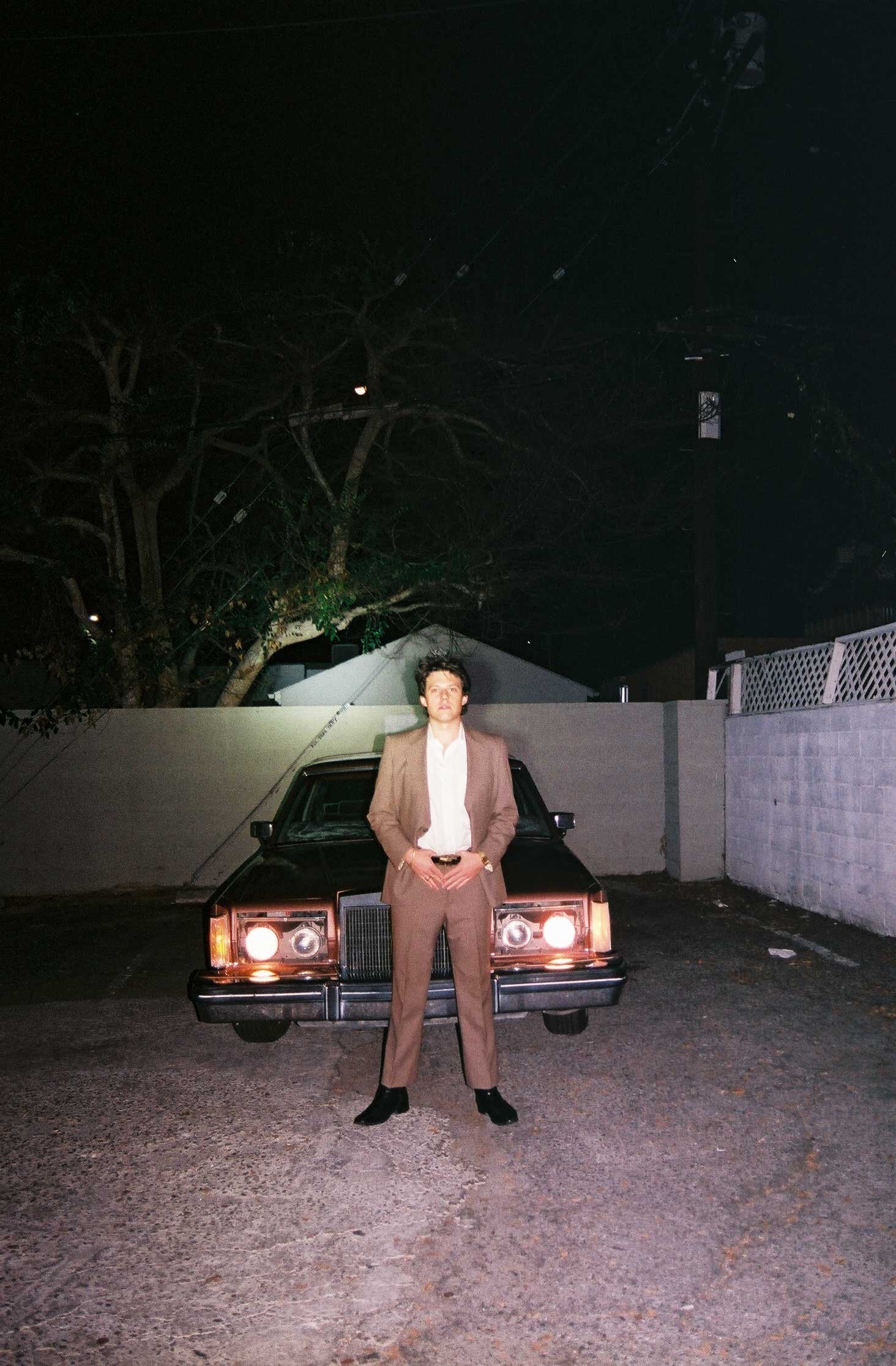
Mitch Davis shot by Kensey Crane

Seeing as Bear the Cold marks Davis’ first musical endeavour in a number of years, I wanted to hear his feelings on starting a new project based on something coming to an end (i.e. a relationship).


“It feels pretty strange. I guess I just hit a moment where I was ready to make music again, and that happened to be what I was feeling at the time. I think I was subconsciously cheering myself up with the music itself, as opposed to the lyrics. I felt rewarded, to a small extent, by being vulnerable. [Vulnerability] is something I appreciate in people, and I wanted to try and represent that for myself. As far as I can tell, a wide variety of people are responding well to it — which kind of surprised me!” Davis grins. “Something I personally struggle with is reading something I wrote in a very vulnerable state and then wondering if it’s too vulnerable. Sometimes it’s difficult to tell the difference between lyrics that are just like, pure, raw and emotional and lyrics that are just way too… overly simple and personal? Even though this can be a challenge, I’ve really learned to trust the past version of myself and following my instincts with this record, both in lyrics and sound.”


Before moving to Montreal, Davis was in Edmonton for quite some time and involved in completely different musical projects, whose influences can be picked up on Bear the Cold. As a former rapper and producer who also played “in indie rock bands forever,” Davis EP harnesses sunny rhythms and grooves with a funky punch. Reminiscing the jack of all trades’ legacy of some of his favourite artists, such as Stevie Wonder, Todd Rundgren, Sly Stone, and Paul McCartney, Davis gives us a glimpse into the magic of being involved in every step of your record’s conception from start to finish — especially without a band to bounce ideas off-of IRL.


In closing our conversation, Davis branches off of this notion of solitude and remarks, “It has been so weird [being separated] from the music community. I miss the feeling of going to a show and seeing someone come off-stage completely energized, and the feeling of playing shows and being able to try-out a half-written song live. That’s why I’ve been posting clips and things online; to gauge reactions. But I do miss trying out songs live where they exist for that night, and that night only,” he laughs.


Though Davis remarks that he imagined himself “becoming a hermit in a loft with a studio or something” upon moving to Montreal, he’s excited to reintroduce himself to the music scene with Bear the Cold. Check out Davis’ 7”, along with a recently released music video for the title track, directed by Jordan "Dr. Cool" Minkoff.


Mitch Davis

Instagram | Twitter | Bandcamp

Zoë Argiropulos-Hunter (she/her) is the co-founder and managing editor of Also Cool Mag. Aside from the mag, she is a music promoter & booker, and a radio host & DJ.


Related Articles
 

Hold Tighter for Days Brighter: Skinnybones releases "SKB04"


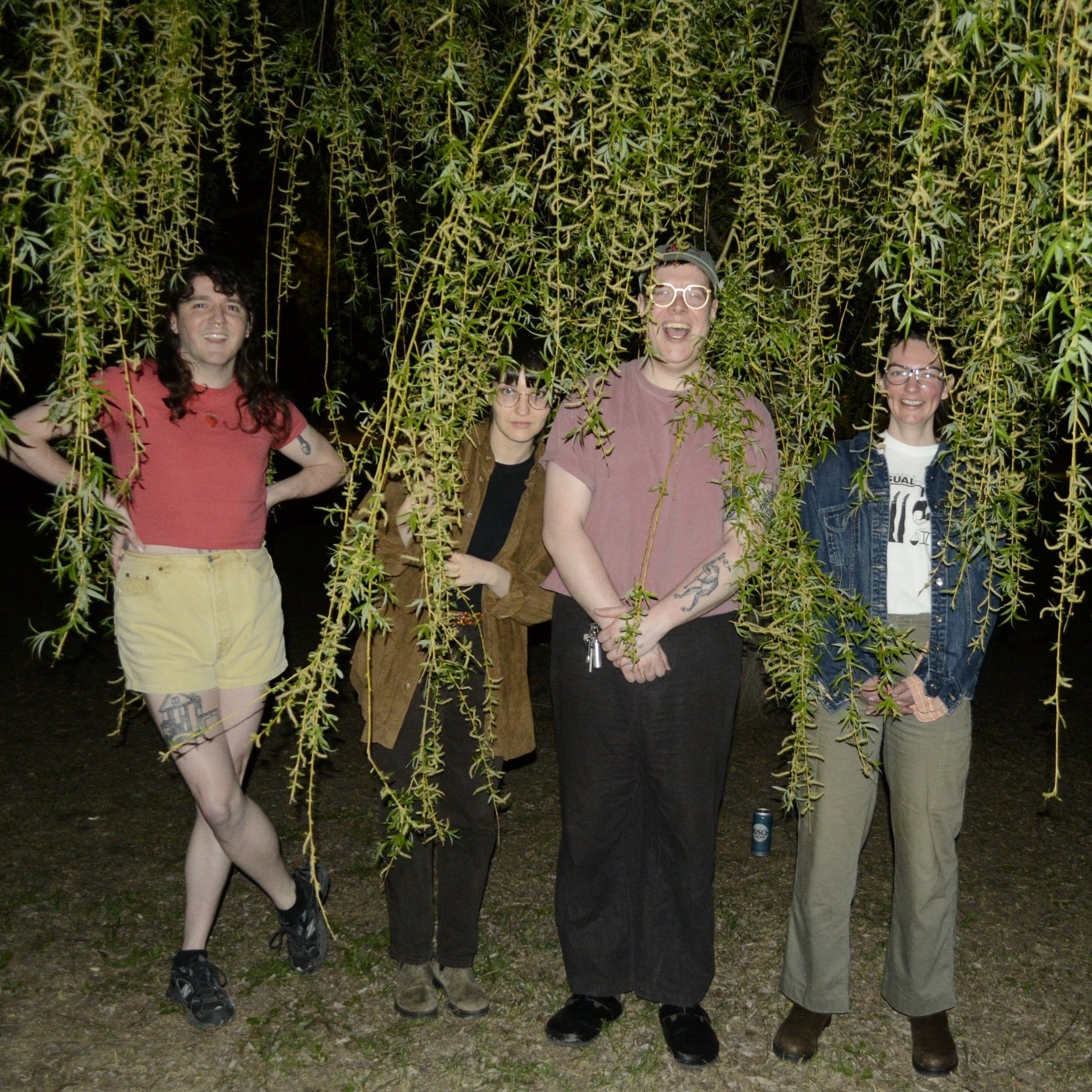
Photo: Vincent Castonguay for Éditions 8888

Make-up: Ashley Diabo for TEAMM Agency
©Vincent Castonguay
©Éditions 8888

Emerging from what seems like one of the most universally difficult winters, the feeling of warm sun beaming on your cheeks as you walk down snowless pavements, seeing people making cheery smalltalk on the corner, the sparkling sound of birds chirping in the branches above, it’s hard not to have a little spring in your step. A bit of jazz in your strut. Heck, maybe you even divert from your designated path when you go on today’s silly little walk. The swinging electro percussion of SKB04, the latest album from Montreal producer and DJ, Skinnybones, is the soundscape for that glitter in your eye, that pep in your walk, in hopes of brighter days ahead.

Working under the alias of Skinnybones, Léon Lo (he/him) has been involved in the city’s underground music scene since the early 2000’s, releasing numerous electronic projects on his label, Skitracks, and many others, including Well Rounded Records, the Dimseniya compilation by Friends for Friends, and on La Rama Dubs with YlangYlang. Skinnybones also hosts monthly radio shows on La Face B and n10.as and notably boasts two MUTEK performances (in 2011 & 2018), among many other local events.

SKB04 is a delightfully bubbling selection of hardware jams compiled over the past four years, referencing classic techno and electro sounds, tinged with a sunny swing. We talked Bell Biv DeVoe snares, the Rave as a living organism, and how to keep the dance music community alive through Pandemic Part II in the interview below.

In the words of the artist himself: World-wide raving folx, hold tighter for days brighter.

Maya Hassa for Also Cool: The smooth brightness of the opening track of SKB04 feels like emerging for that first sunny walk in March, when spring is in the air and in your step, and you have the sudden urge to buy flowers and smile at everyone you see. You mention optimism, hope, and rebirth amid round two of “pandemonium” spring - what was your mood going into writing these jams?

Skinnybones: The tracks on SKB04 are quite old already, and predate the pandemic. I’ve tracked a lot over the years and accumulated a large backlog of recordings, from which I sequenced this release. I was meaning to put out a follow-up to my last cassette for some time, but things kept getting in the way. Then the pandemic sent all the rigid structures around me into free-fall, which opened me up to reevaluating my priorities, making time for things that were important to me, and spending time inhabiting my inner-world.

While I feel like that was a really valuable gift, I’m burnt-out like everyone else in town - and the thought of us having to sacrifice another summer is gut-wrenching. I wanted to assemble an album that wouldn’t play into despair, but wouldn’t be completely delusional in its optimism, either. I hope it can lift people’s spirits, while still acknowledging the challenges of the times.

Pre-order of SKB04. You get 1 track now (streaming via the free Bandcamp app and also available as a high-quality download in MP3, FLAC and more), plus the complete album the moment it's released. Purchasable with gift card Pre-order Digital Album $5 CAD or more Send as Gift High-bias 44 minute cassette tape with Riso-printed 4-panel j-card.

MH: It's noticeable throughout the album, but especially in the second half, that the electro patterns groove with a unique swing. Even when an acid bass-line comes in on “Cold Snap,” the track has a jazzy quality to it. You called it “skewed jack swing.” How would you describe your musical inspiration for this album?


SKB: Skewed jack swing happened when I hurried to the studio to tap out a Bell Biv DeVoe snare roll, playfully recorded it, got over the novelty, and started world-building around it in earnest. I’m a very big fan of free jazz music, and though the similarities between it and dance music may seem few, the way musical motifs are combined outside the constraints of rhythm and harmony in free jazz informs a lot of my music. In a way, this is also reflective of skewed jack swing, taking a familiar setup that could easily fall into pastiche and bending it so that it becomes something unintended, unexpected, and true to itself.

MH: What is your creative process when making a track — do you tend to improvise?

SKB: I almost always have one starting point in mind, be it a drum pattern, a melody or a sample I’d like to use. I’ll lay that down first, then start building up elements around it until I have enough blocks to play with. That will usually be within the first hour. Then I’ll spend a considerably longer time just vibing the hell out. I have a hardware setup, so it’s me improvising, twiddling knobs and pushing buttons, probably making pamplemousse faces and breathing really hard the whole time. When I’ve gotten that out of my system, I have a good idea of the elements that work and the ones that are clutter, so I cut the fat and streamline it. I then work out an outline of the song structure, which usually leaves ample room for noodling, then record one take of a controlled jam, which I later trim down.

MH: “Namur” makes me miss emerging from a dark tunnel at 7am with amen breaks still ringing in my ears. In what ways have you been staying hopeful for the return of the dance music scene (if at all) throughout the past year's lockdowns?

SKB: I actually wrote a Medium piece a little while ago about how I miss going out dancing. I think if we allow ourselves to accept that raving may not come back as the romanticized image that we have of it in our minds, there is more room for hope. To me, raving isn’t only about dancing in a club, rubbing sweaty shoulders with strangers to loud music—though that sounds about as close to paradise as anything right now—it’s about being part of a larger living organism.

What can constitute a living organism is actually quite varied and we don’t necessarily have to stick to a venue + sound system + DJ + dancers formula. There might be countless other ways for the rave to exist which may or may not include physical proximity. I’m keeping fingers crossed for “may include,” and hope it’s soon, but if that’s not the case, I’m still totally down to put my body, my mind, and my time to contribute to keeping the rave going in a larger sense.

Photo: Vincent Castonguay for Éditions 8888

Make-up: Ashley Diabo for TEAMM Agency

MH: Could you elaborate on what being part of a “living organism” means to you? Is it the experience of a unified community, the sense of solidarity brought upon by a shared emotional experience, maybe even the physical sense of interconnection or anonymity brought upon by dancing together? A combination of it all?

SKB: Apart from music, people, venues, and lighting, a rave is also made up of less readily-identifiable things like frequencies, bodies, pressure systems, secretions, intelligence, chemicals, trajectories, impulses, breath, blood, emotions, energy. All of these things are variable, and every one of them acts on and influences every thing else. If a tune I love comes on and I start dancing my heart out, that will definitely affect how the person next to me, who's never heard it before, receives it. All that goes back to the DJ and acts on what they do next, and how they do it.

At the same time, if I had a terrible meal before going out and that same tune comes on when I get to the rave, but this time I feel miserable and just want to crawl into a corner and be left alone, I will act on the rave in a completely different manner, and the experience might end up going in another direction entirely. So, because every little thing is tied together, I consider the rave to truly be a living organism.

MH: That response makes me want to capitalize the word “Rave,” so I’ll do it here. Do you have anything specific in mind when you mention alternative ways for the Rave to live on?

SKB: If we see how easily things from what we consider outside the rave can have an impact on what happens inside it, like the bad meal example I gave, we can also start to see how things from what we consider within the rave can impact things outside of it. An easy image is the low thumping pulse you can hear when crossing the street to get to the venue, and the rush of excitement it can provoke in you while you're technically not even there yet — or how that same sound is perceived by the people living down the block. Bearing all that in mind, inside and outside start to not be such important distinctions anymore, and what we think of as the rave's boundaries start to get blurry. So maybe I don't need to physically see the DJ in order to be part of the rave. Maybe I don't need to have my head in the bassbin of a speaker. Maybe it's my speaker at home, or a set of headphones in the forest, or VR goggles, or butterflies in my stomach when thinking of a song, a place, or someone.

MH: You have a vast discography, going back to your first self-release in 2017, spanning a longtime involvement in Montreal's music scene, which includes two live MUTEK performances and multiple festivals and party series. What has your experience been like as an independent artist — do you prefer to self-release versus working with a label?

SKB: To be honest, my self-promotion game has nothing on my artistic output. I’m not a very outgoing person, so I haven’t always secured the good connections. Because of that, and because I’m not very real-world goal-oriented when it comes to my music, I’m much more comfortable in self-initiated frameworks, be they releases or parties. I should also acknowledge that I’ve been surrounded by talented and gifted people throughout my music-making years, and that I’ve ridden on a lot of coattails, and benefitted from a lot of energy outside of my own. Nothing I’ve done has been self-initiated in the strictest sense.

I have also had the good fortune to have people from the world at large show an interest in my endeavors, and they’ve only been good experiences up to now. I’m always up for more! However, I have a day job and a small family, so I really prefer going at my own pace.

MH: Where can our readers find you (if you're hosting any streams, live shows, online performances, etc)?

SKB: I don’t have any shows lined up right now, but I host a monthly radio show, Sober Ravers Union, which airs every fourth Wednesday on La Face B . I mix records for an hour or two, and usually have mixes from guests of the non cis-white-het-dude-DJ persuasion. I also co-host another monthly radio show with my partner YlangYlang, Heavy Metal Parking Lot, which airs every fourth Saturday on n10.as. That show focuses on experimental music, found sounds and field recordings. Also, I used to put out a free download bootleg every month on my Bandcamp page. I may get around to doing that again, so that might be a good place to look!


Follow Skinnybones on Instagram


Spaceface and KWKA Bring Escapist Psych-Rock to the Masses


“Experiments In Escapist Infinities” cover

Jake Ingalls is a creative soul who makes psychedelic masterpieces with his bands Spaceface and The Flaming Lips. Both groups are known for creating unique, unparalleled stage sets,  light shows and performances. If you’re lucky enough to attend one of their concerts, it will be  an experience you’ll likely never forget. If The Beatles’ Magical Mystery Tour, CAN and the  grooviest bass lines ever had a lovechild, it would be Spaceface.  

Spaceface is a retro-futurist dream-rock band that was formed in Memphis, Tennessee in 2011. Currently, Ingalls is based in Los Angeles. They have released some phenomenal feel-good psychedelic albums and singles such as “Sun Kids” and “Panoramic View.” The band just dropped  a new single on April 1st titled, "Experiments In Escapist Infinities” with Mike Fridmann AKA KWKA. Their forthcoming album is on its way as well. Expect amazing influences on this record, like Nina Simone and Superorganism. Spaceface’s latest offering will be paired with kaleidoscopic visuals and new music videos to create a sublime musical experience.   

We got the chance to connect with Ingalls and Fridmann to discuss their thoughts on collaboration, creative processes, and the theatrics of their live performances.

Sierra Kaylen for Also Cool: Jake and Mike, thank you for taking the time to talk to us today. Can you tell us a bit about who you are and what you love? 

Jake Ingalls: My name is Jake Ingalls, I'm the frontman/bandleader of Spaceface. I also play guitar and keyboard in The Flaming Lips. That's usually  where people know me from but lately, we've been getting more and more folks just finding  Spaceface on their own, which is exciting. I always feel a little grotesque dropping the Lips' name when we're talking about this project, but they were my favorite band from 6th grade to college… and now I get to play with them, which is still kind of mind blowing to me.  

I've also recently embraced being a nonbinary person. I'm from Memphis and I've lived in L.A. for about five years now? I love cooking, rollerblading, and collaborating with new artists. I love a fresh new notebook to scribble ideas/drawings/ tasks and lists in. The list of things I love could go on forever. It'd be easier to list things I don't like… for instance, when you can hear someone eating on the other end of the phone.

Mike Fridmann: I’m Mike, I make music under the name KWKA, run a tiny record label called Nonexistant Records and work as an assistant engineer at Tarbox Road Studios. I’ll name-drop the Flaming Lips too, because Dave Fridmann is my dad… So, I’ve known the Lips my entire life and that’s where I know Jake from! Unsurprisingly, I love to work on music and that’s kind of what I do all the time. In the last year I’ve played a lot of  video games and taken a lot of walks too. And I got a cat, I love cats. 

Also Cool: Your band Spaceface, meshes retro psych and modern pop together creating  unique and magic sounds. Could you tell us a bit about the creative process that went  into the new single?  

Jake Ingalls: Well that's a great compliment! There are usually four of us that write what I'd call “the core” of most of the tunes; so there's almost always a big push and pull or tug-of-war vibe when it comes to where the song should "go.” A lot of times, we'll sit and discuss what scene a new song would be setting in a movie, and try to approach the arrangement cinematically; talking about camera angles that shift focus with the entrance of new parts and what feeling we want to evoke.

I then take the new full-band demo into the studio and tear it apart and re-record almost everything. It started simply out of necessity that I'm the guy who goes into the studio with an engineer/producer to fix it all up and get a good mix going, but now it's just an understood part of the process. Jake, when are you gonna take this one into the studio? I'd love to hear what it's gonna become and wanna make sure you don't ditch my favorite part here. 

I'm lucky that my band trusts me to take what we've worked so hard to create and mess with it to great lengths. There's truly a freeing feeling having the full song done so you can reference anything you particularly loved about the original. But, going into the actual recording process completely unattached to what the song can become, adding new rhythms, instruments, and samples that can completely change the feel of the entire tune.

Jake Ingalls of Spaceface by Blake Studdard

AC: I’ve noticed that your band often pairs music with trippy visuals. Your stage production features light shows that match your song’s themes and overall vibe. What kind of  experience are you trying to give your audience when performing live?  

JI: Firstly, we're aware that most folks that are coming to a Spaceface show likely don't know our music. With that in mind, we've always felt like the "show" element is a nice added treat for fans, and a little reward for people who took the risk, who got out of their warm apartments, and paid $5 to come to check us out. So when we started the band, I immediately went out and bought a fog machine, cheap lasers, and Christmas lights.

I was about 16 when I realized that not everyone sees vivid colors or visuals when they hear music, and always craved adding some sort of obvious queue for people. At first, you can only afford or find easy things like glow-in-the-dark bubbles, fog machines, or work lights with different colored bulbs in them... But it's gotten easier to find ways to incorporate better and more impressive elements into the show that set the mood we're trying to provide. 

Growing up, we'd drive miles and miles to see bands like Of Montreal, Man or Astro Man, and Octopus Project because they made cool music and their shows were fresh and different. I remember we fell in love with this group from Nashville called The Protomen. They wrote and performed rock operas based on the stories within the Megaman video game series. I was just enamored with the idea that you could sneak into a dive bar and have this grimy place be transformed: just because folks took the time to make costumes, coordinate visuals, and get their goofy friends to hop on stage and play along. We want people to leave feeling as happy and joyous as we get to feel playing for them.

AC: What was the process like collaborating together for this single? Do you think collaboration furthers the artistic process or stunts it?  

JI: I'm a firm believer in collaborating as a form of growth. I like to look at myself as the opposite  of Shel Silverstein's story, The Missing Piece. Each new idea is a giant ball of malleable clay  that's rolling down a hill and every person you work with on it gets to chip and chisel away until  it's a fully formed marble statue. Plus, everyone works differently and sometimes your circumstances dictate the process, forcing you to discover new ways of creating. Working on this project with Mikey was a particularly new, delightful and fun experience.

MF: We started working on this sitting in the room together then finished it over the internet. I think at the time I wasn’t too experienced working long-distance on music, so it was a good experience to have. I think we both just wanted to have some fun and try to make something that sounded fun!

Mike Fridmann AKA KWKA by Jonathon Graves

AC: Was it difficult for you both to find your sound, did it come naturally to you? Or, do  you think your sound is always evolving with time?  

JI: At first, we wanted to be a surfy psych-punk band. Each tune was noisy, fast and we relished being out of control. I think we still like getting loud and raucous, but our tastes are constantly changing and evolving. I find my only regrets are when I make choices that are avoiding what comes naturally for each tune. It might be slow, but you gotta let it grow. For this song in particular, we set very few limitations and really tried not to question what was coming out, just to go with it.

MF: I don’t really focus on cultivating any sound in particular, I just usually make what I want to  hear in the moment. If I’m working on one project there’ll be common threads because I was in a particular headspace at the time. 

AC: What are some of your favourite albums? Have any of them influenced the current music you’re making?  

JI: Talk about always changing! I'll go with my current vinyl rotations: Petit Prince's Les plus beaux matins, Superorganism's self-titled album, The Avalanches We Will Always Love You, Charli XCX's how I'm feeling now, Elbow's Little Fictions and Nina Simone's To Love Somebody. I can't say anything but Nina, Elbow, and Superorganism influenced the upcoming record since the album is done and those are the only ones we all had before we finished it.

MF: Honestly, most of my listening for the last few years has just been whatever I’m working on or whatever we’re doing at Tarbox. As far as just listening for fun, Gazing Globe by Outer Spaces is one of my favourites. Before that, my obsession was Sweatbox Dynasty by Tobacco. Those are some extremely different sounding records, but I think they’re both really emotionally transporting, which is something I aspire to. 

AC: Speaking of albums, what was a project you worked on that had the biggest impact  on your life?  

JI: I mean, I'd say getting to work on any of the Lips’ stuff early on had a big impact on how I  looked at the arrangement of a song. The Lips' ability to be unprecious about stuff is… sometimes frustrating but ultimately creatively inspiring. 

MF: I’d say pretty much the same thing, ha! 

AC: Tell us about your plans for 2021! Are you excited?  

JI: Plans for 2021 include: putting out a new single and video once a month leading up to our record release February 2022! I actually really enjoyed some of the down time in 2020, it gave me the space and time to grow, learn and figure out the best ways to make videos and art for the new record.

AC: How can we (and your fans) best support you in your future endeavors?  

JI: Keep your eyes on our page, sign up for our text community, and be prepared! Like I said, new Spaceface every month all year! New record coming soon! Thank you so much.

Jake Ingalls of Spaceface by Blake Studdard

Spaceface

Instagram | Bandcamp | Spotify

KWKA

Instagram | Bandcamp | Spotify

Sierra Kaylen

Instagram

This interview has been condensed and edited for clarity.


Related Articles
 

Finding Freedom Within Limitation: Chicago's Pansy Shares Self-Titled Debut


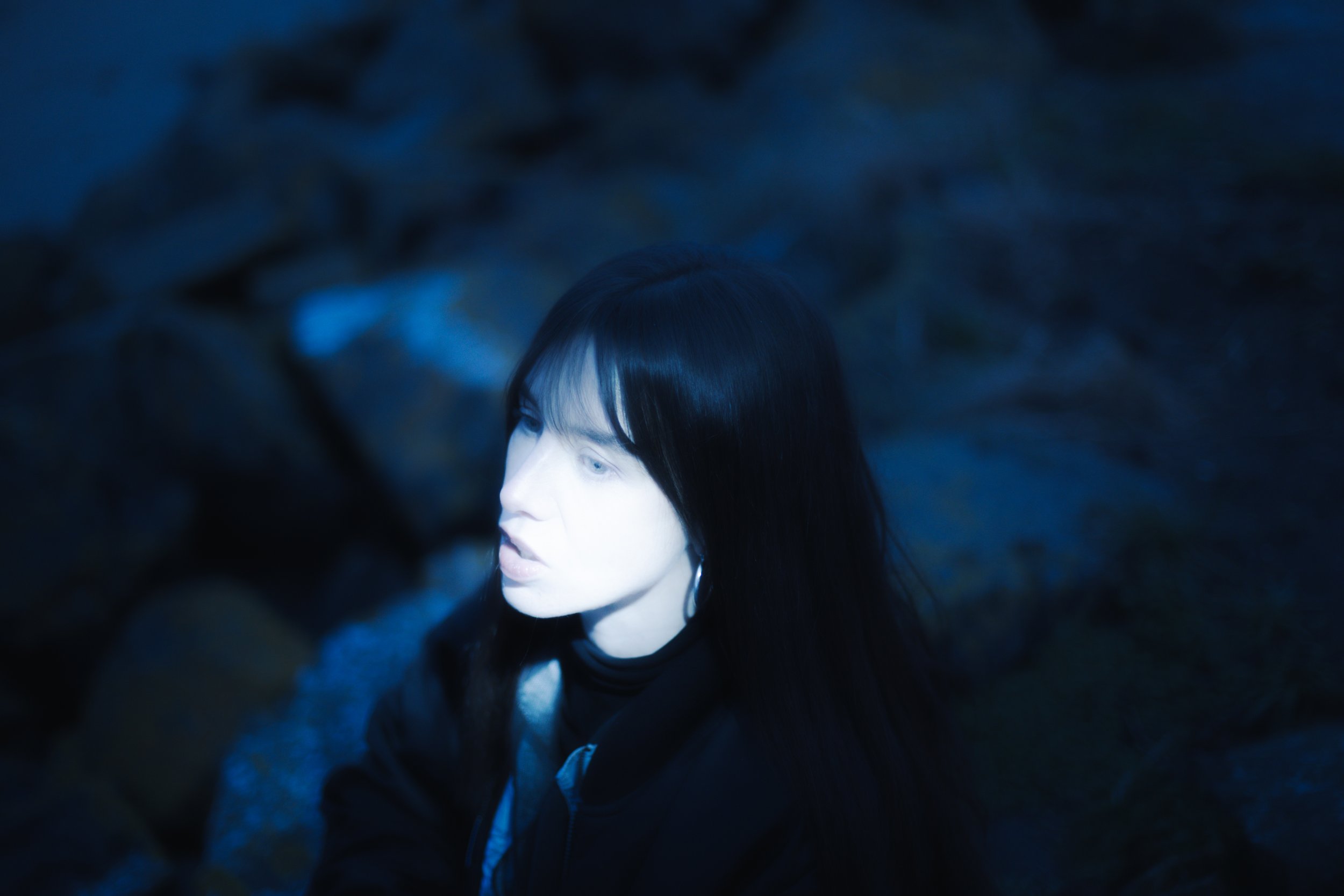
Vivian McCall, photo courtesy of the artist

Spring has sprung, and this week we’ve got the brightest bloom in the bunch on repeat. Meet Pansy, the solo project of Chicago-based musician Vivian McCall. Today, McCall releases her self-titled debut album on Earth Libraries: a nine-track collection of impressions inspired by her experiences as a trans woman. Through Pansy, McCall shares how she reconnected with herself throughout her transition, and parses the highs and lows of embracing her vulnerability. Before creating under the name Pansy, McCall established herself in the Chicago indie scene with her band Jungle Green. As an analog admirer, McCall realized Pansy using the same lo-fi equipment that captured Jungle Green’s recordings over the years. The result is a candid, sunny debut that reminisces 90s college-rock as a backdrop for McCall’s frank lyrics. We connected with McCall leading up to her release to chat about her musical beginnings, rejecting confessional songwriting and leveraging musical imperfections and limitations to make an honest record.

Zoë Argiropulos-Hunter for Also Cool: Hey Vivian! Thank you so much for chatting with Also Cool. First thing's first - congratulations on your debut record! To get things started, how does it feel to have realized such a work and to have had so much buzz and excitement surrounding its release so far?

Vivian McCall: Well, to be honest, it really caught me off guard. I always wanted people to like and connect with my music, but never expected all this interest. This is such a cliche... but I made this record for me and hoped it would resonate with other trans people, too. I thought it was so specific to my experience that people wouldn't care about it, or worse they'd tokenize it. I'm relieved that people aren't doing that or projecting weird trans stereotypes onto me. I think the specificity is exactly what people enjoy. They've been able to connect their own troubles to it — troubles that have nothing to do with being trans. That's been beautiful to hear about. I'm happy that something so me is finding an audience.

Also Cool: Knowing that you’ve been playing in your band Jungle Green over the years, when did you find yourself wanting to explore a solo musical endeavor, and where did this project find its beginnings?

VM: I've been writing songs since I was 14, but this is the first time I've wanted to put anything out. You can't really write songs you care about when you're out of touch with yourself. The point of Pansy — before it was anything or even had a name — was to write songs quickly from a really honest place. I didn't want to play a character and I didn't want to embellish any parts of myself, because that was literally my entire life up to that point.

It's hard to explain to people who aren't trans, but before I went on hormones, I could intellectualize what I felt, but I couldn't express it, couldn't talk about it. Everything felt grey, and I don't I mean nuanced, I mean indistinguishable. I used to think there was something really wrong with me, like I was missing some essential part of my soul. So, yeah, I could write songs, but they were totally meaningless! They didn't even feel like a part of me.

These songs did. That's the difference; what I'd always been waiting for. I could write honest songs because I was recognizing my needs and the actual pain I'd been experiencing. It's just trauma and learning how to process it and dig yourself out. So when you listen to the album, know that some songs came before this big tectonic shift in my life… and everything else came during the midst of it.

The whole process was like that scene in The Wizard of Oz when Dorothy walks from the interior of her grey house to the colorful magical land of Oz, only to be ambushed by the Wicked Witch of the West. In my case, the Witch was me and everything I'd ever buried.

Vivian McCall, photo courtesy of the artist

AC: Thank you so much for sharing your experience and opening up about the evolution of your music. Staying in this vein of thought: You've spoken about realizing that you matter on your own terms, rather than from the approval of others — which I think is really powerful. How did you maintain that mindset while creating such an intimate and vulnerable work?

VM: I had to if I wanted to feel okay about what I was making; I had some concerns. For one, this record is not a diary and that's purposeful. I didn't want my songs to be read as confessionals or emotional pornography for liberals. I was really not okay for a long time and these songs were my way of finding meaning. Every song encapsulates some big emotion I'd wrestle with for months. The conclusions are ... ambiguous, because that's how I felt, and still feel, about womanhood.

I didn't stop and ask myself if the music was "good" as often as I normally do. I was really focused on asking, Okay this line... is this totally, one hundred percent, true to how I feel. Seriously, I did that like I was interrogating myself, which is so, so ridiculous.

I truly hope this doesn't sound self-serious because really, some of these songs came out fully formed and I didn't want to think that critically about them because I was afraid of altering the meaning along the way. I was so deathly afraid of using my music to manipulate my own emotions because it's such a powerful thing when you're vulnerable. At that time, that could have been really dangerous!

Vivian McCall, photo courtesy of the artist

AC: To touch on the sound of this record: You’ve spoken about your affinity for analog recording. What about analog production first moved you as a musician, and how has your relationship with it impacted your creative process?

VM: Recording music uses such a different part of my brain than writing it,and that's why I love it. Classic head and heart, right brain/left brain sort of thing. If I've laid my emotions out in a song, I can start asking how to make those feelings come across clear in a musical sense, or how to make the song catchier if that's what I'm going for.

Analog recording is so limiting, and yet those limitations are freeing. I have to get the right takes. I have to commit to the sounds I'm making. I have to live mix the stereo mixes, making the recordings you hear a kind of performance, too. It can be really frustrating, but I'm not tempted to endlessly tinker with my recordings. They are what they are and I love that.

That's a huge part of the process for me, really pushing whatever I'm doing to new places that I didn't expect. I don't like going into a song knowing what I'm going to do, because that kills the fun and keeps me from exploring. I'm not a master technician or anything, but I'm creative — partially because I don't totally know what I'm doing — but I know what I like. Sometimes that means precision (take after take), sometimes that means making it sound really fucked or sloppy; embracing whatever imperfections and limitations I have as a musician.

AC: To end thing's off, what most excites you about the future of your music career? Where do you hope to find yourself once live music is possible once again?

VM: Well, I'm excited that every song I've written since finishing this record isn’t explicitly about the transition. [My] new songs aren't about transness, but are written from that perspective I guess, just because it's me. I'm excited to be back on a stage again and start figuring out what I want to do next, musically.

Just being a trans woman puts you in some unique emotional situations — some good, some bad — and for the first time in my life, I'm present enough to actually experience my feelings. That's still really crazy to me. I feel like such an alien sometimes, being like, Wow isn't it crazy to be a person? It's so corny. But that's more or less the truth of how I feel. Out in the world, I don't feel as aggressive about my identity anymore.

I wrote a lot of aggressive rock stuff during this huge power-pop phase right before the pandemic hit. I liked the idea of writing lesbian love songs in the language of this super beta-male, cartoonishly sexist genre that I do… love. Then I got my heart really banged up and wrote a bunch of sweet acoustic music. There's a lot, a lot more than I'm used to sitting on at once.

AC: Before we let you go, how is the best way that we can support you as an artist and what are you future plans?

VM: Well, I really need a band! So I guess if you like the record, just write me on Instagram. Maybe we'll get along!


PANSY

Out via Earth Libraries on April 2, 2021

a0157634164_10.jpeg

1. Who Will Love Me Enough?

2. Anybody Help Me

3. Tomorrow, When I’m Even Better

4. Trash

5. Shoes

6. Turn Ur Back

7. Woman of Ur Dreams

8. Mommi Housi

9. Me In Mine


Pansy

Instagram | Bandcamp | Spotify

Zoë Argiropulos-Hunter (she/her) is the co-founder and managing editor of Also Cool Mag. Aside from the mag, she is a music promoter & booker, and a radio host & DJ.


Related Articles
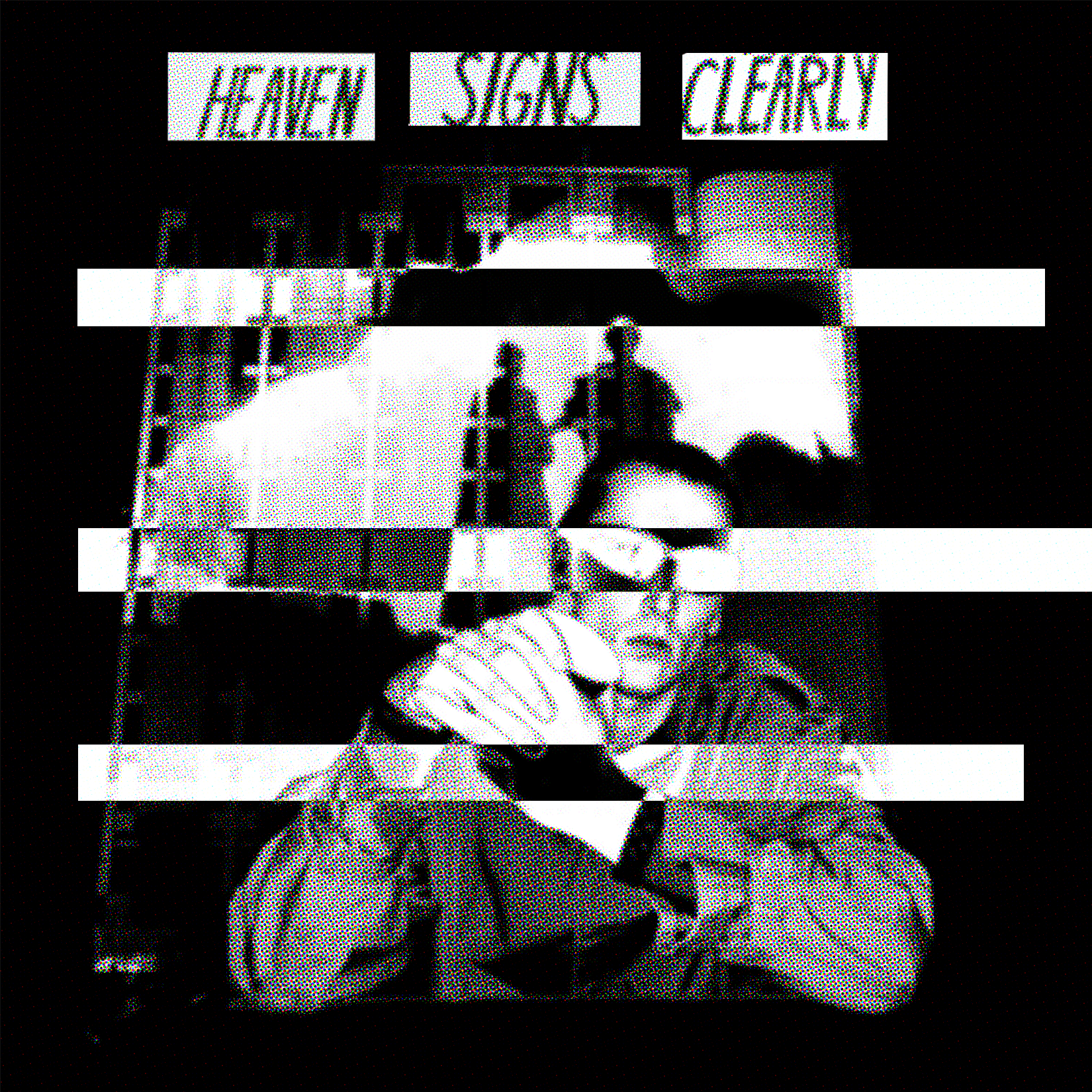
 

Tommy Newport Combines the Quirks of Saturday Morning Cartoons with Broadway Glamour in New EP "Ultra Mango"


Ultra Mango album artwork by Ruby Snell

Midway through February, Kansas singer, songwriter and producer Tommy Newport dropped his psychedelic new EP, Ultra Mango. Throughout his latest offering, Newport guides his listeners into a  hazy funk on songs like “Sweetener,” but also allows himself to become contagiously excitable in more upbeat moments, including the dance track “Ultra Mango” and the catchy synth-pop anthem “Marigold.” The result is an auditory journey that transitions from  sweet and syrupy to rotten within instants; Ultra Mango encapsulates the brightest moments from a young adult life, as well as the darkest ones.

We had a chance to chat with Tommy Newport about the ideas, emotions, and nostalgic experiences which ultimately led to the creation of Ultra Mango. Throughout both its restless moments and its languid ones, Tommy Newport reminds us with Ultra Mango of all the growing up we’ve done, and all the growing up that’s still left to do.

Spencer Nafekh for Also Cool: Ultra Mango is a very different kind of EP because it never sticks to one vibe, and like all your projects, you like to keep your listeners guessing. What kind of music did you listen to growing up? Also, would you describe your listening habits as consistently eclectic, or do you go through phases with what you like to hear?

Tommy Newport: Growing up, I listened to indie rock from the 2000’s and the 2010’s, with a healthy dose of 70’s and 80’s legends: The Rolling Stones, David Bowie, Freddie Mercury, The Beatles, Red Hot Chilli Peppers, The Killers, Dan Auerbach, The Black Keys, Alex Turner, and Morrissey, to name a few. Those are just the core, though… There's so much more than the mainstream sort of iconic names that I consistently listened to. I loved early 2000’s & 90’s rap, R&B, and pop music, too. I have go-to artists that will never change, but I’m always finding new things. 

AC: Your eclectic taste is definitely reflected in your own music, and it seems to me that from beginning to end, Ultra Mango is an exploration of that shaky transition we all have to go through from our teenage lives to our adult ones. Are there any life-shaping experiences from your childhood that really set the tone and inspired the making of this EP? Is Ultra Mango based off of one single experience from youth, or multiple?

TN: I was lucky to have amazing parents that let me live my childhood and teenage life with no hassle and not many rules. This had its ups and downs: I started my career at sixteen, and I was a naive kid. I still am to a degree, but being naive is bliss until you become self-aware. Lots of lessons, and lots to write about. Even if the lyrics to some of my songs are telling the story of a relationship, the underlying story usually uses love songs as a parallel to a real story. Ultra Mango is the story of yin and yang in youth. There’s so much around to influence you at that ageyou are just on autopilot. It takes getting older to really assess your youth. 

AC: I’m not sure why, but when I listen to Ultra Mango I feel as though I am transported into the world of an early 2000’s cartoon TV show. What’s your favourite animated series? If your new EP was a cartoon, which one would it be?

TN: I mean, Ultra Mango is definitely Invader Zim. The parallels are perfect. My favourite series was probably Foster’s Home for Imaginary Friends or Dexter though.

Tommy Newport, image courtesy of the artist

AC: The artwork for Ultra Mango is equal parts surreal and touching, in its own bizarre way. Same with the title: I never thought I’d see the word “ultra” placed beside the word “mango,” and yet the combination feels strangely fitting for your work. Could you elaborate a little more on the meaning behind Ultra Mango’s title, as well as the weird and wonderful artwork that accompanies it?

TN: The EP artwork was inspired by thought processes resembling fruit, in that they can be very colorful, or they can be rotten. Those kinds of contrasting ideas and the rate of time in which thoughts can quickly go from vibrant and colorful to spoiled was a great metaphor for the human mind, youth and growing up.

AC: How do you harness your musical creativity on days where you’re feeling productive? Whether you’re singing, songwriting, or producing your music, are there any specific rituals that you like to partake in before you hit the studio?

TN: I don't have any rituals. I was a very superstitious kid with terrible OCD, so I am surprised now that you ask whether I have any rituals. Then again, making music was the only relief from that, it's like when you fall asleep on a road trip and wake up and you're there. Time spent making music flies by.


AC: Based on the online videos of your passionate live sessions—including your appearance in the internationally renowned YouTube series COLORS—it seems as though performing might be just as important to you as your music; would you say this is true?

TN: Performing is a huge part of it. I think that if you're not an artist and just the average listener, all you see of your favorite artists is them performing. So my idea of being a popular musician as a kid was being on stage or at a festival and performing like it’s Broadway. I'm thinking of Live Aid 1985, those types of things my parents used to show me.

Since we’re on the subject of performance, I just wanted to mention how much I enjoyed seeing you play a bone-chilling Dr. Frankenstein (and his monster) in the recently-released music video for “Shooting Star.” Can you see yourself acting in quirky roles like this for future music videos? I really hope so! 

TN: Yeah definitely, I love videos like that; just so ridiculous. I want to get deeply in touch with my love for films and make some really cool videos in the future. 

AC: It seems as though we’ll have lots to look forward to from you in that case, music and otherwise. Ultra Mango might be the first bit of work you’ve released in the new year, but will it be the last? What else do you have in the works for 2021, music and otherwise?

TN: 2021 will be great…  Grammy nom coming next season.

Tommy Newport

Instagram | Facebook | Spotify

Spencer Nafekh is a tireless reader, writer, editor, and advocate for the written word. With an undergraduate degree in Concordia's English and Creative Writing program imminent, he plans to pursue a Master's specialization in journalism so that he can fully realize his career path. When Spencer is not working away, he is probably listening to experimental music while lost in the world of a science fiction novel.

Instagram


Related Articles
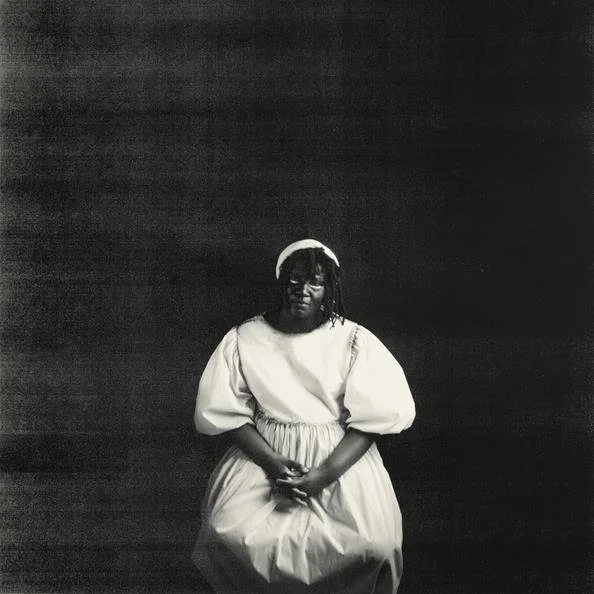
 

Enter La Femme's Neo-Maximalist Nightclub "Paradigmes"


Paradigmes album artwork by Polygon

Paris-based psyche rockers La Femme are keeping listeners on their toes in anticipation of their forthcoming record Paradigmes, out next week on April 2nd via Disque Pointu and IDOL. The LP marks a milestone for the band, being their first release after five years of touring extensively, adding several musical accolades to their trophy shelf (including the coveted Victoires de la Musique award and Gold certifications in France for their first two releases), as well as playing major international music festivals, from Austin Psych Fest to Glastonbury. Formed in 2010 by Sacha Got and Marlon Magnée, La Femme has seen a rise in success comparable to the greats, but remain humbled by the everlasting centrality of their DIY roots. 

The band has already given us a glimpse into the sultry and psychedelic smoking-lounge that is Paradigmes, through teaser tracks “Paradigme,” “Cool Colorado,” “Disconnexion,” “Foutre le bordel,” “Le Jardin,” and most recently “Le sang de mon prochain.” From what we’ve heard so far, we’re intrigued by their clever use of horn sections, DEVO-esque wind-up rhythms, and a sprinkle of cool, laissez-faire nostalgia à la Serge Gainsbourg to present a sound best described as Neo-Maximalist. 

As the title of the album implies, Paradigmes’ narrative is as complex as its grandiose musical arrangements. While the lyrics throughout unpack the many anxieties and frustrations with cultural norms and expectations within Western culture at large, it equally tackles personal afflictions within the human experience — like love and heartbreak, sexual and gendered exasperations and general feelings of depression and nihilism. The band explains that they managed to touch on both existential and intimate themes by tapping into their intuitions, noting: “Maybe it’s easier to write when you are sad or plagued with negativity? The record took on a life of its own when reflecting on our own experiences.” 

La Femme by Oriane Robaldo

Speaking on how the record fell into place, La Femme says that the development and production of Paradigmes was a culmination of experiments, rather than a deliberate realization of a heady think-piece from start to finish. “After we toured Mystère in 2017, the band took break from music. We reunited in 2019 with the hopes of finishing a record, and brought together a bunch of material collected in our hard-drives and chose 15 songs to build Paradigmes. It’s taken a lot of time for us to finish because we are picky on the details.” 

Knowing the band gained popularity by exclusively touring North America before they were picked up by European audiences, I was curious to know if their experiences of the United States informed the cultural critiques within Paradigmes. “Really, we just toured and traveled throughout the US a lot — so yes, the influences and experiences from those memories are definitely present throughout Paradigmes. We specifically commemorate places we’ve visited like Colorado, New Orleans and Los Angeles. But the album also features influences from other countries like Spain and Turkey, as well as three different languages (French, English and Spanish) — so, it’s a world music record in that way. We like the folklore of places and what comes out of them.” 

La Femme by Oriane Robaldo

The ambition of the Paradigmes project is topped with a particular aesthetic crafted by the band. Of the six singles they’ve put out so far, three are accompanied by a music video that takes place in the futuristic “Paradigmes” nightclub. Frequented by a collection of eclectic regulars, such as go-go dancers, cyborg songstresses and intellectuals with an uncanny resemblance to Michel Foucault, you get the sense that Paradigmes is a hang-out where all are welcome. The band expresses that the album’s title track and their song “Disconnexion” were the inspiration behind their fictitious venue. “The song ‘Paradigme’ sounds like a generic, 70s TV show and ‘Disconnexion’ like an intellectual radio show. Combined, these concepts created the set of a fake TV show where all the video clips are connected. At the end, when you watch them all together, it’s going to be a full-length film.” 

At the end of our interview, La Femme lets me in on how they plan to celebrate their release in the most fittingly over-the-top way possible. “We’re going to have the biggest digital party and eat popcorn in front of our computers! The best way our fans can support us is by dropping out, tuning into our record and movie and starting an orgy.” Ça marche, La Femme! 


PARADIGMES

Out via Disques Pointu and IDOL on April 2, 2021

la_femme_cover.jpeg

1. Paradigme
2. Le sang de mon prochain
3. Cool Colorado
4. Foutre le bordel
5. Nouvelle-Orléans
6. Pasadena
7. Lacher de chevaux
8. Disconnexion
9. Foreigner
10. Force & respect
11. Divine creature
12. Mon ami
13. Le jardin
14. Va
15. Tu t’en lasses


La Femme

Instagram | Facebook | Website

Spotify | Apple Music | Youtube

Zoë Argiropulos-Hunter (she/her) is the co-founder and managing editor of Also Cool Mag. Aside from the mag, she is a music promoter & booker, and a radio host & DJ.


Related Articles


Beat-Making, Animal Crossing & More: Loop Sessions Celebrates One Year in Quarantine

 
LS58_ShogoOkada.jpg

Pitbull has competition for his title as Mr. Worldwide, and it's Loop Sessions. The beat-making project has 19 chapters, including Montreal, Toronto, Vancouver, Ottawa, Windsor, Edmonton, Londrina, Bauru, Diadema, Paris, Toulouse, Brussels, Brisbane, Detroit, Milan, and Istanbul, to name a few. 

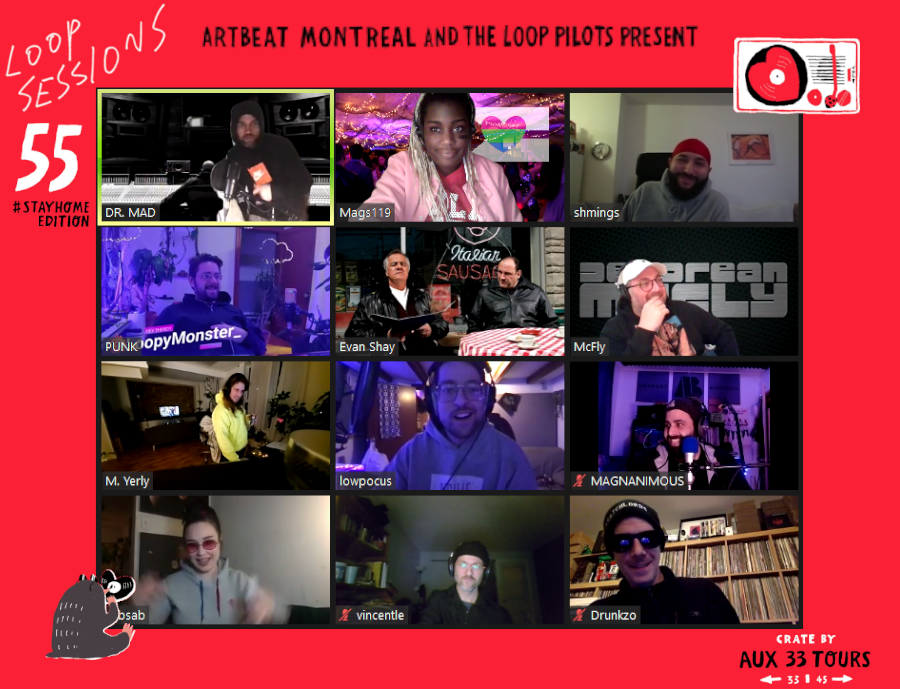
Founded in 2016 by The Loop Pilots and Artbeat Montreal, the project ranges from pre-pandemic in-person events to their recent online expansion with their #StayHome events on Instagram Live and Twitch. IRL activities center around vinyl records, where participants have five minutes to sample their material, which they must use in the evening's production. 

March 24th 2021, marks one year of their online event series, and they're celebrating their #PannyAnni with a month-long Animal Crossing-themed visual collaboration with Mags (aka one of our favourite artists). They're also doing a giveaway with the record store Aux 33 Tours, which features one of our Also Cool tote bags! 

We got to chat with the Loop crew about their event series, community, and worldwide presence below. 

LS58_GIVEAWAY.jpg

Malaika Astorga for Also Cool: How did Loop Sessions get started, and how has it expanded since?

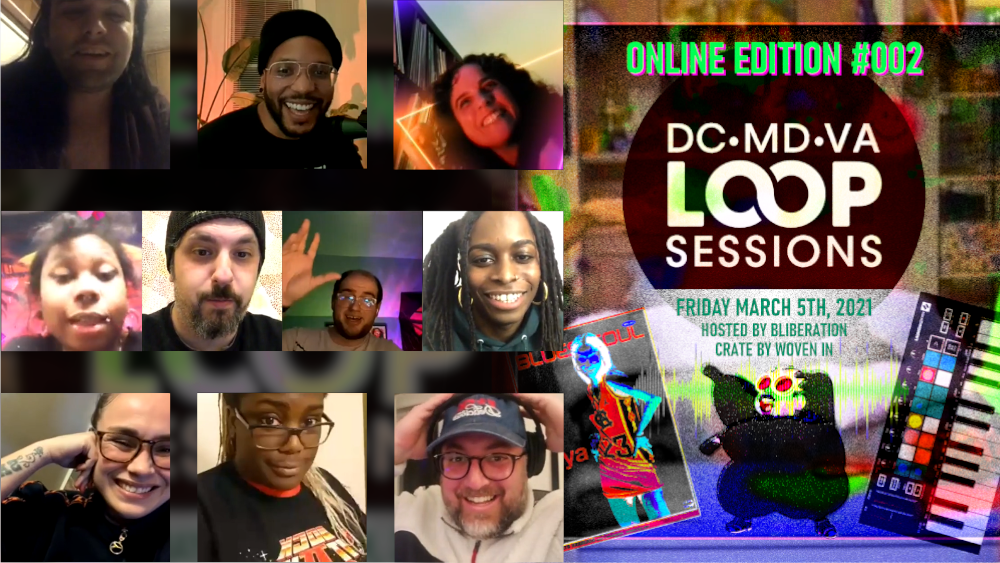
Mags: It all started with a trip to Brazil. Montreal producer and DJ Dr. MaD and his mentor and former high school English teacher, Lou Piensa (of Nomadic Massive), form the duo The Loop Pilots. They were on a sort of tour, where they discovered a weekly event, Beats Brasilis, which would serve as the inspiration for Loop Sessions, powered by Artbeat Montreal.

Magnanimous: They contacted us (Artbeat Montreal) and asked if we would be down to start a recurring beat-making gathering, and the rest is history. It has expanded very organically since, either from people who participated in Montreal and brought it back to their hometowns or people from abroad who reached out to us. We now have almost 20 chapters.

shmings: After the first ten or so editions, Mad was busy with law school, Lou was in the middle of moving to Brazil, and ABMTL co-founder SevDee was getting ready to be a father. I stepped in on the administrative side so Mark wouldn't have to carry the operation on his own.

In the time we've been putting on the event, we've expanded to almost 20 cities. The growth has been exponential, and we have more chapters preparing to join the fold.

2ACLS_Advent 9.png

Also Cool Mag: The Animal Crossing graphics are emblematic of this past year in quarantine. How has Loop Sessions allowed you to stay connected? Tell us about one of your favourite memories from this past year.

shmings: The concept came about when I was brainstorming with Mags, who I credit with coining the term #PannyAnni. As a way to commemorate the trying year we've all had, to reinterpret our flyer mascots as Animal Crossing characters is peak zeitgeist. Don't be surprised to see them go up as NFTs in the near future.  

That we were able to continue gathering with our fellow creatives twice a month during confinement, albeit online, helped keep many people sane, myself included. I've only recently started submitting my own beats at Loop Sessions. I've been notoriously reluctant to share my amateur musical sketches, so to be able to do so among my extremely talented peers has contributed to pulling me out of my shell.

We have an amazing community, one that's supportive and celebrates people from all walks of life. It's beautiful.

Magnanimous: Our online editions have been an interesting way to get to know our community better. We get to have one-on-one conversations that were not as common in the IRL event format. One of my favourite Loop Sessions memories of the last year was when I decided to host with my hair down and sunglasses, which caused the participants to get really creative with their outfits.

Mags: Loop Sessions was very instrumental for me in staying connected to the beat-making scene, as well as the friends I made through it all those years ago (namely 2013). Because of my arduous immigration journey, I had only been back to Montreal from the US a handful of times, and only one of those times coincided with a Loop Session. I used to attend in person pretty regularly, having missed a few in the beginning. But then my LS contribution skipped from session 16 to session 31 in August 2019. When they announced they'd be going online, there was no way I was missing my chance.

I'd say my favourite memory has ironically been wiped from the web due to an aggy algorithm: it was at LS #48 for Halloween and I was the crate provider. This session saw the birth of a new alias for our then-host Magnanimous, who is now affectionately referred to as Spicy Mark. Now one of many new in-jokes, the spice emoji has become emblematic for the online Montreal sessions!

Spicy Mark

Spicy Mark

AC: Loop Sessions is seriously coming for Pitbull's place as Mr. Worldwide. How has the project grown to be so global?

Mags: Word of mouth typically. Most of the global chapters were founded before the pandemic, so lots of folks from other places had attended at least one session and asked to bring it back to their hometowns. Loop Sessions DMV is one of, if not the first chapters to be founded during the pandemic and debut online. 

shmings: Loop Sessions was international from the get-go. One participant took it to Brussels; another brought it to Vancouver, and so forth. Before we knew it, we had chapters across four continents. 

To me, the most important move we made internationally was having Beat Brasilis rebrand their event as Loop Sessions São Paulo. It was important for that association to be cemented because we've always credited the original source. By adopting the name, they acknowledged us. 

I'm still holding on to the hopes we'll be able to tour this global circuit we've assembled. Fingers crossed!

Snapshot_21-03-12_21-56-39.png

AC: Can you tell us about the newest chapter, Loop Sessions DMV. What are the differences between the two?

Mags: The main difference I've observed is that, because Montreal is already so small, many of the participants, even from the beginning, knew each other or had at least heard of each other. The online version allowed for a more one-on-one focus (over the IG sessions) with the chat serving as an amicable peanut gallery. It's allowed us to get to know one another on a more personal level, not just artistic. Whereas with the DMV chapter, it's almost all new to everyone! Many of the participants had not experimented in sample-based production before, which allowed them to step out of their comfort zone.

On top of that, many of the artists don't know each other at all! So this is allowing us to bridge a few gaps in the underground music community of the DMV, which is something of a tri-state metropolitan area, so it's a pretty wide net we've cast. Our host B. who is also new to Loop Sessions does a great job of encouraging folks and really enjoying all the different beats. It's been really wholesome so far, and you're all invited to the next session on April 2nd!

ACLS_Advent 9.png

AC: What are some of the ways that Loop Sessions keeps the scene connected?

Magnanimous: Since 2020, we are doing two online events each month, which provides the space for the community to exchange and interact, both musically and personally. We also have a Discord where people can connect between events.

Mags: With the online editions proving to be somewhat more intimate, people have been less shy about striking up collaborative partnerships and even friendships through the web. A few recent examples of this are the new song and video released by MC Kayiri, produced by Sabrina Sabotage. The original beat was created at LS 50 and selected to be part of a cypher at the Hip Hop You Don't Stop festival in late November 2020, of which Kayiri was on the bill. More recently, a beat produced at LS 48 by Rekha made its way to Télé-Quebec just a few weeks ago on the new music competition La Fin des Faibles.

LS52_Spice_ShogoOkada.jpg

AC: Tell us about some of the artists you've worked with for the project.

shmings: The most crucial addition to the Loop Sessions team has to be Shogo. He's responsible for our wholesome visual style. I can give him a theme, a colourway and a silly reference, and he'll turn in this vibrant, playful artwork that's really a lot of fun. Working with him is a pleasure.

Magnanimous: The list is very long, about 40 to 60 beatmakers from here and abroad that submit beats each edition. Salute to every one of them!

Each second event of the month, we have a guest crate provider, and in the last year, we had the pleasure of having people like DJ Kemo from the Rascalz, Scott C and Urban Science.

Mags: As the founder of Loop Sessions DMV, I enlisted the help of my dear friend S. Sweet, bandleader and bassist of DC-based band Black Folks Don't Swim?, as well as Richmond-based collective Grimalkin Records (of which Backxwash is a former member). Sweet is the one who pointed me in the direction of Bliberation (B. for short), a producer, DJ, and craftsman. I went with my gut feeling: out of three or four names I was given, I chose B. simply because they had Hua Li as a mutual, the only one with a Montreal connection, however small. It was a sign I couldn't ignore, and I'm so glad I didn't because everyone loves him!

ls55cap.png

AC: How could someone get involved with the project?

Magnanimous: Check our Instagram and Facebook pages for the next event, sign up and get involved! Follow us on Twitch @loopsessions, where our events are now being broadcasted.

Mags: Follow your respective chapters on Instagram (the one platform each chapter is presently on), come participate or sit in on a session, and if you're so inclined, hit us up if you have a cool idea for a crate! If there isn't a chapter near you, everyone is welcome to attend any of the chapters; it's a global community after all, and the pandemic has only emphasized that by virtue of the online events.

shmings: Loop Sessions are open to the public. Whether you make experimental electronic music or '90s boom-bap, all styles are welcome. 

The aim is to have as many people experience the joy of making music and sharing their work in a communal, non-competitive atmosphere. We all have to start somewhere, and for many, Loop Sessions was the first time they manipulated vinyl records or sampled. Some even made their first-ever beats at a Loop Sessions event. The online iteration of the event makes it that much more accessible. No matter your skill level, our community will receive you with open arms. 

LSDMV002_YT.png

AC: What's the best way to support Loop right now?

Magnanimous: The best way to support is to participate and tune in to our broadcasts. Follow us on social media and spread the word!

Mags: Follow us in the DMV on all our socials at linktr.ee/loopsessionsdmv, we're also currently accepting donations to support our SoundCloud at streamlabs.com/loopsessionsdmv 

shmings: Check out our #StayHome playlists on SoundCloud (https://soundcloud.com/loop_sessions), where we've amassed over 1200 productions for the Montreal chapter alone. Share the music you love with the people you love, and when you're ready, come make a beat with us. 


Malaika Astorga is the co-founder of Also Cool. She is a Mexican-Canadian visual artist, writer, and social media specialist, currently based in Montreal.


Related Articles
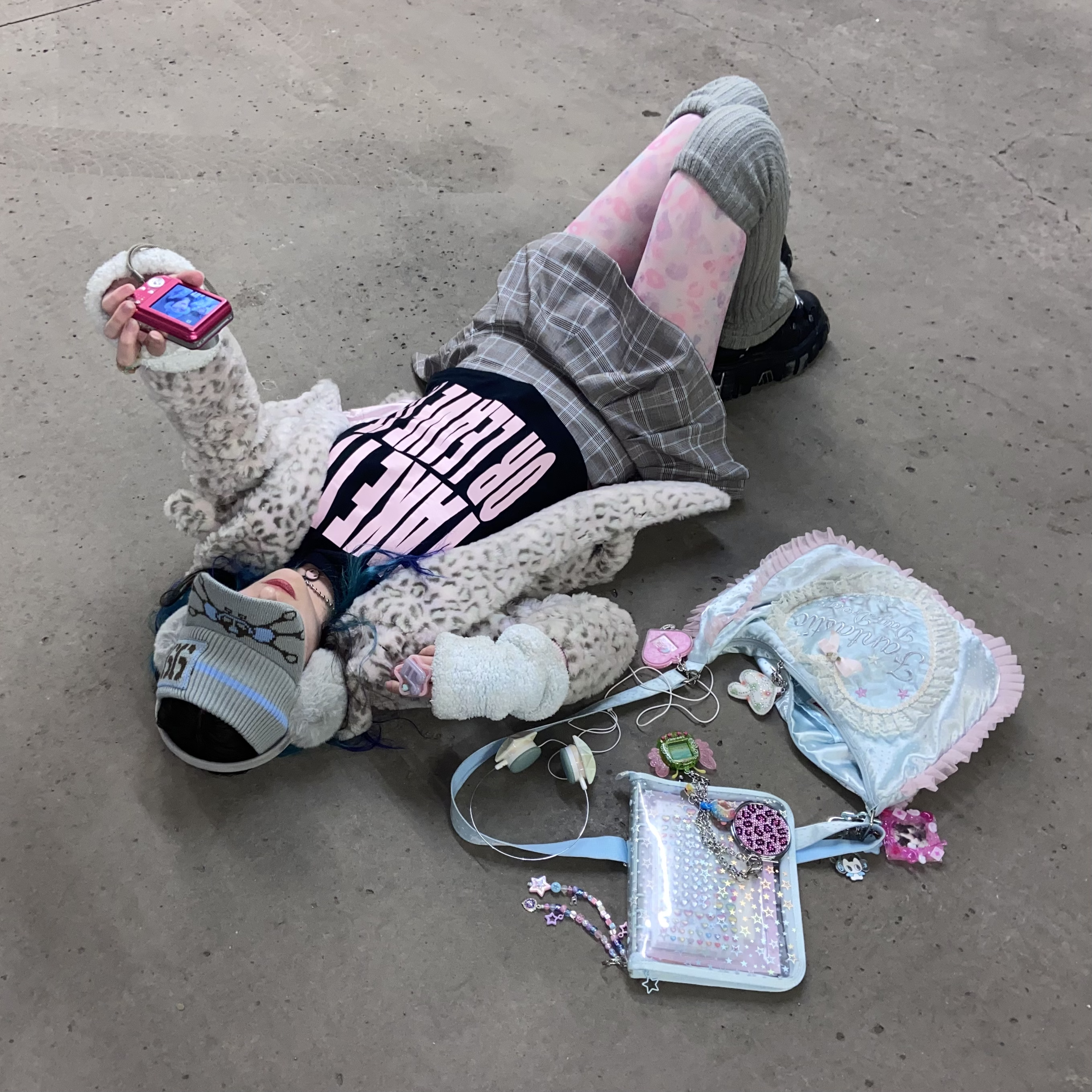
 

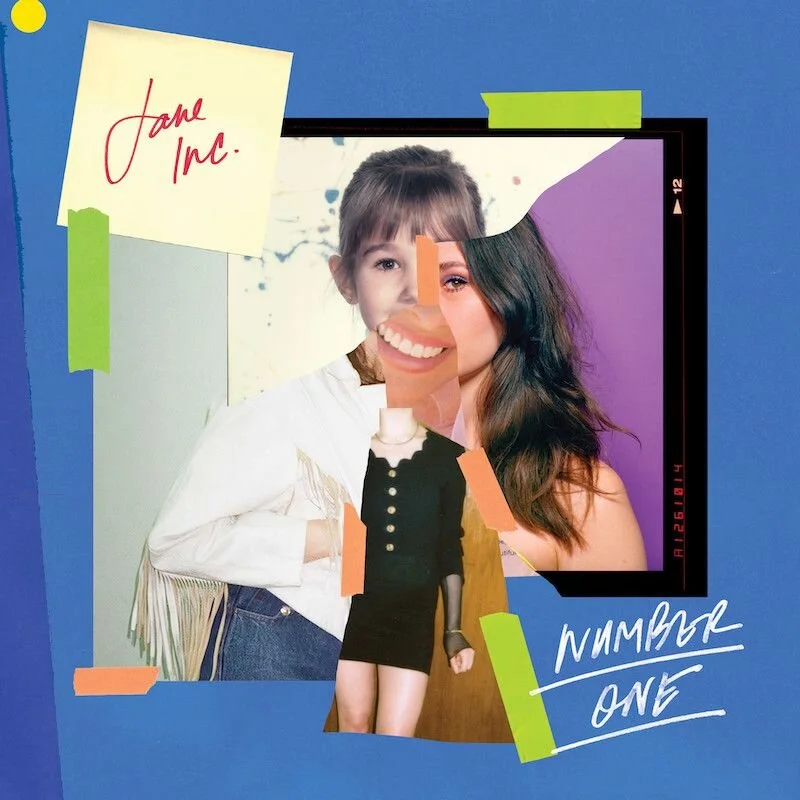
In Conversation: Carlyn Bezic Talks Taking Up Space On and Offline with New Project Jane Inc


Jane Inc by Andrew McGill

What role do you play in today’s social media rat-race? Are you an observer (always monitoring, never posting); a creator (sharing content related to you and your interests); a critic (engaging with and commenting on said content), or; a luddite, in the sense that you’re disenchanted altogether and logged off (and out) forever? Whatever your involvement in whichever form of feed Discourse™, one’s stance on social media translates as a fraction of the self — sometimes, in more ways than one — across online spaces. These curated extensions of the self are of particular interest to Toronto musician Carlyn Bezic, and are given centre-stage in her new solo project, Jane Inc

Known for her involvement in acts like Ice Cream, Darlene Shrugg and as a touring member of US Girls, Bezic realizes years worth of side-gigged musical experimentation as Jane Inc. Building off samples, break-beats and Ableton tutorials, Jane Inc’s debut Number One is out on Telephone Explosion Records March 19th, and serves as a reminder that Bezic is no one-trick-pony. 

What started as layering bass, guitar, synth, and vocals on top of drum breaks and samples has now transformed into the dance-machine that is Jane Inc, with Bezic as its ring-leader. With the help of recruited support from Toronto recording engineer and stalwart Steve Chahley (Badge Epoque Ensemble, US Girls, Ben Stevenson) to coproduce, the duo recorded live drums performed by Evan J. Cartwright (US Girls, Tasseomancy), saxophone by Nick Dourado (BUDi Band, Aquakultre, Fiver) and wurlitzer by Scott Harwood (Scott Hardware) to marry Bezic’s hypnotic, cyber reveries and glittering grooves.

Leading up to her release, I got the chance to chat with Bezic on taking the reins with her latest musical venture, and how she dissects the tensions between the self and the ills of today’s digital climate on her anticipated release Number One.

To open our conversation, Bezic tells me about the origin of Jane Inc, which she explains was inspired by stringing together a myriad of concepts. “The name was born out of a few things. My middle name is Jane, so it’s kind of about me in a way. But, I also liked Jane as in, Jane Doe… Someone who is a blank ‘woman’ figure. ‘Inc’ also plays on my approach to the writing and recording process, where I thought of [the project] as my own little company where I’m playing a bunch of different roles, you know?” 

Bezic elaborates on the shapeshifting quality of Jane Inc, asserting that it’s personified more as an artistic mindset, rather than a traditional alter-ego. “[Jane Inc] is like a mental trick. It was helpful for me to view, say, a baseline as something other than a direct reflection of me — Carlyn, as a human being — that supposedly expresses to you exactly who I am. This framework was informed by an explicit exploration of how what you do online creates a new being removed from reality — which can be both liberating and also terrifying.” 

From here, our conversation shifts onto the topic of how artists in particular struggle to exist, both in relation to survival and relevancy, without having some kind of online presence. Noticing Bezic comments on this in her songwriting, I ask her how she navigates the difficult position of wanting to be critical of this phenomenon, while also having to be complicit in it. 

Sighing in a way that feels relatable, despite the lag of our Zoom call, Bezic states: “I mean, I find it to be a real mind-fuck.” 

Jane Inc by Andrew McGill

“The way I personally engage with the Internet isn’t very healthy, I think. I’m 100% addicted to the Internet, even though I know it’s really insidious. I’ve been experimenting with posting more and showing myself, which feels strange and disingenuous because our engagement habits are so intrinsic to our perceived empowerment. When this is tied to the thing you’re creating… it becomes even more complicated. [My music] isn’t then just an extension of who I am as a person, but also a product, and I become its advertisement — even though I’m just a human being. It’s inescapable because it is so essential for my job, and I’d rather have some control over how I am perceived by handling my social media presence myself.” Continuing on this notion of how she remains purposeful in navigating the maze of social media, Bezic comments: 

“Intentionally taking up online space represents a growth for me. I’m trying to be more comfortable sharing [my music] and being myself, and it feels similar to what it would be like in real life and during a performance. That being said, when I think about it deeply, this comes at the expense of commodifying myself and the art that I’m making. So, like I said, it really is a necessary beast.” 

Through listening to her teaser tracks from Number One, I noticed Bezic’s lyrics air her frustrations with the physical world in parallel with her commentary on social media. Her single “Steel” struck me as an observation on how identity is manufactured by our physical surroundings; through mundane, daily activities. I was curious to know if the sentiment I was picking up on was informed by Bezic’s experiences with the fast-paced rhythm of Toronto.

“Toronto is a city that hates creative people. We are also seeing in a really real and horrifying way how it also hates low-income people, unhoused people and racialized people. [‘Steel’] was born out of a very complicated relationship I have with Toronto, as I grew up here and have lived here the majority of my life. Though Toronto has a very strong [arts] community and is full of creative people, its bureaucratic, big city energy doesn’t allow for any sustainability. It hates itself. Even before the pandemic, I felt like I had no energy. The city was never giving me energy. Everyone is working to live, or living to work, the places [we] love are closing down and rents are skyrocketing. You know, the same old story as everywhere else. The opportunity keeps on getting smaller and smaller,” Bezic laments. 

Bezic’s outlook took an upward turn towards the end of our interview, where she told me about looking ahead and her plans for the future. 

“Though I complain that Toronto sucks, there are a lot of musicians here who really inspire me and push me forward. I am excited, and feel lucky to have collaborated with them [on this record]. I’m looking forward to eventually having a band at some point and figuring out a nice little setup for doing livestreams or something lowkey. Other than that, I’m already writing the next album, which I’m hoping to release in the next year.” 

Jane Inc by Andrew McGill


NUMBER ONE


Out via Telephone Explosion Records on March 19, 2021

8fdEufxb.jpeg

1. Gem
2. Steel
3. Faceless, Bodiless
4. Dirt and The Earth
5. Bloom Becomes Me
6. My Oldest Friend
7. His, Mine
8. Obliterated

All songs written and performed by Carlyn Bezic


Drums and Vermona by Evan J. Cartwright
Saxophone on "Bloom Becomes Me" by Nick Dourado
Wurlitzer on "Faceless, Bodiless" by Scott Hardware
Mixed by Steve Chahley and Anthony Nemet
Produced by Steve Chahley and Carlyn Bezic
Toronto, 2020


Jane Inc

Instagram | Bandcamp | Spotify

Zoë Argiropulos-Hunter (she/her) is the co-founder and managing editor of Also Cool Mag. Aside from the mag, she is a music promoter & booker, and a radio host & DJ.


Related Articles


Premiere: Sisi Superstar Reclaims Emo Culture with "Demon Tales"


Photo credit: Ariana Molly

Reject modernity, embrace tradition. Sisi Superstar is queering emo music with her poppy, goth, 2000’s alt-rock-infused debut EP, Demon Tales. From co-founding the queer party series, Unikorn Parties, to her popstar debut, dive into Montreal’s glamorous underground drag scene with Miss Spooky 2021, the queen who creates her own reality, building her own spaces when gatekeepers try to stop her.

The scene kids are coming to take their music back. We talk our favourite early 2000’s melodramatic rock bands, the challenges of writing your first album, owning our skinny jean-wearing high school looks, call-out the high school bullies who turned emo for aesthetics, and analyzed the science behind social media’s ever-present based-cringe ratio in the all-revealing interview below.

Maya Hassa for Also Cool: Let's start with the story behind Demon Tales.  How did the album come to be?

Sisi Superstar: I first met my producer at a party I was hosting over a year ago.  At that time, I was trying to start a band with my friend Awwful - we started working on a few songs, but it was sounding very raw to me.  I had never really sung before - and I didn't know much about music production either. I always want to put the right amount of effort into the work I put out – and that project just felt rushed. I was worried it would become "that one drag single" I release - I didn't want that to end up happening.

Right before the pandemic, I met Pierre Crube at Muy Muy, which is a Mexican party series that we also host in Montreal. It’s funny, I didn’t recognize him at first, but he was in a band that I used to listen to as a teenager called Numéro#. They were really popular in the French music scene - I even had photos of them in my locker and went to a lot of their shows in high school. I was obviously wired when I realized who he was. It was 6:00 AM, I was in a look, talking a lot, but not making much sense - there's a certain point during the night when you start making insane plans with people, knowing that in reality it’s totally not going to happen.

We started talking about music, and he was just like, “Yeah, you should pass by my studio, we can record something, test the waters.” At this point I’m thinking, “Okay – we’re not really friends yet, we just met at this party.” It was super intimidating to go there, especially since it was my first experience making music with a stranger. Afterwards, he sent me some beats and I started writing lyrics for a song that ended up on this EP.

“Icy Tears” is the most lyrically complex song I wrote - it was my first single, so I had a lot to say. In my experience, when you start a new medium, you just have so many ideas. I had so many things to recount about my experiences, since I first moved to Montreal at 17, to now - over ten years later. The title, Demon Tales, is just a play on words – the songs are tales of demons past.

AC: This album is giving me Lady Gaga, a little bit of synth pop, a little bit of early 2000’s goth vibes – what sounds were you channeling for this release?

SS: I have two sides of me - I really like experimental and hardcore electronic music, and I also like rock and alternative. Since this is my first EP, I didn’t want to get too distracted by my music taste, and instead, work on finding my voice and deciding what sounds good. A lot of people don't necessarily produce the kind of music they listen to on the daily - expressing whatever is inside of you matters most.

Demon Tales is a mix of early 2000’s rock moments like Linkin Park, Avril Lavigne, and melodramatic alt-rock bands like Sum 41 and Billy talent, mixed with electronic music, new wave, and a bit of goth in the style of Crystal Castles. If you mashed all of those up and turned them into a pop song, that’s the sound I’m going for. I would call it emo pop.

My aim was also to reclaim emo music. With this new trend of people jumping on the emo and scene aesthetic bandwagon, it often seems like they aren’t genuinely part of the culture. If you were an emo or scene kid in my generation, you would have had to endure a lot of judgement for looking that way. It’s great to see so many people appreciating it now, but this has consistently been my lifestyle for years. People used to bully me for wearing skinny jeans, acting feminine, and wearing nail polish – now it’s considered “aesthetic.” I'm fucking reclaiming emo music – but I’m making it really poppy and queer at the same time.

Photo credit: Ariana Molly

 AC: You're a visual artist, a DJ, a drag artist, and a makeup transformation legend. How did the start of your career as an artist look like – and how did you end up getting into the club scene?

 SS: My medium has always been a mix of illustration and painting, but when I started going out a lot, I was consistently throwing looks. I’d wear colorful contact lenses and makeup, but I wasn’t necessarily going for the full drag moment - yet. I was experimenting with fashion - and then I think it just grew on me. One day I was like, “wait, let me try on that wig.”

The first time I did drag was about five or six years ago, when I went to the Dita Von Teese show in Montreal. I tried dressing more feminine and burlesque, took a glamorous cab ride with a friend, and realized I really felt in the moment – I loved being femme-presenting. 

It all came together when I started throwing my own events. I was already so involved in the party scene, I thought maybe I should learn how CDJs work, so I decided to give it a try. I was experimenting with drag around that time too, but not necessarily performing – I didn't feel like I had a place at the bars in the Village to actually perform there.

 That didn’t stop me, though - if I didn’t have a seat at the table, I had to build my own. That's what happened with Unikorn parties. Awwful was already DJing and throwing Glitter Bomb, so they showed me the ropes - and that’s how Unikorn Parties was started.

Coincidentally, Ariana Molly invited me to her studio for a shoot one day, and someone was reading tarot cards there. Without telling them much about what was going on in my life, they told me I was juggling way too many things – and they were right. I was DJing, doing drag, making art, throwing parties - doing everything at once.  

They told me that I was going to find a mentor who would help bring all of that together. At the time I couldn’t really imagine how all the different things I was doing would end up working out, but after meeting Pierre, I realized this was it. I could perform in drag and express my creativity through music and visuals. Sisi Superstar became my pop persona. It took time, but now I realize it’s all aligning.

Photo credit: Ariana Molly

 AC: You said you wrote “Icy Tears” when you were feeling inspired in Mexico City – what was special about being there?

SS: I was there for a festival called Backdoor - a queer party series that happens in Vancouver, Toronto, LA, and Mexico City. My friend Sam Blake introduced me to the organizers when they came to Montreal, and I ended up flying out to Mexico for their next event. I loved it - being in a new place gives such a boost to your confidence. People in Montreal are used to seeing me around the nightlife scene. It’s a small city, so we're like a big family here – but in Mexico it was really popping. People get excited when they see a fresh face – they’re not jaded. That energy was very inspiring.


AC: The first single you released, “Purest Evil,” was recently remixed by D v D, a DJ/producer in the Montreal party scene. How did you end up collaborating?

SS: I first knew D v D’s music through Soundcloud. He came to a Unikorn party once – and I just knew I had to go talk to this person. I ended up going to a few of the events he was DJing – parties in the basement of La Sala Rossa – and I just thought he was a really good DJ and producer.

Our music tastes are very similar – we both love a hyper pop moment, EDM, hard dance, all that. I wanted him to do a remix because Demon Tales isn’t very dance-y, it’s more introspective headphone music for when you’re taking the metro and you’re “having the feels”. I wanted to make a remix that was closer to what I would actually play in a DJ set next time I do my goth night.

@bubblebadbitch

 AC: You’re also a TikTok star. How is that working for you as a platform to promote your art?

SS: I haven't gone viral or anything, I'm just enjoying TikTok more than other social media platforms at the moment. I actually got put in “TikTok jail” recently - I got flagged for wearing a bikini with my breast plate. It was just too sexy, but it also felt deliberate, because I’m a drag queen and the algorithm is very selective. It's less welcoming to queer bodies and marginalized identities - especially targeting sex workers. When an influencer posts suggestive content, their posts are treated differently. A similar thing happens on Instagram – if you have a blue Verified check, your posts are less likely to get reported. I'm basically reported on all social media, so I’d rather just focus on whatever platform makes me the happiest.

The TikTok community is very cringe sometimes, but it’s also a lot more authentic. It’s not about presenting an image for people; it’s about posting the stupid shit showing who you really are. Rawness is valued over curated content – you won’t spend hours modifying your appearance before posting it on there – it’s meant to be a live moment. More importantly, it's usually meant to be a joke. Social media can get pretty dark sometimes, so it’s nice to have this constant source of comedy. I can spend an hour on Instagram and not laugh, but if I'm on TikTok, I'm going to laugh – like, a lot.


AC: The based-cringe ratio is so real - I’m obsessed with testing how far I can go before crossing the line. Navigating the algorithm is especially difficult for artists, because you have to master a lot of different platforms, including Soundcloud and Spotify, to get the views that you deserve.  

SS: It’s hard – I keep them all. I can’t put all my eggs in one basket.


Support Sisi Superstar on Bandcamp and listen to Demon Tales on Spotify below:

Produced by @pierrecrube
Mix/Master by @lebeaudet
Photos by @arianamolly
Graphic by @casketnap

Listen to Demon Tales on Spotify. Sisi Superstar · Single · 2021 · 6 songs.


Wanna Be My Daddy? Mystic Peach Talks Sexuality, Creative Process & More

 
Via Mystic Peach

Via Mystic Peach

Heavy-hitting and spellbinding, Mystic Peach's track "Wanna Be My Daddy" is a grunge-rock reminder to not give a fuck about what others think of your sexuality.

It's an anthem for every small-town kid who wants to feel comfortable and confident with their identity, despite the judgements of others. We got the chance to chat with the band about the track below.

via Mystic Peacj

via Mystic Peach

Malaika for Also Cool: Hi! Hope you're all holding up the best you can. How would you describe yourselves to those who don't know you?

Curtis for Mystic Peach: I don't think we've ever sat down to think about it, but here's a list we've gathered in the past few years- Melodic Pop, Psych Pop, Psych Rock, Space Rock, Noise Rock, Dwayne "The Rock" Johnson, Grunge and some others. So take your pick, but, at our last show, the sound engineer called us Psych-Punk, which we like.


Also Cool: Let's get into your origin story. How did you all become friends and get into music? 

Mystic Peach: Curtis and Joe went to the same school and had worked on a few projects together throughout the years. We went through many phases that were all enjoyable, but looking back, it was all very confusing. One minute we were recording loud droney stoner music, and then the next week, we'll be recording Mac DeMarco-Esque guitar pop. I don't think either of us knew what we wanted. 

I just felt like we were going nowhere, and I wanted to actually find the strengths in my voice and guitar playing. I vanished for a while, and not many people could get hold of me unless they actually came to my house. 

Shortly after the vanishing trick, Jimi and I met down at the pub through mutual friends and started talking about music and bands. I was astonished that Jimi wasn't in a band. We both knew of each other through previous bands, so it was a chance to woo him with my songs and get things going. After two years of not really speaking, I got in contact with Joe to ask if he wanted to give this project a go. To my surprise and with little reluctance, he said yes. 

Now we're all friends doing some pretty cool stuff and playing music that we like. We're very lucky that we actually like each other.


AC: What's the local music scene like where you're from, and what role did it play in getting you into music-making? Were there any venues or spaces in particular that made you want to be a part of the scene?

MP: I would say it's healthy, there's plenty of interest, and locals are willing to give bands a listen. I wouldn't particularly say there was a specific local scene we wanted to be part of; perhaps we just wanted to shake the whole thing up a bit. I think as long as you get on with fellow bands and those in the music community making things happen in the city, that's all that matters, really. 

We have venues like Joiners, Heartbreakers and The 1865 in Southampton, and Wedgewood Rooms in Portsmouth. We wanted to play them after seeing some of our favourite bands perform there. The promoters are always looking for new music, which keeps the city's music scene in a good state.

AC: I've noticed during the quarantine that people seem to be more and more comfortable with their sexuality and sense of self. You've mentioned that the track tackles the discomfort that others can feel because of your sexuality. How did you come to terms with your personal identities and find confidence in that part of yourselves?

MP: I never really thought I was doing anything that grown adults would need to comment on. It seems that some people bring that 'school kid mentality' into adulthood. But at the end of the day, who cares? You do you. If someone has a problem with whatever it is about you, let them simmer in their own discontent. We all have a very honest set of friends that like each other because we connect... Not because we have a mutual hobby of being a dick head.

AC: How do you find inspiration for your music? Who and what are you inspired by?

MP: We've all put our two pence in on our sound through individual influences. Anything from shoegaze (My Bloody Valentine, DIIV, Slowdive) to punk (Sex Pistols, Black Flag) and 60's garage to 70's rock. More recent influencers are the likes of Yak, FIDLAR and Peace. 

As for subjects, it seems to be based around mental state and social commentary. Sometimes it comes from personal experiences, what we've read, or sometimes just people-watching. Cult films (The Warriors, Pulp Fiction, Clock Work Orange) are a big part of this band too!

AC: Delving into some pre-pandemic nostalgia real quick, what's your favourite memory from playing live/being on tour?

MP: Our most recent and last pre-pandemic memory was our tour with Temples in France in March. It got cut short after three shows, but we all loved it. It was the most fun we had, and we savoured every moment. Playing in Paris to 1,000 people was a highlight and definitely something that brought us closer together because we're cute like that. 

But all in all, just being able to rehearse when we want. Going to the pub, going away to random places together, and getting drunk in hot tubs or in the middle of a field. We miss each other, and I'm sure that's the case for most bands.


AC: Who are some local artists or creative friends who you think deserve more hype?

MP: Defcon Lawless. Unreal talent, fantastic lyricist and incredible music taste. We could talk to him for hours about music and life. Originally from America, but he's ours now; they can't have him back.

Also, our long-term friend and talented artist, James Digweed. He's done art for our last two singles and for our upcoming EP. A true weirdo, a visionary, and we truly love him. 


AC: What are you looking forward to this year? Any upcoming projects?

MP: We're looking forward to releasing our EP this year and having more than just singles out there. We're unsure of timing due to the pandemic, but we're making plans as we speak. We're crossing our fingers for before summer, but we also know that it might happen later than that. 

If the virus starts settling down here, it looks like autumn could be a pretty busy time with shows and rescheduled releases. Intense but exciting for us. An act at our level relies on live shows so much for engaging with new & existing fans. No better feeling. Can't wait to get on that stage again!

AC: Closing out here, is there anything you want to shout out or promote? 

MP: Be safe, be kind to each other, don't shit on each other's opinions and respect people's views even though they may be different from yours. Marmite is better than Vegemite, and if you disagree, then you are wrong.

Thanks for speaking with us, and we're over at @mysticpeachh on all socials. 

Watch Wanna Be My Daddy? below

Malaika Astorga is the co-founder of Also Cool. She is a Mexican-Canadian visual artist, writer, and social media specialist, currently based in Montreal.


Related Articles
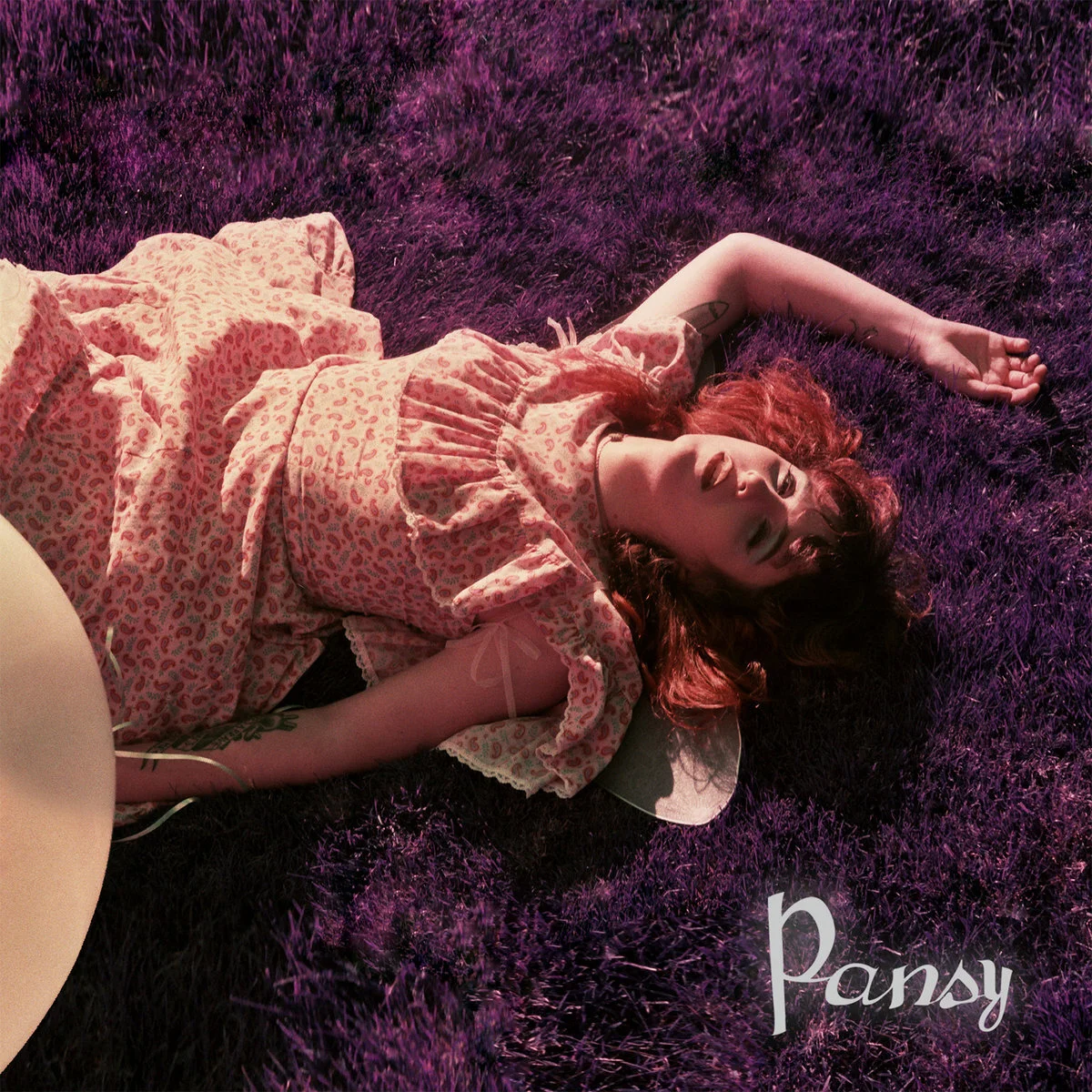
 

Premiere: punctï Makes a Case For Colouring Inside the Lines With "Surprise"


punctï is the most intriguing practice of musical constraints since Brian Eno’s Oblique Strategies (or at least we think so). Turning the concept of limitation on its head, multifaceted experimental artist Laura Bardsley (and her alternating cast of one-off collaborators) strive(s) to embrace a “less is more” mindset by creating an album once a month following the same set of guidelines: composition, recording and overdubbing are done in the first, single session, and; post-production is done in another session, who’s duration is roughly the same length as the first. By cultivating a conceptual environment that aims to stretch the possibilities of performance and improvisation, Bardsley captures the “noise, meditation and inner turmoil” at the core of “Yes-Wave.” At the same time, Bardsley explains that “[the] project is all about reclaiming that childhood joy and wonder, without all the learned insecurity.”

Today, punctï premieres her 48th release, Surprise. In 15 tracks that graze the minute mark, punctï paces, yo-yos and chips away at the question she asks herself time and time again: “How do you feel today?” We had the chance to catch up with Bardsley on tinkering solo with her sampler, the restlessness of late-capitalism, and why Tiffany Haddish is “nobody’s bitch” to celebrate the four years of punctï. Check out our full interview below.

Zoë Argiropulos-Hunter for Also Cool: Hi Laura! Thank you so much for chatting with Also Cool. Before we get into the specifics of your latest album Surprise, let's talk about the punctï project. What inspired you to pursue such an ambitious endeavor? In what ways has working within the punctï framework impacted your artistic process, as a musician or as a performance artist?

Laura Bardsley: punctï started 4 years ago on a rather dejected Valentine's Day evening. I had a four track app on my phone and decided to make at least four tracks with the app in one night. After releasing my first album, I realized that it would be super fun to continue making albums in very short time-frames, especially if I collaborated with other artists. [The constraints of punctï] allow my collaborators and I to flex our music muscles every month, and I’ve learned enough about producing, mixing and mastering that I’ve realized there is so much more to learn.

I learned that Wile E. Coyote and Road Runner's relationship was built on a set of rules, just like punctï. It's really illuminated the endless possibilities of what is possible under a specific framework. For performing, I channel a disillusioned office worker, and it's a blast because: a) I've never worked in an office, so it's an acting challenge, and; b) It's a meld of performance art, music, choreography and comedy; sincerely the most fun I can have in one performance.

Also Cool: On that note, you've spoken to how your work channels and critiques feelings of restlessness and inadequacy within the constraints of late-capitalism. How has your perception of, and relationship with, these concepts changed and impacted the spirit of punctï with the dawn of COVID-19 and working-from-home?

LB: My perception of these concepts has only been cemented by the onset of COVID-19, but with more hope for change and growth than ever before. We're at a point where the whole world is experiencing this restlessness and these feelings of inadequacy. Somehow in our shared anxieties, there is a general understanding that this system is worn out and in need of replacement.

I've been doing remote sessions with my collaborators for most of the pandemic, and it definitely is more of a challenge to get into a creative, open and non-insecure mindset. Thankfully, we have the internet and all its gifts… Although I do truly prefer working with people IRL, and will cherish those sessions when they come back.

AC: Something I noticed when studying the punctï project as a whole is that all your collaborative albums reflect different levels of spontaneity. Can you speak to this notion of "Yes-Wave" that you and your collaborators embrace, and how you embody its mindset throughout your production process?

LB: I attribute the spontaneity to the time constraints and spirit of the project: each album is a record of my collaborators and I are at in that moment of our lives. What is grinding our gears right now? What makes us giggle? What makes us nostalgic?

One of my rules for punctï is that if you really like what you're playing, really feeling it, then change it. Make it better, make it different and challenge yourself to explore it. I used to worship No-Wave music, but at a point the rejection of musicality got old to me — I don't want to reject it, I wanna embrace it. I wanna say Yes to The Wave washing over me.

AC: You've tapered off from partnering with another artist to create Surprise entirely solo. What caused this shift and what influences did you bring into the work?

LB: I've produced the occasional solo punctï album, and since this month marks the project’s four year anniversary, I decided to do it alone. As for constraints, I only used my Sampler PO-33 KO, voice, and bass on one track. I was inspired by Tierra Whack's Whack World, where she made 15 one minute songs. Obviously I'm no Tierra Whack, and some of my tracks are over one minute long, but I really enjoyed making Surprise. At points I wanted to make more sample-based tunes, which I pepper into the record. There's bitter stuff, like "Previous Her,” nostalgia for recess on "Snow Worlds,” sex in "Eyes,” and of course, the anxiety of the pandemic in "Like A Lazy Aristocrat.” Oh, and a song about Tiffany Haddish, cause she's the best.

AC: I feel like with any work, there is always some "lessons learned" sentiment that lingers after it's fully realized. If this idea rings true to you, what has been the main take-away from Surprise?

LB: I think because I make an album per month, it's usually not really until later, looking and listening back that I get some kind of a "lessons learned" feeling. The main takeaway from this album is one I keep having to remind myself of: Why try? Why the fuck not.

AC: To close off, do you plan to continue the punctï monthly releases? Do you have any other projects or collaborations you'd like to plug?

LB: I'm pretty sure I'm gonna keep doing punctï until I die. I did the math and at age 69, I'll be producing album #420.

I do more accessible music under Blue Odeur. My newest single "Foam Born" is out on all platforms and on YouTube with a snazzy video.

Listen to Surprise below!

punctï

Spotify | Bandcamp | Youtube

Instagram | Facebook | Twitter

Laura Bardsley

Website

Zoë Argiropulos-Hunter (She/Her) is the Co-Founder and Editor of Also Cool Mag. Aside from the mag, she is a music promoter & booker, radio host & DJ, and a musician.

This interview has been condensed and edited for clarity.


Related Articles
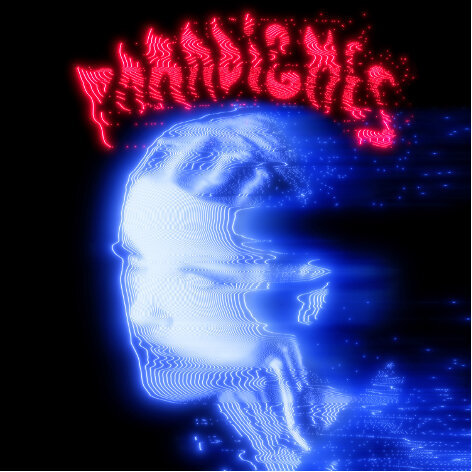
 

Premiere: DECOUPLR Drifts Through the Now with "Digital Bonfire"


Digital Bonfire by DECOUPLR is out now. Cover art: Jake Beadenkopf


Looking for something a little different?  Philly-based duo DECOUPLR have released their debut album Digital Bonfire, and the result is a sound that sticks. 

DECOUPLR is the product of two unique musical histories. Vocalist Bailey Walker got her start in Savannah, GA with Rich Animals, and joined neo-soul group Likebirds after finding her way to Philly. Producer Adam Laub is a long-time staple of the Philadelphia scene, releasing indie-pop as a member of OhBree and trip-hop as <radioaddict>, among other projects.

With Digital Bonfire, the listener moves through the pair’s influences and bears witness to their cohesion. Digital Bonfire is a trip-hop-infused product of the pandemic and all the feelings it’s drawn out – uncertainty, nostalgia, confusion. Walker describes debut single “Cold Sweat” as “...an intersection of the whirling uncertainties of this year colliding with a desire to be vulnerable with our closest friends.” On the second single “Changes,” DECOUPLR continues to fight the mundanity of isolation with vivid longings for tomorrow. 


Fans of Sylvan Esso and Flying Lotus will want to take a listen to what DECOUPLR’s been cooking. Let Digital Bonfire remind you to find hope beyond the Zoom screen… and take a read of our interview below!

Rebecca L. Judd for Also Cool: The pandemic’s impact on the album was incredibly pronounced. A standout track for me was the opening, “Keepsake”, which [highlights] this theme throughout the album where there are these mundane reflections of immobility and disenchantment over chaotic piano arpeggios and production. 

Was it your intention to reflect the present times in your album, or did that come about naturally? 

Adam Laub for DECOUPLR: It definitely was. A few of the tracks, we started a month or two before the pandemic hit. But they also happen to [just] be about being distant from people that you haven't seen in awhile, just by chance. And then, as soon as this all hit and we were all stuck inside, it quickly became this is the moment, this is where it should go.

Bailey Walker for DECOUPLR: I remember when we first started writing, the content was very about being lonely, and I had reservations – do we really want to come out with such a bummer album? Over the course of time, [we felt] like this is content that people can relate to. This is what a lot of people are feeling. So it's good to share.

Also Cool: What utility – as artists or as people, members of your community – does making the “COVID album” serve you in this time?

Bailey: I think that [it’s about] creating a conversation and an ability to connect with people during COVID. Creating like this, ever since March, we all started redefining what our community is and building our communities, especially online. To me, [this] feels like self-expression, but also an opportunity for conversation with people about things that [they] are not normally willing to open up about immediately.

Adam: It's been [part of] a lot of the lyrics. [The] concepts were about letting people know that it's okay to reach out to someone and talk to someone if you need to, especially during this kind of time. There was definitely a focus on that.

Bailey: But the privilege of getting to make music during a time like this, it's also not lost on me either. I have all these feelings, sure, but this is a collective struggle, you know? So it's for everyone. 

AC: Absolutely. It's just interesting to see people use [artistry during COVID] not only as something to unite their fans, but to reorient themselves. It's like a keepsake. It's something tangible [where] you can say it's the same sort of memory as a photo album.


Bailey Walker and Adam Laub of DECOUPLR. Image provided by DECOUPLR

Bailey Walker and Adam Laub of DECOUPLR. Image provided by DECOUPLR


AC: Looking at your musical histories, both of you have been involved in so many projects before DECOUPLR. Digital Bonfire reflects that, and it touches on a whole lot of genres. Has there been anything notable that's stuck with you from these musical projects?

A: I would say definitely. The genreless thing is big for me; all the projects I've been in have been pretty genre-absent. And I like being able to jump in between stuff like that. Also, I like a lot of glockenspiels with arpeggiators. You could probably find that on almost every track on this album, if you listen hard enough. It's always there. I promise you. [laughs]

B: I was going to say “glockenspiels''! But every project I’ve been in has also been a genreless, “we don't know what's going to happen” project. Having somewhere where I can just vocally run around in circles and play in [a] space is great. The whole genreless thing has worked out for me pretty well. 

A: I would also say, in general, the projects that I've worked on – including with DECOUPLR – have always been concept albums, even if we don't explicitly say it. So it's just something about having a flow or a narrative [that] has always stuck with me. And even if it's not a sticking point of the album – I think that for me, having that concept in the background has always helped to stitch things together in the end and make it make sense.

AC: That's true. So many artists will either put a completely different story on the page – because it lets them leave their stuff at the door – and for others, art is just an open diary.

I wanted to talk about the “Changes” video, because I thought that [video] reinforced this contrast between the chaotic instrumentals to it all and these reflections of loneliness and wanting to be understood. Hallucinatory animations and the longings for those colours in your own life. [Let’s] talk more about that collaboration process for the video with SUPERVOID.tv

A: I’ve been working on and off with [SUPERVOID.tv] on different projects for years. We did an electronic music record label that [had], God, some of the early beats that I made out there. Then, we kind of fell off and hadn't worked on anything for a few years, but Drew and Keppler and the rest of [them] started this new studio because they wanted to move. Drew did a lot of lighting design and then stage. They started moving into visuals, and we'd been talking about doing something like this for a long time and it just clicked.

It was easy to work with them. We'd never done anything like that. And, you know, [as] someone who is not a visual artist, it was mind-blowing to see how they could make two people sitting next to a tree seem so intriguing and emotional. They literally filmed us for like about 10, 15 minutes… and they did take the time to hand-draw, frame by frame. So, thank you very much SUPERVOID.tv It’s an awesome video.


AC: “Punchline” was another track I wanted to ask about. It intrigued me for its change in narrative [and emotion], relative to the rest of the album. That post-chorus of cacophonous “ha”s, that’s been stuck in my head. Could you elaborate on the intentions of that track and how it fits into that [Digital Bonfire] kaleidoscope?

B: With any disorienting mess that you go through, there's always this “aha!” moment, this moment of clarity where you say “...oh, I'm still breathing. I have all my fingers and toes.” “Punchline,” the lyrics, the melody, the little ditty came to me in this moment of just needing to take a second to find humour in a very humourless situation. And I drew from influences like Kate Bush and the silly abandoning of reality that she does. “Punchline” acts as a sigh of relief, a little bit. 

A: We also wrote it [when] we were at the height of the Trump administration. And the rest of the album was a bit about personal feelings towards all this stuff. We needed to talk a little bit about how our country is killing half a million people – but try to make it a little bit light and danceable, I guess. There was definitely a point in the pandemic where it all [sounded] like a big joke on us and they were going to pull it back and it was the Truman Show. But sadly, that's not reality. 

AC: How has your local music scene shaped your musical approach? What do you like about the Philadelphia music scene, or is there anything that you wish could change?

A: I've just found a lot of loving, caring people in this music scene. We've done shows all over the place, but I don't feel like I see the same kind of community… [We have] this huge scene with so many people who don't seem to shut smaller and newer artists out. I've just felt a lot of acceptance here, and it's why I've stuck around and done so much.


B: Savannah is a great city, and there’s lots of artists there and a lot of important movements happening there right now. I felt the same thing when I got to Philly, I would take myself to different open mics and local shows ... And the people, they just want to talk to you. People want to know what you have going on.


AC: Final question: with Digital Bonfire out [today], is it too early to ask about next steps, or anything you’d like to plug?


A: We actually have another music video by SUPERVOID.tv for the first single “Cold Sweat.” With the timing of things, we thought it'd be better to wait until the album's out. With this album, I pulled a lot of beats that I've had in folders for years. I've got a lot more of those. So it's only a matter of time before we've got new music yet again…


I’d like to plug the person who helped us with our album art and graphic design – Jake Beadenkopf. He [also] helped us with all of our fonts and texts.

DECOUPLR

Website | Instagram | Twitter | Facebook

Bandcamp | Spotify | Soundcloud | YouTube

Listen to Digital Bonfire, out now on all streaming platforms.

Rebecca Judd is the features editor of Also Cool Mag.

This interview has been condensed and edited for clarity.


Related Articles
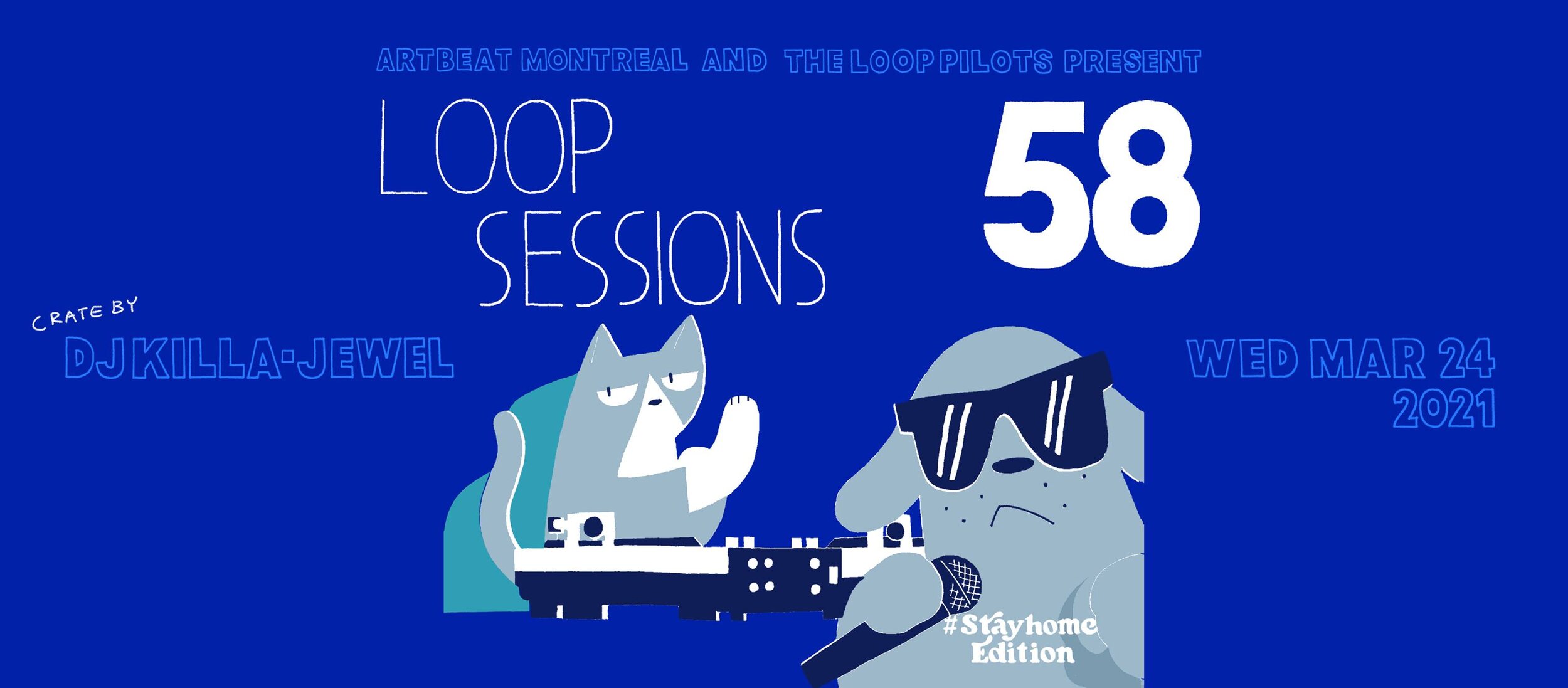
 

Alex Nicol Debuts Reality-Bending Video for "Mirage"

 
Still from Mirage via Alex Nicol

Still from Mirage via Alex Nicol

Sit back, relax, and dissolve into the surreal world of Alex Nicole’s music video for “Mirage” (directed by Director Big Shot AKA George Simeo). The reality-bending video brings a new dimension to the song off of Alex’s 2020 album All For Nada.

The video is a beautiful visualization of this era where every day feels like it blends into the next. This video perfectly demonstrates how our lives become more and more intertwined with the digital world, making harder to balance reality with our online existence.

I got to chat with Alex about his new video, and started to unravel this the complexities of online identity, and the importance of IRL community.

Check out the video and read our interview below.

Malaika for Also Cool: Hi Alex! Let's start with talking about how you got into the Montreal music scene. How did you first get involved, and how has it changed since you've been a part of it?

Alex Nicol: I moved to Montreal for school when I was 19. I started a band pretty much to move there, but nothing really happened until a few years later. Gradually I found the underground: DIY spaces, basement venues, a cornucopia of people from all over the place congregating in dank spaces to share a love of music and community. I spent a lot of time at La Plante, Silver Door (then Drones), Cagibi, Casa, the list goes on. I was also a relatively active member of a DIY community venue called Poisson Noir; I lived there for a bit, helped put on shows, played a bunch. I remember one night clearly: Win Butler slapped me on the hea- Great stuff!

The energy in the air was exhilarating; the purpose of our lives was to create music and build community around it - at least it felt that way for a while. I’m sure this vibe still exists in the city, but as I’ve gotten older I have turned inward, focusing on the craft of music rather than its social impact or purpose. Sadly, that’s how it’s changed for me, at least. 

I think, generally speaking, the scene in Montreal is built around the pillars of Casa and Sala. These are the institutions that inspire people to move to the city, probably still to this day, and as long as they are around the scene in Montreal is going to be healthy. People come and go through the city of course, but these pillars remain. 

Still from Mirage via Alex Nicol

Still from Mirage via Alex Nicol

Also Cool: How did music first enter your life? Have you always played music, or how did you get into it?

Alex Nicol: Music was all around me since before I can remember. My Mom listening to classical music when I was an infant; us listening to Cat Stevens on long car voyages in the hot summer; dad playing Scottish socialist anthems on acoustic guitar late into the evening. I guess it all happened by osmosis really. My Dad has a PHD in music and wrote some operas; I sang in an Anglican boy’s church choir; and I went to an arts high school focusing on the alto sax. I never played jazz sax though - I was into classical sax. I remember playing a Rachmaninov solo for a Grade 11 recital while my friend Mike Heinermann played a fancy (and incredibly technical) jazz piece. 

In high school I would have my friends over upstairs in our cramped third floor. We would jam for hours. I used to write 9-15 minute instrumental songs that would twist and turn with more parts than I care to remember now. Oh: and I picked up the acoustic guitar at the age of 16 because I saw my Dad play a riff by Neil Young and I thought: that looks fun, I want to do that too. It did not take me long to realize that, as a left-handed person, learning guitar would be tricky; but I was not deterred. I took a right-handed guitar, re-strung it to the left, and taught myself Hey Joe by Jimi Hendrix. 

Still from Mirage via Alex Nicol

Still from Mirage via Alex Nicol

AC: What are some of your musical and visual inspirations? The video is so visually stunning, I'm interested to hear what influenced it. 

Alex Nicol: You’ll have to speak with Director Big Shot about visual influences for the vid. I was a willing and active participant to his vision! 

Big Shot statement:
We have created a situation.

We have summoned the unusual, the unexpected, caused a break in the natural flow. 

We have explored the depths of our minds and found symbols of a new world: the formless magician, the wandering nimbus, the virtual forest.

We have exposed the mirage of old, and in doing so, we offer relief, uncover deceit, and infiltrate the elite.

We have seen behind the wizard's curtain and now dare to grant you access.

So please, take your seat. Enjoy. 

Still from Mirage via Alex Nicol

Still from Mirage via Alex Nicol

AC: The song's lyrics are surreal and evoke a sort of laissez-faire energy towards the bizarre life we're all moving through. The song was released at the beginning of the pandemic. Has it changed in meaning in any way over the year? 

Alex Nicol: The world was wack before the pandemic. Since it has only become more twisted. 

AC: The video seems to touch on how real life and the online world have become even more intertwined lately. What's your relationship with your online presence like as an artist? Is it something you enjoy or something you feel is necessary as an artist?

Alex Nicol: The online world is virtual. It’s a form of reality that is in a sense real, but in another sense entirely intangible because it’s not physical. I like the idea of exploring digital spaces, but I will always be more interested in physical presentations and physical relationships and so on. I feel it’s necessary to be digital but most certainly does not come naturally to me. In a sense I see it as a grand (fabricated by design) distraction from the economic / ecological hardships - the truy physical reality, the weight of those challenges - that are hitting millennials the younger generations. I think my favorite era to live in would have been around the 1890s - at least in terms of communication. That should give you an idea of how I feel about the digital domain / digital dominant lives. I often get angry and upset about how much time collectively is spent online.

Alex Nicol by Stacy Lee

Alex Nicol by Stacy Lee

AC: Unplugging for a second, can you describe one of your favourite memories or dreams for us? Do they impact your music at all?

Alex Nicol: Playing barefoot soccer in the park. Sunny afternoon, green grass, fresh air, too young to realize how short life is. I can live in that feeling forever. Feeling truly free, totally present and entirely unencumbered. I strive for this feeling from music that I make and I seek this feeling out in the music I listen to. I get it from Thom Yorke’s voice; Orthodox a capella choral music; early house music; lots of soul groups. I strive to create that vibe in my own way through my own music. So it basically inspires everything I do artistically! It’s not the only thing that inspires me, though. I also have a sense of social obligation to use my music to create a more just world (more on that in my next album!) 

AC: How have you balanced your creative practice with day-to-day life? What are some of the ways that you stay inspired?

Alex Nicol: Mostly I unplug from social media and technology in general. The time to think and feel inspires me. I jog, I read, I meditate sometimes, and I try to get enough sleep (but sometimes, when I am exhausted by exterior life and it’s expressions, I feel most in-tune with my artistic self). Then I try to fit regular chunks of practice or creative time into my day: usually from 6-8am. I also try to be as honest with myself and with those around me as possible. I balance a full-time job with my music, and sometimes (too often), music takes a backseat. I’d like to be more creative, more often. 

AC: What are your favourite releases from this past year from other musicians/artists?

Alex Nicol: Eve Parker Finley - Chrysalia

Cotillon - Cruiser

Nick Schofield - Glass Gallery

Thanya Iyer - Kind

Dana Gavanski - Yesterday Is Gone

Jonathan Personne - Disparitions

Hua Li - Yellow Crane

Beaver Sheppard - Downtown

Anna Burch - If You’re Dreaming

Backxwash - God Has Nothing To Do With This Leave Him Out Of It

Corridor - Junior

Eve Adams - Metal Bird

Helena Deland - Someone New

Thomas Molander - The Walk

Susil Sharma - Keep the Dream Alive

Xiu Xiu - A Bottle of Rum

Eric Gingras - Enfant Magique 

Deca Joins - Bird and Reflections

Penny Diving - Big Inhale

Vanille - Soleil '96

Eliza Niemi - Glass

Sheenah Ko- Nowhere In Time

Whitney K - Maryland

TEKE::TEKE - Meikyu

Cut Worms - Nobody Lives Here Anymore

AC: Last but not least, do you have anything exciting planned for this upcoming year?

Alex Nicol: Working on / releasing a new album! 

Alex Nicol

Spotify I YouTube I Instagram


Related Articles

 

Sugar, Spice and Everything Nice: Vanille Serves Up Franco-Pop for Brighter Days Ahead


Rachel Leblanc / Vanille by Dominic Berthiaume

After three years of creative introspection, pop singer Rachel Leblanc, also known as Vanille, is footing a more sincere debut en Français with the release of her LP Soleil ‘96, via Quebec label Bonbonbon. What makes this album especially validating for the 60s-inspired artist is allowing her mother tongue, and by extension her unmediated stream-of-consciousness, to bloom in her songwriting. Ditching English lyrics has brought on a new level of confidence for Leblanc; allowing her embody a performance style that nurtures her artistic pursuits, rather than projecting the image of a “cool” frontwoman for the sake of her audience. For lovers of Françoise Hardy and Mazzy Star, look no further — Vanille is reviving yéyé with a lusty 90s sensibility. Take a peek at our interview below to read more about her playful, and signature, je-m'en-fous approach to songwriting.

Zoë Argiropulos-Hunter for Also Cool: Hi Rachel! Thank you so much for collaborating with Also Cool. To start, can you tell our readers more about your act Vanille? Would you describe "Vanille" as a persona, or more so as an extension of yourself?

Rachel Leblanc: Thank you so much for having me! Vanille is really just the name of the project. I don't really like when people call me Vanille or ''the singer of Vanille,” haha! It's not a persona, nor a fraction of myself. I just wanted a name for the project that reflected the cuteness and nice vibes of my music! I started Vanille four years ago and I originally sang in English. I later realized that I was not completely honest with myself, and that [the project] was less me and more the image of what I thought was “cool.” From that realization, I began to write songs in French — more in a classic writer-composer spirit than what I did before, and I really found confidence in that.

Also Cool: You've recently released your first album Soleil '96 - congratulations! Can you share what inspired this album, both emotionally and sonically?

Rachel Leblanc: I was really inspired by the 60's British bands and the ones from the West coast of the US in the same era. I wanted to make a rock album, but also an album with catchy melodies and bittersweet lyrics. I listened a lot to Margo Guryan, The Beach Boys, The Zombies but also Sonic Youth and Belle & Sebastian. That melting pot made me write different kinds of songs over the past four years. I usually write songs when I listen to a lot of music during the day. I spin LPs everyday and the greatness of what I hear always pushes me to write, or at least to try something. That's where I get all my inspiration.

AC: Branching off of that, releasing an album is always exciting for an artist, especially when it's your first! Did anything about the experience of producing and sharing Soleil '96 impact your outlook as an artist? Were there any moments that were particularly special?

RL: Releasing an album during a pandemic is weird, but I never experienced it during ''normal times,'' so I couldn't compare, haha. I think that it was mostly good, because people were happy to hear a new album and the enthusiasm was really there for me. I enjoyed making this album with my friends and I will continue to work with the people I know and love! I understood how important it is for me. The team of people I worked with (Guillaume Mansour, Jean-Sébastien Gervais, Julien Pagé, Benoît Parent and Emmanuel Ethier) were very tight and professional. It was also a huge, fun experience because it was taped before the pandemic and we ate a lot of food during those sessions — a lot of candy… and that's something I will remember. I'm starving right now!

Rachel Leblanc / Vanille by Dominic Berthiaume

AC: You mention that you take inspiration from French yéyé singers from the 1960s; what about these artists and their music resonates with you?

RL: I just adore the simplistic melodies and the light-hearted energy from this era. There was a nice effort in making pretty music and the refinement is beyond compare! The looks were also on point, haha! There's also a kind of je-m'en-foutisme that I really love. The attitude and style of the Swinging Sixties and the psychedelia influence on the artists interests me a lot.

AC: In relation to those influences, what is your approach to making music that has a vintage appeal with a current twist? Are there any particular practices you use to achieve this sound?

RL: We used a lot of old guitars for this album. Emmanuel helped a lot to choose the right guitars and basses for each part on the album. We used a lot of different mics with various reverb effects, and kind of created with a speaker in another room where our winter boots were. We used different kinds of synths also… I'm unfortunately not a gear gal and I couldn't tell what we used, haha! I think it could have sounded more retro, but I the next [album] will fulfill this need! I want to use old instruments like the harpsichord and the mandoline. I'm looking forward to that!

AC: I know that you recently were on the cover of Le Devoir and were featured in the Journal de Montreal, which are amazing milestones! How does it feel to receive such positive reception so far, and what lasting impressions are you hoping the album will have?

RL: It's such a dream! I couldn't be happier. The fact that my music resonates with a lot of people is the best feeling in the world. I'm really grateful for what's happening to me and I'm living this precious time with a lot of tenderness for everyone. I wish I could play live in front of people and see them smiling and singing with me, but I'm sure it will happen one day! I hope that this album made people feel a little better or understood during these times (sorry I sound like an ad).

AC: Before we let you go, what is the year ahead looking like for you, and how can we best support you and your music?

RL: I hope to be able to play everywhere in Quebec this summer, but it's really too soon to tell... I will definitely work on my second LP, taping it in the woods in the Laurentides, probably in Fall. A bright year is ahead of me and of all fellow artists. People will want to date [again] and everyone knows that bringing your crush to a good show is the way to go baby!

Vanille (She/Her)

Instagram | Facebook | Bandcamp | Spotify | Bio

Zoë Argiropulos-Hunter (She/Her) is the Co-Founder and Editor of Also Cool Mag. Aside from the mag, she is a music promoter & booker, radio host & DJ, and a musician.


Related Articles
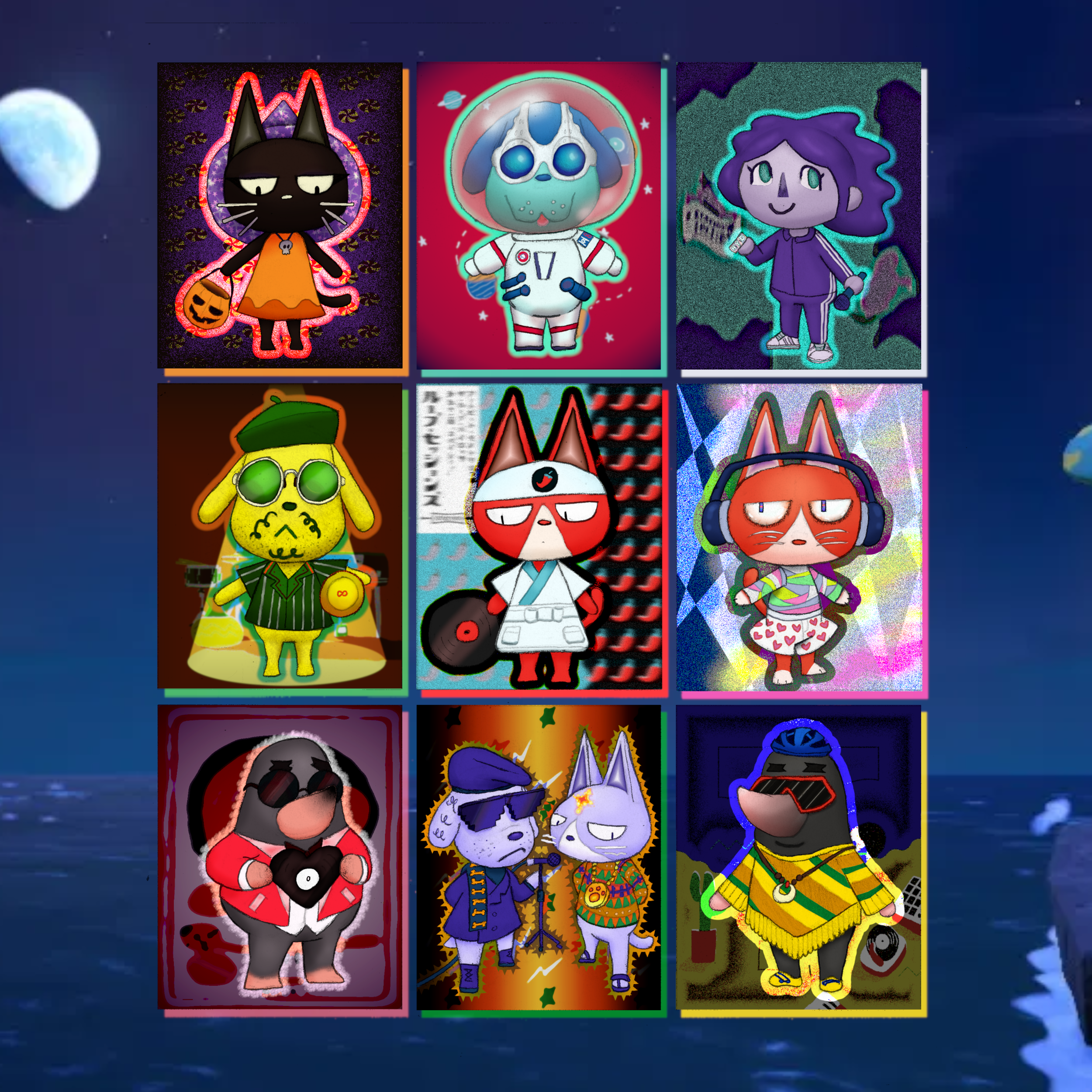
 

Won't You Come Through? The Black Creatures Talk Grief, Community Care, and Neopets

 
The Black Creatures by DOMvisions

The Black Creatures by DOMvisions

Won’t you come through and kick back with The Black Creatures? The Kansas City based power duo have released their music video for D'ummm, and I’m not gonna lie, it’s been on repeat all morning. It’s the perfect mix of sweet, laidback tunes and community love. The track is off their 2020 album Wild Echoes.

Their music provides a deep introspective look into themes of grief, love, and mental health, particularly within the Black community. Jade and Xavier wanted to make music that allows people to imagine things that may not exist right now. They explain, “Music is very political. It permits us to draw out the blueprints for what we want to create.”

I had got the chance to chat with Jade and Xavier, covering everything from meaningful community activism, to what their songs would look like as Neopets. Check it out below.

Malaika Astorga for Also Cool: For those who don’t know you, how would you describe yourselves as individuals and as a band?

Jade of The Black Creatures: I'm Jade Green, a singer, prison abolitionist, and Pan-Afrikanist. I'm nonbinary, and I want a world without starvation, homelessness, or police. The Black Creatures became a thing when I was going through a really hopeless time in my life, and since then it's the only thing that has consistently made sense.

Xavier of The Black Creatures: I'm Xavier and I would describe myself as unimportant in the same way that trees, rocks, birds, water, and dirt are. I'm the same as everything else: here.

We, as a band, are a collection of our greatest inspirations and fears, filtered through our understanding of music to support and uplift people who are like who we were as kids; the lonely, confused, hurt, angry, joyful, passionate, and curious.

Also Cool: What’s the music scene like in Kansas City? I know you met over the Internet initially in your senior year, and I’m wondering what the IRL and online creatives spaces in your scene are like. I’m also interested in what serpentine green lipstick has to do with your friendship.

Jade: My experience being in the KC music scene for the last seven years has been mostly what I made it. But the environment is undeniable; the music scene here is almost as segregated as the rest of KC, the home of redlining (which is the practice of drawing districts into ridiculous shapes to preserve its whiteness, property values, and funding).

At first, I was really green - I didn't come from a family of musicians, I was sort of shunned (and simultaneously emulated) by the white punk kids I ran with in high school, and I really had no background in being a recording artist. At first I felt like everyone was laughing at me all the time. When I stopped caring about what people thought of me and just started focusing on learning and growing, it really changed the trajectory of the band I think.

Xavier: The KC music scene is admittedly underrated. No one outside of Kansas City would expect so much amazing music so many incredible artists to come out of the Midwest. There's an unparalleled range of styles and approaches here. While I don't deny other places having an equally wide variety, I just think (at least for us) there's a lot of intermingling. We've played shows with punk bands, jazz artists, rappers, metal bands, noise artists, DJs, the list goes on. There is a surprising number of shows and festivals from local to nationwide, all put together by artists and performers from HERE. Or maybe I'm just not well travelled; ask me again in a few years!

The Black Creatures by Beth Taye

The Black Creatures by Beth Taye

AC: I love your undying chaotic love for creative creation. From Sonic, to Charmed, to a huge range of musical inspiration, you seem to pull your creative forces from many different places. What are some of the most influential pieces of media, whether they’re musical or visual, been for both of you as artists and people?

J: Media consumption was very important for me growing up in the 90s and early 2000s. Watching The Fifth Element as a child gave life to my love for funk, outer space, and opera. Video games like Final Fantasy X-II & Kingdom Hearts opened my mind up to even more otherworldly possibilities, and companionship that spans beyond time. Musically it was Aaliyah, The Gorillaz, Dir en grey, and Missy Elliott that inspired me then and now to make visceral, unapologetic music - hoping it heals and breaks some curses along the way.

X: Within production and lyric writing, I've been inspired by things completely unrelated to music like Shigeru Miyamoto's approach to game design in Super Mario Bros, teaching all of the mechanics of the game in the first level in the first few seconds. I copy this approach musically by introducing the listener to a theme through melody or rhythm to kind of define the "rules" of engaging with that particular song. Or, like in visual mediums, white space (think of the unpainted parts of art on canvas) can be used to actually fill out the piece, or direct the eye, or cause tension.

Ultimately, a relationship between a song and the listener can be informed by silence. Many films have definitely inspired some work, like Annihilation, Interstellar, The Boy, and The Blair Witch Project to name a few!

The Black Creatures by Beth Taye

The Black Creatures by Beth Taye

AC: You’ve mentioned that your activism is very community-oriented, and IRL. In an age of digital activism and performative infographics, can you tell us a bit about how you connect to your communities IRL, and the importance of maintaining that kind of connection?

J: I'm learning now what Angela Davis meant when she said the personal is the political. The most sustainable efforts of "activism" I engage in are part of my daily life: urban farming, conflict resolution services, working with children, volunteering at Food Not Bombs KC, helping Black and Indigenous folks buy houses in this predatory housing market situation our city has... speaking of which, my friend is about to lose their house because the city decided they want to build a shopping center there. In a city with several abandoned shopping centers already... yeah. I guess another form of daily activism I engage in is bringing contradictions to light. I don't say this to brag, but to give other people ideas on how to make trouble for the dying culture that wants to take us with it.

X: Honestly, keeping a network of colleagues, associates, and friends who know people who provide information, resources and/or services, and people who simply have needs is another way we approach this. At every level of society something can be done in some capacity; it can be as simple as connecting a hungry friend with someone who provides regular meals, to something as frontlines as connecting activists with someone who knows the right information.

AC: If your songs are like Neopets, can you tell us what D’ummm and Wretched (It Goes) would look like?

J: D'ummm gotta be MAD BUBBLEGUM CUTE. Like a purple-and-white Polish Frizzle chicken with nasturtium and phlox blossoms in the feathers. Chunky and funky. Life of the party. Wretched would be like a Hotep tuxedo penguin with a Kufi (hat) who speaks nothing but the truth. He also chews up shrimp to feed his children. He has braved many storms and he is loyal.

AC: Your project ranges across the Internet, from your music to your YouTube videos. How do you find balance creating content and creating just for yourselves?

J: Honestly, a lot of what I put into The Black Creatures then and now started as personal journal entries and notepad notes. What's wonderful about being part of this musical project is that Xavier has always encouraged my personal growth. If I ever was "too much," he wouldn't show it — we would just find a different way to exert all that energy and it always turns out alright.

X: Understanding my own limits is incredibly important to me. So is knowing when to say no. Finding balance, for me, is mostly about knowing myself well enough to avoid overwhelming myself. It's admittedly an ongoing process because the goal is to always know myself better. I try to extend that to the band as a whole. So, as a band, our combined processes keep us mostly balanced in regards to our workload.

AC: Who are some artists/musicians from your scene that we should know about?

J: God I LOVE THIS QUESTION! PLEEEEASE check out Les Izmore, Bath Consolidated, Collidescope, and Betty Maun.

X: I strongly recommend TideCruz, Mess, Ebony Tusks, Bad Alaskan, VP3... how long can this list be????!?!?

AC: Last but not least, what do you have coming up this year? Is there anything you want to shoutout/highlight?

J: We are planning to give everyone a new video from us before Valentine's Day, and a lot more later... but I don't want to spoil anything (yet)! You're the first to know about our upcoming video.

X: Issa mystery.

The Black Creatures

Website I Instagram I FB

YouTube I Spotify


Related Articles
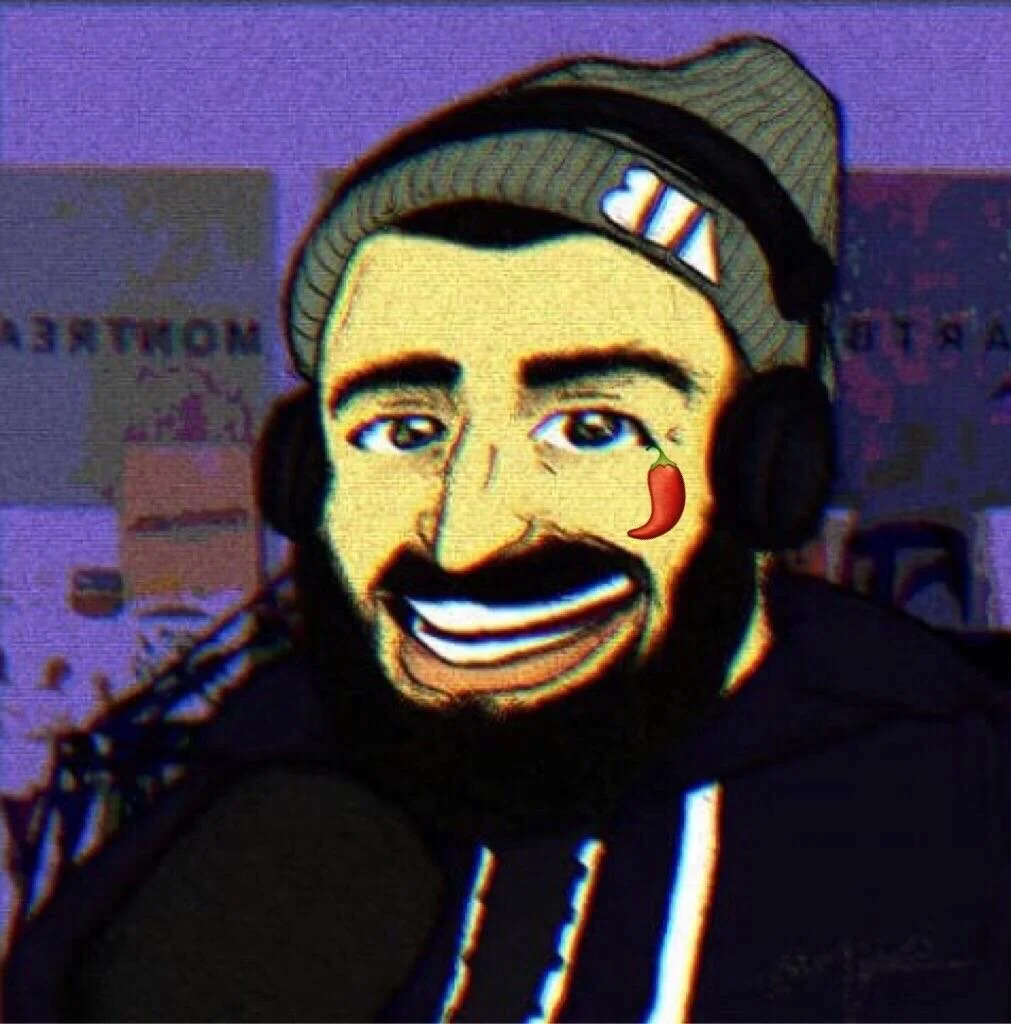
 

Premiere: Lindus asks, "After the Haze, What?"


Whether it’s work fatigue, COVID-fatigue, or just feeling plain tired of being in situations, the experience of being stuck in a fog seems ubiquitous. Lindus has been roaming the shadows of the underground music scene for over a decade. Now based in Toronto, he’s freed himself from corporate shackles and produced a highly emotional 5-track EP called After the Haze, What? for Liquid Love Records’ third release. This psychedelic house record is the product of transcending the barriers of an unfulfilling lifestyle and stifled creativity, of growth, and of bravely asking the question, “What comes next?”
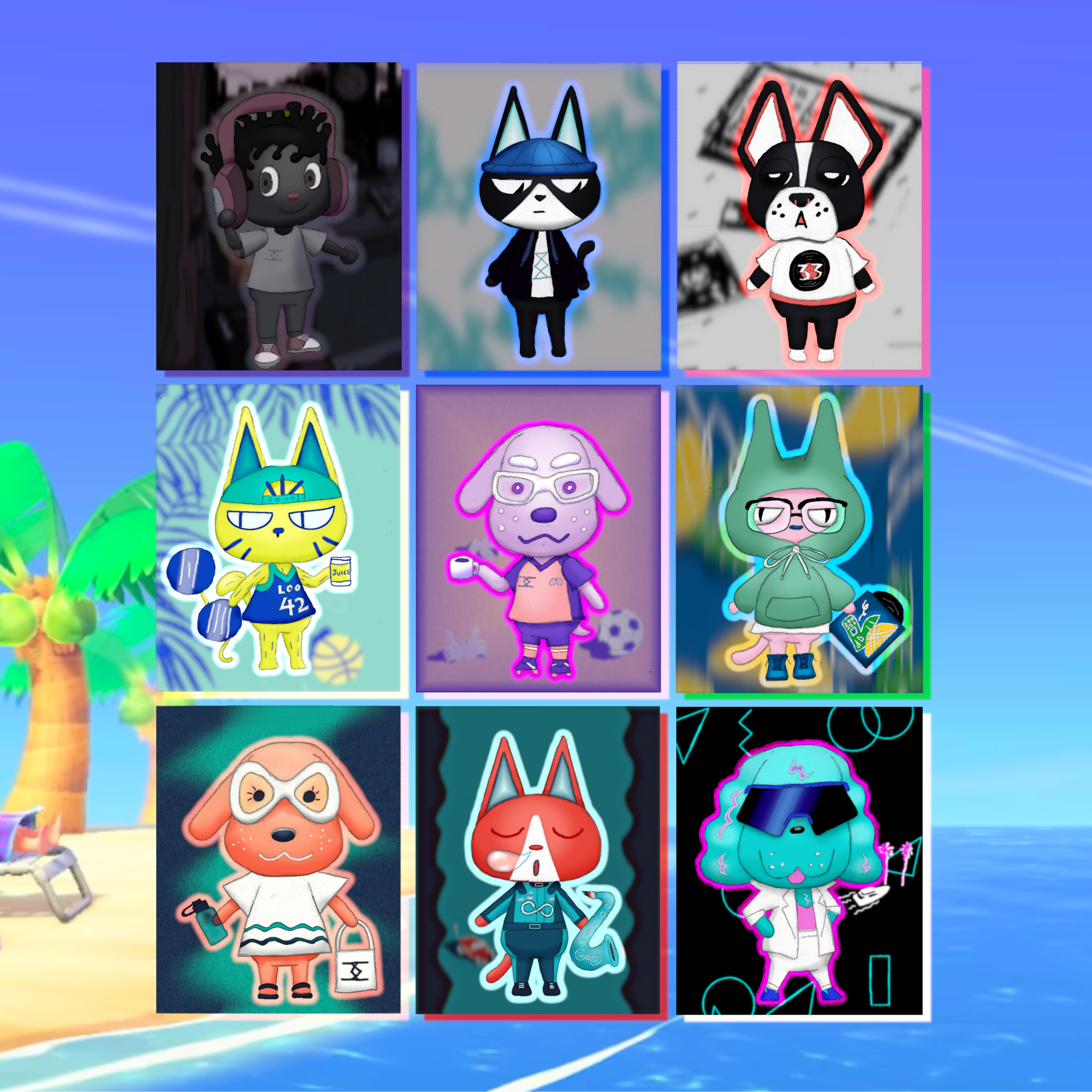
Check out our interview with Lindus - and don’t forget to listen and support - below:
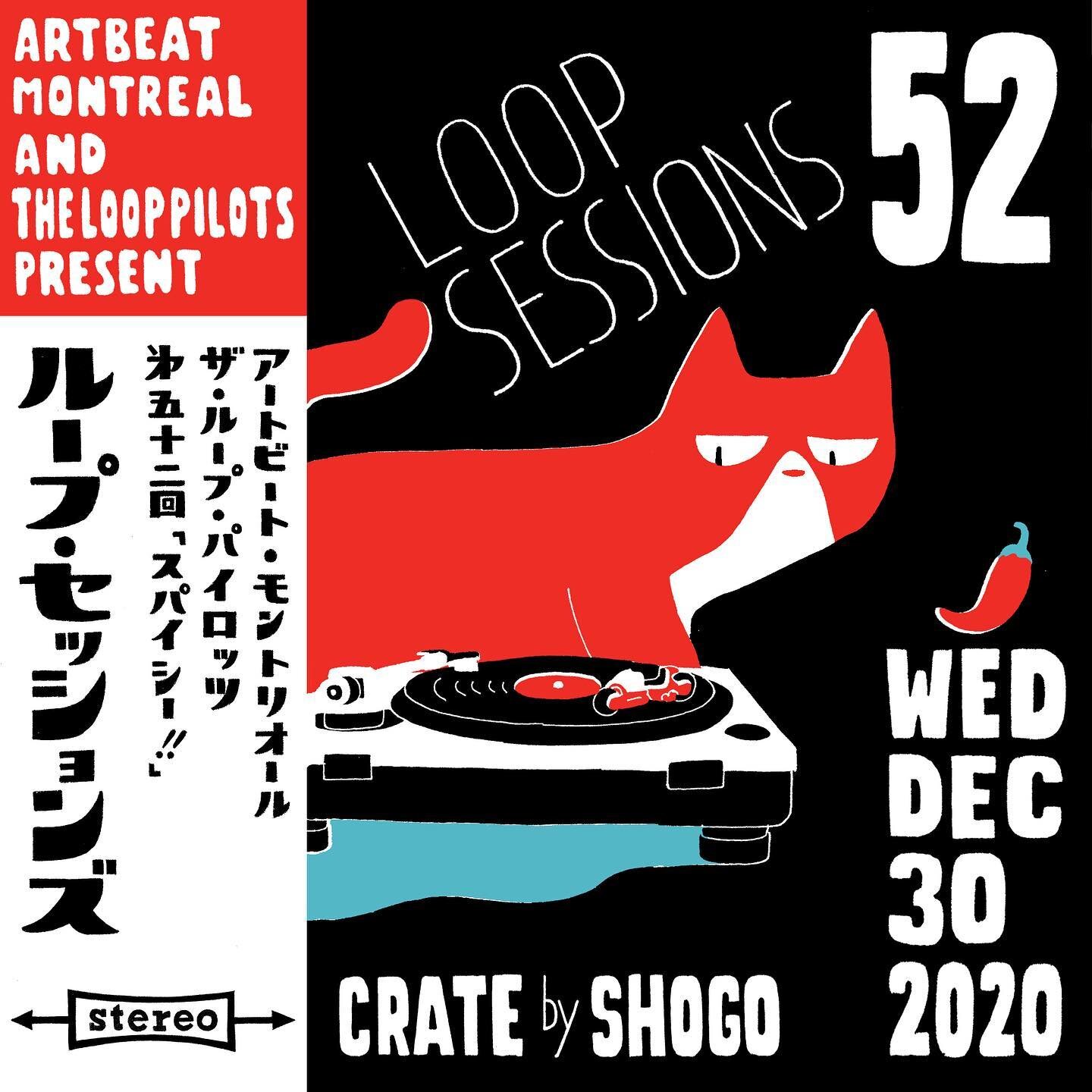
Lindus makes his Liquid Love Records debut offering a heavily emotional and unique five-track EP of deep, psychedelic, house. “Rubber” kicks off with a minimalist, bass-laden take on the Eastern European micro sound: think Rhadoo making modular synth loops. Things speed up on “More Underground”, a Montrealer’s take on Jeff Mills retold through distant memories of summer loft parties and winter mornings spent at the mythical Stereo club. Haze gives way to texture and melodies with the delicate euphoria of “In My Wires” and “For These Places We Loved” - rhythmic dance tracks while basking in the melancholic, distant calls of re-pitched vocals and outlandish synths. It's finally time to leave the club and things wrap up with “Try Not To Forget”, the kind of pronounced dark techno hit whose energy contrasts the fading body of the early morning raver. Lindus has been a bedroom musician for over a decade and is currently based in Toronto, Canada, where he works on themes of originality, process and the possibility (or lack-thereof) of transcendence in music. After The Haze, What? EP drops Wednesday 27th January via Bandcamp. 1. Rubber (Loop Mix) 2. More Underground 3. In My Wires 4. For These Places We Loved 5. Try Not To Forget Bandcamp: https://linduslindus.bandcamp.com/album/after-the-haze-what

Maya for Also Cool: How did you get into making music?

Lindus: I'm part of the internet generation - it's where my first connections came from. Sites like OiNK [Oink’s Pink Palace, now shut down], the first private torrent site, introduced me to some extremely nerdy internet stuff, which then expanded into music and music sharing.

I never really discovered much music through friends - most of it was through there - and the people on it listened to a lot of post-rock, like Godspeed [You! Black Emperor] and Explosions In The Sky - then everyone started getting into Burial’s end-of-the-world vibe. It was a time when the internet was a communication hub, but not as standardized as it is today. You had to crawl through lots of forums.

In 2010, MUTEK did a crazy showcase in Montreal. They featured Kode9, Spaceape, Flying Lotus, and Martyn - they were really on top of it that year. I started getting into dubstep and discovered clubbing through that - which in retrospect was a weird introduction to [the scene]. So my musical brain at the time looked like a mix of dubstep, psytrance, and all the Montreal post-rock bands like Godspeed You! Black Emperor, Silver Mt. Zion.

Also Cool: When did you start producing your own tracks?

Lindus: There's something about the world of dance music where there’s a high chance that someone who is consuming it is also participating in creating it. Especially back then, no one was buying gear - we were all making beats on the computer. There was a sense that anyone could try it. Lots of people downloaded the free version of Fruity Loops [FL Studio] and tried their hand at making music. That was when going to parties and making music started to overlap for me. I began making loops and sharing them online - before Soundcloud became so popular, people were using other platforms, like Myspace.

AC: Your write-up on the record describes a melancholy night at Stereo - do you have an emotional connection to that nightclub?

Lindus: Around 2011, there was a split in the scene - something broke at a local level, where what was originally supposed to be about music started having social consequences.

People started going into totally different scenes - some went from dubstep to bro-step, and some people realized they needed something new. A notable transition track was Joy Orbison's Hyph Mngo - it's deep, it's physical - like dubstep - but it sounded new. So a lot of dubstep heads transitioned to house and techno, myself included.

At one point people started hosting parties at this place called Velvet. One time I showed up with my roommate - we were like 18 or 19, just these awkward guys who went to these parties they found a link to online. When we showed up to Velvet, we got bounced - the bouncer actually pretended that we got the wrong address.

To me that was a sign that something in the scene had changed. The people putting on those parties were making a kind of shiny house music that was becoming really popular at the time - and all of a sudden these new venues would check you when you came in. That was totally unlike the [more relaxed] dubstep parties. At that point, it was a departure from the [underground] scene - it became more corporate. There was a car brand called Scion that put a bunch of money into these parties - I think that's when Red Bull also started getting involved - it felt really stale.

Maybe a year later, I went to Stereo for the first time, and it felt like a new community. It was like discovering a new part of dance music that I didn't know, because I didn't grow up with house or techno at all. When you're in there during the weird hours, like seven-thirty to nine [A.M.], you’d notice a special type of vibe - and the music made so much sense for the room.

That's also when I understood why people had to play house and techno in certain settings - you’re not going to play dubstep at seven in the morning when most people in the room are tripping. I tied the utility of the music with the scene and the space - and suddenly things made sense for me.

Then I just kept going. I definitely went to some weird nights. I saw Solomun there, which made me realize, “wow, they can really pack it with bros,” then I went to CLR Chris Liebing nights, where everyone was dressed in black and the music had really clean and crisp production and sounded super mechanical. I also went to see Danny Tenaglia and other house classics there - and those nights were great. It felt like I was entering into dance music history.

AC: How do you think SoundCloud affected the development of underground music culture - and the politics of it?

Lindus: Form became really important. I usually think of the Low End Theory stuff [the experimental club night responsible for Flying Lotus’ rise to fame, among others]. When that album came out, it was just at the beginning of the Internet. Everyone picked up on the formal characteristics of it - like the sidechaining, the pads, and the unquantified beats. Because of the Internet, like a week later, people from Sweden were copying those beats. Music felt really decentralized. You could also say democratized, because there were more people taking part in creating [these new genres].

With dubstep, there was this messianic thing. There was this vision of a scene in the UK - and with me being far away in Canada, experiencing this new genre from the UK felt full of promise. It didn't have anything to do with the formal characteristics of the music - it was more about the vibe, the projects, the communities. When people started getting good at Ableton and making really quick clones of beats, it made it hard to situate the music and sound within a scene. You no longer knew who to look to for leadership. Now it's easy to connect with a lot of people online and you can build community through the online medium.

Credit: Liquid Love Records

AC: Why sad nights at Stereo?

Lindus: Dance music got so big, and happiness became such a key part of the messaging that was used to sell it. Suddenly everything was like a Zedd music video - starting with some lady working at her boring office job, then the beat drops, and all of a sudden she's dancing on a beach.

Transcendence and dissociation through dance music became a push for happiness. They lowered the booth and stereo at some point, and that was a big change because all of a sudden, the DJ was like right there, six feet away from you. You got sold so much on the idea that every night you went, you had to have [the time of your life] - so my anticipation would really build up. With time, I became more attuned to the fact that things didn’t really have to go that way.

There was this one night that I went to Stereo with Martin [Liquid Love Angel], and we saw Jeff Mills. Immediately after his set, Mills suddenly disappeared with a small group of people - there was just no community vibe in there. It was really the antithesis of the dance music "promise" that you're going to go in and find community and warmth.

It felt grim - Jeff Mills played for like three hours and one minute. That's probably what the contract said, but it wasn't just about how that specific night went, it was about the industry of expectations and selling you this dream. It became even more commercial with things like Boiler Room and hyper-produced videos of parties with messaging like, "This could be you..."

AC: So what is it about a club culture that isn't necessarily the foam parties and euphoria that get marketed to us?

Lindus: Like with any artform, you can experience different emotions through music - there are sad tracks, you can feel melancholia, dissonance. Sometimes you actually can't lose yourself in the music - and maybe that's a good lesson to have. Compare that to times when you feel like ravers are in disregard of the world that they're in, where raving seems to be all about consumption and taking drugs. Everything is focused on the self. Or when you see people throwing water bottles at Stereo - it's stupid - and you can really feel the disregard for the context and the space that these people have. They don't give a shit about your experience - they're only there to have a “great” night.

Another thing is that the sadness you might feel is not necessarily the minor-chord type. You feel it with the cliché of leaving a club in the morning and seeing people go to work. Why does it feel weird to be on the subway at 10:00 AM on a Sunday and seeing people way older than you going to their real jobs? How do you relate to that?

Credit: Liquid Love Records

AC: Coming back to the album, and more specifically its title, did you transition from a corporate job into making music? What's the story behind that?

Lindus: I studied philosophy in grad school. When I graduated, I didn't really know what to do. I was in Toronto and there were just so many corporate jobs. So I got one, and it was soulless. It's a cliché that corporate work has no soul, but working for one of the big insurance companies, I was thrown into this completely regimented life - there was no originality. Everything was processed and repetitive. At one point I just couldn't do it anymore, so in August I quit, after over two years.

I found a space with some friends, and I was so over the structured lifestyle, that I decided to just smoke a lot of weed, sit in this basement, and make music. It was such a strong response to everything that I had experienced - a real loss of hope from being in that regimented world where you couldn't really want anything, where the barrier between what was true or not was really blurry. Corporate messaging was so often around keeping people motivated and engaged - that involves mountains of deception. I got out of there with such a deep feeling of nihilism - without even really realizing it - but [in the basement] there was nothing to do but smoke weed and make music.

AC: So what's after the Haze? What's the story behind the album title?

Lindus: It's in reference to that hazy time after leaving my corporate job. Standard stuff like going to therapy, starting to figure yourself out, building a healthier relationship with yourself in the second half of your twenties.

I really enjoyed the Haze - I found a lot of comfort in being stoned, going to parties, and things feeling kind of approximate. I also always liked music with tons of reverb. When I abandoned the corporate lifestyle, I still felt the haste of it. Wake up, get high, go to the studio - I was still totally drowning in those loops.

At one point, I faced the question: what do you do after that? The Haze is kind of atemporal - you're high, then you're tired from the high, then you sleep, and then you get high again. It's hard to make change from within that circularity. It's kind of like being in a relationship, when you're at a point where you want to know what comes next. You can't really put it into words, but there's a striving for [growth].

This project is me striving for something beyond the Haze.

After the Haze, What? is available on Bandcamp at the link below:

After the Haze, What? by Lindus, released 27 January 2021 1. Rubber (Loop Mix) 2. More Underground 3. In My Wires 4. For These Places We Loved 5.

Written and produced by Lindus
Mixed by Lindus.
Additional arrangement by Martin Cadieux-Rouillard.
Mastered by Cristobal Urbina at See You Mastering.
Cover by Bénédicte Morin


Related Articles


Meet Me in Mothland: An Interview with the Label, Promoters, and Connectors of the Montreal Music Scene

 
Via Mothland

Via Mothland

Lately, I’ve been finding nostalgia in the mundane activities I once took for granted. I want nothing more than to text a friend to see if they’re going to l’Esco tonight, where one of our friends’ bands is undoubtedly playing.

I had the opportunity to delve deep into this nostalgia when I chatted with Mothland, (who released that banger compilation you love) about the Montreal music scenes, how they got started, and what they’re doing now that they’ve expanded into a label.

Malaika Astorga for Also Cool: Like many people in the city, the Mothland crew initially met at l’Esco and connected through the music scene. How did you first get involved in the Montreal scene? Can you describe what it was like then, and how it's changed?

Phil for Mothland: I used to go to l'Esco when I was underage to watch my friend's band play. We would come from the suburbs, and I'd come in with them for the soundcheck in the afternoon. That was in the old l’Escogriffe, it was smaller and a bit dirty but it became my favourite place in the world. L'Esco has changed a bit, it's cleaner now, but the spirit is still there. It evolved for the best.

I knew Michelle from the Night Owl in Toronto. She had sent me some touring bands that needed a Montreal gig, so I started to book touring punk & psych bands at l'Esco. Bands like The Auras, Moonwalks, Pet Sun, The Deadly Vipers (now called Shadow Show), and Heaters.

I met Marilyne around that time, and she had been in the music business for a while. She founded "L'Autre St-Jean," a pretty big outdoor festival when she was really young. She also co-founded Taverne Tour. It used to be a small event to kill the post-holiday boredom, and it became this huge thing. Now, the whole Mothland team is working on it. The 2020 edition was probably the last "real" festival in Montreal before the pandemic. 

When the old Montreal Psych Fest fell through, Max had the idea to build a team and create DISTORSION. He's been in a million bands, so he connected people from all over to build the team. Marilyne became the zoo-keeper to our lovely & dysfunctional family. 

Marilyne and I were getting more and more involved with bands that were gravitating around DISTORSION. We decided to create Mothland (the label) with local bands like Paul Jacobs, Atsuko Chiba, Yoo Doo Right, Crabe & Teke Teke, and our friends from around the world: Yonatan Gat, Spaceface & Sunwatchers.

We've been giving out mushrooms at festivals for years. It's a bit like planting seeds to make things groovier. Hopefully, it's had even a little impact on some people. I'd love to think that we've influenced other promoters to book more experimental acts in their line-ups. I feel like some part of the culture is becoming more "beige" and safe. We are dedicated to making things more edgy and weird. 

Via Mothland

Via Mothland

Also Cool: How did you become interested in DIY music scenes in the first place? When did you decide you wanted to become active members of these communities by putting on shows and getting involved in different ways?

Mothland: I met JP through Analogue Addiction. I would go to all their shows, which is how I discovered the punk scene and decided I wanted to be a part of it. It's really fun that we get to work together now at Mothland. I spent a weekend with him going to Osheaga to see Nick Cave & The Bad Seeds and The Replacements, some of our favourite bands. After the festival, we went to l'Esco, where there was an Analogue Addiction show with Paul Jacobs on the bill. Paul was a one-man band playing punk back then. He had a Daniel Johnston t-shirt, and I thought it was cool, so I went to talk to him. 

We became friends, and I started to help him out get some gigs. That's how I learned more about shows and the music business. Isa "La Terreur" also gave me an internship when she had a label/pr agency La Royale Electrique. I owe a lot to her. 

Via Mothland

Via Mothland

AC: You've often mentioned building bridges between scenes. Can you describe some of Montreal's different scenes, and why you think that they often operate separately from each other? How have you helped bridge those gaps?

Mothland: Well, it's hard to describe something like a music scene. It's not really concrete, and bands always overlap in different spaces, but I feel like the French acts and the English acts live in two different worlds. There are different venues, labels, festivals, promoters, grants.

I think a lot of English bands don't even try to make it in the mainstream Quebec ecosystem. They go to the USA or Europe, and if they get noticed there, maybe people will talk about them here.

We try to mix things up for our events and our releases. We go to as many shows as possible, trying to pay attention to everything going on in the city.  

We are dedicated to building a bridge between Montreal & Toronto too. We are so close, and yet it can be really hard for bands to make it to the other city. We've been booking bands like FRIGS, Hot Garbage, Kali Horse, Peeling, Nyssa, Bad Waitress, Odonis Odonis here for a while.

Distorsion staff and friends via Mothland

Distorsion staff and friends via Mothland

AC: Although Mothland had established itself as a booker in pre-pandemic times, the focus shifted to the project's label aspect when COVID hit. What have some of the learning curves been in the process of starting the label? How does the label currently operate in terms of supporting artists?

Mothland: Mothland wasn't supposed to be a label at first, even though it was always in the back of our minds. When we booked a tour for Le Prince Harry, I suggested we repress their split 12" with Duchess Says on tape so that they had a little bit of exclusive merch for the tour. The ice was broken, but it was just a fun sideline for us.

When the pandemic hit, we decided to make the label a priority. I feel like my knowledge of music history paid off to give the label a direction. I've been reading a lot about indie labels like 4AD, Sub Pop, Factory, Creation and Goner. Still, we had to learn how to adapt their DIY ethic in a digital era. We are also very lucky to have a strong community from DISTORSION supporting and our bands.

The Sounds from Mothland compilation was also a great way to spread the word about our different bands from around the world. The goal was to forge something greater than the sum of its parts. 

Via Mothland

Via Mothland

AC: What are your plans for 2021?

Mothland: More records. We have at least three more releases coming up.

We'll be announcing a really catchy sophisti-pop record from a local crooner. We've been playing it all year, and it made 2020 more bearable. We also have a really loud and cerebral LP coming up right after to balance our first pop release. It's the perfect soundtrack to our troubled times. These LPs will be followed by raw punk via 7" later in the year. The kind of music to scare suburban parents and make kids go nuts. 

Needless to say, we're really excited about these projects and can hardly wait to finally announce them! Hopefully, we can have a little DISTORSION as a treat…

M FOR MOTHLAND WEB.jpg

AC: What's your advice for someone who's new to the scene and unsure of how to get involved right now because of the current covidian conditions? 

Mothland: I'm really into Facebook fan groups! They are a great way to be part of the scene without going to shows. I'm in this No Wave group with tons of artists like Thurston Moore, Weasel Walter, Dougie Bowne, Fred Schneide. People post pictures of zines, posters, LPs, talk about shows they've been to, and share the music they've been doing. 

It inspired me to start one for the Canadian underground scene, I called it Les Durs de la Feuille. It's really nerdy, but it's a fun way to discover new stuff and communicate with your peers. The Internet can be really useful; there are no barriers between fans and artists. Blogs & social media are the new zines. It is easier for anyone to get involved and spread the word and support your favourite bands.

Via Mothland

Via Mothland

AC: I really like the idea of Mothland as a physical place. Since we're all in need of a little escapism, what would Mothland be like if it were an IRL spot we could visit?

Mothland: We want people to think of their own version of it.

The idea I had for the Sounds From Mothland cover was to ask Paul to draw his version of "Mothland." His version ended up being a person playing guitar in a small apartment with a cat and some wine. For each volume of the mixtape, we will ask an artist to draw their version of Mothland. It can be anything.

Mine is like a planet without a sun. It would be night time all the time but with a really bright moon. Moths & dogs everywhere, of course. The Flaming Lips & The Cure would play there sometimes. 

Everybody is dressed in black. That's really important, we have a strict dress code, but that's the only restriction. You are free to do anything else. Everybody is welcomed, you just have to follow the noise. 

Via Mothland

Via Mothland

AC: Closing out here, is there anything you'd like to mention or shout out?

Mothland: I'd love to tell everyone who is struggling to hang on. The world will heal soon. 

Mothland

Website I Facebook I Instagram


Related Articles


Saturday Sermon: Racquel Jones Disrupts Traditionalism with "Sacrilege"


Racquel Jones, still from “Sacrilege” music video by Lacey Terrell

Racquel Jones is a vibrant and ruthless Jamaican rapper, visual artist and model. In her recent music video for “Sacrilege,” she brings horror movie visuals into a Catholic church. By simultaneously horrifying and intriguing her audience, Jones forces us to reflect on the dangers of blind faith in religious doctrine. Through rap flows and poetic verse, Jones aspires to disrupt hate-fuelled tendencies associated with religion, and exposes the toxic headspace that tradition can impose; proactively leading us to dig our way out.

We had a chance to chat with Jones about religious identity, spiritual practice, and the personal experiences that led to the making of her music video. Beware: this interview is not intended for people caught up in conventional ways of thinking.

Spencer Nafekh for Also Cool: Between the freaky visuals in the music video, the blaring synth in the song’s chorus and the prayer-like poetry you incorporate to denounce religion, “Sacrilege” is a very incendiary track. The intense anti-religious messaging in your work surely is not without reason, though. From personal experience, can you elaborate on the impact of religion on your life?

Racquel Jones: I am a Black person who grew up in Jamaica (a Christian country), in a very Christian family. My mother is a preacher. I’m a descendant of people who were enslaved and taught this religion, and said religion was also a crucial tool in the enslavement and oppression of my ancestors. The impact of religion on my life is devastatingly vast, more than I will ever be able to adequately express. It is so impactful that it sadly cannot be undone. So devastating that even after now knowing better, my being is unimaginable without the scars and mental rewiring of my true identity and heritage warped and erased by religion.  


Also Cool: I agree, it’s shocking how religion and tradition can warp our identities and alienate us. Do you think spirituality is something that people can practice while still being passionately anti-religious? Would you consider yourself a spiritual person, and if so, what’s a good example of some of your own spiritual practices?

Racquel Jones: For sure. Spirituality has absolutely nothing to do with religion in my opinion. I think the basis of the lies surrounding religion stem from that… They want you to think otherwise. Spirituality, to me, is my deep [soulful] connection with my inner self, my ancestors, the energies in the universe, and the powers within. Examples of spiritual practices I do are: meditation, introspection, forgiveness, self care and self love, practicing empathy and loving in spite of. 


AC: One thing that really stood out to me in the “Sacrilege” music video was the freaky, horror movie-esque aesthetic which your director Alex Di Marco creates through eerie lighting and unsettling special effects and costumes. As a big horror movie buff myself, these elements were all things I could instantly appreciate! Was the purpose of this aesthetic to reflect religious practice in a horrendous light, or does it also come from an admiration for horror movies in general? If you are an avid watcher of horror movies, could you name a few faves?

RJ: It was intentional. I cannot think of anything, aside from racism, that is more horrific, horrendous and evil than religion. Because of this, I do not like horror movies. I have lived through the real horror of cult like practices I’ve seen, and watching horror movies evokes PTSD for me. I could never sit through a horror film, especially the ones with demons, exorcisms or anything religious based. I like The Silence of the Lambs, though. Is that horror?


AC: As your first high-production music video as a solo act, the “Sacrilege,” music video can be set apart from your other video works, such as “Letter to the Editor,” which showcased your rap flows alongside the American electronic duo Thievery Corporation. It was also filmed during the COVID-19 pandemic, which I’m sure came with its own unique setbacks. How was filming the “Sacrilege” music video a novel experience for you? Any funny or interesting behind-the-scenes stories which took place during filming?

RJ: Well I was supposed to have a congregation in the video and that couldn’t happen because of COVID. We were going to simulate a whole church experience, from the pulpit to the pew. Something funny did happen… Well, partially funny. The actor scheduled to play the role of Black Jesus in the confessionals initially, showed up to set breathing heavily, sweating and seemed like he was showing symptoms of COVID. He was kept outside, paid and asked to leave. Turns out he was just having an asthma attack. Needless to say, he was very upset.

Racquel Jones, still from “Sacrilege” music video by Lacey Terrell

AC: I’ve heard that you’ve recently been dealing with some issues in getting the “Sacrilege” music video monetized on YouTube, and that you suspect this is likely due to video’s charged religious imagery. I imagine that the issue of online promotion and monetization is especially frustrating for a unique artist such as yourself. Can you speak a little more on this?

RJ: I am not exactly frustrated or upset even, because I expected the backlash. There’s always resistance to change. And there’s always biased censorship. I didn’t expect that people were going to be happy that I’m ripping Bible leaves to roll my joint, burning a photo of “Jesus” and calling the Virgin Mary a bitch. Being anti-religious is a threat to the comfort and hope of people. And for them to find out the lies they’re told, or even exploring the idea that religion is built on the premises of lies, evil, control, segregation and false hope causes pandemonium, fear and panic among people. We are wired to find comfort in the things that hurt us. And religion is the most genius example of that. So, I figured my video is seen as a weapon and a threat as opposed to feeding the narrative they prefer. My responsibility is to put the message and the art out there and let it do its thing. If YouTube or Google fails, there are other ways. 

AC: One thing I find impressive about the “Sacrilege” music video is how much its themes and colours can be paralleled with your paintings, which I’ve seen showcased on your Instagram. It seems as though you are passionate about building your creative vision from the ground up, and mixing artistic mediums to express certain thoughts and feelings. How much does visual art tie into your creative practice when it comes to your poetry, singing and songwriting?

RJ: They are all the same. Sometimes it’s chaos in my head because they all function together, and they all speak to me together at the same time. None can operate without the others. Over time I’ve learned to master listening to them all. I am happy that I finally now have the outlet to do them all simultaneously, because before, being forced to separate them was driving me crazy. It seemed unusual and confusing to people in the past that I do them all, and I was often asked to choose and focus on only one. I don’t listen to people anymore, I listen to the voices of the arts in my head and only those. 


AC: If “Sacrilege” is a reflection of what’s to come on your upcoming album, IgnoRANT, then it seems there will be no lack of killer bars and strong spoken word for listeners to look forward to. Want to speak a little more on this project, as well as the inspiration for its name?

RJ: Man, I don’t think they’re even ready. It’s nothing like I’ve ever heard before and it scares me sometimes. “Sacrilege” is one of the few normal sounding songs on the record in terms of structure. Myself, along with the producers, followed no pattern or mold, but let ourselves be purely obedient to the art and the emotions. It’s scary but brilliant, and everyone who's heard it so far has had a strong reaction. In terms of concept, for me the title IgnoRANT is a rant about ignorance. It’s being cognizant of the fact that we’re all ignorant to something. It’s being vulnerable about being ignorant and the openness to learn and understand. It’s the recognition of the damages caused by ignorance. It’s knowing that it’s impossible to ever know everything and that we will always be ignorant, but it’s possible to love and have empathy despite ignorance. IgnoRANT is really examining and addressing harmful stereotypes under a microscope in an in-depth way and also through microcosm.  It is honest, pure, intense and raw. 


AC: Sounds like lots of thought and experimentation has been put into this project, and I’m really excited to check it out once it releases! Lastly, knowing you are a multi-medium artist, are there any recent artistic undertakings outside of your music that you’re feeling excited about? 

RJ: The record is just half of the project. I’m excited about the visual arts I’m creating to go along with the record. Each song will be accompanied by a piece of art that further explores and explains the concepts in the song. Aesthetically, these are explored through surrealism, expressionism and iconography. I’m excited about completing the art and exhibiting both the music and the art together. I am almost done making the art. 2021 will be an interesting year.

Racquel Jones

Instagram | Facebook | Spotify

Spencer Nafekh is a tireless reader, writer, editor, and advocate for the written word. With an undergraduate degree in Concordia's English and Creative Writing program imminent, he plans to pursue a Master's specialization in journalism so that he can fully realize his career path. When Spencer is not working away, he is probably listening to experimental music while lost in the world of a science fiction novel.

Instagram


This interview has been condensed and edited for clarity

Related Articles


BARBUDO: The British "Pop-Funk Pizzazz" Brother Duo

 
Photo Credit: BARBUDO

Photo Credit: BARBUDO

BARBUDO is a Pop-Funk/Psych band from Havant, Portsmouth. Brothers, Ben and Harry Stanworth and Elliot Salter just released their latest single “Magnolia Mansion.” This tune is filled with funky and psychedelic undertones, fervent vocals and is topped off with a seriously groovy bassline. The unique pairing of these elements creates a fresh distinct sound that fully surrounds and captures audiences worldwide.

They take inspiration from 70’s funk, soul and disco pioneers and add on their own unique, modern twist. Their songs are intricately oozing with soulful melodies and charming themes. If you just want to get up, have a good time and dance - these are your guys.

We had the pleasure to talk to BARBUDO on topics ranging from the band’s visions, who they’d choose in a disco-dance off, their biggest influences and creative processes.

Sierra Kaylen for Also Cool: Hey Ben and Harry. What’s up? How’s life?! 

BARBUDO: Good thanks! Staying afloat during these strange times.

Also Cool: How would you go about describing your band and overall vision to those who haven’t heard of you before?

BARBUDO: We call our sound Nu-Eyed funk - a fresh take on Classic Funk, Soul and Psychedelic grooves.

AC: I’m hearing a lot of funky and psychedelic undertones on your singles: Are there any artists from the 60s - 70s that have influenced your work? I’m hearing a lot of Parliament- Funkadelic and absolutely loving it!

BARBUDO: Yeah we are big P-Funk fans and love music from those eras. We take inspiration from various 60s & 70s artists, spanning from The Beatles to The Isley Brothers.

Photo Credit: BARBUDO

Photo Credit: BARBUDO

AC: What’s the creative scene like where you live? Has it impacted the art you make? 

BARBUDO: There are some great bands in Portsmouth, who constantly inspire us to improve. We are all different but it's fun to gig together and learn from each other.

AC: BARBUDO is a brother duo, how did this come about? Harry and Ben - how is it like working together as siblings? 

BARBUDO: A bit of brotherly love never made life difficult for a band ... did it?


AC: “Magnolia Mansion” is your new single. How did the song come alive? Why did you decide on the name? 

BARBUDO: The song came into fruition when experimenting with a Tascam tape machine. Ben made this riff and set of chords, which wound up turning into the song. We chose the title as we felt it encapsulates the escapism of the track; it's a place in which you can disappear.

Photo Credit: BARBUDO

Photo Credit: BARBUDO

AC: Who was your favourite artist of 2020? If you were to pick one artist as a collective, who would it be? How has this person influenced your creative process? 

BARBUDO: We've been listening to a lot of Mac Miller this year. Something about his lyrics really hit home. And obviously, the beats bang. We also love releases by Sault and The Black Pumas.

AC: We are living through very strange times right now, what do you do to stay motivated and dedicated to your music?

BARBUDO: This year we have tried to find a good balance of doing things to look after ourselves alongside the music. Exercise is really important, as well as getting out of the house for long walks. Basically just doing things to clear our minds so that time spent on music is more productive. 

AC: Were you guys always interested in music and pursuing it? Where do you think you’d be without it?  

BARBUDO: We've been playing together in bands since we were teenagers. It's a passion we pursue completely and dedicate most of our spare time towards. But most of all the songwriting process is so enriching and meditative. I don't know what we'd do without it. More yoga maybe!

AC: Choose your fighter on the disco-funk dance floor: Prince or the Bee Gees? 

BARBUDO: Prince - little man, big attitude.

AC: Who would you like to collaborate with in the near future? Also, If you could go into the past and collaborate with any funk musician, who would it be? 

BARBUDO: We would love to collaborate with Thundercat. He's such a talented and tasteful musician and seems [like] a good laugh too. Also, we would love to go back in time and have a jam with Watts 103rd Street Rhythm Band - such tight grooves.

AC: What’s your top piece of advice to musicians who are just starting out? 

BARBUDO: Might be a bit cliché, but don't do it for anyone other than yourself! It's very easy to fall in the trap of thinking "will people like this/it is good enough?" Just focus on how the creative process is rewarding in itself, regardless of whatever success does or doesn't come your way.  

AC: Finally, how can we best support your band and music? Any final messages you’d like to leave to the people who look up to you?  

BARBUDO: Please follow us on socials and keep steaming our music! We have a vinyl for sale on Bandcamp too if that's your kind of thing. Our message is: Thank you all so much for your support. It's great to have anyone engaging with something you created. We appreciate the love and have more tunes coming out soon for you!

Photo Credit: BARBUDO

Photo Credit: BARBUDO

BARBUDO

Instagram I Twitter I Facebook I Bandcamp | Spotify

Related Articles