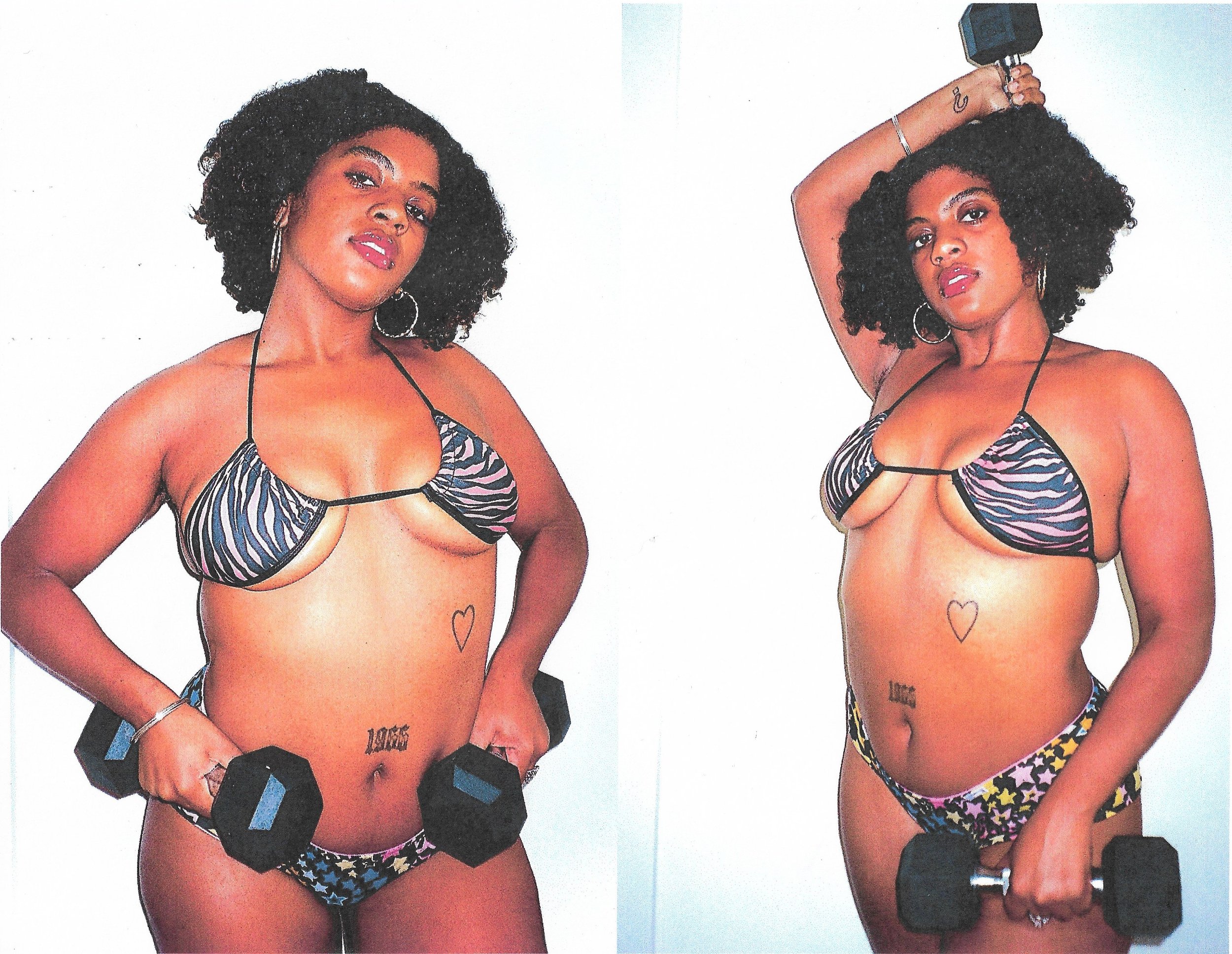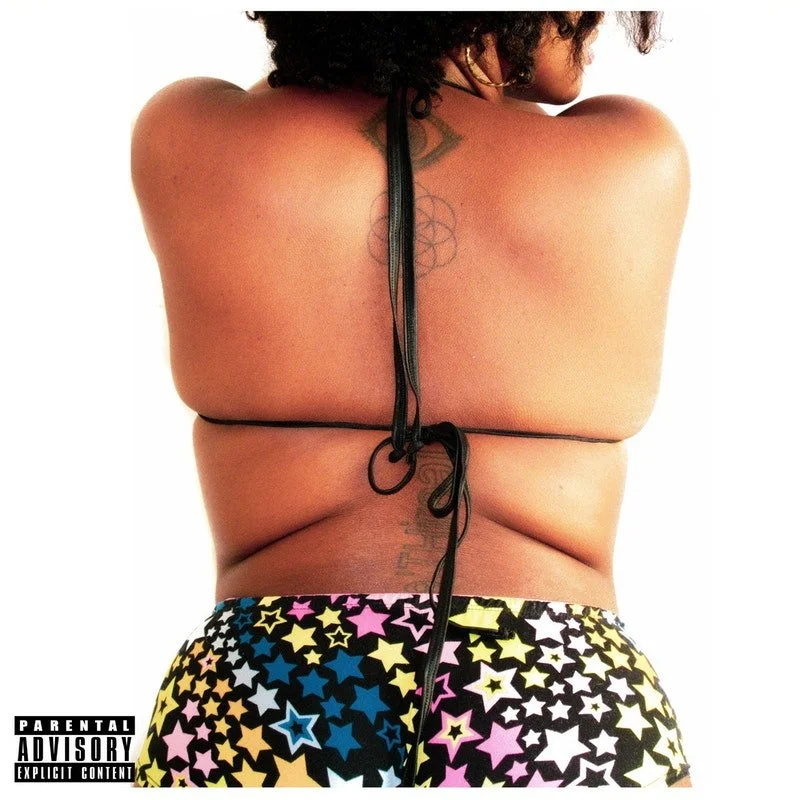
Nora Kelly Talks Touring, Overcoming People-Pleasing and the Punk-Country Influences in “Rodeo Clown"
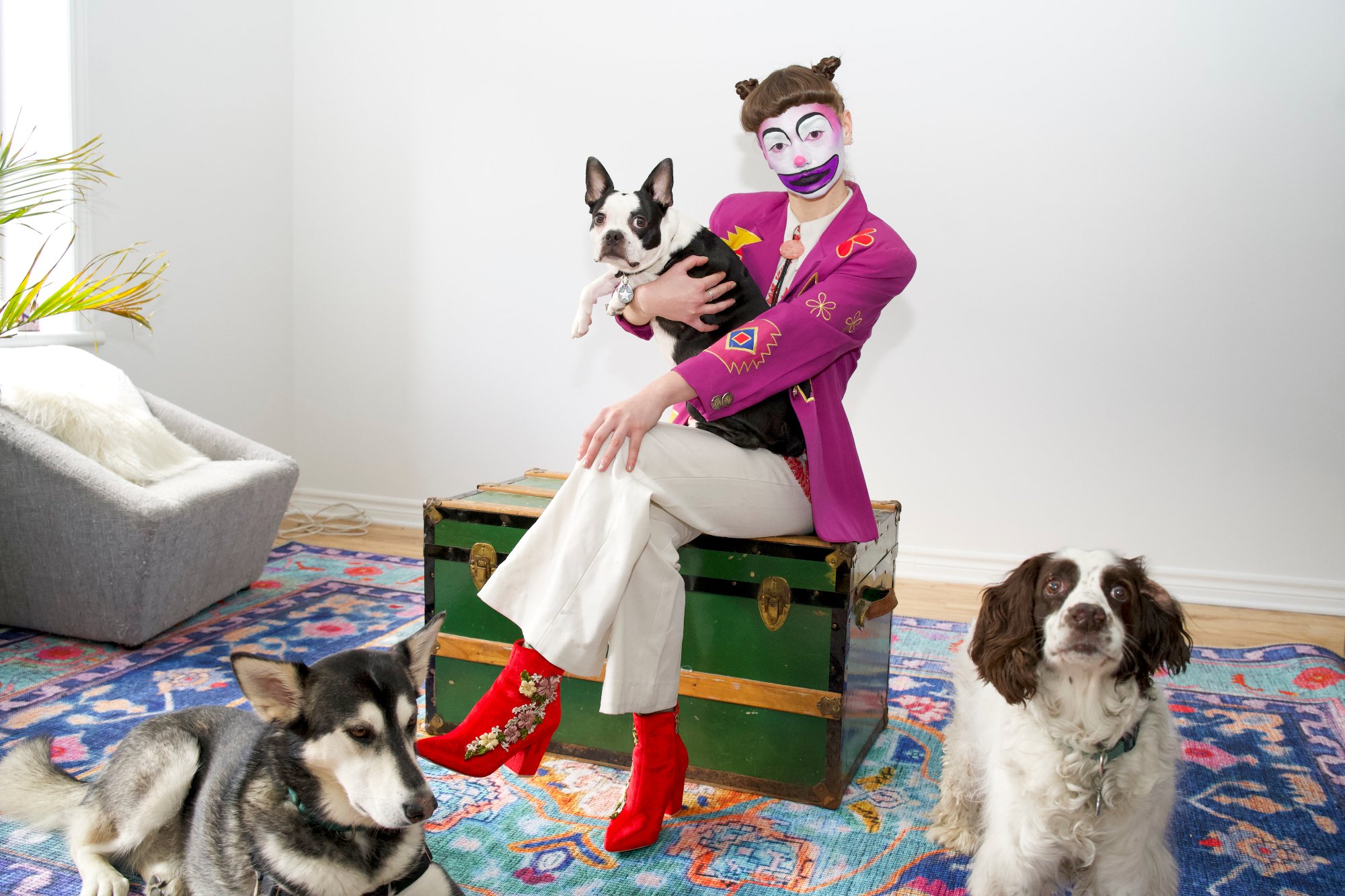
 

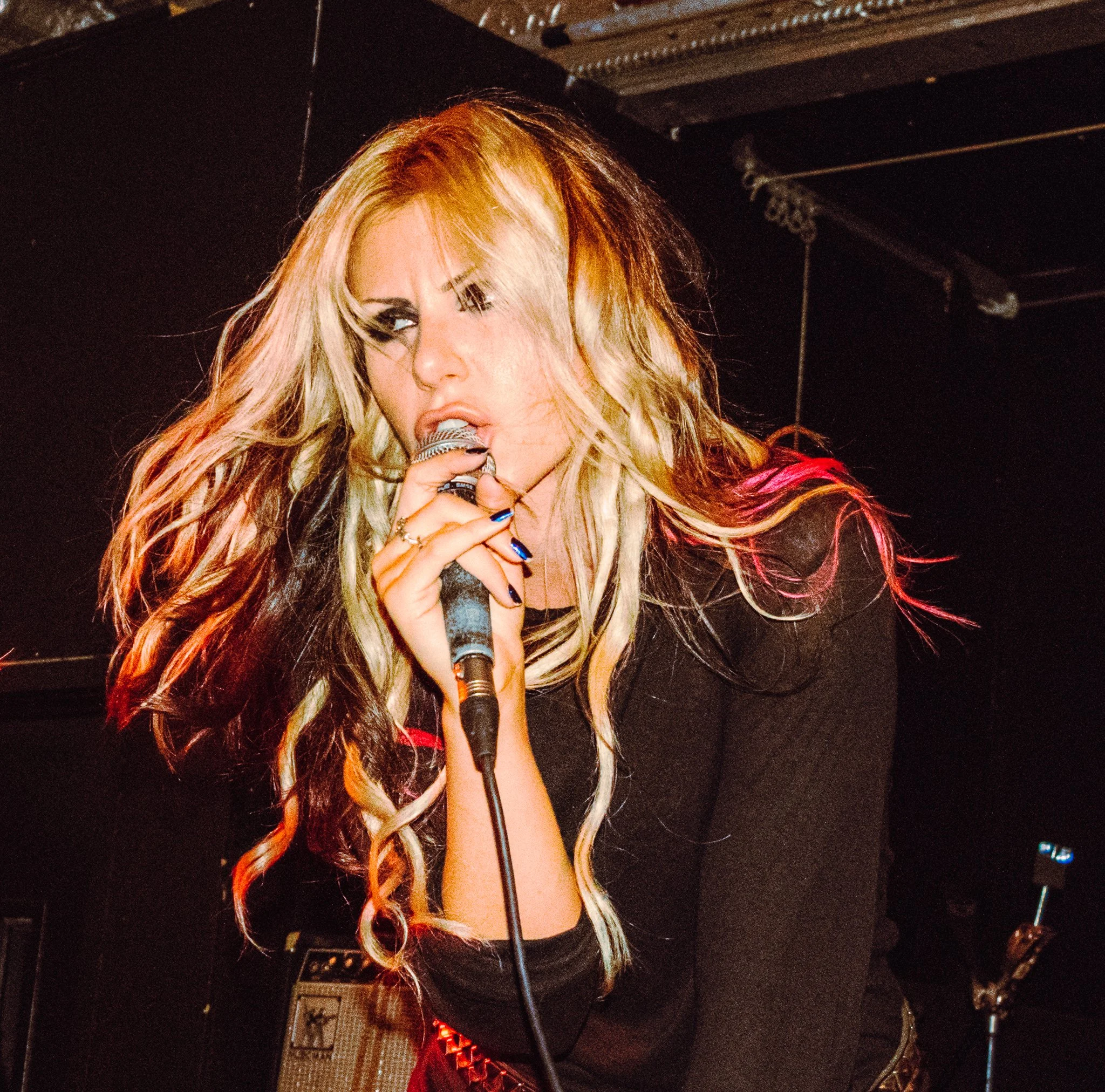
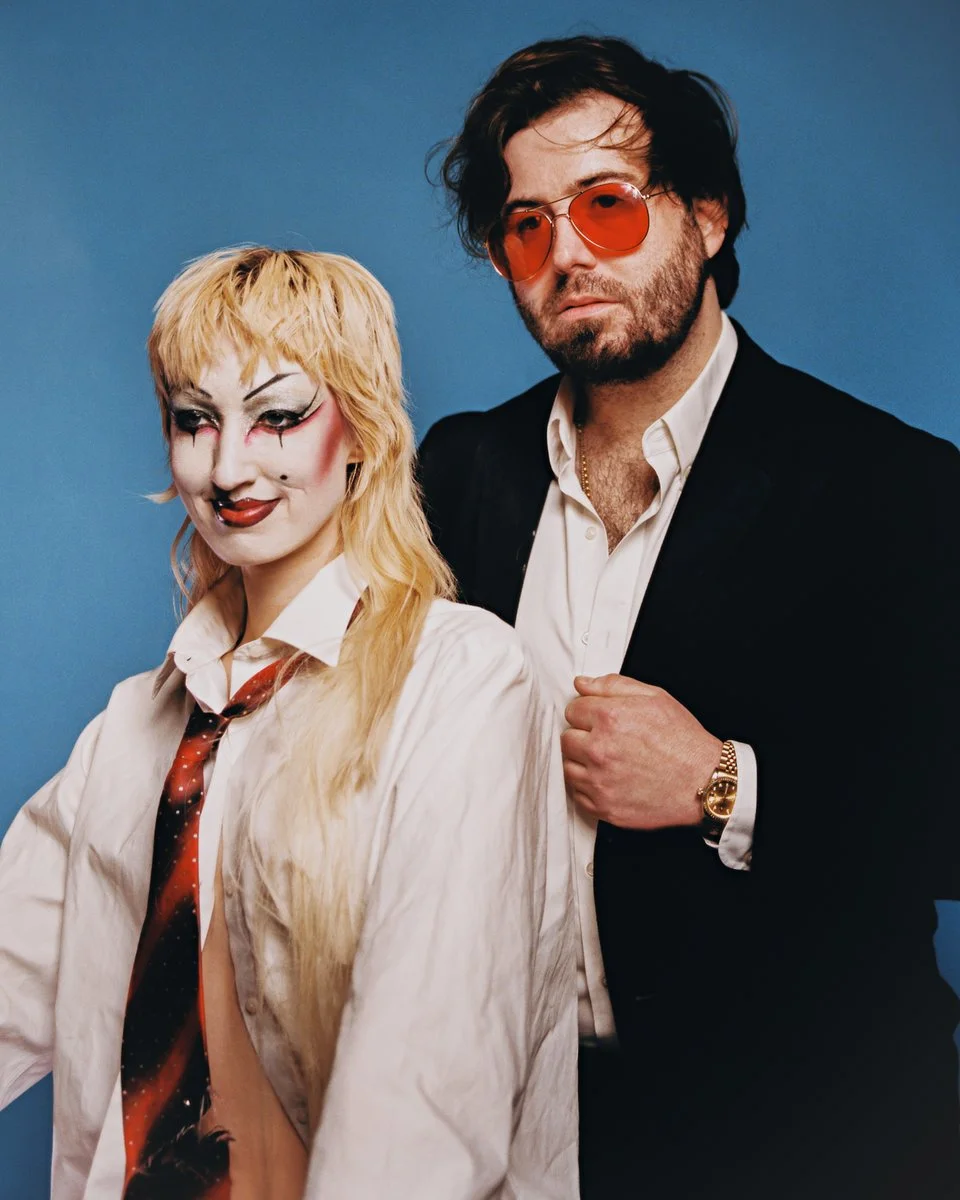
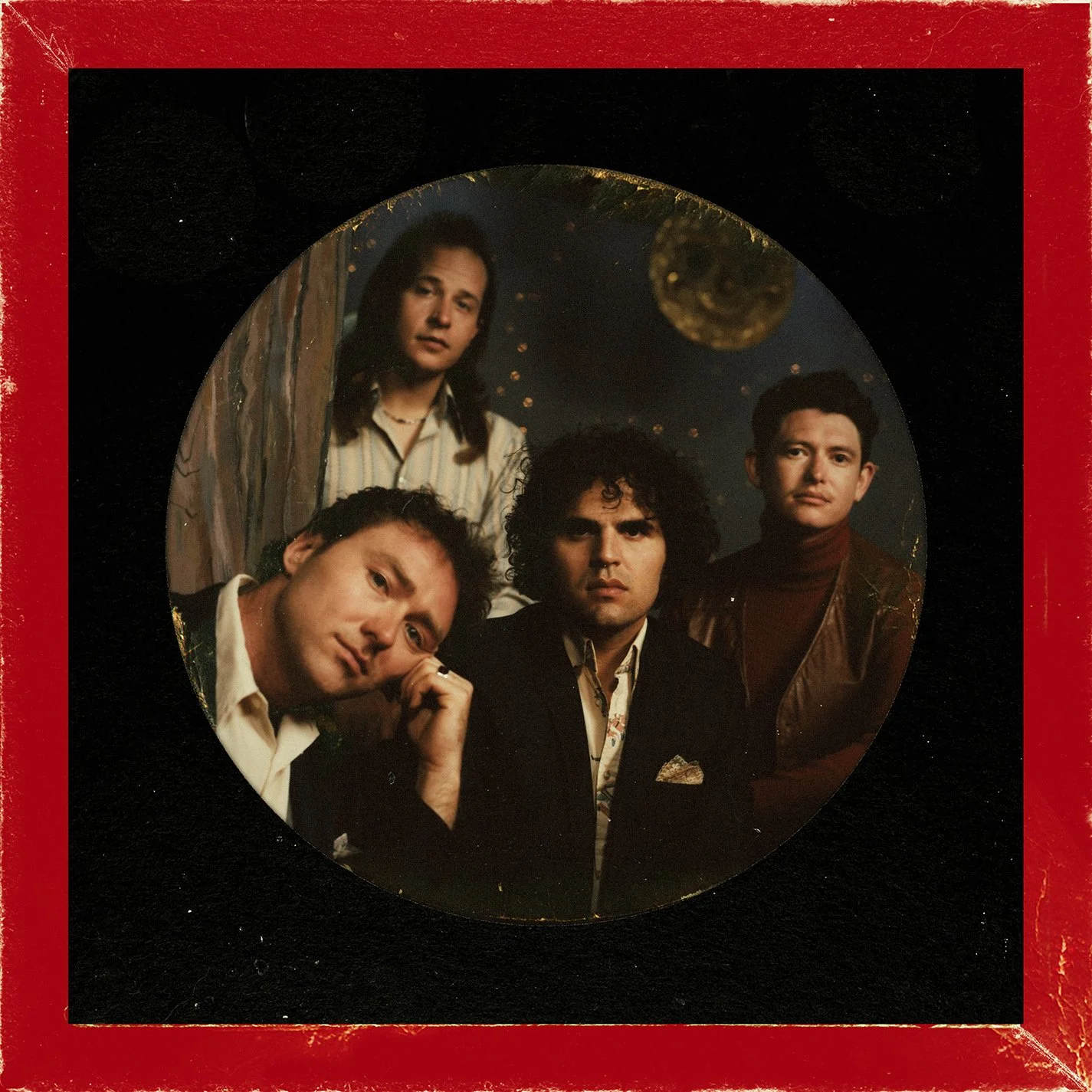
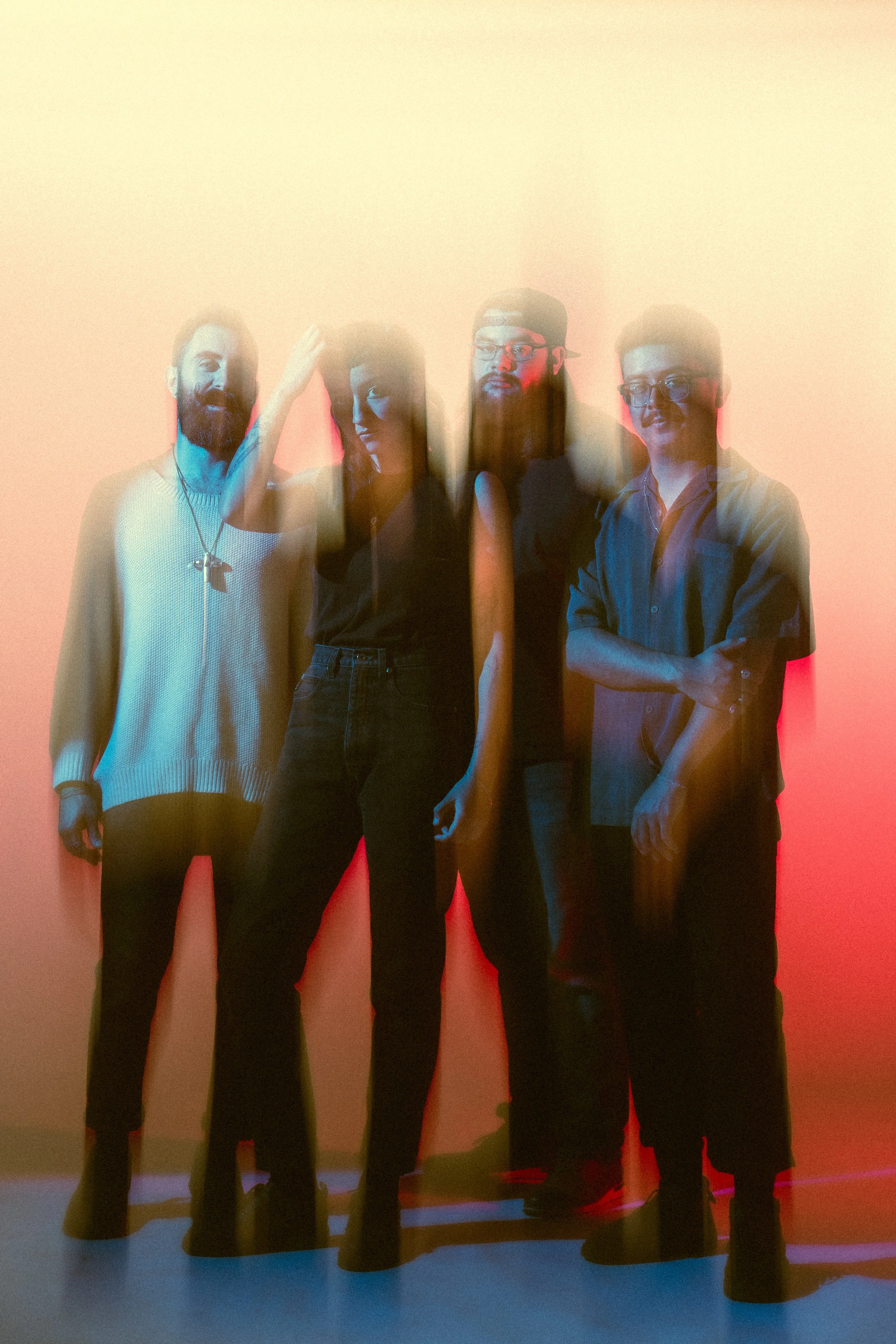
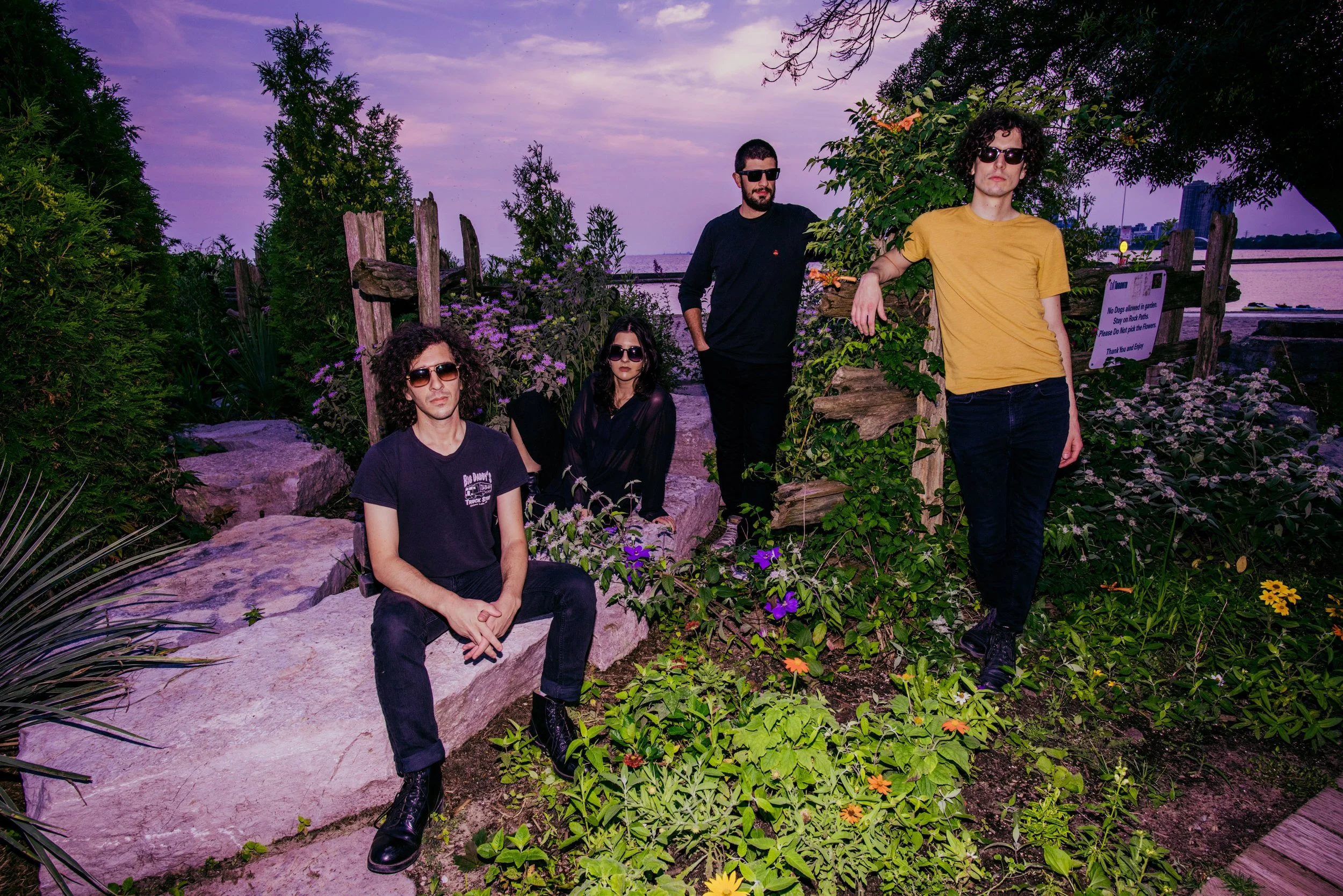
Nora Kelly by Gabie Che

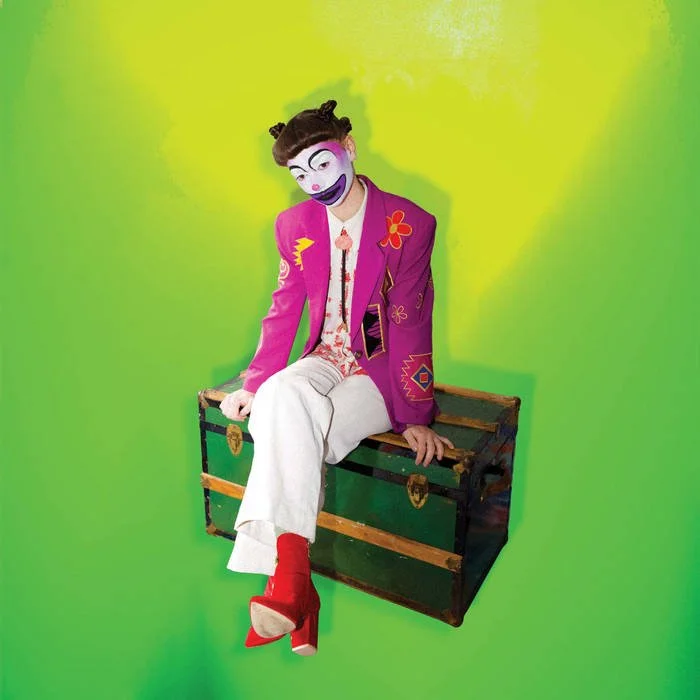
“I think one of the reasons people are kind of creeped out by clowns is because they’re always presenting the emotion of their painted face, [so] you don’t really know what’s going on underneath,” says Nora Kelly, lead of Montreal’s Nora Kelly Band. “Maybe they’re feeling something completely different.”

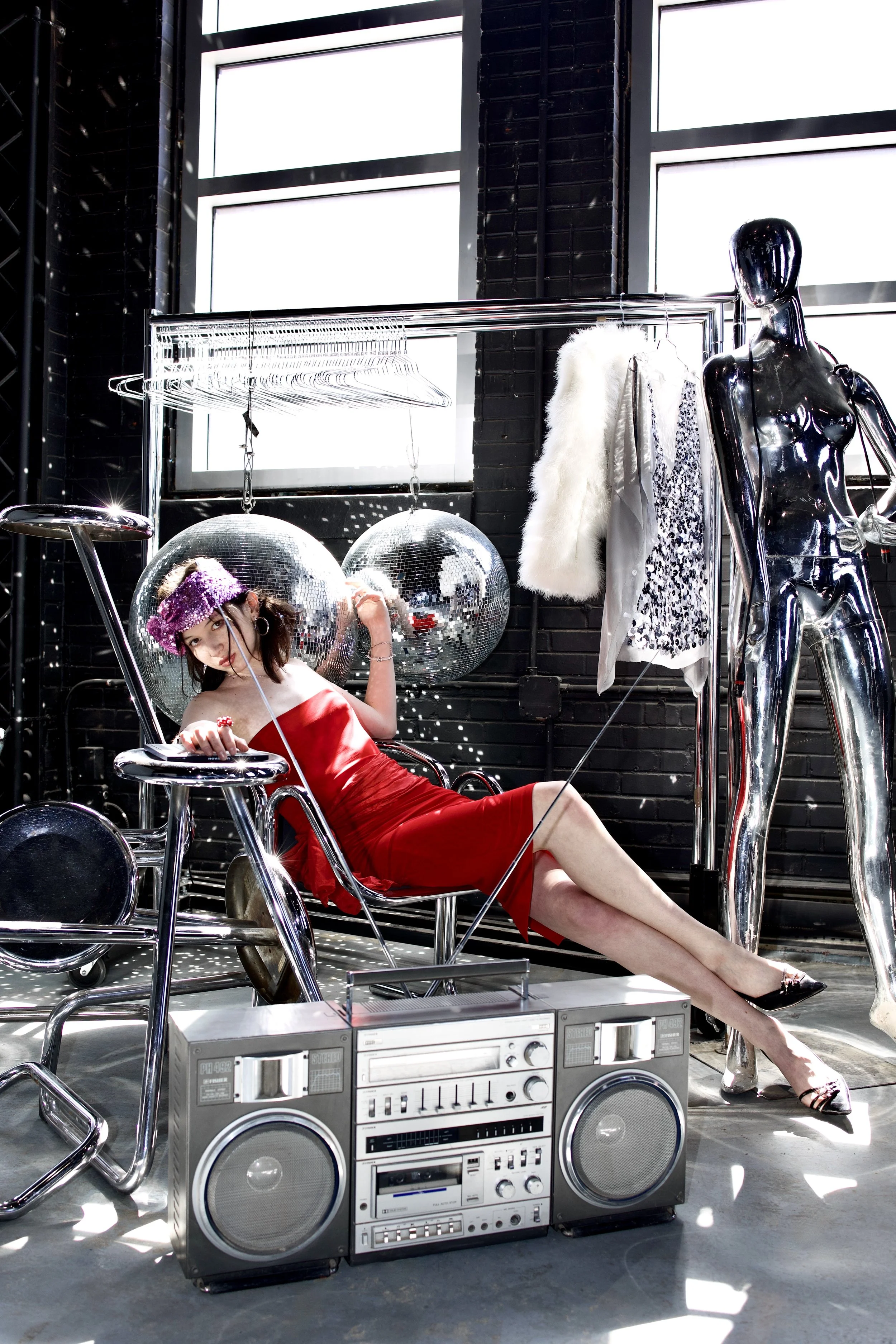
This idea is at the core of the band’s newly released record Rodeo Clown, an album that blends folk, punk and country influences and delves into themes like breaking out of people pleasing. “A lot of Rodeo Clown’s material is leaning into tongue-in-cheek absurdist role-playing,” Nora says, with herself as the clown.

The ten-track album is the band’s first full-length release, with songs blending punk elements with folk and country-inspired storytelling.

“When COVID-19 hit, I think we all went through introspective times in our lives, and that was an area of growth for me. To start being more honest to people around me,” she says.

“I would be in a lot of uncomfortable situations and go along with it, feeling a lot of pressure to be nice all the time and not really set boundaries. Then I would get overwhelmed.”

Songs like “Lay Down Girl” and the accompanying video embody this theme, with Nora walking around as a “manically energetic, people-pleaser” clown, running into a vampire (the energy-sucker who always asks things of you) and other characters you’re likely to recognize (in more ways than one).

“It’s a song about not being the life of the party for everyone else,” she says. “If you’re going to do it, do it for yourself.” A clown, an “evil hoarder obsessed with material possessions”, and a “horse girl-city slicker” are among the characters she possesses throughout this album (Roswell aliens even make an appearance) as she explores this path of self-discovery.  

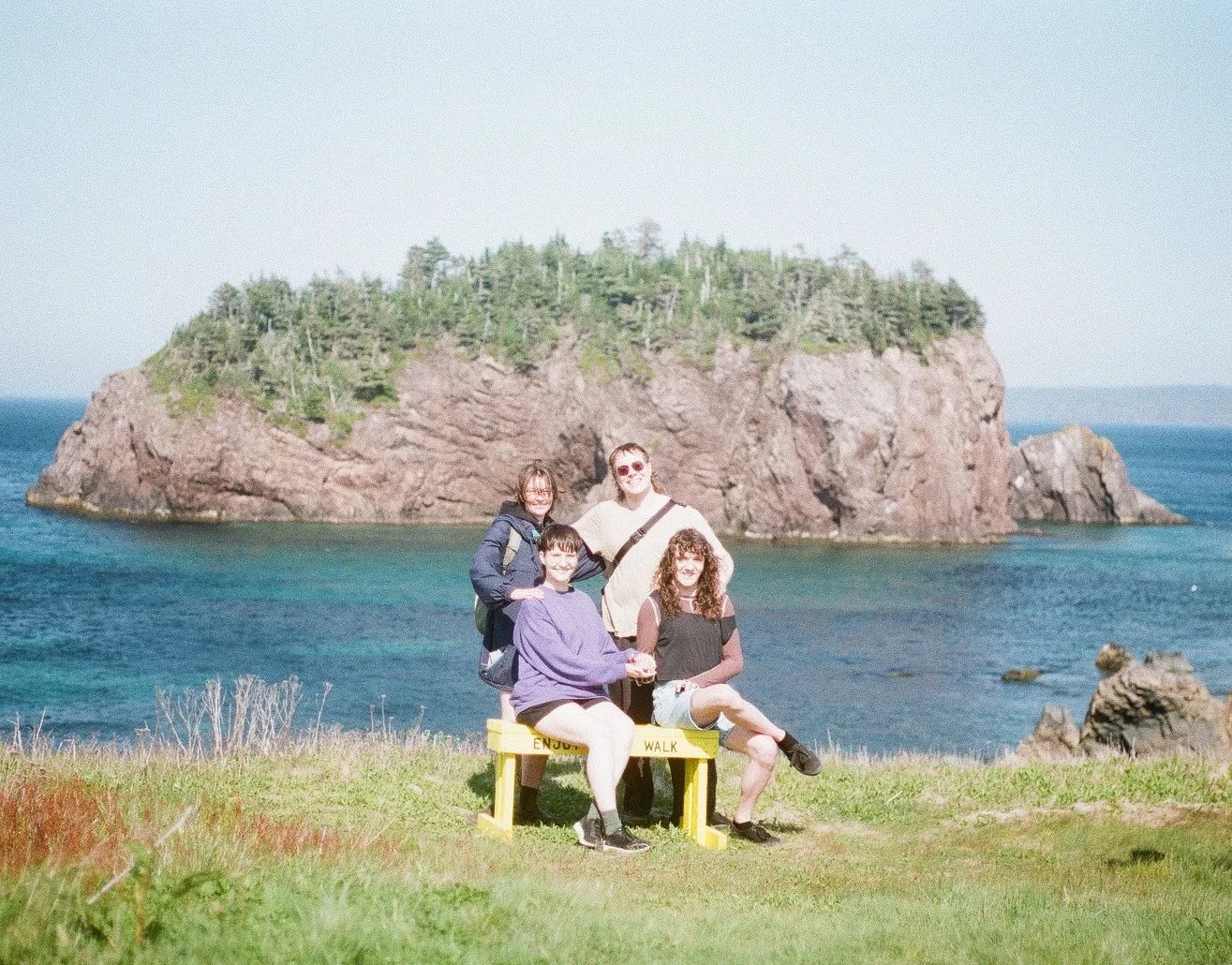
The Nora Kelly Band was created in 2020, amid COVID shutdowns that forced Nora’s post-punk band with drummer Ethan Soil called DISHPIT to take a break. During that time, they would frequent an outdoor area near a skate park and train tracks in Montreal’s Mile End, where local musicians would meet and play country covers. It’s there the two bonded with Rachel Silverstein, Vader Ryderwood, Dylan Keating, and Ellie MacPhee, with the six of them going on to form the band. 

“The friendship dynamic was strong, so we naturally moved into that,” Nora says. “Now we’ve been playing together for two years, and we’re working on our next album. It’s cool to see it grow up this way… and now we’re on tour together, doing laundry together.”

They started recording their first EP Perfect Pig at their apartment and finished the album at the Autoland Audio recording studio in Montreal, owned by Richard Reed Parry of Arcade Fire.

Beyond the music, Nora is also a painter who leans into that art form to unwind. “The two practices are really opposite for me,” she says. “Music is a really collaborative thing. When I write songs, I write them alone, but I write them quickly. Then there’s a lot of workshopping with the group. With art, it’s completely independent, and I'm in control and I can start and stop when I want. I do it late at night and get in touch with myself, then I do music during the day with the band on the weekend, and it’s my little social tasty treat.”
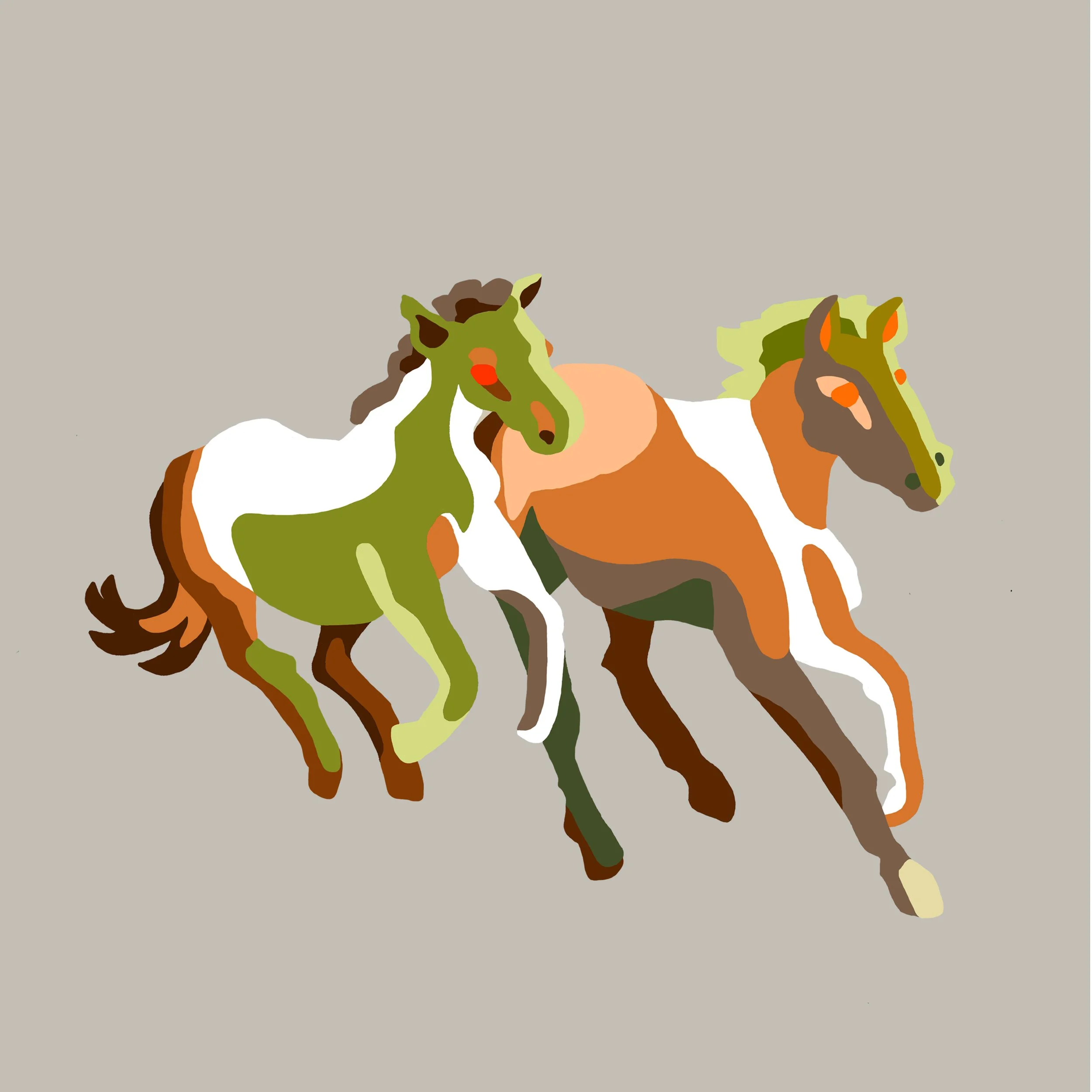
“Horse Girl” single art

While music provides Nora with an opportunity to “really get something out,” painting is an opportunity to step back. “As much as I'm a social person, I need to recharge… like a lot,” Nora says, mentioning how she leans into painting and drawing to decompress. “Music is this chaos energy, a vessel for me to channel my intense energy as a person in a healthy way.”

When it came to creating Rodeo Clown, Nora went in an entirely new direction: “Musically, I wanted to move away from the stripped-down punk band thing, recording live off the floor with three instruments.” Rodeo Clown features a diverse catalogue of instruments, including the banjo, fiddle and pedal steel. 

Nora cites artists that are “musically diverse with different voices coming in and out” as inspiration for their record, including The Band, Neil Young, Big Thief and Songs: Ohia's The Magnolia Electric Co.

Country influences also make their way throughout Rodeo Clown. Although Nora started out playing in punk bands, she was all the while writing “folky songs that didn’t fit with that band”, only bringing them out every once in a while on camping trips. “Deja Vu”, appearing halfway through Rodeo Clown, is one of these songs, and the first one Nora wrote at 16. 

“I really love country music,” Nora says, ”but when I was a teenager, I would say I liked every genre except it. My parents love country music. They’re both from the US and played it a lot. My brother and I would scream when they put on Hank Williams III,” she laughs. “But as I got older, I really came to appreciate a lot of the humour in the lyrics. It does have this outlaw sensibility if you’re listening to the right people.”

Songs like “Horse Girl”, “Roswell” and “Purgatory Motel”—which pleads “Though I’ve been good please don’t send me to Heaven /  All of my friends are down in Hell”—lean most heavily into the folk and country influences. They poke fun at classic country tropes (“boys like trucks”) while adding in earnest musings and the aforementioned mix of instruments. 

“‘Horse Girl’ is a funny and kind-of meta song about being a city slicker who is pretending to be a cowboy…which really is our band,” Nora says. “Elie is from South Carolina and plays fiddle, and Dylan is from Alberta and plays pedal steel, so they are pretty legit, but the rest of us are from Vancouver or Toronto and grew up in the city. We like country music a lot, but we don’t have a lot of the classic childhood stories that a real ‘country-living’ person would have.” She laughs. “The song is us calling ourselves out a little.”

Discussing the unlikely similarities between punk and country, Nora says they’re both simple.  “Country is just a few chords, and punk is just a few chords,” she says, “and they both have a fuck you attitude. A lot of badass heroes to look up to, who were living differently for other people. But there are also a lot of people who give each genre a bad rap,” she adds.

Songs like “Tonka”—which closes out the record—feature raw vocals, leaning into many of the band members’ punk roots while blending other influences. 

“The nice thing about country music is it's a genre a lot of people can connect to, like little kids and older people. While punk is one of my favourite things to walk around and listen to on my headphones—it stirs me up like no other genre—country has a wider demographic that comes out to the shows.”
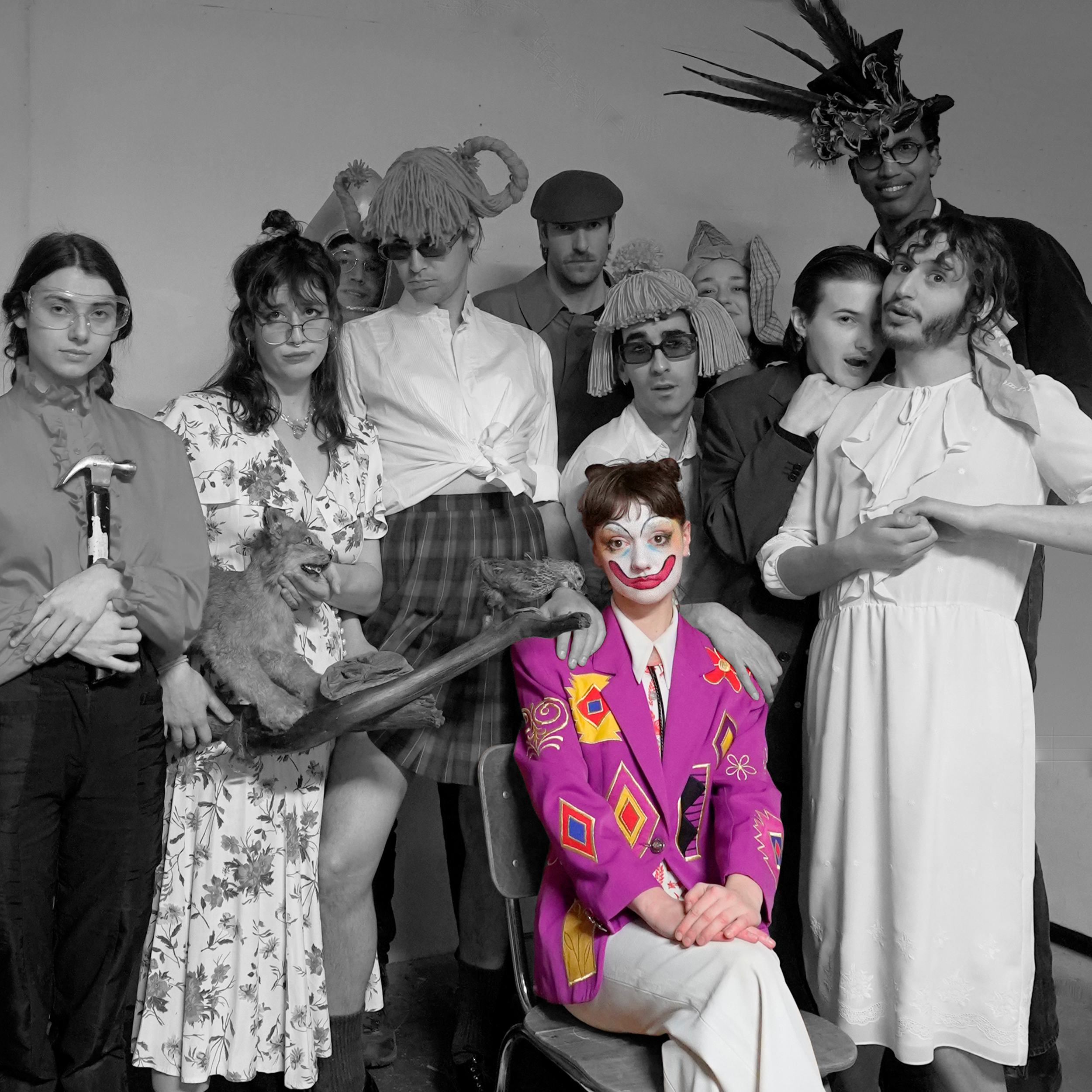
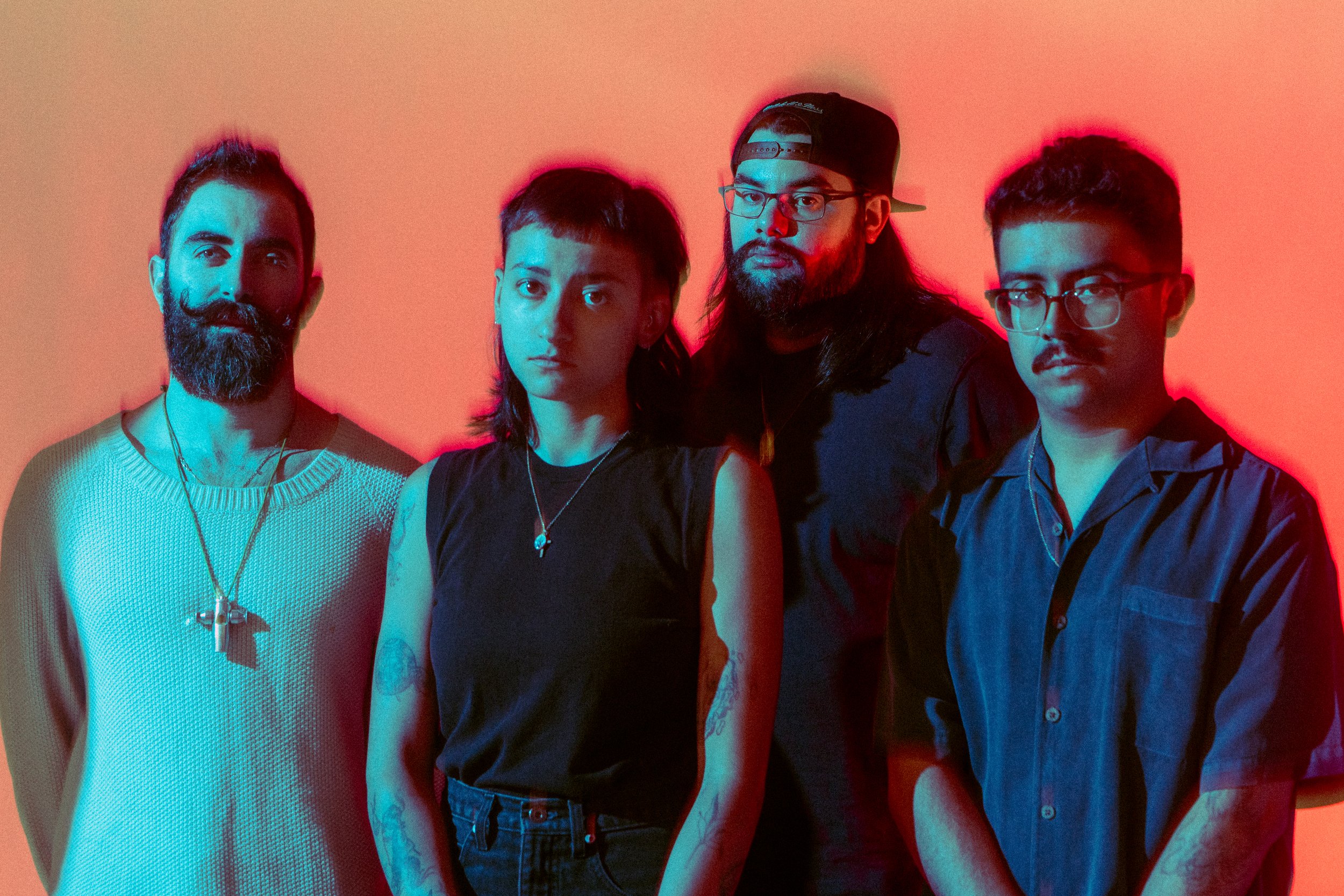
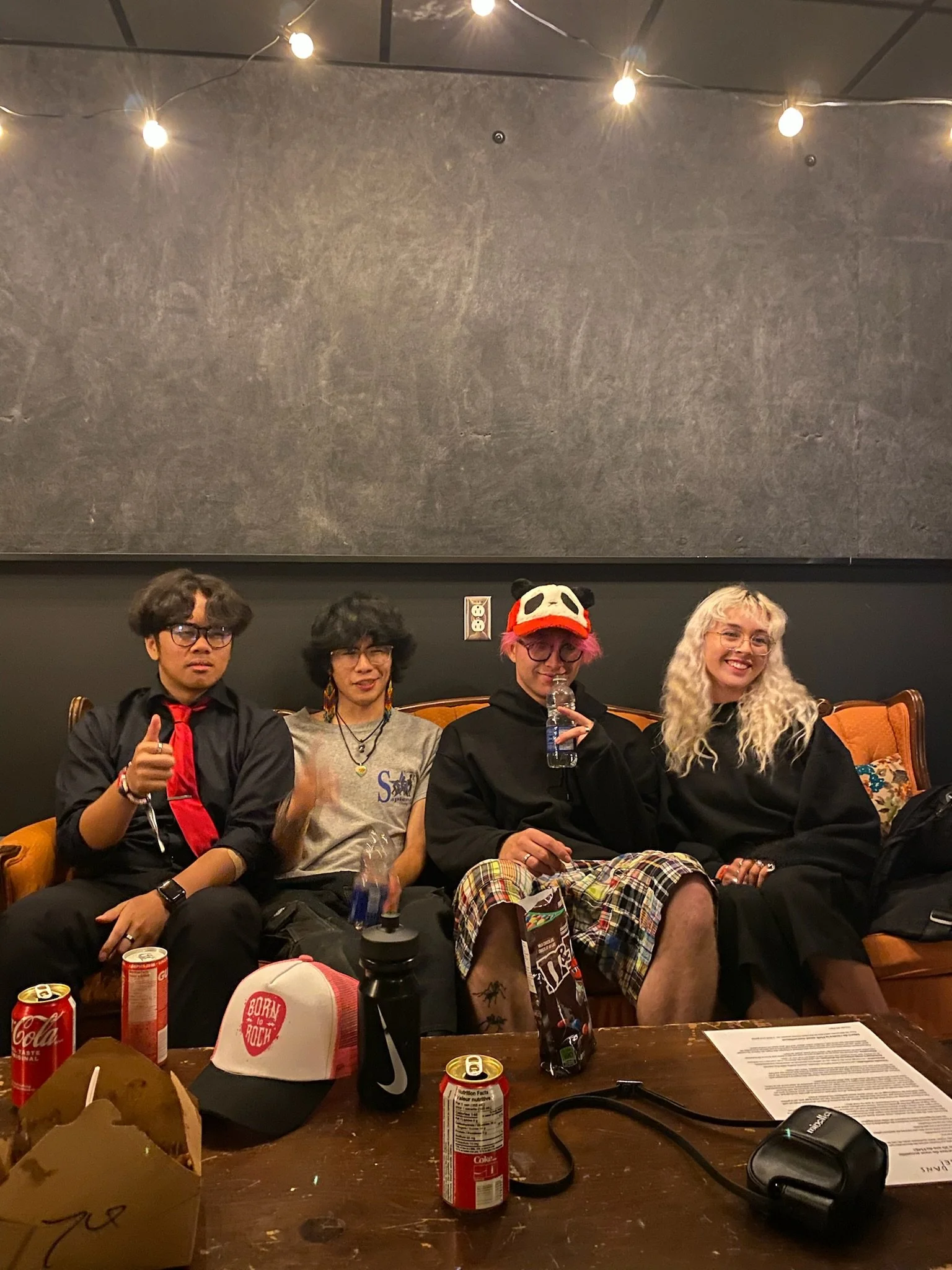
Nora Kelly Band by Gabie Che

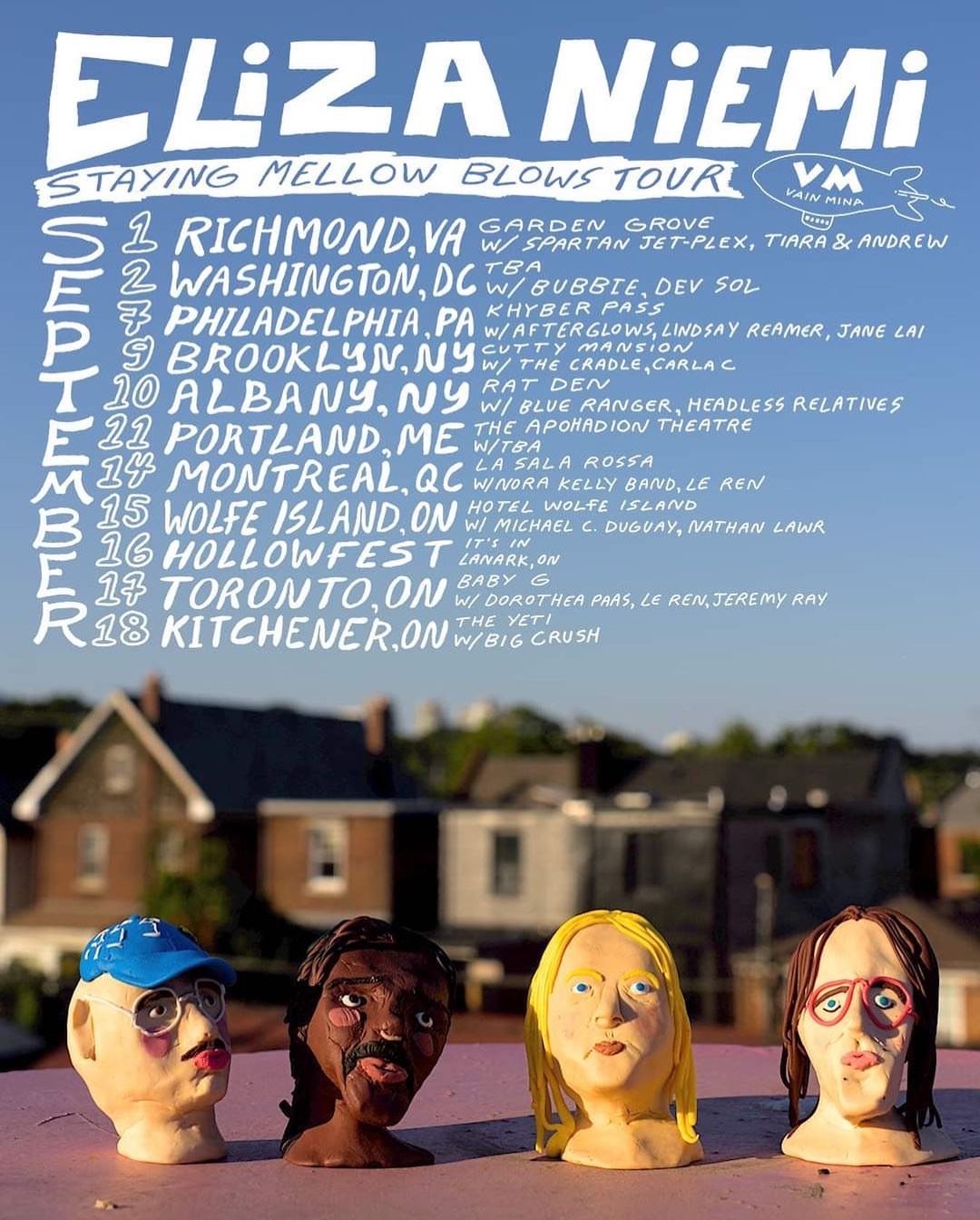
The band recently wrapped up their first tour, making their way through the US’ East Coast – Nora was reporting from Brooklyn at the time of this interview. “It’s my first time seeing DC and Philadelphia (a city I’ve always wanted to visit), and we were in Buffalo and played a cute queer house show venue and people danced a lot.” 

“We were having a lot of touching moments,” she mentions, citing “playing at a place that used to be a mausoleum where dead bodies were kept in Philly” and “drinking a PBR at night at the feet of Abraham Lincoln’s statue (and subsequently getting kicked out by security)” among highlights. “We're just running around having a good time,” she says. 

“The shows are really fun, but being on tour for the first time is really socially demanding. I really respect everyone who stays on the road for months and months. It really is a grind.” she adds.

Fittingly, Rodeo Clown’s recent launch was celebrated with a Montreal show featuring Nora wearing the album’s signature makeup on stage for the first time. The band is currently halfway through writing their next record. This next album will not feature the clown motif, but listeners can expect new themes. “I feel like I should have been a theater kid, but I wasn't,” she laughs. “I love the performative aspect of music.”


Rodeo Clown is out now. Listen to the new record here.


Rodeo Clown

released August 25, 2023 via Mint Records
1. Mmm-Delicious

2. Lay Down Girl

3. Catch a Bone

4. Horse Girl

5. Heartbroken Over a Man

6. Deja Vu

7. Purgatory Motel

8. Rodeo Clown

9. Roswell

10. Tonka


Nora Kelly – lead vocals, guitar, banjo (10), dick flute (8)

Rachel Silverstein – keyboards, harmonies

Vader Ryderwood – bass guitar, backup vocals (2, 4, 5, 7)

Ethan Soil – drums, percussion, guitar (4,7)

Dylan Keating – pedal steel

Ellie McPhee - violin (1, 8, 9, 10)

Gabie Allain – violin (3)

Michael Feurstack – pedal steel (5)

Eric “Creature” Campbell – banjo (2)


All songs written and performed by Nora Kelly Band

Produced by Nora Kelly and Ethan Soil

Mixed by Pietro Amato

Engineered by Pietro Amato, Matt Rogers & Ethan Soil

Recorded at Skybarn, Autoland & Croc Studios

Mastered by Harris Newman

Album art photography by Gabie Allain

Album art make-up by Neve Kerry

Album art design by Owen Ostrowski


Nora Kelly Band

Instagram | Spotify | Bandcamp

Valerie Boucher is a writer based in Ottawa, Canada. You can follow her on Instagram and learn more at valerieboucher.ca.


Related Articles
 

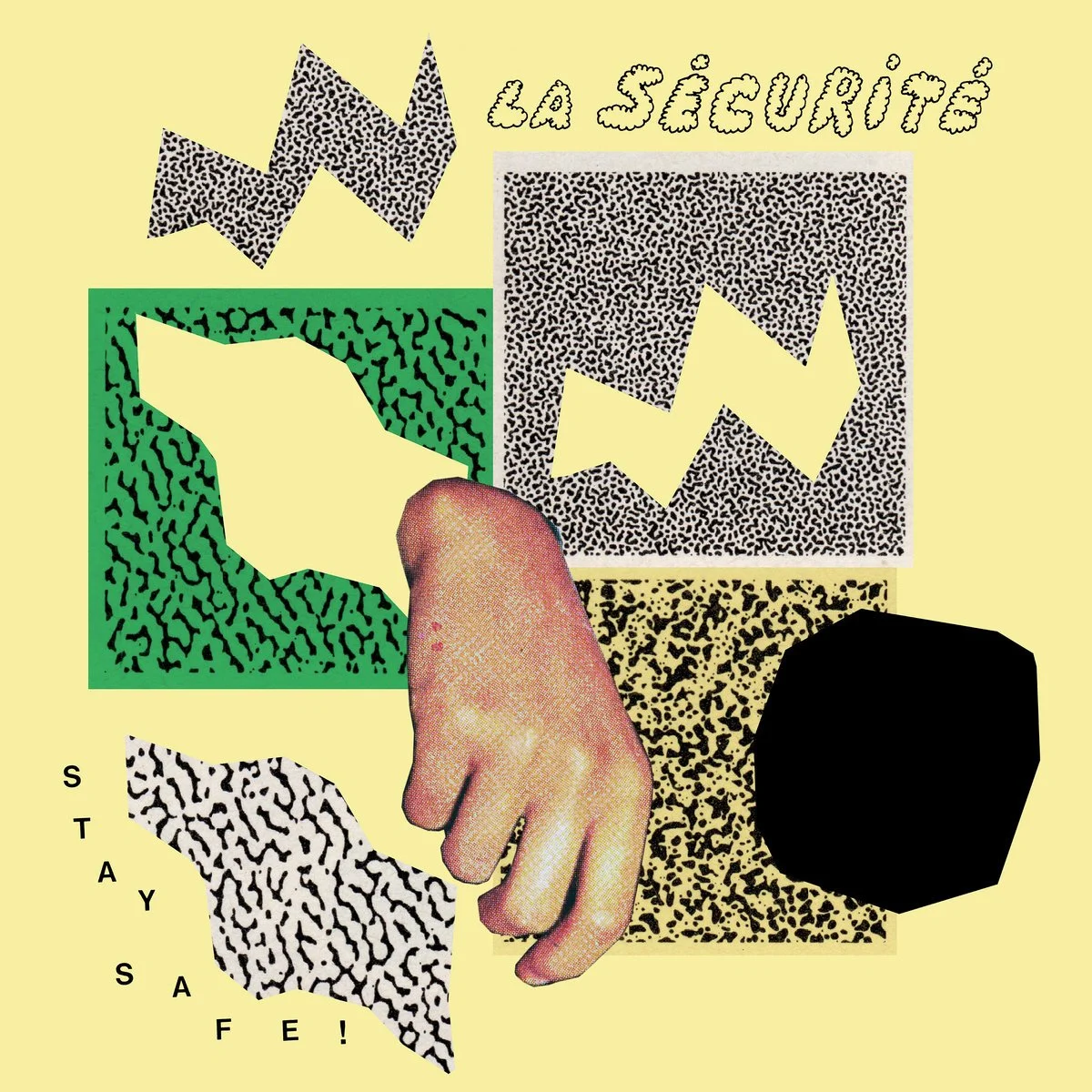
La Sécurité Ignites the Boulevard with Debut Album "Stay Safe!" (Mothland)


La Sécurité by Aabid Youssef

With their highly-anticipated debut album waiting in the wings, La Sécurité is ready to cause some commotion. The Montreal art-punk group shares Stay Safe! tomorrow via Mothland – a record consisting of ten electrifying tunes united in their skittish asymmetry.

The musicians that form La Sécurité are no strangers to the scene, having charmed countless audiences through other projects like Choses Sauvages and Silver Dapple, but operating within this collective keeps each member on their toes. From the arresting synths of debut track “Suspens” to the domineering bassline of “Serpent”, the band has set a standard of heightened sonic volatility, and the remainder of the record continues that thrill. Stay Safe! provokes the senses with its bilingual musings and jagged new-wave arrangements, traversing between subjects like flirtation and bodily autonomy with the same crafty cool. Expect to strut to zigzagging guitars, commanding rhythms, and a sprinkle of woodblocks.

A few weeks before the release of Stay Safe!, vocalist Éliane Viens-Synnott connected with Also Cool to reflect on the final touches and tease the summer adventures ahead.

La Sécurité by Aabid Youssef

Rebecca Judd for Also Cool Mag: This new single “Serpent” is peppy with a punch. I love the effortlessness of its undercut, how it captures the messiness of catty gossip with such breezy disco flair. This is a broader balance you strike within your forthcoming album as well: this determination to be both lyrically and instrumentally bold, scratching many different surfaces and thriving in the madness. How did the development of “Serpents” fit into Stay Safe!’s creative process?

Éliane Viens-Synnott of La Sécurité: It came about in a pretty organic way. [Drummer] Kenny [Smith] started doing that funky beat, just joking around during a practice, and [bassist and producer] Félix [Bélisle] kinda whipped out that super groovy bassline! We noodled around with the rest, keeping in mind the more dancey side of our art-punk influences (Maximum Joy and ESG, to name a few) without wanting to rip anyone off, of course. I thought it was fitting for some lyrics I had already written. I didn't want the song to be emo or dramatic or anything – just a friendly little jab!

Also Cool: The video for “Serpent” is frenzied and lighthearted, capturing everything from Sonic to South by Southwest. Your videos notoriously stay true to your sound, feeling lo-fi yet descriptive. Does the band have a particular approach to concocting music videos, or was this one just as simple as a glitch?

La Sécurité: Pretty simple, yeah! Since we kinda established that DIY/VHS approach with our first videos, we thought it was a nice direction to continue in. It's a way to keep a natural, sort-of intimate-feeling approach, highlighting good times that we have spent together as friends and bandmates.

AC: As the video shows, La Sécurité recently played SXSW, which feels like a significant milestone given your first show at DISTORSION was six months ago. Can you share more about your experience in Texas and what you took from it?

LS: Yeah, what a ride that was. Even having our first show at DISTORSION was kind of unreal! We were pretty curious to see if there would be any buzz at all outside of the comfort of our MTL scene, and I guess the short answer to that question is yes! We met many awesome people and our shows felt pretty electric. Playing six shows in a week definitely helped us weld our dynamic on- and off-stage together.

AC: Stay Safe! comes out on June 16, and you’ve teased that your debut will be “quite pleasing, even to unsuspecting eardrums”. Without giving too much away, what kinds of experimentation made the final cut?

LS: Well, there is one unexpected surprise I'm excited to share. I guess the one hint I'm willing to share is: 90s prom night vibes, haha. Once you hear it, you'll get it. Besides that, expect more songs along the same lines as what you've been hearing so far. They each have their unique touch, but somehow all belong together.

AC: Festival season is afoot… surely there are some plans up your sleeve. What does this summer look like for La Sécurité?

LS: Looking good! In June, we are hitting up FLOURISH Festival in New Brunswick, followed by a show in Québec City with our friends Jesuslesfilles (which [guitarist] Melissa [Di Menna] also plays in)! Then we head to Calgary for Sled Island, and in July we are doing La Noce in Saguenay as well as Le Festif in Baie-Saint-Paul. There are a few more dates that aren't announced yet, so it's a secret for now. Last but not least, we will be doing a record release show in Montreal at l'Esco! The date will be announced the day our record comes out.


Stay Safe!

Out June 16, 2023 via Mothland

1. Le Kick

2. Dis-Moi

3. Anyway

4. Waiting For Kenny

5. Suspens

6. K9

7. Serpent

8. Try Again

9. Hot Topic

10. Sleepy Rebellion


All songs written & performed by La Sécurité


Produced, recorded, and mixed by Samuel Gemme & Félix Bélisle

Mastered by Francis Ledoux

Artwork & layout by Melissa Di Menna


La Sécurité

Bandcamp | Instagram | Spotify

Rebecca Judd is the features editor of Also Cool Mag.


Related Articles


Trevor Sloan Creates A Nostalgic Blend of ‘70s Psych-Folk, City Living and Everyday Imagery in New Album "Dusk Among the Plum Trees"


Trevor Sloan. All photos courtesy of Trevor Sloan

During a cold and dark winter in Toronto, Trevor Sloan—a songwriter, multi-instrumentalist and mixed media artist based in the city—found himself in a cozy room filled with loved ones. His friend started talking about his family’s plum trees and their process of making homemade brandy, and there came the inspiration for his latest album, Dusk Among the Plum Trees, released this spring. 

“I had this picture in my mind of a dusky sky above plum trees,” Sloan says. He went on to write a song by that name, and while it was never finished, the title stuck. “It conjures up images of dusk and night, and I think most of the songs on the album fit with that. I had also been reading a lot of Japanese poetry, which often references plum trees, so that was part of the inspiration too.”

The 11-track record, mixed and mastered by Andy Magoffin at the House of Miracles in Cambridge, Ontario, intertwines simple imagery and everyday themes. With a nostalgic psych-folk sound, the album conjures up images of faded pastel Polaroids, transporting listeners to another time and place.

Sloan explains most of the songs began with simple observations, like how “green grass is after the rain” and evolved from there. He weaves characters and objects into his songs, creating soft, colourful scenes filled with references to “…trashy magazines, singing robins, green steeples, the rubble of a burned-down hotel, coyotes walking on train tracks, and the light under a pigeon wing in flight.”

Many of these observations come from Sloan’s wandering in Toronto’s Junction neighbourhood, where he lives. “The song ‘Panther in a Cage’ is about a guy I see walking around my neighbourhood. ‘Sunset Glow’ refers to people and things from around here as well: ‘Old man and his cane… landlords and panthers, women from the shelter, loners and lovers, parrots and flowers.’”

The latter song closes out the album, paying tribute to its title and portraying the “city folk on their way” as the sun sets. Sloan explains, “It paints a picture of my neighbourhood, skillfully weaving together characters and references from other songs into one final closing piece.”

Sloan's sound draws inspiration from artists of the 60s and 70s, such as Donovan, Nick Drake, Labi Siffre, and Cat Stevens. ”There is something natural and genuine about the music from that time,” Sloan says, also highlighting his recent discovery of the music of British folk duo Chad & Jeremy. Songs like “Willow Weep for Me” and “Before and After” have left a lasting impression on him with their "mellow nature, gentle vocals, nice harmonies, and lush arrangements."

He also draws inspiration from new artists like Sylvie, Evan Cheadle (Fault Line Serenade), Dan Edmonds (Good Fortune Assembly), and Jon McKiel (Bobby Joe Hope), among others. “I am constantly trying to discover new music,” Sloan adds. 

These influences are clear in the album’s open track, “Ottawa 1977”, an upbeat homage to his family. While Sloan never lived in the city, he has strong ties with his parents having grown up in the city. 

“I was inspired to write the song after looking at photos from my parents’ collection. I love the warmth of 70s photography. Many of those pictures had the place name and date handwritten on the back,” he says. That idea of the back of a photo is where the song got its name. “I was thinking about my grandmother’s apartment in Ottawa. In the courtyard, there was a clothesline to hang laundry. If you were in the kitchen, the radio was usually on. In the family room, there were often tabloid magazines on the coffee table. For me, it was a golden place full of good family memories. I would say that side of my family is quite spiritual and believes in magic; that is why I used the line, “My family tree is full of mystical minds.

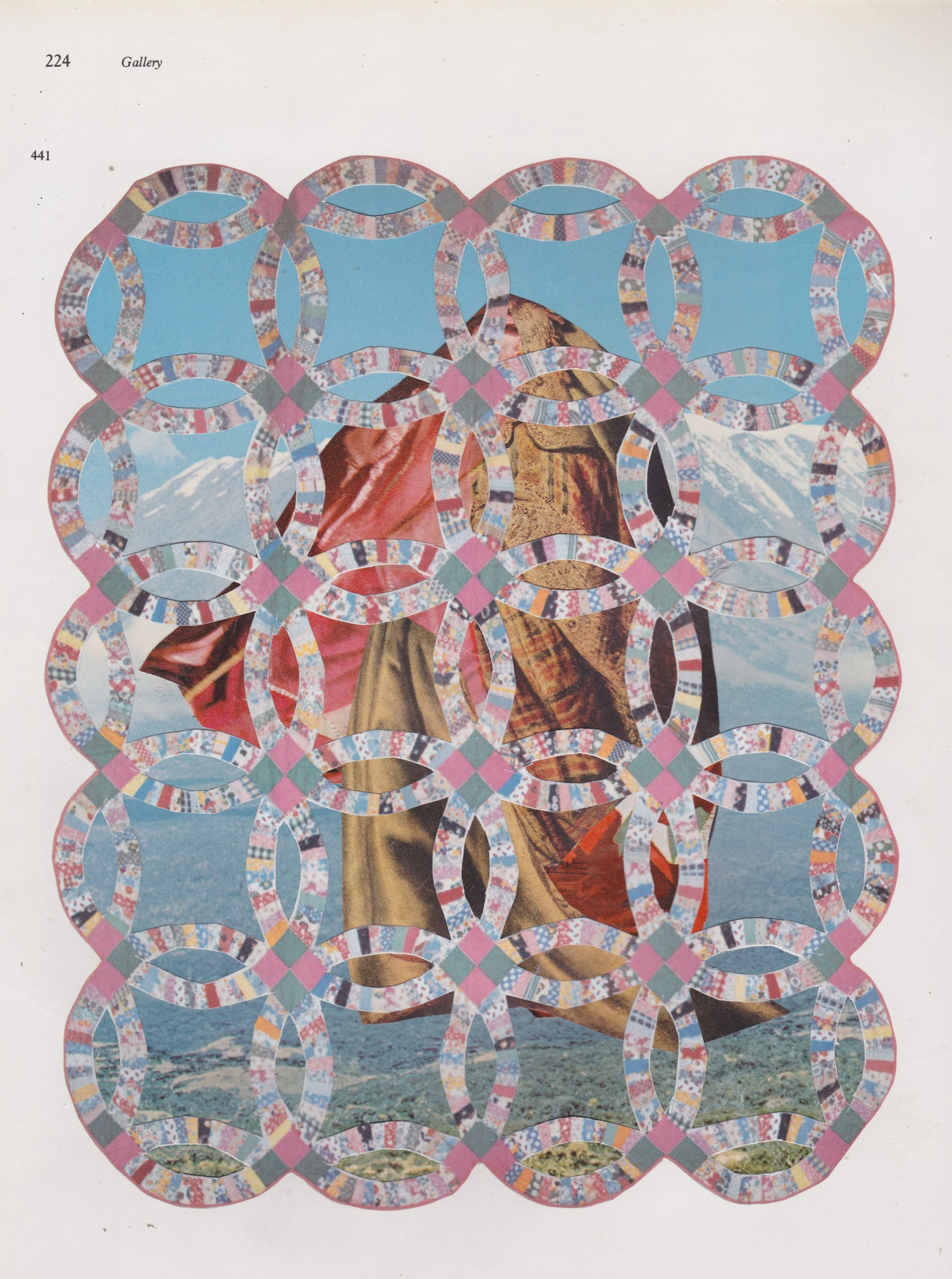
Accompanying the album is a zine consisting of ten collages and ten poems, a fitting complement to the imagery presented in the record. “I liked the idea of there being something physical that people could have in their hands while they listened to the music (as it is a digital release),” Sloan says.

Sloan started experimenting with collages around five years ago, finding a supportive community on Instagram. “There is this feeling that anyone can give it a try, even if you don't have a background in visual arts. I feel a great sense of freedom in collaging, as I can try different styles. I love working with scissors, paper, and glue. I love the immediacy of collage, being able to make a collage and share it with the world in one night.”

This immediacy contrasts with the longer creative process involved in making a record. “The process of writing, recording, having the music mixed and mastered by someone, and then planning an album release can take over a year. Collage and poetry provide instant gratification while I work on music projects over a more extended period of time. I believe collaging has helped me be more open-minded with music, more willing to experiment, to have fun, and just focus on making the music that sounds good to my own ears.”

While the album creation process takes some time, the recording process itself is more spontaneous. “When I write a song, I record it right away,” Sloan says, who recorded the album at his home studio. “So, I’m writing and recording continually throughout the year. I recorded about 30 songs and then picked what I thought were the best 11. Generally, I write songs on an acoustic guitar. I start with the music and then write the lyrics. I record each instrument, track by track.” 

From there, using an acoustic guitar, some vintage synths and keyboards, bass and a midi software program called SampleTank, Sloan records and layers each instrument track by track, creating his breezy, mystical sound.

“My Roland Juno-106 keyboard was slightly defective during the recording process, which added some interesting warbly drone sounds to some of the songs. That keyboard would get unbearably staticky after a minute of being turned on, so I would have to record those particular parts within one minute or wait until the next night (I've since had the keyboard repaired).”

The resulting album has a mellow, mystical sound, with each song taking the listener to a different moment in time as a true observer. 

Sloan references Francoise Hardy’s Ma jeunesse fout le camp…, as what he says might be “the perfect album to listen to while making dinner,” hoping listeners find a similar kind of quiet comfort and timeless appeal in this album. “I hope Dusk Among the Plum Trees is the kind of album that people would like to listen to while making dinner,” he says. “I hope they find warmth in the songs and the arrangements and it leaves them with a mellow feeling.”

Trevor Sloan. Photo courtesy of Trevor Sloan

Trevor Sloan

Instagram | Spotify | Bandcamp | Website

Valerie Boucher is a writer based in Ottawa, Canada. You can follow her on Instagram and learn more at valerieboucher.ca.


Related Articles
 

Interview: The Return of Montreal's Suoni Per Il Popolo is an Intergenerational Celebration of Musical Escape


Suoni Per Il Popolo 2023 poster

Montreal’s world-renowned experimental music and art festival, Suoni Per Il Popolo, returns from June 1st to 23rd, 2023. The 23rd edition of the festival plans to animate the city’s beloved venues as a homecoming for music-makers, composers and the sonically curious. From the festival’s Plateau-bound nebulous and beyond, festival goers can expect a profusion of over fifty intimate concerts from local, national and international artists, and genre-defying programming spanning free jazz, avant-rock, noise/post-punk, avant-folk, afro-futurism and more. Along with concerts, the festival features sonic meditations, exhibitions, screenings, comedy shows, parties and a street fair

In anticipation of this year’s festival launch, we caught up with Kiva Stimac, Suoni Per Il Popolo’s co-founder and co-owner of Casa del Popolo and Sala Rossa

On this year’s edition, Stimac reiterates the significance of Suoni’s avant-garde programming as a means of community restoration: 

“With regards to anything in arts presentation right now, we have to consider the power and importance of music and creativity in healing from the turmoil of this global pandemic. What I’ve always looked for in experimentation and play is the questioning and liberation that you get from not only being a musician, but an audience member as well.”

Along with fellow festival co-founder and business partner Mauro Pezzente (Godspeed You! Black Emperor), Stimac established Casa del Popolo and Sala Rossa, two pillar venues in Montreal’s music scene. Acting as the festival’s homebase since its foundation, Stimac says their atmosphere brings Suoni’s values to life.

“As venues and as places, it has always been really important that we serve food and drink that is delicious and that when artists come, we provide them with a good stage and good lighting…and somewhere to stay in a really familial way! [Pezzente] is a musician and I’m a chef and a visual artist, so our model is based on both of us being artists and wanting to invite artists that we love to our home to celebrate and create with us.” 

While Suoni has expanded since its humble beginnings of “beer sales and selling sandwiches,” its DIY ‘til death mentality remains, with all of the festival operations continuing to happen behind the scenes at Casa and Sala on St Laurent boulevard. Likewise, the project continues to be funded by grants and unique collaborations, which Stimac feels fuels, rather than limits, Suoni’s spirit year after year.

“Though we have a limited budget, it forces us to look for money in other ways for special projects to do with artists. Like grants to fund local and international artists coming together to create a project,” identifies Stimac. “For example, this year we’re doing a deep listening sound walk with Pauline Oliveros’ life partner, IONE. It’ll be led by Ayelet Gottlieb, an Israeli-Canadian deep listening practitioner and vocalist,” she adds. “This makes it so there’s a multitude of ways you can experience the festival: You could go to a free meditation, a film screening, or a deep listening mountain walk, and then come to a performance.”

Suoni Per Il Popolo 2023 poster

Of course, Suoni’s “by artists, for artists” grit has also willed its vibrant and off-beat curation. This has set the festival apart since day one, making it the premiere event for testing boundaries through music. At the same time, Stimac and her team’s willingness to take creative risks with their programming set an interesting precedent for Montreal, which hasn’t always been the hub for out-of-town acts we know today. 

“When Casa del Popolo opened in 2000, a lot of artists were actually skipping Montreal on their tour routes,” she articulates. “So, people would play Toronto… and they would play Boston… And eventually, [my partner] Pezzente reached out to his agent, who was managing a bunch of cool artists at the time, and was like, ‘Why aren’t these bands coming to Montreal? Why don’t we try having them come to Montreal?’”  

From this phone call, Stimac and Pezzente went on to put together their first show with Scottish indie rock group Arab Strap at the newly opened Casa del Popolo. To their surprise, it sold out in 10 minutes.

“From that show and eventually starting to program at Sala Rossa across the street, we realized there was a demand for international touring artists here. Another major incentive [to book these acts], especially in the experimental and avant-garde worlds, was to invite them to Montreal in the first place.”

This effort has remained integral to Suoni’s raison d’être, and a way for communities, both local and international, to work together and “transgress the physical space” through creative innovation, according to Stimac. 

While the definitions of experimental and avant-garde have evolved throughout the years, Stimac maintains that Suoni attendees can still anticipate generations coming together to appreciate underground and outsider art.

“The size of our rooms limit you to new and up-and-coming artists, or unheralded elders at the end of their careers. This year, we have three different groups performing who are in their eighties—and on the other end of the spectrum—local groups in their twenties performing and a piano recital for young kids who are just starting out. Inviting all ages has always been important to me because you can see the trajectory of their career, and that is impactful to so many.”

Likewise, the intergenerational aspect of the festival remains integral for Stimac, due to the universally transformative power of music. 

“The release of listening to or making music can really heal trauma, and that’s the music I’m drawn towards. Whether it be the free jazz of my dad’s generation or the punk rock music of my generation… Music is made for liberation,” she explains. “My vision for the festival has always been challenging revolutionary good times.” 

Expand your listening palette and attend this year’s edition of Suoni Per Il Popolo. The festival kicks off June 1st at Casa del Popolo. Tickets are available online below. Follow Also Cool on socials for more festival updates and coverage in the coming weeks. 

Festival Information

Artists | Schedule | Tickets

Suoni Per Il Popolo

Website | Instagram | Facebook | Twitter

Zoë Argiropulos-Hunter (she/her) is the co-founder and managing editor of Also Cool Mag. Aside from the mag, she is a music promoter & booker, and a radio host & DJ.


Related Articles


Chicago Post-Punk Duo Oddysseys Talks Friendship, DIY Happenings and New Single "Enough"


Oddysseys: Paul DiRico, (left) and Christian Treon (right)

Hot off the heels of their 2022 LP Softcore, Chicago-based post-punk duo and DIY collective Oddysseys shake off the bleak ache of winter with their new single “Enough”, arriving April 1st, 2023. Setting a promising tone for future music from the band, “Enough” cuts through its narrator’s uncertain inner-monologue with poignant, grungy rhythms and an undefeated aftertaste.

On “Enough”, Oddysseys’ Christian Treon shares:

“(‘Enough’) was written in the middle of the pandemic, when I started seeing less and less people; reaching out to less and less people. I was in a state of feeling very isolated, lonely and insecure. It progresses and gets louder and louder, following how I was feeling. It’s kind of like that build that comes from a while of being dissatisfied with how you handle situations—how you want to grow beyond (them)—and see how you can be enough not only for other people, but above all for yourself.”

“Enough” single artwork by Oddysseys

While we can’t say much more about the track until its release, listen to our audio interview with Oddysseys’ leading members, Christian Treon and Paul DiRico, below. Within, they discuss their latest arrival, learnings from their last album Softcore, as well as the admirable work ethic and camaraderie nurturing their creative vision.

Oddysseys

Instagram | Facebook | Spotify | Bandcamp

Zoë Argiropulos-Hunter (she/her) is the co-founder and managing editor of Also Cool Mag. Aside from the mag, she is a music promoter & booker, and a radio host & DJ.


Related Articles


Paying To Play: fanclubwallet on the Price of Touring the United States as an International Artist


Hannah Judge AKA fanclubwallet via Bandcamp

Editor’s note: The following interview originally aired on First Crush on CKCU 93.1 FM (Ottawa, Canada) on Friday, February 24th, 2023 and was produced by the author of this article.

Editor’s note (March 4th, 2023): Since the release of this article, the deadline to submit feedback to the Federal Register regarding the Department of Homeland Security’s proposed increase to visa rates has been extended to March 13th, 2023.


While the concept of "paying to play" is unfortunately nothing new in the music industry, especially for emerging artists, its harsh reality has risen to a whole new level.

In early February, the United States Department of Homeland Security announced proposed increases to performer visa fees that would make touring in the United States significantly more expensive, if not completely inaccessible, for international musicians.

In order to legally enter and tour the United States, international musicians are required to obtain P-type and O-type visas. Should the new rates come into effect, musicians will have to pay at least 250% more for the mandatory paperwork. As cited in Stereogum, P-type visa costs would skyrocket from $460 to $1,615, and the O-type visa from $460 to $1,655 (this is USD, by the way).

Not only will musicians be further inundated with the debilitating financial burden of touring, but the state of the North American music industry at large—and the hundreds of thousands of creative workers it employs—is under threat.

This news has driven musicians to take to social media to recruit supporters in lobbying the Department of Homeland Security to keep touring in the United States possible for international acts.

Also Cool had the chance to speak with Hannah Judge, AKA fanclubwallet, an Ottawa-based indie artist, on the issues facing Canadian musicians in the current cultural climate and how the community can show up to help keep touring possible for artists from our own music scene and beyond.

Listen to our conversation below. Supporters have until March 6th to oppose the move by leaving a comment on the Federal Register website here!

fanclubwallet

Instagram | Website | Bandcamp | Spotify

Zoë Argiropulos-Hunter (she/her) is the co-founder and managing editor of Also Cool Mag. Aside from the mag, she is a music promoter & booker, and a radio host & DJ.


Related Articles


Montreal's Eve Parker Finley Hosts New CBC Music Series "Ten Minute Topline"


Eve Parker Finley by Stacy Lee

Eve Parker Finley is putting musicians to the test by challenging them to write an original song based on a randomly-selected genre and a topic pulled from a hat. To top it off: contestants have ten minutes to compose their lyrics in-front of rolling cameras from the country’s biggest broadcaster. This is the concept behind Ten Minute Topline, the new CBC Music series hosted by the Montreal-based multi-instrumentalist and comedian.

On Ten Minute Topline, Parker Finley shares, “I hope [that people watching the show] get an excitement to try and play and experiment artistically themselves.”

With three out of five episodes out so far, the short series aims to “bring awareness to [the] diverse talent” making-up the Canadian music industry.

Hear our conversation with Eve Parker Finley on Ten Minute Topline below!

Watch Ten Minute Topline on CBC Music!

Eve Parker Finley

Website | Instagram | Bandcamp | Spotify

TikTok | Facebook | Twitter | YouTube

Zoë Argiropulos-Hunter (she/her) is the co-founder and managing editor of Also Cool Mag. Aside from the mag, she is a music promoter & booker, and a radio host & DJ.


Related Articles


Surf Curse Talks DIY Music Scenes, Friendship and TikTok Algorithms


Surf Curse by Julien Sage

When I think of 2013, I think of Buds, the debut album from Los Angeles indie-rock band Surf Curse. At the time, I was just discovering the music and film that would impact my teenage life in an identity-shaping way. I was stoked to hear those same points of inspiration in the band’s collaborative songs and independent projects (Current Joys and Gap Girls), and couldn’t get enough of their garage-rock sound that was re-emerging at the time. 

Surf Curse has come a long way since then, and have been touring their new album Magic Hour this past year following the viral success of “Freaks,” which came off their first album. 

I’ve been lucky enough to get to know Nick and Jacob over the years, in both Los Angeles and at home in Montreal, and was happy to catch up with them before their recent show at Club Soda. We spoke about the all-ages venue in Reno that changed their lives, their friendship over the years, and the impact of TikTok algorithm’s on DIY music scenes.

 Malaika Astorga for Also Cool: Can you describe the scene you came up in Reno and what it was like when you moved to L.A.?

Nick Rattigan: I feel like there's like three parts: Vegas, Reno and L.A.

Also Cool: I went to Vegas for the first time recently and was wondering how people live there full-time. 

Nick: Yes, we do that every time we come back.

Jacob Rubeck: Especially when you're young, it's like you're musically depressed, you know? It would take forever just to go see a band that you actually like. When we got to Reno, there was finally an all-ages space,The Holland Project, where bands that Nick and I loved would actually play.

Nick: It was kind of shocking.

Jacob: The very first night we were in Reno, we got invited to a show that was on the college campus by this guy handing out flyers. It was for a band called The Babies, and it was Kevin Morby and Cass Ramone from Vivian Girls. I had literally gotten the seven-inch record that day in the mail and loved it. Then this guy's handing out flyers for a show that they're playing in like two weeks, and I was like, “Where have you been my whole life?”

Nick: That guy booked our first show.

Also Cool: Not to say that Vegas is a small place, but I understand that there's not much going on music scene wise, and I’m also from a place where there was not much going on. This made it so that any show at all was really exciting and special. It was better than nothing, and I so desperately needed that.

 Nick: We went from a little bit of something to a lot, because L.A. is a lot. When we first visited, it was always the extreme of what we experienced at The Holland Project. There were so many all-ages shows, so many event spaces and places for people to play. So that was very exciting and exhilarating. Now I don't have my ear to the ground at all. I'm like, “Where’s the new stuff in LA? What's going on with the scene?

Jacob: Yeah, it's funny; it’s a lot of touring bands. What's great about being able to live in Los Angeles is that everyone comes to play here. So, you're reunited with old friends, bands that you always wanted to see; they’re all going to land here at some point. I got to see Duster this year and have been stoked on that. I got to see two nights of Pavement, which was incredible, and Danny Elfman for Halloween at the Hollywood Bowl, which was absolute lunacy. The one thing that I do like about L.A. is that you have access to so much.

I will say that I do miss being in smaller venues, like seeing a show at The Holland Project back in Reno. I miss being in that room and on the stage and figuring out what to do at the end of the night. With all these LA shows, I tend to leave immediately afterwards and go home, you know? Like an old guy. 

AC: Yeah. I mean, one of my questions was, and I know politics with The Smell are a bit complicated, but it obviously had a huge impact on your lives, so much so that you wrote a song about it. I'm wondering what other venues or spaces have been impactful for you in that way? Often when I talk to musicians, they often have “this one venue that was the only spot where everyone went to, and where that's how they met everyone in their lives.”

 Nick: Yeah, I feel like that was mainly The Holland Project for us in Reno because it was the only all-ages space we'd ever experienced before. It's where we played all our shows and where the bands that came through hopefully would play.

 Also Cool: And bands don't really tour through Reno?

 Nick: And bands don't really tour through Reno. They do sometimes. They did a pretty good job of lassoing some pretty big bands. I remember Future Islands came through, and that was like the biggest deal of the year. 

But then in LA, my favourite was Pehrspace. It's actually the new cover of our first album because the other cover was so bad, I was like, “We have to change this.”

 Also Cool: Why do you think it was bad?

Nick: It's just like us sitting on a couch with some waves behind it.

Jacob: It was a little beachy.

 Nick: It's a little beachy. We already suffered the “surf curse,” which is that everybody just seems to think that we’re a surf rock band.

Jacob: Which you know–-

Nick: It's the surf curse.

Jacob: It's a curse.

Nick: You get what you know, two beachy dudes from LA.

 Jacob: We love eating pizza.

 Nick: Yeah, yeah. We love movies and pizza.

Also Cool: Movies and pizza, great.

Nick: Movies and pizza, yeah, we still like movies. I've actually been eating a ton of pizza the last few days, but Pehrspace was just this really cool DIY venue in L.A.

Jacob: It's supposed to be coming back.

Nick: It's supposed to be coming back for years.

Jacob: It disappeared because they got kicked out of their location. I'm pretty sure it got replaced with a big chain coffee shop, if I'm not mistaken, but they're moving somewhere else. We opened up for Omni there.

 Nick: The Bootleg, Pehrspace is moving into the Bootleg.

Jacob: Bootleg was a good spot, Non Plus Ultra was also a great spot.

Surf Curse Magic Hour

Also Cool: So, I like to ask people who've been in bands together for a long time: What have you learned about friendship from each other?

Nick: It's complicated.

 Jacob: It is complicated. I like to look back on us. The cool thing about us is that we didn't drive each other crazy so fast because we had too much time in between everything.

Nick: Yeah, we didn't like, blow up, right away.

Jacob: When we first started, Nick moved to New York and worked as a PA, and I was working as a dishwasher.

We had a lot of time to take space from each other and then reunite again, work on music and show each other stuff whenever we did have the time. So it wasn't like we were young, and then our egos got to our heads and were like, “ I fucking hate you,” or nothing like that. It was like, “It's good to see you again. Let's go back into it.

The more we’ve toured and added members and worked on new music, you know, not gonna lie, it has been tough and hard, but we've been able to communicate with each other.

 Nick: Yeah, communication is key. That's the glue.

Jacob: When we added Henry and Noah, we wanted people that we one; totally respect musically, and two; who are just like really great people. It’s balanced a lot of things out between all of us.

It feels good, creatively. When we do Magic Hour, and we are writing new stuff, I have it in my head that it’s intentionally for someone, you know? Like something that's going to be appealing to them. So when I pitched them like, “You like this, do you like this?”

 Also Cool: You both have your independent projects too. I'm sure you separate: “Okay, I'm writing for Surf Curse, and maybe this one is just more for me.”

Nick: I think this year has been a good learning curve to this year because it's the busiest year of our lives, and we're kind of figuring out how to make it all work.

Jacob: When we did figure it out, being as a DIY, independent band or whatever, I think, you know, we mastered it. But then when the major label thing came about, it was a whole other learning curve of trying to figure out what makes sense and what feels good.

Also Cool: I know that film has hugely influenced your music to the point of having song titles on Buds named after movies. What visual media in the last few years has had a similar impact on your creative process?

Nick: We're All Going to do the World's Fair (2021). That's one of the best modern movies I've seen, and is forward in its storytelling techniques. It's a horror movie about this kid that starts playing this online horror game… and that's really all I can tell you about it. You just gotta watch it. It's so good. Alex G does the soundtrack, and I came for the soundtrack, but stayed for the movie.

Also Cool: This is the only TikTok-related question, but I see a lot of kids on TikTok the Internet void, “How do I get involved? Where is the scene? How do I get invited to the party? Where is the secret DIY venue?” Which is really funny but also sweet. They're just like: “I don't know!” So, I'm going to ask the algorithm until it gives me what I want. 

I think the pandemic affected this sort of integral experience of being a teenager that starts going to shows. When I was like 16 to 18-ish and was like figuring it out, I had older people showing me how to act at shows and where to find them. That was completely gone for this generation, where they went from being a teenager to being a sort of adult wondering, “How the fuck do I find friends?”

Nick & Jacob: Yeah.

Also Cool: I'm interested in what your advice is for those people who would like to get involved in things in a meaningful way and have a scene again in real life and not on the internet. 

Jacob: It's a great question. I think the best way is to pick the shows that you like going to, if you do have that music scene and just start noticing who's there and who are the recurring suspects. Those are potentially going to be the people that you can find in all your music, love and trust in.

 Nick: Yeah, that's funny, as soon as you said that, it kind of reminded me of the Facebook question of when people would post their status like: “Hey, what's everybody up to tonight?”At least that's like, my equivalent of it.

When I was 19, we were looking for that too, you know? I think everybody's looking for that. And you sort of stumble into it. I think just life just happens, and you find your people.

Jacob: One thing that I do like about TikTok is that there's no gatekeeping. I see this one girl always posting slowcore stuff. I don't know her name, but she's like: “If you like this, you like Alex G. Here's another five bands,” and then there's discourse that's happening in that comment section. It's like a good way of connecting with people. That's how, you know, I was back in the day on Tumblr, Facebook, and Instagram, just trying to find some sort of sense of a community. It still exists, it’s just changing.

Despite our conversation about searching for community through the algorithmic void, there weren’t as many phones out as expected during Surf Curse’s set that night. The crowd was energetic, respectful to each other (from what I experienced in the mosh pit), but most importantly, just really happy to be there.

Stream Magic Hour on all platforms, and keep an eye out for future shows via Surf Curse’s socials

This interview was transcribed by Cyril Harvin Musngi.


Malaika Astorga is the Co-Founder & Creative Director of Also Cool. She is a Mexican-Canadian visual artist, writer, and social media strategist currently based in Montreal.


Related Articles


Mue On Ritual, Intimate Spaces, and Decomposition in LP "Les vasières" (Halocline Trance)


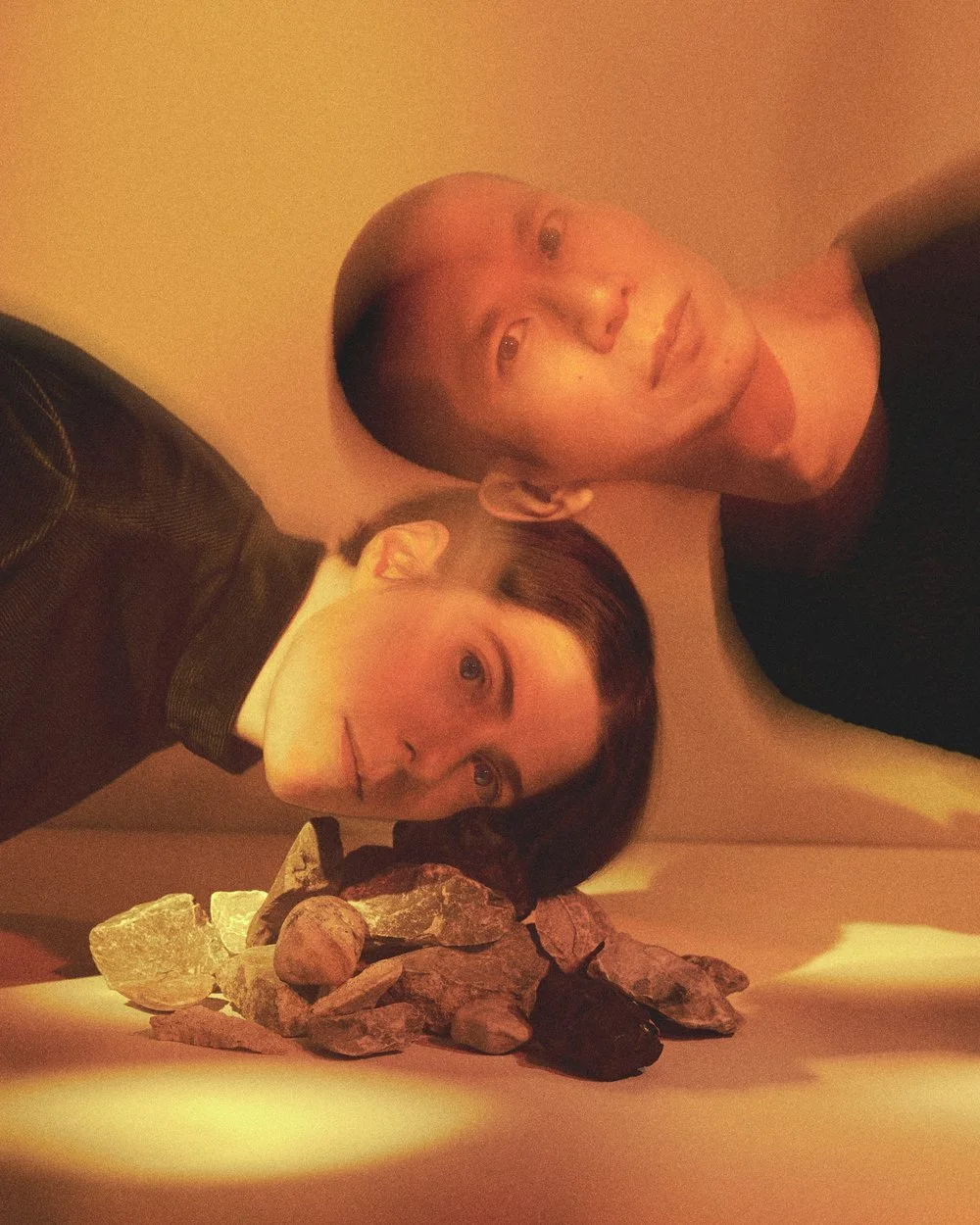
Mue by Vincent Castonguay

Explore the esoteric and terrestrial that is embodied in Mue’s first full-length new album, Les vasières. Even though the electronic duo—made up of Léon Lo and Catherine Debard—is based in Montreal, the sonic perimeters of Les vasières are vast, spanning across complex layers of sound and space. 

Elaborating on the landscape of their latest release, the band explains: “The French album title translates to “The mudflats.” Sounds from disparate sources form aural silt that is brought to life by waxing and waning cycles, each improvisation presenting a new, different mudflat scenario.”

By incorporating the sound of water, nature, and compost, Mue presents more than an album but an auditory experience through their experimental rhythms and alternative percussions. In this conversation with Mue, Liza Makarova mediates the intimacy of Mue’s spontaneous-yet-methodical approach to their world-building and soundscaping process. 

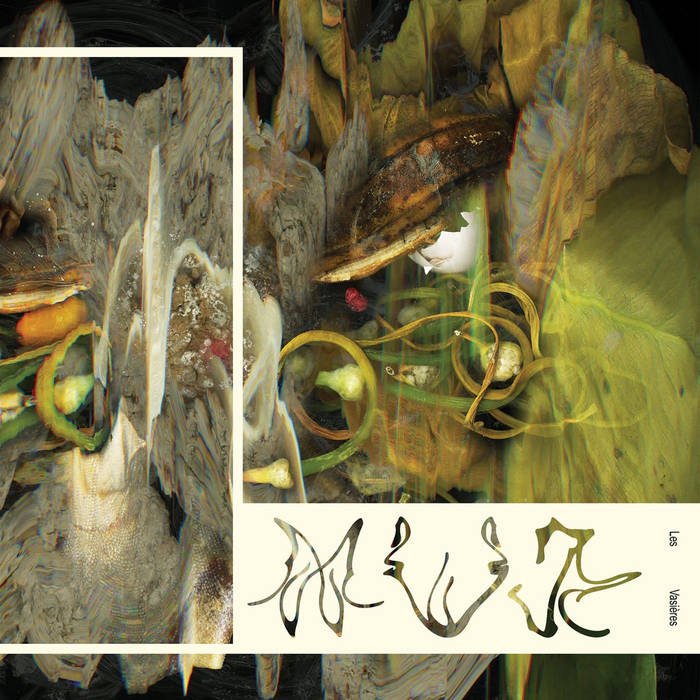
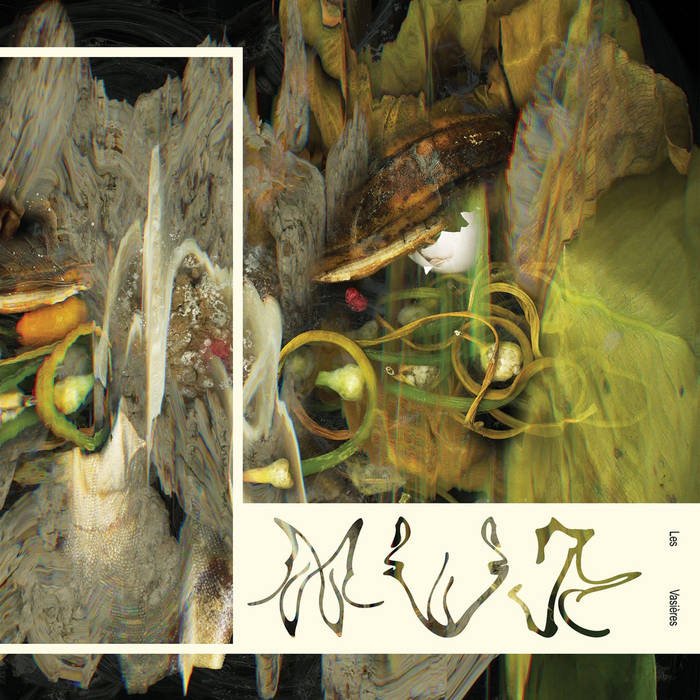
Les vasi​è​res by Mue. Cover artwork by Katherine Melançon, graphic design by Haley Parker

Liza Makarova of Also Cool Mag: What is the history behind Mue? When did it start and why?

Catherine Debard of Mue: Mue is definitely a pandemic project. It [all began]in March 2020 – I was supposed to go on a European tour and had sublet my place. A few days before leaving, I started having doubts and ended up cancelling everything (which was a really good decision, since the international lockdown happened the week after). I stayed at Léon's place and we quarantined together.

Léon Lo of Mue: I had some gear stocked at home from a previous performance, so one day, out of boredom or curiosity, we decided to jam together for the first time. I set up my computer to record it just in case and it turned out to be unlike anything either of us had done individually before.

Liza: Throughout the three- (or more) year process, what were the feelings, sources of inspiration, rituals, and expectations that motivated you to develop Les vasières?

Catherine:  Looking back on the recording process, the ritualistic aspect was undeniable. I think the pacing was important in this respect. We recorded a song or two at a time, a few weeks apart, for a few months. Each time, we would clear the space and since our project is hardware-heavy, it would take us about an hour to set everything up. It was meticulous and messy as if we were building a world out of a bunch of cables and machines, all intertwined and tangled together. Then, without talking much or planning anything, we improvised until we connected with each other and when the sounds locked, we would record until we felt satisfied. It would always start playfully and chaotically, but then, intuitively, we'd find each other and vibe on the same frequency.

Léon: I would say “frequencies”, as there were so many elements acting of their own accord. It was entrancing but also eerie in how egoless the process was.

Catherine: Somehow, we always intuitively stopped recording at the 12-minute mark, possibly our own sacred time unit. That was the first phase of the project, and we didn't have an album or concept yet.

Léon: After letting those recordings sit for a bit, we revisited them, chose the ones we liked best and set about cutting them down to more digestible formats. That proved to be really difficult because of the overlapping cycles of different lengths. Finding the right spots to cut out without it showing too much was challenging. But at that point, there was a feeling that the compositions could become something more concrete –that together, they could turn into something else. Kris from La Rama was an early supporter and singled out two songs (“1,000 Passages” and “A Tangle of Filaments”) to release as a limited edition 10” vinyl on the store’s in-house label La Rama Dubs. Toronto-based label Halocline Trance gracefully signed on to release the remaining tracks, which were coalescing into something like an album.

Catherine:  It's around that time that we started thinking about mudflats, right? That's what “vasière” means. We added the interludes to expand a bit more on the idea. Before that, I remember we were into more of a “compost”, “slimy” imagery. I was trying to grow plants out of vegetable scraps, and I recall we were both pretty invested in the process.

Léon: Yes, listening to the tracks, we started seeing how our disparate sounds would come together like all the different overlapping cycles present in mudflats: those of the waves, the countless micro-organisms, the vegetation, the birds overhead, etc. So, each jam was re-imagined as us having set up a new mudflat and wanting to see how all the different elements would co-exist.

LM: The album is both transcendent and down to Earth. While utilizing high-frequency vibrations to create an ethereal aura, the title—Les vasières—and the organic rhythms create a grounding sensation. By balancing the abstract and the earthly, where would you “place” the sonic atmosphere?

LL: I think "transcendent" and "down to Earth" are two poles that we reach for. However atmospheric our music may be, we really want it to be a physical experience.

CD:  I think a telling example is the kind of field recordings we used in the songs. I had recorded myself playing with rubber bands, pine needles, water... I think these sounds bring everything together in a more physical way, as you were saying.

LL: When you listen to the music and hear these sounds from different sources, you're getting all of their original sonic contexts as well. So, the sounds are actual physical spaces merging and vibrating in your space, and not just ethereal evocations of ideas of space.

CD: Thinking about your question, it made us realize that we both embody a different end of that spectrum. I am very much in my body and my senses, but my contribution to the music is more amorphous, and ungrounded.

LL: Whereas I'm very much in my head most of the time, I contributed the more grounding rhythmic base.

CD: Weird!


LM: Les vasières was recorded on your living room floor. What do “home vibrations” mean to you? What kind of energy is generated while recording in a home studio and how does producing in intimate spaces affect your creative process?

LL: Recording in a small living room with all of our gear felt like a cozy spaceship.

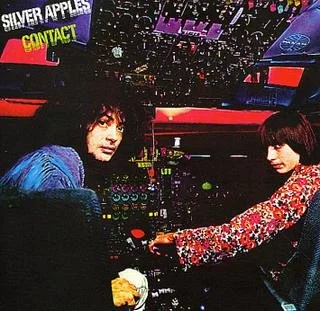
CD: Like the cover of that Silver Apples record, but super chill, and with herbal tea and fruits.

LL: Because we didn't have any plans at the outset, the recordings were intimate moments of exploration. There were no clocks ticking overhead, no pressure to deliver anything specific.

CD: I think it's because the whole thing was so low-key and fun that I made much bolder moves than I would usually. I had the time to dive further into my instruments' menus and settings, which led to more sophisticated, weirder textures. I didn't care about perfection at all, and you can hear that. Also, not using a computer led me to rethink my way of creating loops or to improvise using more than one instrument at a time. It was all quite clumsy but special.

LL: Also, I think it's important to let people know exactly where we worked so that the music doesn't just float around untethered. The context is important because it defined what we could and couldn't do at that specific time. For example, I was a middle-aged, middle-class, cis-het settler of colour lucky to still have a job and some music gear at home.

CD: I was a white settler part-timer in the service industry—temporarily out of work and living out of a suitcase—but still, I was able to get some of my equipment from my place.

LL: We didn't have access to a professional recording studio, and neither were we constrained to just doing everything in Fruity Loops. All this binds the listener back to us at that specific time and avoids creating a purely isolated aesthetic experience.

CD: What I like about working with Léon is that context also becomes a performative, playful and intrinsic aspect of creation. For example, when we started working on our radio show (Heavy Metal Parking Lot, N10as), he had this whole idea of using dice to determine the “energy curve” of each episode. That led us to make adventurous, playful choices that we wouldn't have necessarily made. We could say our live project at Mutek with Katherine Melançon was another example of a both constricting and super-stimulating context.

LM: Many visual and video art pieces, such as the album cover (created by Katherine Melançon and designed by Haley Parker, in addition to Melançon’s music video), were produced in tandem with Les vasières. How do you think the listening experience of “Télophases” changes when paired with the visual component?

LL: The visual aspect of the music video really transforms the listening experience, especially with someone as talented as Katherine. She had run the idea by us of scanning our shared compost and using the resulting images to produce the video for “Télophase”. That sounded awesome, but she mostly kept it a secret until it was done, giving us periodic progress reports along the way. We were totally confident that it would be fantastic, but we were completely unprepared by exactly how fantastic it would be.

CD: When we watched it for the first time, we kept exclaiming throughout the whole thing. We had to watch it a few times in a row to wrap our heads around it.

LL: The images in the video end up taking the lead, in my opinion. They're so strong and the narrative arc is so well-constructed that it could seem like we composed the music to go along with it. That's definitely not a bad thing, and I think it's okay if the music is not experienced the same way as if it was listened to on its own.

CD:  As for the album artwork, it offers a very earthy, physical, material palette (food, leftovers, intimate bodily relationships), but made surreal andeerie. The meticulous beauty and the strangeness perfectly set the tone for the record.

LM: To follow-up: in using compost as material for “Télophase”, the binary between decomposition and composition is blurred. Do the song titles and order convey a narrative regarding these themes?

LL: In keeping with the theme of mudflats, we didn't set out to mark any clear beginning or end for the album. We preferred the impression of catching the middle of something, that things were already constantly starting and ending.

CD: Or like if each piece is a glimpse of an ecosystem at a specific time, a fleeting impression of a landscape. As for the song titles, they emerged from an intense research session on various subjects that we felt resonated with the music.

LL: Things, beings, spaces, and the relationships between them.

CD: We followed various rhizomatic associations and jammed intellectually. We looked over the results and named the songs.

LL: Song titles for instrumental music end up acting as super-condensed lyrics, so we tried to choose the most potent words we came across. And about binaries, though they can be useful sometimes, we make it a point to avoid them. A blur is much more interesting to us. Ambiguity rules!


Les vasi​è​res

Out November 25, 2022 via Halocline Trance Records

1. Hylozoïste

2. Ambeing

3. Balanes

4. Télophases

5. Quatre Temps

6. 433 Eros

7. Andand

8. Sumac

9. Naica

All pieces composed, produced and recorded by Catherine Debard and Léon Lo

Mastered by East End Mastering

Cover artwork by Katherine Melançon

Graphic design by Haley Parker


Mue

Instagram | Bandcamp | Spotify

Liza is a multi/interdisciplinary artist and writer who, at all times, feels an inner pull toward the stars, towards the future. They gratefully reside in Tiohtià:ke, which is the unsurrendered territory of the Kanien'kehá ka.


Related Articles
 

Montreal Surf-Punk Trio NO WAVES Talks All Ages Shows, Artistic Influences and New Music


NO WAVES by Daniel Takacs

The soundtrack for most teens' early years is moaning vocals and distant pop icons from another decade, but some of us are lucky enough to have NO WAVES. The smell of sweat and Twisted Tea fills each venue; pink hair and neatly pressed dress shirts swarm together as the crowd swells. At their shows, young Montrealers experience the special feeling that comes as you start to uncover the ecosystem of music around you. Whether it be your first mosh-pit-induced black-eye, or wringing out a t-shirt soaked with sweat, NO WAVES is the breeding ground of Montreal's next-gen in music.

The band has a look you can't define… Maybe a kaleidoscope of indie sleaze, where Blink-182 and Surf Curse intersect? They all sit in the limbo zone before adulthood, with boyish smiles and CEGEP classes packed between shows. Their sets radiate a joyousness and respect that's rare in the industry. They want to be there as much as the audience does, and it shows. 

In the aftermath of the pandemic, NO WAVES is the light at the end of the tunnel for many, with their underpass show of August 2021 acting as a green light for commotion. They lit a fire, and the scene couldn't resist dancing around it. 

As someone who began the pandemic starry-eyed and unknowing of the music world,  NO WAVES has been a gateway into Montreal's music scene. NO WAVES is for the people who go to shows every night, and those who've never entered a venue before. They are an instant family of sorts; one that pulls you in for a hug and never lets go. 

I had the chance to catch up with the surf punk three-piece about their early beginnings, where they’re headed now, and everything in-between.

Uma Nardone for Also Cool Mag: Let's start off easy! Tell me about your first gig?

Sam: Our first show was at one of the Climate Demos, a protest in the middle of winter. Cy wasn't even there, so it was early early days. It was during our March Break and held outside. It was crazy! It was the coldest I've ever been.

Angel: Later on, we did shows in a dance studio. We weren't supposed to be there, and everyone had to take their shoes off. It was very hot and small, with like 50 kids crammed into a room. 

Also Cool: You've begun your second stint of recording. What has it been like working on the first EP versus your second?

Cy: Very, very different.

Sam: The songs are more fleshed out.

Angel: During our first EP, we had this frustration: We really wanted to just release our music, have it out there, and start playing shows as soon as possible. It was done with this mentality of recording as soon as possible. Now that we're recording again, we're in no rush. We're revisiting old songs and reworking them. 

AC: How has the music you're listening to impacted your new music? Have you discovered anything recently that has completely changed your creative process?

C: It's ever-changing, and I don't think it will ever stop, or at least I hope not. 

A: I've gotten into more hardcore punk, but everything feels new. Lots of Bad Brains, TURNSTILE, Dying Fetus, and very Midwest emo shit.

S: It's all over the place for all of us, everything from breakcore and punk to pop. 

AC: Do guys consider NO WAVES as falling within a specific genre? How do you typically describe your music to others?

S: I call it pop. It's all pop, just pop.

A: I've come to terms that with everything we do, it comes out trashy or punk. I used to struggle a lot, ‘cause I would try to write stuff that was soft, but no matter what, it would end up noisy and loud.

C: Noisy pop!

AC: That's perfect, though, because I consider you guys—and I mean this in the best way—the greatest gateway band in the city. After COVID-19 lockdowns, you started that revival of live music, especially for a younger crowd. 

A: That's kind of our goal, to be accessible to everyone. There are a lot of bands that feel hard to get into because of the crowd, and places sometimes feel snobby or unsafe, and that sucks.

S: Right, that's what I love about us. If you go to one of our shows, every kind of person is in the crowd. If you go to different venues, there's all these different cliques or groups, and at our shows, they're all there together.

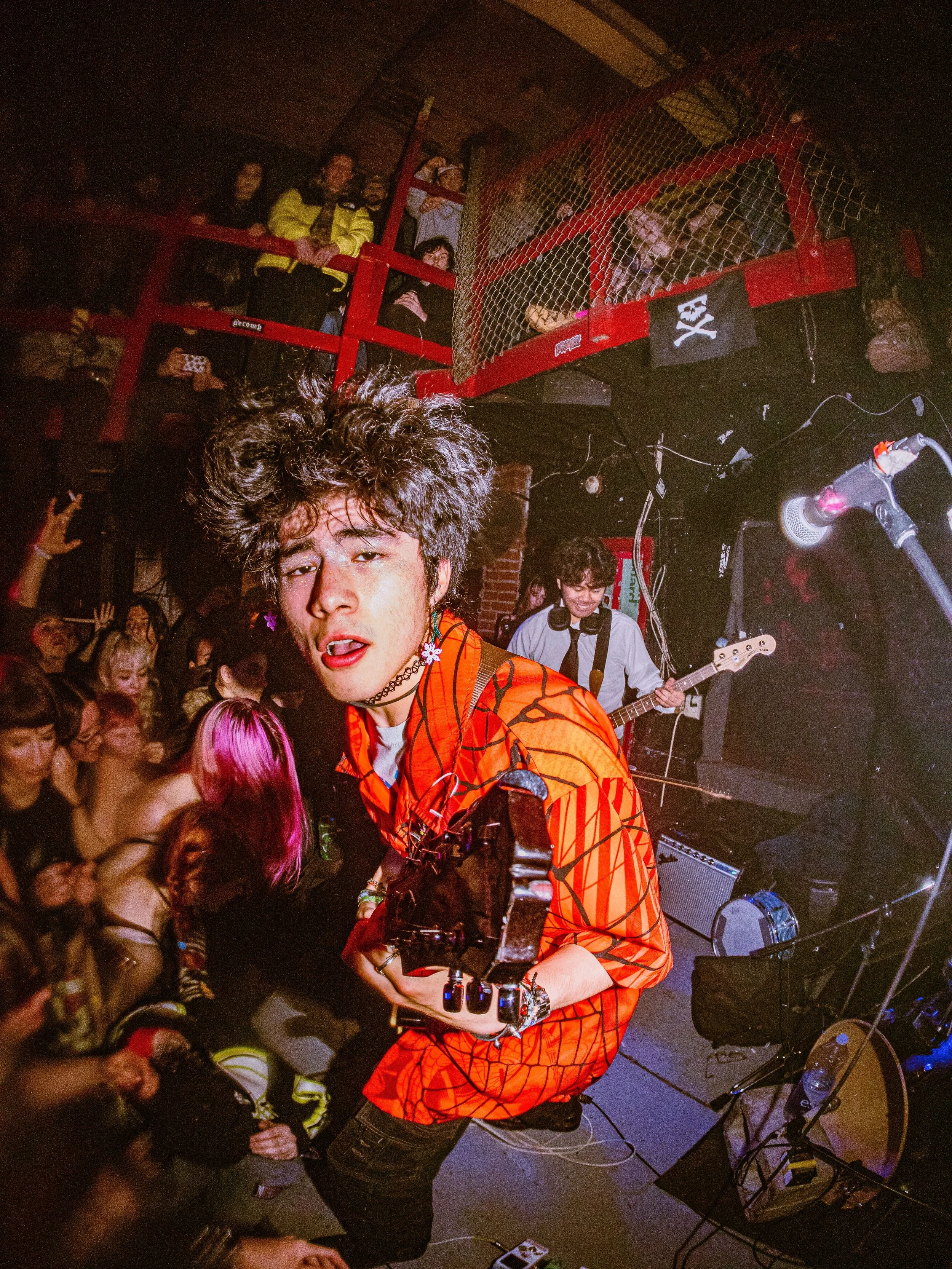
Angel from NO WAVES with audience members, photo by the author

AC: That's so true. At your summer bummer show, I met these girls from the Laurentians who had taken the train in. It was their first time moshing, seeing a gig in a small venue. You guys help people feel safe enough to experience these things for the first time.

C: That feeling is something we prioritize. We want an environment where people can hang out without worrying and have good vibes. 

S: It's not that deep either. Shows should be safe for everyone. That's how it should be.

A: There's this thing I learned when I was really young, that has stuck with me. I was told at 15 or 16 that music is sharing. Ever since, that's been how I see music. You're sharing with the crowd, the staff and the musicians. We all share this common love, you know?

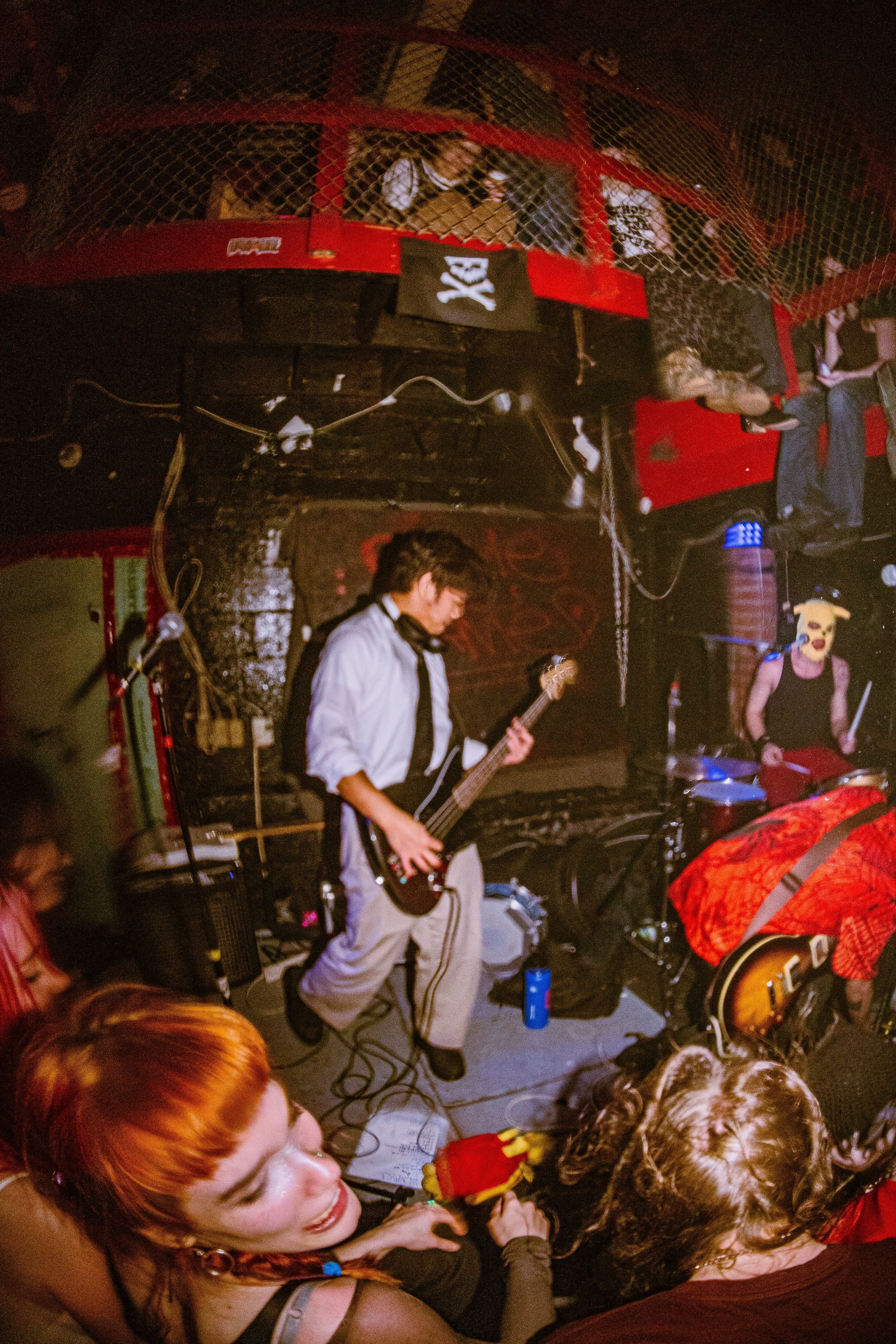
Crowd at a NO WAVES show, photo by the author

AC: That's evident in the crowd, as well. You've grown up with the people who come to your shows, and they keep showing up for a reason. It's like a big family that keeps growing. 

S: I think it’s so beautiful. 

A: It's super sick because I see people who were at our shows five years ago, who went to our launch party, pull up to our shows now. They are the OGs of NO WAVES. 

S: People we've known since they were 13 and playing at school, and now they're grown up and still coming. It's amazing. 

AC: I can attest to that. I was maybe 12 or 13 when I went to my first show, and now I'm here. I consider you guys integral to my childhood, and many others feel the same way. NO WAVES is the soundtrack to teenagedom here! My first black eyes were at your show, and my friends' first kiss happened at your show. You guys are part of all that. 

A: I think it's so cool. We've been able to play our music and grow up with them. After the outdoor show, this dude slid into our DMs and told us about his first experience with LSD. It was so crazy cause what band gets to experience that so closely. 

S: Right, I was like, man, you're a stronger person than I am. 

AC: Tell me more about the underpass show. How was that experience for you all? 

S: Oh man, I loved that show. It was my favorite show we've ever played because of how close we were to the crowd. There was no stage, so people surrounded us. At one point, this dude slapped me on the back and complimented me from behind the drum kit. He was a complete stranger; it was so cool. The formality of a show was gone, and we were immersed in the crowd.

C: We go against that formality. We play better when not on a real stage. 

NO WAVES by Daniel Takacs

AC: Do you guys channel certain people in terms of stage presence? Like when I was kid, I wanted to embody Sid Vicious or maybe even Zappa. Who is it for you? 

A: I would say Blink-182 for all of us. To me, they are the standard of what a trio band is capable of. Whenever I'm on stage and feel stuck, I have a guitar, and I can't move or whatever; I look up to them. 

S: Same; I channel my inner Travis.

A: I think at most shows, we're just daydreaming that we're Blink. That's our secret.

AC: Would it be a dream to open for them? Is there anyone else that you want to play with in the future? 

A: Surf Curse, too; we just have to do that. We've been thinking about it for so long. 

S: I just want to go on tour and go as far as possible with this.

A: We want to expand our horizons and explore new places. I really want to go to Mexico. The whole scene that inspired me to do everything I'm doing now all comes from there. Those kids inspired me. 

C: I remember hearing my first songs from Angel in Spanish, Los Blenders and Senor Kino; they influenced me so much. They taught me how to put on a show. He showed us all this world we didn't know about. 

AC: What's the songwriting process look like for NO WAVES?

S: It's really all of us. Every song is a collaborative effort.

A: I'll come in with a guitar riff or a single verse - these very unrefined songs. Then we'll all write over it and work on it over time. We all just pile on ideas until something comes out of it. Some songs take thirty minutes, and others take years.

S: We have songs we've been working on for more than four years. 

AC: Has playing in NO WAVES changed your social life at all? 

S: We all have the same mentality when it comes to playing: We don't feel better than anyone because of it. So many people have helped us come to where we are today, and we're really grateful.

A: People made fun of us in high school. We didn't feel cool then.

S: I just hate the mentality that people have. No one is better because they are on stage. It doesn't change who you are.

C: It's also not what music is supposed to be. Music is not a hierarchy. No one is better than anyone else. Our shows are for people who love music the way we do, that's all. 

NO WAVES holds a place in my heart that I can’t quite explain, I feel oddly devoted to the music, to the crowds and the all encompassing joy it brings. They are the band that sings to a choir of misfits, welcoming old punks and scene kids alike. 

They keep growing and as more and more people come to love them as I do, the excitement of experiencing a small history being made is thrilling. NO WAVES is ever-moving and might change, as young bands do, but no one will forget them. Everyone who's been in a crowded room with damp floors and broken stereos singing along with NO WAVES knows their systems have been shocked and their brain chemistry never be quite the same. The NO WAVES phenomena, explicable in their talent, is band who will forever be ingrained in my brain, and hopefully yours as well!

Don’t miss NO WAVES’ free Taverne Tour pizza party at Le Ministère on February 11th at 11:59PM!

NO WAVES

Instagram | Bandcamp | Spotify

Uma Nardone 

Instagram


Related Articles


In Conversation: Cosmic-Pop Enigma Elizabete Balčus on Artistic Freedom, Vegetable Synthesizers and "Hotel Universe" (Mothland)


Elizabete Balčus by Zane Zelmene

Hailing from Rīga, Latvia, extraterrestrial-pop maestro Elizabete Balčus performed one of the most memorable sets of the year, and possibly ever, this past fall. Since making a stop in Rouyn-Noranda for the 2022 edition of FME, touring her avant-garde opus Hotel Universe, we’ve been enthralled by Balčus’ raison d'être. With an entrancing, collaged-sound that spans from a Lynchian merry-go-round to what you might hear twinkling in the alcoves of a celestial ice fortress, Balčus’ enigmatic production is a realm-bending portal that combines operatic vocals, classical flute, 80s-tinged rhythms and electronic vegetable-synth pulses.

Following the buzz of her album release, we had the chance to connect with Balčus on the importance of harnessing her independent spirit as a creative, and the inner-workings of her multifaceted artistry.

Zoë Argiropulos-Hunter for Also Cool: You recently completed a touring stint in Canada promoting your new album Hotel Universe and met your Montreal-based label, Mothland. What was it like realizing this work alongside new audiences? How did the creative circles in Canada compare to that of your hometown? 

Elizabete Balčus: It was great to meet my label in person after some months spent collaborating with them remotely. They take a lot of care in curating lineups for tours, and I felt like I was sharing the stage with artists that were a good fit for me.

It’s been nice adding in new material and tapping into the mood of my new album. But, I always balance that with music made in the moment; improvisation. Meaning, the songs I have on the album can be stretched and changed a lot, compared to the originals. Each show on my tour was quite different because those improvised parts would change depending on my mood. What’s most important to me is to have a true catharsis and expressing my emotions to their fullest. If I’m showing what I’m feeling without holding anything back, that’s when I get the strongest response from a crowd.  Being in Canada and being in front of a new audience was exhilarating – it made it easy for me to relay my emotions.

Elizabete Balčus at FME in Rouyn-Noranda, Quebec - September 2022, photo by Malaika Astorga

Also Cool: You wear many hats as a musician, composer, performance artist and actor. How did you balance and tap into these intertwined passions when realizing Hotel Universe?

Elizabete Balčus: In general I am a fan of one solo artist’s perspective. I like to feel that one person is responsible for everything. When I put a release together, I like to feel like it’s all of me, and not just one part of me. And I feel that I can express myself with visual art and performance in a way that emphasizes my musicality, so it is very important in what I do. Having multiple hats is a consequence of me having a project that is homage to a lot of my inspirations: I love theatre, I love dancing—I like music that is immensely theatrical and surreal. So, it’s natural for me to apply these things to create what I consider a solo show worth attending.

AC: What pushed you to expand from your traditional artistic background to an experimental solo endeavour? Has this transition made an impression on how you approach, or feel about, your craft? 

EB: The thing that pushed me was that I wanted to do something that came naturally to me. That natural thing was, and still is, being creative with something that I can call entirely my own. It’s artistic freedom, I suppose.

There’s an axis between my classical upbringing and my solo show. All of my arrangements are quite classically-based, and this comes through in playing classical flute in my sets. I use the thing I learned in the Latvian Academy of Music, but I changed it to fit my world. 

Elizabete Balčus performing at Club SAW in Ottawa, Ontario - September 2022, photo by the author

AC: Branching off of that, when did you start incorporating eco-synthesizers into your music? What is your favourite fruit or vegetable to play?

EB: I wanted to make the performance art aspect as important as the music. I discovered these inventions, and felt they were right. Way back in 2016, I got a device that allowed me to play real fruit and vegetables., and I incorporated it into my live show. I still sometimes play broccoli and pineapple—I guess they’re my favourites because of their psychedelic shape! I am always interested in adding different tools to my live show. Sometimes I play with a prosthetic leg, other people’s skin or my own biorhythms to create electronic sounds.

Elizabete Balčus’ musical set-up at FME in Rouyn-Noranda, Quebec - September 2022, photo by the author

AC: Alongside your sound, your live show has so many intriguing elements. Touching on your costumes and makeup: what inspires your aesthetic and where do you source your performance wardrobe? 

EB: I take a lot of influence from avant-garde fashion, Dadaism, retro-futurism, sci-fi films and Greek mythology and theatre. Sometimes a certain painting, a film character, a plant or even an animal can inspire me to make a costume. For example, once some green insect flew in my room and danced on the wall while I was listening to my demos and sketching costume ideas. It inspired me to make a hat with antennas and paint my pointed boots light green.

I place a lot of importance on wearing and making headpieces because they are, for me, a mark of spirituality. I think of it as a way of broadcasting my energy to the cosmos. It’s like how saints are pictured wearing halos. As for makeup, it usually comes after the clothes and headpieces as a final touch. Most of the time I just take a brush and experiment, see where it goes.

For clothes: I like vintage shops. I’ve picked up a lot of stuff that I remix. I reshape or cut and glue things together, to make them more my own. I also take some costumes from the theatre my family runs, and from time-to-time, I collaborate with fashion designers that lend me some of their creations. I was lucky to find the artist Anna Gulbe who lent me the hat and boots for my Canadian tour.

AC: What has been the most rewarding aspect of unveiling Hotel Universe thus far? What impact has the experience had on your artistic outlook?

EB: The rewarding thing for me about releasing music is it’s a format that I feel I can most fluently express myself. Even more than talking. So, it’s nice to have that communication with others who feel my music and respond to—what is a very accurate—portrayal of who I am, deep down.

Releasing music doesn’t directly change my artistic outlook, but it definitely spurs me on and gives me energy to move forward.

Elizabete Balčus by Zane Zelmene

Elizabete Balčus

Instagram | Facebook | Twitter | Bandcamp | Spotify

Zoë Argiropulos-Hunter (she/her) is the co-founder and managing editor of Also Cool Mag. Aside from the mag, she is a music promoter & booker, and a radio host & DJ.


Related Articles
 

Gloin Releases New Album “We Found This”


Gloin by Sara May

This year, Also Cool had the pleasure of meeting Gloin at FME in Abitibi-Temiscamengue. To say we were compelled was an understatement – their songs “Cha Cha” and “Shoot to Kill” were on repeat both directions of the nine-hour drive to the festival.

When we got to see them in the tiny and packed Cabaret de la Dernière Chance, our faces melted off (in the most consensual way). Gloin brings so much energy to the stage and we are absolutely stoked to get the opportunity to interview them in parallel to the release of their latest album, We Found This.

Gloin are knock-out performers, and you cannot help but bop as Vic shreds onstage. While their 2019 album Soft Monster was loaded with head-bangers, there are some more soothing rhythms on We Found This, always with some level of distortion and dark underbelly (a Gloin signature).

They also recently graced Montreal with their presence at M for Montreal, playing at the M for Mothland showcase alongside other Also Cool favourites like Grim Streaker.

In our excitement about their latest release and in Also Cool façon, we had to interview them – not only about We Found This and group dynamics, but also about some of their random thoughts, small favourites surrounding Toronto, and their band as a whole.

Holly Hilts for Also Cool Mag: So, first off, how have your last few months been, between Northern Quebec festival life and your album release – how are you feeling?

Vic: FME and the surrounding shows left me on a high. Since our release, I have been insanely eager to tour and promote the album. I am an impatient person and the process is killing me.

John: FME was a lot of fun, and since then we have released our full-length album. I feel similar to Vic – excited to translate the record to a live setting. It’s always a lot of fun and the songs often sound better.

Richard: The excitement of playing FME was only succeeded by the release of our new record. It’s been exciting to see the positive feedback of something we’ve worked so hard to put out.

Simon: Feeling excited that the record is finally out, and eager to play these songs live.

Also Cool: Listening to the album, I get some really stark imagery – like on “FZero”, I really picture digitized, glitchy marching robotic humans to the beat. Do you have any really clear images that jump out at you while you are playing any of the songs?

R: Skeletons having a luau during “Dark Moto”.

J: “Winter Abroad” is an old song I wrote years ago. It was written specifically to depict looking out a window during a snowy, quiet Toronto morning.

V: “Work Patrol” is less of an image and more of a filter that distorts reality into a chaotic and extremely stressful experience during every single fucking thing you do. Also known as anxiety I guess (laughs).

S: “FZero” is named after the video game, and when we play it I just see them racing.

AC: What is your favourite intersection in Toronto?

J: I don’t have any that I like but I have a lot that I hate. Dundas and Lansdowne, Queen and Spadina, Front and Spadina, Bloor and St. Clair. These are all based on traffic and road work.

R: I don't have a favorite intersection but I have a favorite street, Palmerston between College and Bloor. Also 401 and Major Mack.

V: I’ve got a soft spot for Front and Sherbourne because I had a first kiss with someone very important at the Rabba on the corner where I lived when I first moved to Toronto.

S: Dovercourt and Mackenzie Crescent. Walk up Mackenzie ‘til you get to Lisgar.

Gloin, by Alex Carre

AC: What have you had to learn to accept about each other over the years?

V: I’ve always found it difficult to spend a lot of time with men. So that’s been pretty much the main thing. But to be honest, these guys are pretty chill. Mostly. It does feel like family in a certain way and when one person is not there the rhythm is off.

J: When you spend such a large amount of time with one another, you realize that being friends with people that you don’t see every waking moment is extremely different than spending every waking moment with them. You gain a much deeper understanding of each individual person, you see the good and the bad and you learn to accept everyone's strengths and weaknesses. Not without its setbacks as friends, we have discovered how we all operate and have grown as friends as well as creative partners because of it. Being in a band is not as easy as everyone may think it is, and it takes a lot of work.

R: Everyone works at their own pace. It's good we find time to get shit done together.

S: Learn to call people out when they are slacking and accept it when it happens to you. We all have our own ways of dealing with issues and trusting that process no matter how long it takes.

AC: Your latest album is titled We Found This – what did you find?

Gloin: If you buy the vinyl, there is a handwritten note inside that will explain everything! 

AC: How did you figure out your overall sound and how would you describe your growth since Soft Monster?

Gloin: With Soft Monster we did not have a clear direction, and we pulled what liked and expanded on those specifics. We liked the driving energetic vibe, the aggression, and the pop element. We tried to avoid overdone repetitive droning psych elements in order to keep things exciting.

Gloin, by Nikki Dicunto

AC: Favourite lyric on the album, please!

V: I love to yell “RUSH” in “Pitchfork”.

R: I like it when Simon says “Avec des gants de sécurité” from “Brique Chaude”.

J: “Weak mind, be kind” from “FZero”.

S: When Vic yells “HEY BUDDY” from “Work Patrol”.

AC: How do you dream your audience members feel after a show of yours?

R: Exhausted.

V: Relieved, energized, powerful!

J: That we are their new favourite band and they can’t wait to see us again.

S: Confused but happy.

AC: And any last thoughts you would like to share with Also Coolers?

Gloin: If we were cast in The Hangover, John would be Stu, Richard would be Alan, Vic would be Phil and Simon would be Doug.

Gloin - We Found This


Related Articles
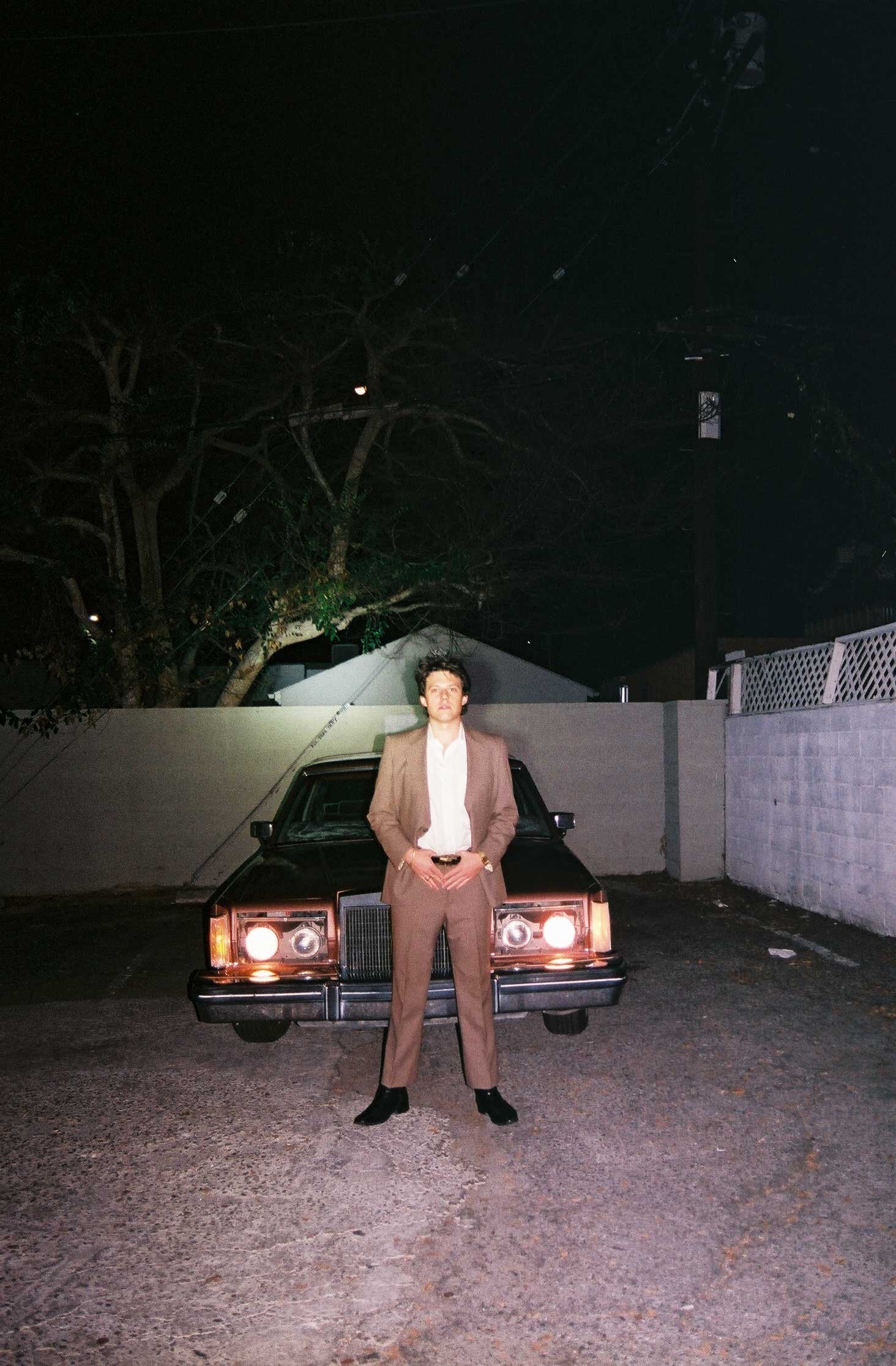
 

Late Nite Laundry Makes a Mesmerizing Return with Self-Titled EP (Acrophase Records)


Late Nite Laundry by Charlie Young

Faced with the unavoidable turmoil of cancelled gigs and changing circumstances, Late Nite Laundry had no choice but to find their footing and start anew. The Chicago psychedelic soul band—composed of guitarist Ari Lindo, bassist and designer Emily Burlew, keyboardist, engineer, and producer Brenden Cabrera, and drummer Alex Santilli—has re-entered the scene with a crisp and noteworthy EP, Late Nite Laundry, out via Acrophase Records.


Featuring Lindo and Burlew on vocals, the EP hits a breezy stride as it flirts with elements of Brazilian jazz, bedroom pop, and R&B. Encompassed with a dazed warmth, its four tracks stand apart and—at once—melt together. Let Late Nite Laundry wrap you like a cozy plush blanket and sink into the richness of its sound.

Rebecca Judd for Also Cool: Stylistically, your band takes influence from a wide variety of genres and eras, which culminates in a warm and comforting blend of psychedelic soul. Which sonic inspirations did you reflect in this EP?
Late Nite Laundry: In 2020, we recorded and released a project titled The Michigan Tapes that we believe initiated our new sound. It was our first experience self-recording and producing, which we did in March 2020 soon after the world entered lockdown. We took those same practices and applied them to a more refined recording process over the last year [when making this new EP]. Although we are heavily inspired by many genres and bands as individuals, we rarely reference specific artists between ourselves. Instead, we are inspired by individual elements within our favourite music and [find that] each member brings a different flavour to the table.

Also Cool: Your band underwent a fundamental transformation with the disruption of COVID-19 – you’ve previously mentioned that it was a time to “rediscover [your] sound and smoothen [your] process”. Can you elaborate on the ways in which this time redefined Late Nite Laundry as a band?

Late Nite Laundry: Without shows to play in 2020, [our] band regrouped with writing and recording sessions. Previously, we had only experienced recording in a traditional studio format. After the first EP, we wanted to stress experimentation and expand on the production process. Since then, all recording, production and mixing is handled within the group. This has given us the space to push our creative boundaries, while also developing our skills and relationships with each other.

Late Nite Laundry by Charlie Young

AC: Among the changes you experienced throughout the past couple of years was a change in lineup, with Late Nite Laundry’s original lead singer leaving the group. Nonetheless, you previously identified a sense of synchronism between the four remaining bandmates that led you all to push forward. Were there any defining moments where you felt this connection, or was it a gradual ease?
LNL: Naturally, we think it took time to rediscover ourselves. We spent a lot of our initial meet-ups at the practice space writing new material and reworking old songs. A clear moment in our memories was when our song, “Fantasy”, was first written. During a home recording session for the track, Ari [Lindo] began writing lyrics and sang upward of 100 recorded vocal takes. This was a defining moment for the band, because at the time we had contemplated auditioning for potential singers. Releasing that song was a symbol of what we had become and it clearly established Ari as the new lead vocalist.

AC: I’m particularly interested in the duality of “Floating”, which closes the EP. There’s a feeling of one’s resurgence and contentment that soars past memories of a fragmented relationship. I found myself swept up with its instrumental jazzy vibrance and hungry for more all too soon. Which emotions and decisions went into this track, and how are those contrasted or connected with the rest of the EP?

LNL: This was one of the first songs first ever created for Late Nite Laundry. Ari started writing it in 2016, before the band began. It talks about Ari’s first relationship with his high school sweetheart, and it’s intended to capture the euphoric highs and deep pains that he associates with this time. Ari also has a special musical ability to weave into different styles.

This song really shows our indie styles on the choruses with the layered lead synth sounds, but subdues you with witty chord writing on the verses. The outro of the song has always felt like a different planet from the rest. Everything from psychedelic harmonious textures to Alex [Santilli]’s tasty drum fills, the ending ties in the sound that Late Nite Laundry truly represents. We feel like there’s examples of this in all of our songs.

AC: With this new release, what are your plans for re-introducing Late Nite Laundry to the world? Which directions are you next hoping to explore as a band? 

LNL: Now that the EP is out, we are focusing our efforts on touring and promoting the project across North America. Outside of performing, we are a group that consistently writes and records. Naturally, there’s a lot of musical ideas flowing in our brains whether in demo form or just jammed out at the practice space. What we definitely look forward to the most is playing and making music. Sometimes, that means hanging in each other’s living room, jamming at the spot, or getting away to a cabin in the woods (like for The Michigan Tapes). We’re not sure what we will release or when, but our engines never seem to turn off.


Late Nite Laundry

Out November 4, 2022 via Acrophase Records

1. Hold

2. Sizzle

3. Hi, Can You Hear Me?

4. Floating

Written and recorded by Late Nite Laundry

Engineered by Brenden Cabrera

Mastered by Kelly Hibbert

Photo by Charlie Young

Album design by Emily Burlew


Late Nite Laundry

Instagram | Facebook | YouTube | Spotify | Bandcamp

Soundcloud | Apple Music | Website

Rebecca Judd is the features editor of Also Cool Mag.


Related Articles
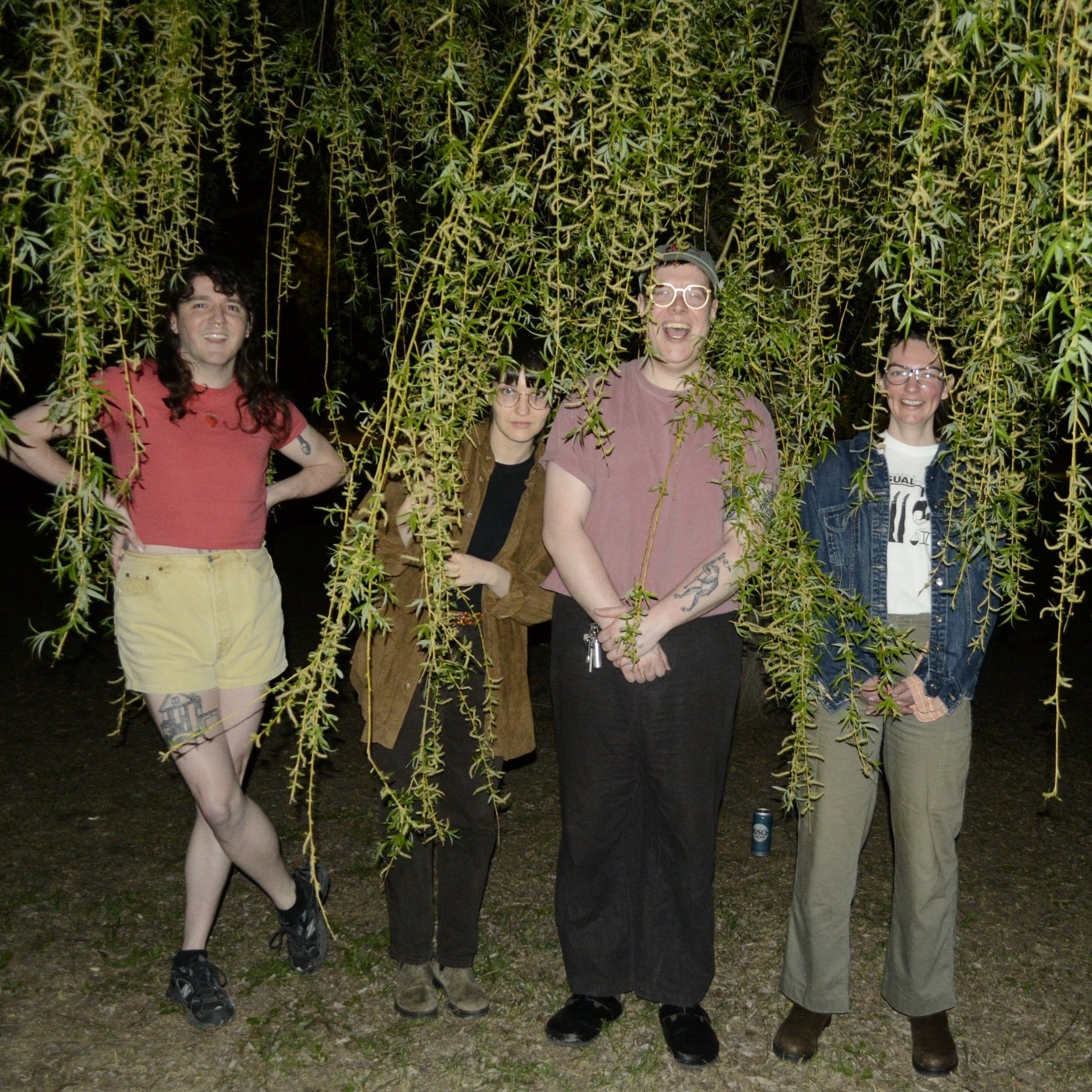
 

Lesser Evil Summon Everything That is Evoked Without Being Said on Debut LP "Subterranean"


Lesser Evil (from left to right: Ariane M. and Christophe Lamarche-Ledoux) by Ebru Yildiz

Lesser Evil are done interpreting their own sound. After nearly four years of tireless music-making, the Montreal-based electronic duo consisting of Christophe Lamarche-Ledoux and Ariane M. are excited to promote Subterranean and hear from the listeners themselves. The reception, according to Lesser Evil, is the second-most exciting part of being an artist; apart from the production stage itself.

I had the pleasure of meeting with Lamarche-Ledoux and Ariane on a sunny Saturday morning in late-September, where we had the opportunity to chat about their artistic process, how Lesser Evil came into existence, and what it took to create Subterranean — their debut album releasing on October 14th.

When talking about the formation of Lesser Evil, Lamarche-Ledoux describes the experience as natural, yet long-overdue. “We’ve known each other for a very long time,” says Lamarche-Ledoux, “because we were actually neighbours in a small town called Sherbrooke [Quebec].” 

Despite this, Lamarche-Ledoux explains that it took around eighteen years before the duo found themselves together in a studio, and that this actually happened after they respectively decided to relocate. “We both moved to Montreal, still not being friends. [But] we met in Montreal because we have a lot of friends in common from Sherbrooke, and [we had both been] doing music for a long time.”

Lamarche-Ledoux notes that when the two creatives and hometown neighbours finally collaborated on music production, the results were like nothing they had ever heard before. “While we were working on [Ariane’s] songs, the music became something else. It didn’t entirely sound like Ariane’s work, and it didn’t exactly sound like mine either… It kind of became this whole new thing.” He says that after hearing their strange and magical concoctions resulting from shared studio time, the formation of Lesser Evil occurred naturally. “At some point I just looked over and said, ‘Ariane, we should start a band.’ And that’s when the new [project] was formed.”

The results of this formation included an initial, self-titled EP in 2018, which produced much success upon its release; songs off the EP like “V.W” and “Cobra Effect” garnered thousands of streams on Spotify, and their track “Sight Of” has accumulated nearly 60,000 streams on the platform ever since. Still reeling from the initial hype generated by their first project, Lamarche-Ledoux and Ariane decided to hunker down and focus their energy towards something more nuanced and time-consuming. Nearly four years later, Subterranean came into existence.

Lesser Evil by Ebru Yildiz

Speaking on the creative process that went into making Subterranean, Ariane is quick to point out that the duo intended to create a piece of art that is intentionally ambiguous, allowing it to be left for interpretation by its listeners. “When it comes to the ‘bones’ of a song, it always needs to come from [us] initially,” Ariane says. “I’m an emotionally-driven person, and it dictates my life.” 

She goes on to say that the songs initially capture “a moment in time, where there’s something in me that [fixates] me.” She says that this is something that remains constant throughout the album, “As you start working on [the songs] it can pretty much go anywhere.”

Yet this incentive of having songs “go anywhere,” as Ariane puts it, is not without intention. Instead of giving clear direction, Lesser Evil instead opts to leave enough space in their songs to allow listeners to become lost in them, forcing them to find their own final destination. “I’m obsessed with everything that’s hidden; everything that’s tacit,” Ariane says. She explains that she has been doing psychoanalysis for five years now, and that this process translates directly into Lesser Evil’s music production. “When I try to write songs and capture that initial spark, I am also trying to tap into everything that’s hidden.” 

This process also inspired the album’s title, which refers to the “subterranean” elements of the human psyche. When our conversation transitions from focusing on the album’s production process to its title, Ariane describes the decision to name their project “Subterranean” as a “no-brainer.”

The controlled level of ambiguity that Lesser Evil conveys on Subterranean is clear on the singles that have been released leading up to the album. The song “Fiction” feels like an underwater voyage through subdued synths, with Ariane’s voice guiding listeners to their own conclusions as she softly sings about yearning, isolation and mystic love. Although quite different sonically, the bass-heavy dance track “Contemplate” is a surreal voyage through an underground tunnel, and Ariane’s distorted vocals equally shine on the song’s darkest and most upbeat moments. The instrumentation on these songs might change, but all have one thing in common: they are intended to resonate directly with the listener. 

Commenting on how they decide which sounds to keep while producing their music, Lamarche-Ledoux explains: “It could just be a synth sound, or the perfect amount of reverb on the [vocals]. It just has to be something that interests us, and that we can actually feel.” He elaborates by saying that while this process might “seem simple… it is actually very subtle,” and that it takes a lot of time to finalize.

Through this process, the duo aspires to create an auditory experience that listeners truly yearn for. “It has to resonate enough,” Ariane explains. “Christophe has to hear that little backbone, and be like ‘yeah, let’s spend [countless] hours on this.’” The music is intended as “a hybrid of classical songwriting” layered over “all the modern ways of treating sound,” Ariane says with a smile. The songs, as they explain, must emanate that “subterranean” reaction in thought as well as feeling. After all, nobody spends time in the studio isolating sounds and fine-tuning them if they never elicited an emotional response in the first place. 

Lesser Evil by Ebru Yildiz

Asking the duo about their creative traditions before hitting the studio, Ariane says that their music typically forms itself through improvisation: “[B]asically, we show up and see what happens.” But at a certain point in the day, Ariane and Lamarche-Ledoux do in fact have an unspoken ritual to uplift one another’s spirits. “We’re looking for high-fives,” Ariane says. “We never know what we’re going to do when we arrive; we just show up and do a session. But then, we always say that we’re looking for that ‘high-five’ moment, when we’re so enthused by our work that we begin screaming and high-fiving.”

Ariane notes that they have an additional, unorthodox tradition while making music: belting out lyrics from 90s hits like Jock Jams’ “Are You Ready For This” during their more successful moments during production. “I’m usually in the back and Christophe is in the studio,” Ariane says, “so sometimes we don’t really see each other for hours. And then he’ll just say, ‘Are you ready for this?’ and I [start singing] in the back.”

Wrapping up our interview, I ask Ariane and Lamarche-Ledoux what Lesser Evil fans can expect in the months following the release of Subterranean. “Will you guys be touring at all?” I wonder, “or will you be looking to make some music videos? Or are you guys just going to be taking a break because your album is out and you’re tired,” I muse. Lamarche-Ledoux chimes in by saying. “Are you crazy? That’s not how it works!” We all share a good laugh.

“We’ve worked for years on this record,” Lamarche-Ledoux says. “We’re really proud of it, and we want to make it [have] a life. We’re getting into some activities — some shows here and there, including a Montreal show and a Quebec show. We’re probably going to play in New York at some point next year as well.” He elaborates by saying that because Lesser Evil is a DIY project: “It’s really insane, and we’re having trouble doing all these things at once. It’s also all out-of-pocket money, so it’s pretty fucking crazy,” he jokes. “We’re really just smashing this project into the world as hard as we can.” 

The band notes that music videos and visualizers are not something that they are willing to take-on themselves, but that they are not opposed to having creatives try to visualize their work. This has been done twice already for songs off of Subterranean, including collaborator Joël Morin-Ben Abdallah’s otherworldly visuals for “Fiction” as well as Abdallah’s recent, psychedelic visualization for the track “Haze,” which uses images from the 1981 Hungarian movie Son of the White Mare.

As a final question, I ask the duo whether there is anything else they would like to chat about. Ariane replies promptly, saying that more than anything, “...I just want people to listen to the album… for us, we worked so many years on this. I just want other people’s judgment on [Subterranean]. I’m tired of listening to my own analysis.”

Lamarche-Ledoux echoes this sentiment in his answer, but also notes that bringing the world’s artistic community together is the primary response he wants to elicit. “Now the most fun part of doing art is over, which to me is making music. We’re getting into touring, and doing promotional stuff… this is kind of less fun to do. Moving forward, I want to meet more people who are interested and genuine about art, and our music. That’s all I want: I don’t necessarily want an ‘enemy interview,’ or a TV spot. I just want it to be about the love of music, and being true. Not about success.”

Subterranean comes out on October 14th, but in the meantime you can listen to Lesser Evil’s ethereal new singles on their Spotify or other streaming platforms. They also have two upcoming shows you’ll want to check out – catch them on November 4th in Quebec City at Le Pantoum, or November 5th in Montreal at La Sotterranea.

Lesser Evil in Montreal post-interview; photo by the author


SUBTERRANEAN

Out October 14, 2022

1. New/Same

2. Fiction

3. Subterranean

4. Heights

5. Wandering

6. Contemplate

7. Haze

8. Heavenly

9. Hot-Blooded

10. Reincarnation

Engineered, composed and produced by Lesser Evil

Mixed by Mark Lawson

Mastered by Brian Lucey at Magic Garden Mastering

Artwork by Caroline Robert

Source photo of the diver by Odile Gamache

Logo by Florian Petigny


Lesser Evil

Website | Instagram | Bandcamp

Facebook | Spotify | Apple Music


Spencer Nafekh is a tireless reader, writer, editor, and advocate for the written word. With an undergraduate degree in Concordia's English and Creative Writing program imminent, he plans to pursue a Master's specialization in journalism so that he can fully realize his career path. When Spencer is not working away, he is probably listening to experimental music while lost in the world of a science fiction novel.

Instagram


Related Articles
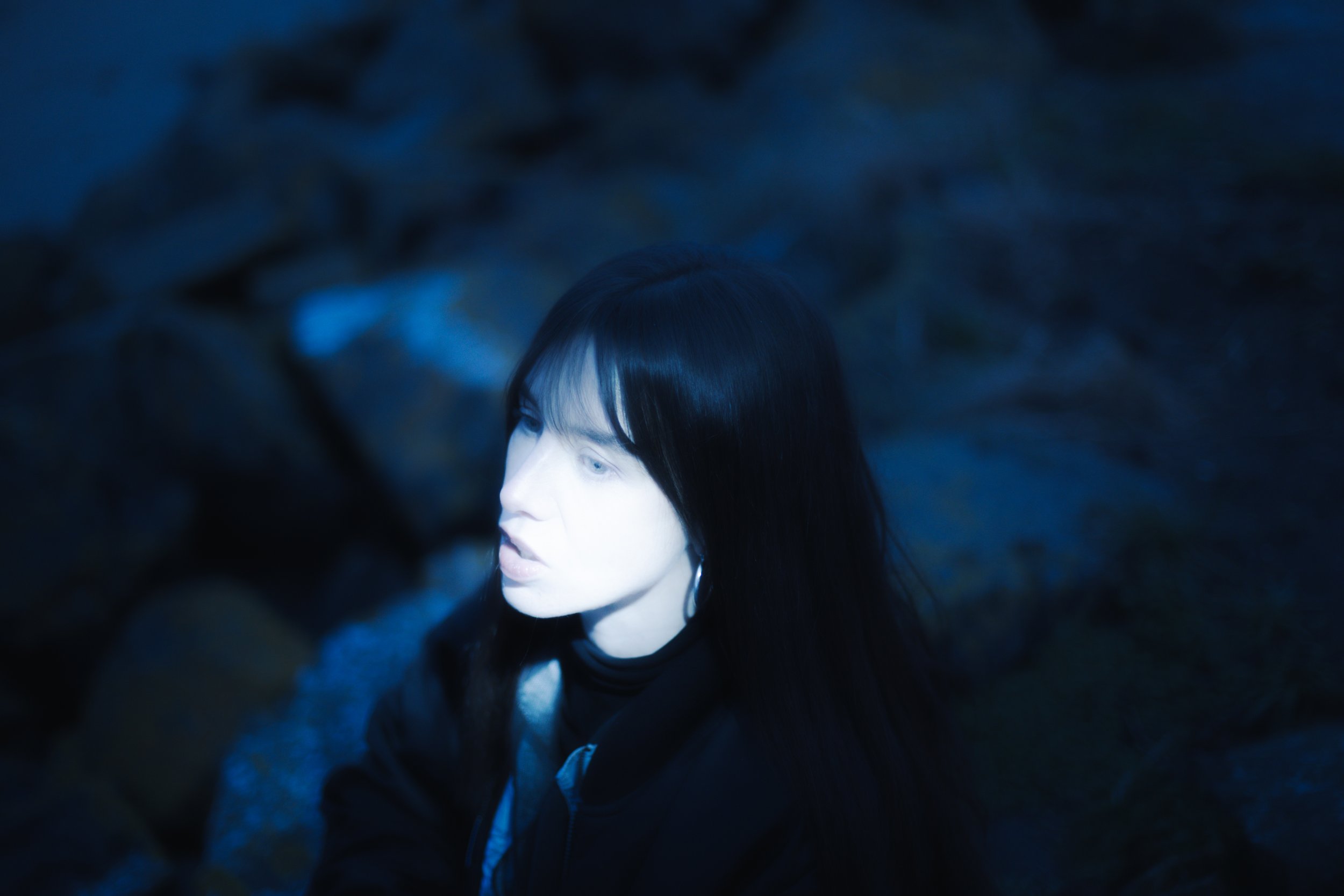
 

La Sécurité and Hot Garbage Talk Influences, Experimentation, and DISTORSION PSYCH FEST (Mothland)


DISTORSION PSYCH FEST poster by Tiny Little Hammers

Before plugging in the synths and warming up the fog machines, we were able to chat with two bands on the bill at this year’s DISTORSION PSYCH FEST leading up to their rollicking sets in July.

La Sécurité by Marc-Antoine Barbier

The first group we had our eyes on was La Sécurité, a newly formed art-punk supergroup featuring members from iconic Montreal bands such as Choses Sauvages and Jesuslesfilles. In the spring, they treated audiences to a delightfully frantic and groovy dual single release – “Suspens/Try Again” via Mothland. DISTORSION was the band’s first live show together, and it was a gig for the books. 

Sofie Milito of Also Cool: I'd love to hear a bit about your group's beginnings. How did La Sécurité come together?

Éliane Viens-Synnott of La Sécurité: The band initially started with Félix [Bélisle] and I noodling around during the pandemic to pass the time. We had fun mixing up all our influences — him having more of an electro/disco background, whereas I'm more into punk and new wave myself. We then invited three friends to join. I met Melissa [Di Menna] in Vanille, this other band we played in together. We realized quite quickly that we were very compatible creatively. Laurence-Anne [last name unknown] is a good friend and has collaborated with Félix a couple times on other projects, so it kind of seemed like a no-brainer. We met Kenny [Smith] in the past couple years in and around the music scene, and we clicked really quickly as well. He has lots of natural taste and talent. Long story short, we all came together in a pretty organic way. 

Also Cool: With members from a multitude of different bands and musical projects, is there anything you were (or still are) curious about experimenting with as a group?

Éliane: It's fun to switch up who is composing which part and to take in everyone's ideas. The first few songs were mostly written by Félix and I, but the more we go along, it's more of a collaborative effort. I guess that's the direction we are interested in experimenting with. It's kind of fun to be kept on our toes and it's a good project for that purpose.

AC: What was inspiring the band in the making of your first pair of singles (“Suspens / Try Again”)?

Éliane: I wrote those singles during the pandemic, so there are allusions to that for sure. We found our groove arranging the musical aspects of the songs together and they helped us to figure out our work dynamic.

AC: There's a voltaic energy to those songs that seems like great fun for a live setting. What's most exciting to you about playing this first live show at Distortion?

Éliane: I'm excited to break in our live performance in general, and to present news songs that were composed in a more collaborative way. You can't really know what it's going tobe like until you do it!

AC: If La Sécurité were stranded on a desert island, what would be your top media picks?

Éliane: See The Whirl by Delta 5, [Miyazaki's] Howl's Moving Castle, and Please Kill Me [by Gillian McCain and Legs McNeil].

AC: On the heels of your first studio recording, is there anything on the horizon for the band that you can tell us about?

Éliane: We’ve got a couple more shows planned before the end of the year. An album is in the works as well…


Hot Garbage by Alex Carre

Combining krautrock and psychedelia, Hot Garbage has been releasing spell-binding tunes since 2017, coming out with their first full-length album RIDE via Mothland in 2021. Hailing from Toronto, they trekked over to play DISTORSION amid a series of US gigs. Catch them on their fall tour this November!

Sofie Milito of Also Cool: How did Hot Garbage come to be?

Julianna Carkevaris of Hot Garbage: Alex [Carlevaris] and Mark [Henein] had been playing in bands together since their early high school days. I joined in on bass when this project was getting going—around 2014—then Dylan [Gamble] joined on keys shortly after. 

Also Cool: What are you experimenting with these days?

Julianna: We're currently working on a new record, and for the past couple of years we've been exploring new approaches to the songwriting process. The pandemic forced us to work on things while being apart from each other, which had advantages and disadvantages. I think now, we're finding a new balance between that and the synergy and spontaneity of getting ideas out by playing together in an improvised way.

AC: RIDE takes us on a scorching, swirling journey from minute one to its trippy finish. Can you tell us a little about the album’s world and what was inspiring you in the making-of?

Julianna: I think the inspiration is quite varied throughout the record, but generally, we draw a lot of ideas and moods from imagery and photos, cinema, books, mysterious phenomena — both worldly and otherworldly ["RIDE is all at once dread, beauty, wonder, horror and mystery"]. 

AC: As a band, what’s your favourite part about a live gig?

Julianna: The give and take, and the exchanging of energy.

AC: If Hot Garbage were stranded on a desert island, what would be your top media picks? 

Julianna: [The film] Goodfellas. It is a marvel of cinema with a great soundtrack. RIP, Ray Liotta.

AC: What’s the hottest garbage you’ve come across?

Julianna: It's pretty hot right now actually, so I probably walked by some today… and it will probably just keep getting hotter. Enjoy it while you can.


La Sécurité

Bandcamp | Instagram 

Hot Garbage

Bandcamp | Instagram

Sofie Milito

Bandcamp


Related Articles
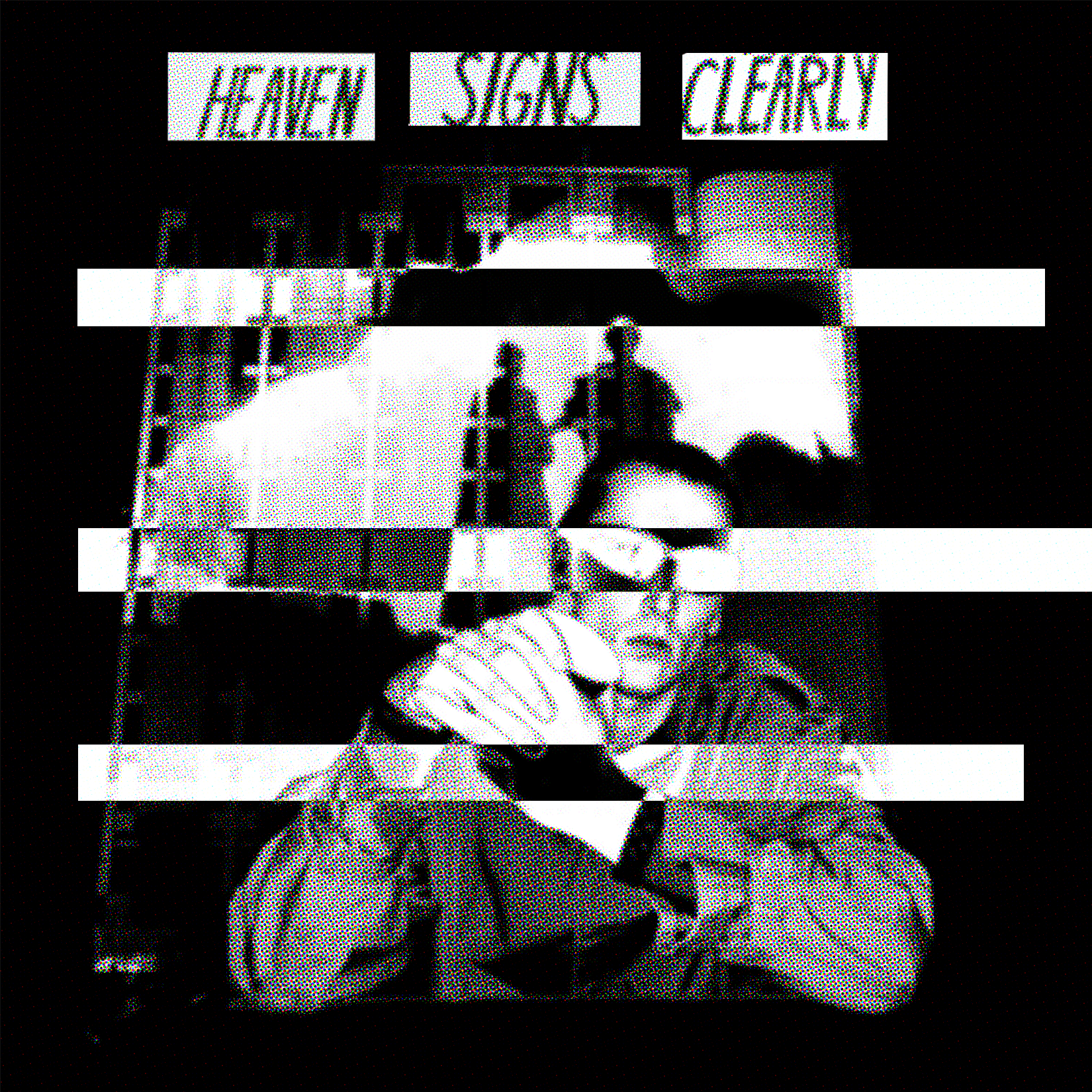
 

OMBIIGIZI Incites Change Through Embracing Musicianship as Cultural Responsibility on Debut "Sewn Back Together"


OMBIIGIZI (from left to right: Daniel Monkman, Adam Sturgeon) by Rima Sater

For moccasin-gaze band OMBIIGIZI, musicianship is about more than self-expression, it’s about cultural responsibility. 

“If we’re going to be Indigenous artists, we also have a responsibility to share parts of ourselves that not a lot of musicians necessarily have to wear. Being able to experience that struggle together is what helps us to overcome its challenges,” shares Adam Sturgeon, one half of OMBIIGIZI.

Composed of Anishinaabe musicians Daniel Monkman (Zoon) and Adam Sturgeon (Status/Non-Status), Toronto/London band OMBIIGIZI formed in 2021 and shortly thereafter composed their Polaris-Prize-nominated debut Sewn Back Together–released this past February on Toronto label Arts & Crafts

Produced by Kevin Drew of Broken Social Scene, Sewn Back Together drew both Sturgeon and Monkman out of their comfort zones to combine their complimentary styles into an expansive listening journey that is both meandering and thunderous. Awash with grungy, whammy guitar and pop-punk vocals, intertwined with crystalline moods and open hearts, Sewn Back Together manifests honouring the reclamation of heritage and a mutual commitment to healing. 

“The spirit in me is my family / The past and the future / Together it’s nearer / To our prophecy / This resurgency / I’m hearing you calling / So I make this offering”

- “Spirit In Me” (Sewn Back Together

Through its exploration of both individual and collective identity, Sewn Back Together reckons with the realities of generational trauma, guided by familial teachings and a connection between Monkman and Sturgeon that transcends their collaborative brilliance. 

In a fortunate opportunity to speak with the band before their set at FME, we discuss how they hold space for each other’s vulnerability in their craft. 

“We put ourselves together in a safe way, so that we can understand eachother,” says Sturgeon. “Touring can be difficult because we go from our studio–a really safe environment–to the road, where we encounter the struggles of the music industry. It’s the reality of what we do, but we always have each other to actively remind ourselves why we’re doing what we’re doing,” he adds. 

On the notion of touring insecurities, Monkman chimes in: “Venturing into unknown territory can be scary. Most people we meet are really kind, but you never know when the convoy freedom flags will fly up… [Being in Quebec], I get caught up in the French language stuff and it’s making me think more and more about how we’re all trying to exist on Turtle Island. Ultimately we have to come together…” 

In a way that almost seems like Sturgeon can read Monkman’s mind, he continues: “Differences between us are our strengths. The more that we collectively acknowledge ourselves, the more we can collectively see each other. Our traditional teachings remind us of that.” 

OMBIIGIZI by Rima Sater

Through embodying a creative mindset that uplifts their shared backgrounds, OMBIIGIZI incite change for future generations. One important aspect of the duo’s shared path is nurturing artists’ sobriety within the music industry, something that often comes as an afterthought when introducing safer space practices. 

“Looking back, how do you feel you set an example for a younger version of yourselves?” 

“Sobriety has been a big inspiration and is a movement within our band,” nods Monkman. “Our families are so important to us and addiction has been a part of our histories.”

“It’s really tough in the music industry,” says Sturgeon. “It’s hard not to want to partake in…desirable things? I suppose. But we keep each other humble and stay grounded.” 

“We don’t have alcohol in our greenroom or on our rider. When I first talked to my dad about sobriety, he couldn’t understand. But now looking back. I’m glad to be in the present with other people who have continued to build a strong foundation for themselves,” concludes Monkman.

It’s through informing the present by looking at the past that OMBIIGIZI cultivates their motivation to inspire themselves and future generations. With a sound, energy and outlook that comes to life on stage, OMBIIGIZI and their aspirations to make change sets them apart from the status-quo. With their first release stirring thoughtful conversation in less than a year of rotation, they’ve set in motion a notable artistic trajectory to keep a pulse on.

Don’t miss OMBIIGIZI at POP Montreal on Saturday, October 1st at L’Entrepôt77 at 7:00pm.

OMBIIGIZI  

Instagram | Bandcamp | Twitter

Zoë Argiropulos-Hunter (she/her) is the co-founder and managing editor of Also Cool Mag. Aside from the mag, she is a music promoter & booker, and a radio host & DJ.


Related Articles
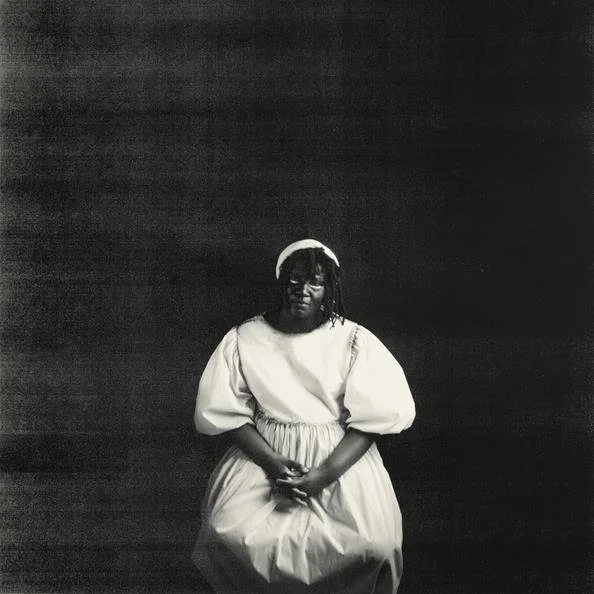
 

NO WAVES Talk FME, Gatekeeping Hats in Chinatown and Getting into Metal


NO WAVES with Malaika Astorga for Also Cool

At the tail-end of our FME weekend, we were able to catch up with surf garage rock band NO WAVES from Montreal. We covered their show at Bar L'Escogriffe, where they had played alongside Jess X, Piss for Pumpkin, and TVOD earlier this year, and were excited to catch up.

By far the youngest band at the festival, we chatted about their gratitude for the opportunity, who they were looking forward to seeing, as well as their personal style influences.

Malaika Astorga for Also Cool: How are you all feeling about playing your first festival in rural Quebec with Animal Collective?

Sam for NO WAVES: It's really crazy; it's crazy as fuck. I never realized that getting to something like this was actually possible. I feel kind of freaked out.

Also Cool: In a good way?

Sam: Yeah, definitely.

Angel: I don't think it's fully sunk in that we're here, that we're doing this. I feel very excited and grateful to be super far away from home just to play music; I think it's so sick. It felt super silly seeing our name with all these huge artists. It gives me a lot of hope.

Cy: I'm on par with everyone else. It's not freaking out, but it's like, we're really out here, 8 hours away (from Montreal). Especially shows like the one we’re going to play at MTELUS. That is crazy; I can't wrap my head around it. It's a shock.

Sam from NO WAVES

Also Cool: What goes into the outfits you wear, and what's the difference between dressing for a Montreal show and dressing for rural Quebec? What influences your personal sense of style?

Sam: I just really like these shorts, but I was scared of wearing them because of how cold it is here.

Angel: I base my personality around Mick Jones from the Clash. I saw him when I was 16, and I thought it was cool how he was tidy, so I usually try to go for a clean-ish look. 

Sam: Angel's business casual every day. Cy is the one who's the most consistent with his style, though.

Cy: Honestly, I love doing this; I love dressing well. It makes me happy. 

Sam: Cy used to have a school uniform, so on a Friday, when we had a show, we would go straight from school to our show, and he would stay in his uniform.

Cy: Yeah, it started that way, but I realized that I also really liked it. I'm a big fan of uniforms, I'm not great in terms of creative outfits, so this was the most uniform thing I could put on. I can't do t-shirts, but that's me 

Also Cool: The people who go to your shows really dress up.

Angel: Yeah, it's so cool!

Sam: I don't really wear t-shirts anymore because it gets too hot when I'm drumming.

Also Cool: What is the story of your hat? Where did you find it? You wear it all the time.

Cy: He's gatekeeping it, guys.

Sam: I can't remember the store's name, but they're sold out. I even asked the lady at the store to order more for me, but they haven't yet.

Sam gatekeeping his hat

AC: Who are you excited to see at the festival?

Sam: I want to see Hubert Lenoir because that's, like, the homie.

Angel: I would say Hubert, as well as Choses Sauvages and La Sécurité.

Cy: I'm also excited about Hubert, but I think all the metal bands here are really cool too. Metal is cool; I wanna explore it more. I would definitely see Dying Fetus.

Angel: I've been getting into heavier groups like that, and even their soundcheck was amazing.


AC: Anything else you want to touch on?

Angel: I just want to highlight that the scene in Montreal has been flourishing, especially since last summer. I've been interested in this group called YouTube to MP3, who are more hyerpop, and I'm just really excited for what's to come.

Catch NO WAVES this weekend at MTELUS and Entrepot 77 on Friday and Saturday, and stay tuned for another full-length interview with the band coming very soon.


Malaika Astorga is the Co-Founder & Creative Director of Also Cool. She is a Mexican-Canadian visual artist, writer, and social media strategist currently based in Montreal.


Related Articles


Charting Piss for Pumpkin's Ascent in the Montreal Punk Scene


Piss for Pumpkin. Photo courtesy of @charlie.yoko

In the span of less than a year, Piss for Pumpkin’s experimental punk sound has made the band of three a staple in the Montreal music scene. Their sound —which the band describes as loud and anxious — is tailor-made to whip a crowd into an almost violent frenzy. As pandemic restrictions have eased over the past year, Piss for Pumpkin and their shows have emerged as a much-needed outlet for the moshers stuck inside for far too long.

Indeed, as the one-year anniversary of their first show approaches, the lightning-fast popularity of Piss for Pumpkin’s sonic experience is reflected in the huge variety of venues the band has played. From the Van Horne skate park to Turbo Haüs to backyard venues in British Columbia, Piss for Pumpkin has become widely loved for their ear-shattering vocals, heavy bass, and homemade approach to punk. Lead singer Annie MacLeod and bass player Isaac Seglins sat down with Also Cool to discuss their journey as musicians and the release of their first single “Citronella” on July 12th. 

Kate Addison for Also Cool: Thanks so much for meeting with me. I've loved going to your shows over the past year, both in Montreal and BC. You guys have been an official band for a while now — how did you first start playing together? 

Isaac Seglins for Piss for Pumpkin: All three of us came together in university. Matt [Sagar] — the band’s drum player — and I knew each other and jammed in high school, and together we wanted something different [from the music we had played before]. We met [when we were still in school] but we weren’t a band for a long time because we had nowhere to practice. 


Annie MacLeod for Piss for Pumpkin: After some searching, Matt found a practice space we could use last August. [It’s] an old industrial building that is always soaking wet and disgusting, but at least we can be as loud as we like.

Also Cool: Annie, I know you were in first year at Concordia three years ago. Did you guys play together then or only start jamming a year ago?  

Annie: We became friends during our first year of university [in 2019] and we jammed together once at a Concordia studio. 

Isaac: It was too clean, nothing really happened. It was a weird, sterile room. 

Annie: [The experience] was kind of awkward, and I was really nervous. Nothing happened after that, I guess, until we were in third year. That's when things [with the band] started happening.

Isaac: Yeah, things really started happening as soon as we got that [industrial] space [in 2021]: we wrote half of our songs the first week, and then we had a show two weeks later [on August 27 2021 under the Van Horne overpass].

AC: That's crazy quick! How did you book that first show?

A:  Matt is really good at being social. He had been going to a bunch of shows, just talking to people and other bands. He met Jack from Last Waltzon who mentioned that they needed an opener. [And so] they gave us a shot.

Piss for Pumpkin in concert. Photo courtesy of @bailyaphotography

AC: Let’s talk about your band’s name, Piss for Pumpkin. Where does that come from? 

A: Okay, I love this question! As a kid, I had a guinea pig named Pumpkin, but I didn't know how to spell pumpkin. [I spelled it] “pum-kin” instead. [@Pissforpumkin] was my Instagram name for a long time, because I was thinking that ‘P is for pumpkin’ [and that the name] honoured my dead guinea pig who I cherished as a child. I thought it would be kind of funny to put another “s” and make it a little vulgar. [After] we wrote a bunch of songs and decided, “Okay, we're a band, we need a name,” Matt suggested my Instagram name. [The band] put the extra ‘P’ in there [to make Piss for Pumpkin]. 

Pumkin the guinea pig. Photo provided by Annie MacLeod

AC: Who would you say are your musical inspirations?
A: Well, all three of us definitely have so many influences that are all very different to our sound. [The music we make] is definitely an entanglement of all of those different elements. It's hard to pinpoint specific artists. All three of us definitely have so many influences that are all very different, but our sound is primarily influenced by living in Montreal and the environment where we are [making] music.

Piss for Pumpkin’s rehearsal space. Photo provided by Annie MacLeod

AC: How would you describe your music to someone who's never heard it before?

I: I would say energetic. Scared, but not scary.

A: A lot of the lyrics are about being really anxious and living in the city.

I: Another influence for Matt and I was our time spent being in bands that we kind of hated with multiple guitarists who were very loud. [Piss for Pumpkin] was an opportunity for Matt and I to be the loud ones. As a bass player, you [normally] don't get to be upfront too much, so, for me a big inspiration for the sound is how loud can the amps go now that I'm not competing with any guitar.  

AC: You’ve played several live shows in Montreal overy the past year, with a few in BC too. How has that impacted your music?
I: While we have recorded stuff coming up, I still consider the live shows to be the primary Pumpkin experience. It's interesting: you write a song in the dungeon, right? Then you practice it, and you think it's gonna be a certain way, and then you perform on stage and you realize “never mind, the song should be like this.” We find that when we’re performing the song, we’re kind of still writing it. Matt and I will shoot a look at each other and confirm with our eyes, and then the song will be rewritten in the moment.

Piss for Pumpkin in concert. Photo provided by Kate Addison

AC: With all the performances you’ve been doing, is there anything special that has stood out for you? 

A: The Vancouver show [with Dastard on July 25th] is definitely fresh in my mind. We were performing [in a backyard] near this strip of restaurants, and this really drunk lady showed up. She was just so enthusiastic. She was dancing and loving it, and she brought us pizzas and put them in the pit. Everyone was grabbing pizza and dancing, too. Outdoor shows [can be] really nerve-wracking because [neighbours] complain. For example, there was another lady at the Vancouver show who was standing outside the fence and giving the organizers a hard time. That was kind of scary, but we gave her some cake and she left.

AC: Maybe the cake lady was just feeling left out. 

This has been a really great discussion, thanks so much for your time. So, finally, before we end for today — what is the plan for Piss for Pumpkin going forward? 

A: We're releasing our first single [on] July 12th, which we're really excited about, [and] a music video as well.

Piss for Pumpkin. Courtesy of Ali Seglins

I: Last month we went to Annie’s grandparents’ [rural] property. We set up lights, and shot so much footage and so many photos of the band. We did a big visual art project.

A: We don't have a set date for the album [yet] because it's still being mixed. But hopefully [it will be out] this summer.

AC: How are you producing it? Are you doing it yourselves or are you outsourcing it? 

A: A few people are kind of working … poking away at it.

I: [The album] is very close. Friends [are making it]. It's a low-budget operation but we have some very knowledgeable friends. 

Listen to their first recorded single “CITRONELLA” here, and their newest release “CONDITIONER” below!


Piss for Pumpkin

Instagram | Bandcamp | Youtube | Facebook

Kate Addison

Website I Instagram


Related Articles
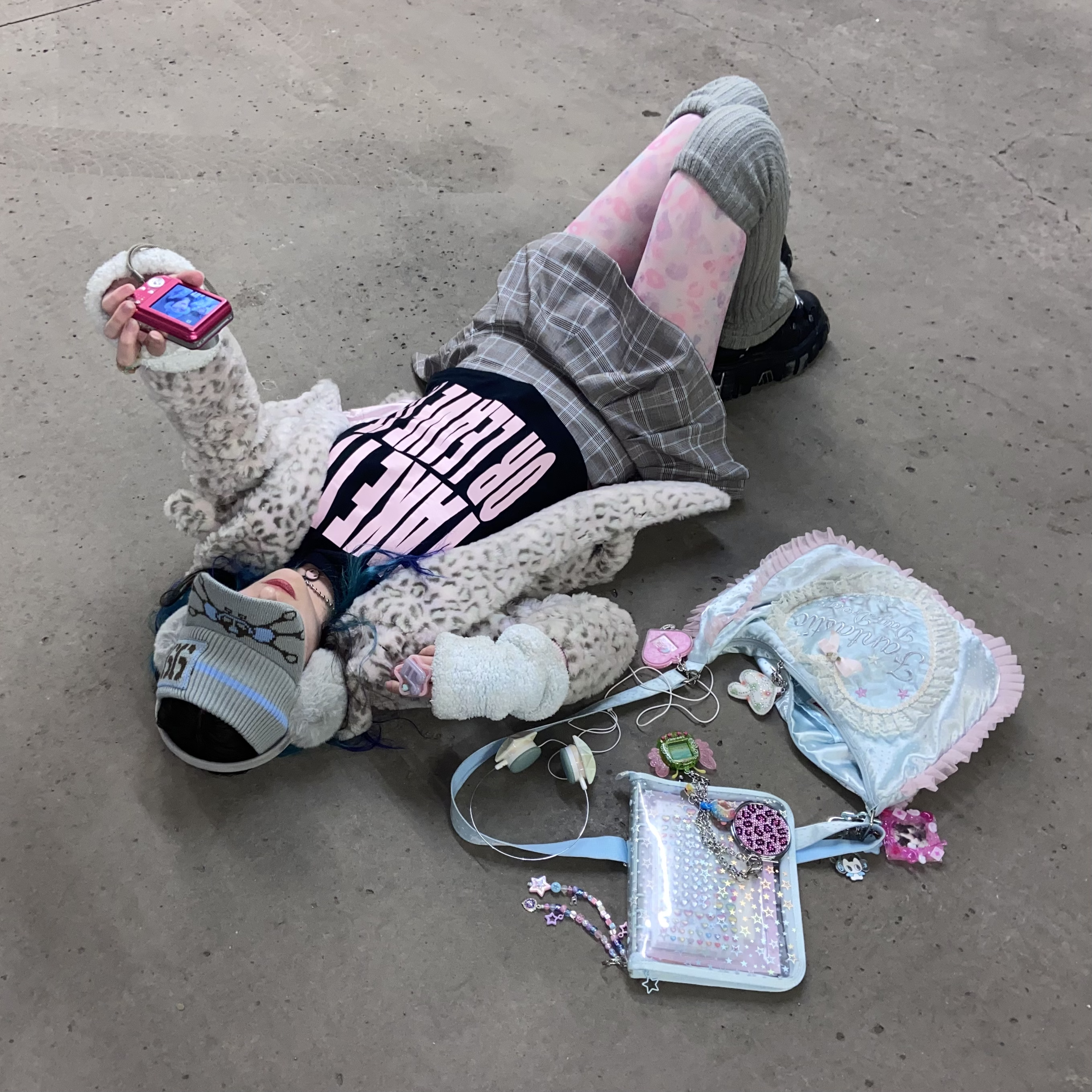
 

Between Frankness and Cheekiness is Eliza Niemi's "Staying Mellow Blows" (Vain Mina / Tin Angel Records)


Eliza Niemi by Ben Mike

Alt-folk raconteur Eliza Niemi’s knack for sincerity and surrealism make her masterfully endearing. The Toronto-based multi-instrumentalist and singer first found her footing in so-called Canadian indie circles with her former band Mauno and since disbandment, has established a solo-venture defined by striking idiosyncrasy and collaborations. Now, Niemi finds herself with two EPs under her belt and operates an independent record label, Vain Mina, on the side.

Niemi’s deft and illustrious approach is refined on her to-be-released LP Staying Mellow Blows, out August 5th, 2022 on Vain Mina and Tin Angel Records. Between cello musings, folk experimentations and modular synth flirtations is Niemi’s most bountiful collaboration to date—a testament to her talent and creative kinship. Staying Mellow Blows features contributions from 19 confidantes within Niemi’s web and charts a back-and-forth intrinsic to community ties; transcending its pandemic-bound gestation period.

In our conversation with Niemi, we had the chance to discuss how Staying Mellow Blows evolved in passing through many hands, the way she is sustained by innovative relationships, and the experience of getting a tramp stamp of her album name.

Read the full interview below!

Eliza Niemi by Ben Mike

Zoë Argiropulos-Hunter for Also Cool: You are a prolific world-builder when it comes to your collaborations. How has your creative process transformed from the solitary practice captured on your first EP, Vinegar, to that being realized on your to-be-released Staying Mellow Blows?

Eliza Niemi: With Staying Mellow Blows, I wanted to preserve the solitude and intimacy of my older EPs in the core of the songs, but make the arrangements a joint effort with the other players on the album. I basically wrote a bunch of songs on cello, guitar and keys, and then sent them around to my friends all over North America to build on. Some were a bit more collaborative in earlier stages, like how "Walking Feels Slow" was co-written from the start with Will Statler, or "Sushi California" and "Trust Me" were co-produced by Mike Fong.

This record was my first time fully recording and producing my own vocals, cello, keys, and guitar. That part of the process was quite solitary. It created a cool dichotomy with the deeply collaborative process of all my friends writing and layering their own parts overtop. It was like I leaned even further into the intimacy and introspection of my previous releases—which were recorded by Louie Short in a small studio here in Toronto—and then turned that on its head by completely opening it up to other musicians' perspectives. I think in this way, my creative process has expanded both inwards and outwards. Making this record has been an exercise in understanding myself and in letting go—trusting the people around me.

Also Cool: Branching off of that: Did working with your friends bring about anything of the album that you hadn't initially expected? 

Eliza Niemi: Sending these vulnerable, raw songs to my far-away friends and having them interact with them so honestly was a beautiful way to feel close to them. It was an emotional process receiving everyone's stems over the pandemic. I put a lot of careful thought into whom I asked to play on which songs, but didn't give anyone specific direction. Each friend blew me away with their sensitive and brilliant playing and singing. The odd time when I would send two players the beds of a song simultaneously, they would send back parts that serendipitously worked perfectly with one another. It was pretty magical. Each player expanded their song(s) in ways that I never would have been able to. The album is almost like a web of emotional and musical conversations. 

AC: You and your hive are close-knit in more ways than one. Can you tell me about how these relationships contribute to your label Vain Mina? 

EN: I started Vain Mina as an imprint for my first solo release, mostly to seem more legit to press and industry people, while still being able to own all the rights to my music. "Vain Mina" is adapted from the Finnish vain minä which means "only me,” with a sort of childish inflection. I called it that somewhat ironically because I was setting out to do everything myself, but it ended up being birthed from the efforts of many members of my community.

Mark Grundy (Heaven For Real, Quaker Parents) had been involved in DIY labels back in Halifax, and had been self-releasing music for a decade. He helped me a ton at the beginning. I'd say we basically started the label together. Our second release was Quaker Parents' Our Drawing Club in 2019. Louie Short has been our resident engineer from the beginning and has worked on all of mine and others’ releases to-date.

We all play on each other's recordings as well. I guess we're a collective… Bolstering each other and aiding one another in self-releasing under the label name. We're trying to organically build something with like-minded people and facilitate transparency, artists owning the rights to their music and knowing exactly what's going on at all times. The evolution of the label has felt natural in this sense... We’ve continued to link up with people who share this vision and have gone from there. 

AC: Going back to Staying Mellow Blows: Your leading singles are accompanied by music videos with an uncanny undertone in commonality. What informs your visual and online identity? 

EN: In line with the collaborative nature of this album, I brought songs to friends who make visuals and gave them free reign to interpret them. I've had certain people I like to work with since Vinegar, and they made videos for this album too, like Ryan Al-Hage and Ali Vanderkruyk, as well as some new collaborators like Gart Darley and an exciting to-be-announced artist. 

In terms of my visual and online identity, I gravitate towards things that I find interesting and inspiring. I have an affinity for miniatures, puppets, figurines and outsider-art, which has been present in a lot of the visuals throughout my solo career. I think these things represent how I feel about my music and expressing myself in general. I find making art to always be a sort of clunky, funny, sad, and overall odd representation of the self. Weird little puppets, stained glass, and sculptures convey that well for me.

AC: Speaking of your music videos; can we talk about the extremely rock n’ roll moment of getting your album title tattooed on camera? What inspired this adventure? 

EN: Back in the winter, my friend June was driving me around NYC. At golden hour in Manhattan, we passed a sprinter van with a fun little decal on it. I said, "It looks like a tramp stamp," and we laughed. I then said, "I should get it," and he said "staying mellow blows”—in reference to the title of my unreleased album, which he'd heard every version of for the past two years. We laughed and then I got serious again and said, "That's a great idea!” Over the course of that trip, I conceptualized the music video. I wasn't sure if I was serious about it until it was actually happening. Honestly, I mostly did it to make June laugh and think I was cool, I think it worked. I don't regret anything. It also perfectly encapsulates the sentiment of “staying mellow” being dumb.

AC: In closing, what would you tell your younger self from this moment looking back on your musical career so far? 

EN: What a nice question. I would say: "Don't get the tattoo!" Just kidding! 

It's a hard question because I don't wish anything had gone differently… It’s all led me to where I am now, which is a good place, I think. But yeah, I guess I would tell my younger self to trust your gut, to not be afraid to change gears, and that everything is gonna work out, kinda.

Don’t miss Eliza Niemi on tour!


Staying Mellow Blows

Out August 5, 2022 via Vain Mina / Tin Angel Records

1. MPF (Movies)

2. Sushi California

3. Tea On A Plate

4. Murphy’s

5. Trust Me

6. Walking Feels Slow

7. Don’t Think

8. Not Killing Bad Energy

9. Leave Me

10. Death I

11. Death II

12. Rolling

13. Staying Mellow Blows


Eliza Niemi

Instagram | Bandcamp

Zoë Argiropulos-Hunter (she/her) is the co-founder and managing editor of Also Cool Mag. Aside from the mag, she is a music promoter & booker, and a radio host & DJ.


Related Articles


Aura Moreno Affirms Life's Complexities with "A Love Story" (Part II)
 

Aura, photo courtesy of Ana Maria Hernandez

Today marks the Bandcamp release of A Love Story — the latest chapter in musician and creative Aura Moreno’s empire. The Providence-based artist is known for embracing her tastes and energies in all their forms, mixing them together with a charming and unapologetic confidence. With this latest mixtape, Aura leans into experimental textures, sensuous pop, and jolting effects to concoct an autobiographical roller-coaster ride.
After opening up to Also Cool about her formative experiences and creative stylings, Aura is ready to share more about what she believes and where she is headed. Continue on for the second-half of our heart-to-heart, where we explore the healing powers of expression and all the moves she is set to make.

Aura, photo courtesy of Ana Maria Hernandez

Rebecca Judd for Also Cool: In that vein, something that excites me with your music is how escapist it is, while also being contemplative and heartening. You describe your music as “crafted with the intention to dance, heal, and reflect” — many of your tracks convey that beautifully. Have you always incorporated affirmations into your music? 

Aura Moreno: Well, my music has always been honest and true to my experience, so I’ve incorporated affirmations previously, but unconsciously. With my album Understanding, it all was made purposefully, with intention. I needed to hear those songs and conduct that light energy.

Prior to creating that album, It had been brought to my attention that, back in the day when music came to be, people chanted to manifest a better life. To have a powerful frequency like that moving throughout the world, I began to think “Well, now that I know that, why would I just say any old rhymey thing on my songs?”  I’m using this talent to my advantage, to heal myself and to aid the healing of those who are listening! 


Also Cool: Absolutely. Your music has many powerful reflections on how individuals can treat themselves, but also how they can treat each other. I was just listening to “What I Want” [from Aura’s album Understanding], thinking about how I have friends who are going through difficulties. “Give them their flowers while they’re still here”  — that got me in my feels.

AC: How has music helped you to build yourself back up?

Aura: When I was introduced to 90s hip-hop, I was confused about life, feelings, and relationships. As I studied the music of artists like Erykah Badu, Jill Scott, Common, Tupac, A Tribe Called Quest, Slum Village, etc., they painted beautiful images of love and life. I really felt it, but more importantly I understood. That was life-changing.

Within my own work, I was going through it heavily when I started writing Understanding. There was so much shifting in my life: I had lost my apartment, I had no mentors or guidance, and quite a few of my close friendships were falling away, one of them of over 10 years strong. In the midst of all of this, I had lost my identity… I felt alone, hopeless and was deeply unable to validate myself. Creating the album (along with some prayer) was a big step in the process of getting back to my purpose and values.

I appreciate music so much, because every song I’ve made has been a footnote to circle back to. When I listen, I remember certain lessons I’ve learned, feelings or situations I’ve overcome. I’m able to reset, even if it might take some patience and reiteration.

AC: It can be something where people put their own experiences into [their interpretations of] your music, but you orient yourself through it as well. It gives you context for your own future.

Aura: Literally. Once anything goes public, everyone is able to attach their own meaning to it. As long as it’s inspiring and encouraging, I’m happy. Personally, this is my journal that I don’t have to have physically.

Aura, photo courtesy of Ana Maria Hernandez

AC: I’ve loved watching your live performances! If you were to curate the Aura show of your dreams, what kind of atmosphere would you have, and which artists would share the stage? What would be your dream presentation of yourself?

Aura: Definitely green pastures. I love performing outdoors. If I could just perform in a beautiful field, where people are connecting with the Earth… shoes-off vibe, there’s weed, there’s ice cold fresh-squeezed lemonade, there’s bubbles, the sun is shining with a light breeze and it’s just a high vibration… I would want to connect with all the people who are there to have fun and share Love. and the sound system would be incredible of course! 

I would love to perform with some friends — Cassius Cruz, Project Gurl, Homeboyextra, Blue Mena. I’m also really into Babyxsosa right now, she’s incredible. I would love to have a show with her, Pete Rock, baby.com, Pierre Bourne, Hook, Princess Nokia, Rosalia, SZA. And Charli XCX as well!

AC: Absolutely! An Aura collaboration with some metal artists would be really special.

Aura: Yeah, I definitely want to make rock music and metal in the future. I don’t think that I’m a screamer yet, but it’s coming.

I wouldn’t doubt me doing any sort of music, you know? I love country as well, like Johnny Cash, and Leonard Cohen is also an influence. And Neil Young…

AC: Looking into the future, you’ve got a lot on the go. What are your next projects, and your intentions for the rest of the year?

Aura: I’m trying to take the business side of music more seriously. In all these years, I’ve prioritized the creation versus the earning, but I do need to take care of myself. My music is incredible, my heart is pure… I deserve so much. I have a whole résumé of music that I could have tried to monetize in different ways had I learned the game sooner, so I guess I’m trying to be a girl-boss with the music shit? *laughs* I’m also in my baddie era, so I’ve got a mixtape [“A Love Story”] coming soon with all those vibes!

I’m working to become more positive within myself and know that I am limitless — we all are! But I want to feel it and know it deep in my bones. I don’t want to doubt myself or worry anymore. I’m trying to pay attention to where I feel worried about life and rework those thoughts. I’m also trying to move to LA, and get my connections up and get my name out there. I’d like to create, release, and perform a lot more. It’s time to level up, period!

I moved back home June of 2021. After not being around for a while, I wanted to come home and re-centre. I’ve been going out more, talking to different people, and re-introducing myself  — despite growing up here, I don’t think I was ever really “in the community”. I had my friends and stuck to my friends. But I’ve been trying to find what’s happening around town, checking out different scenes. It’s been beautiful to see [Providence] flourishing in such a creative way. There’s so much potential here, I’m just trying to enjoy it while I'm around.


A Love Story

Out June 6th, 2022 via all streaming services (Soundcloud version out June 1st, Bandcamp version out June 3rd)

  1. OUF! (snippet)

  2. A Love Story

  3. flip phone freestyle

  4. guesss nottt

  5. Culo de Oro

  6. Canvas

  7. fuck off (demo)

  8. Su Música Suena (demo)

Produced by Jay Almeida, Kris Fame, Black Surfer, eqobKING, Cassius Cruz, Nestro, MasterJo, playshado, Tompsy, and Aura

Mixed by CR3AMER

Additional lines on track 5 by Debra Brito

All music written by Aura, with additional writing by eqobKING (track 4) and Kufa Castro (track 6)

Cover image by Ana Maria Hernandez

NYC Also Coolers can check out Aura’s mixtape release party this Sunday, June 5th at Pianos NYC from 8 to 11 PM! Take a peep at the flyer below (made by Aura!) for more info.


Aura

Instagram | Bandcamp | Spotify

YouTube | Apple Music | Twitter | Soundcloud | TikTok

Rebecca Judd is the features editor of Also Cool Mag.


Related Articles