Aura Moreno and the Makings of Her Love Story (Part I)

 

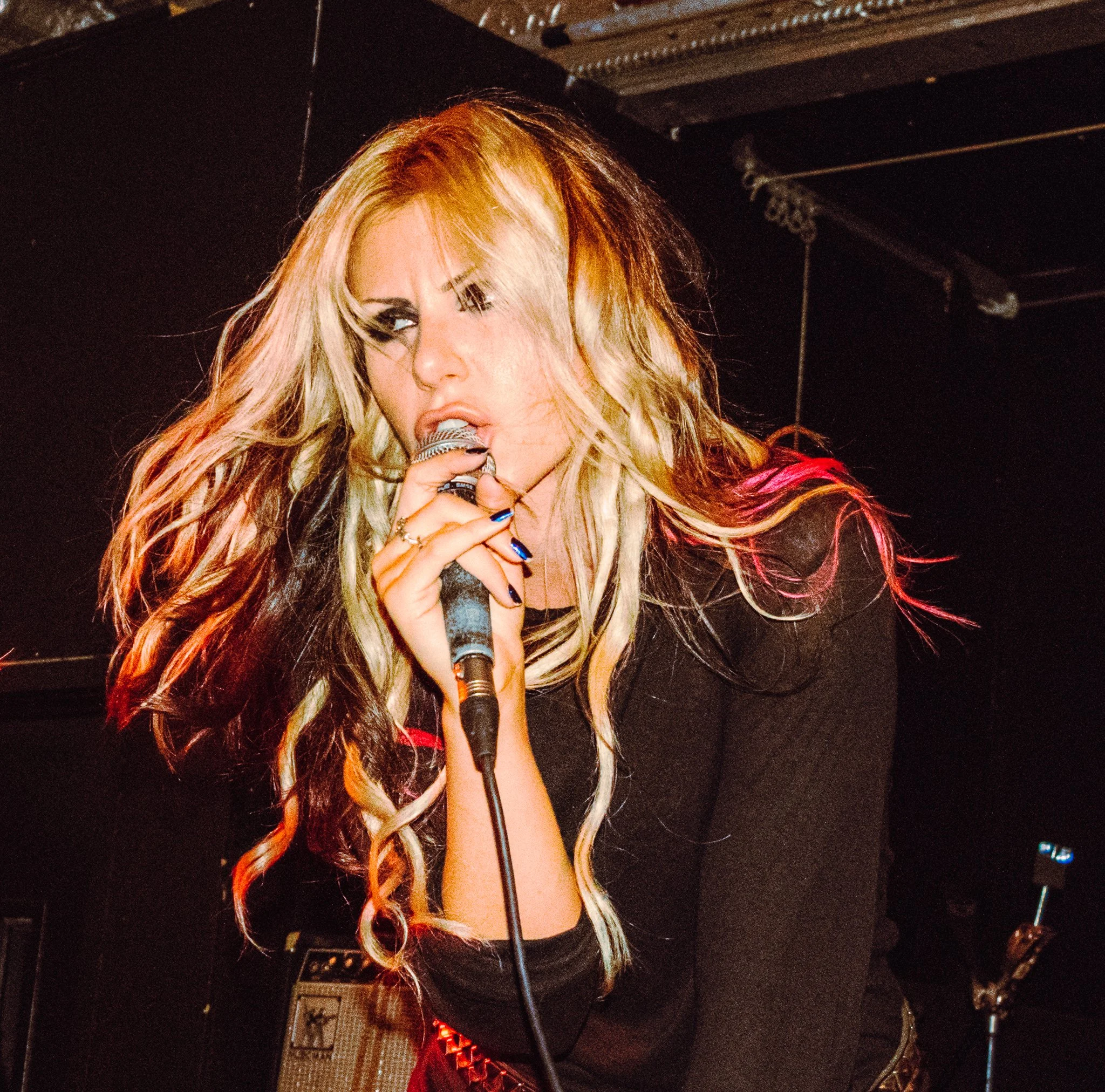
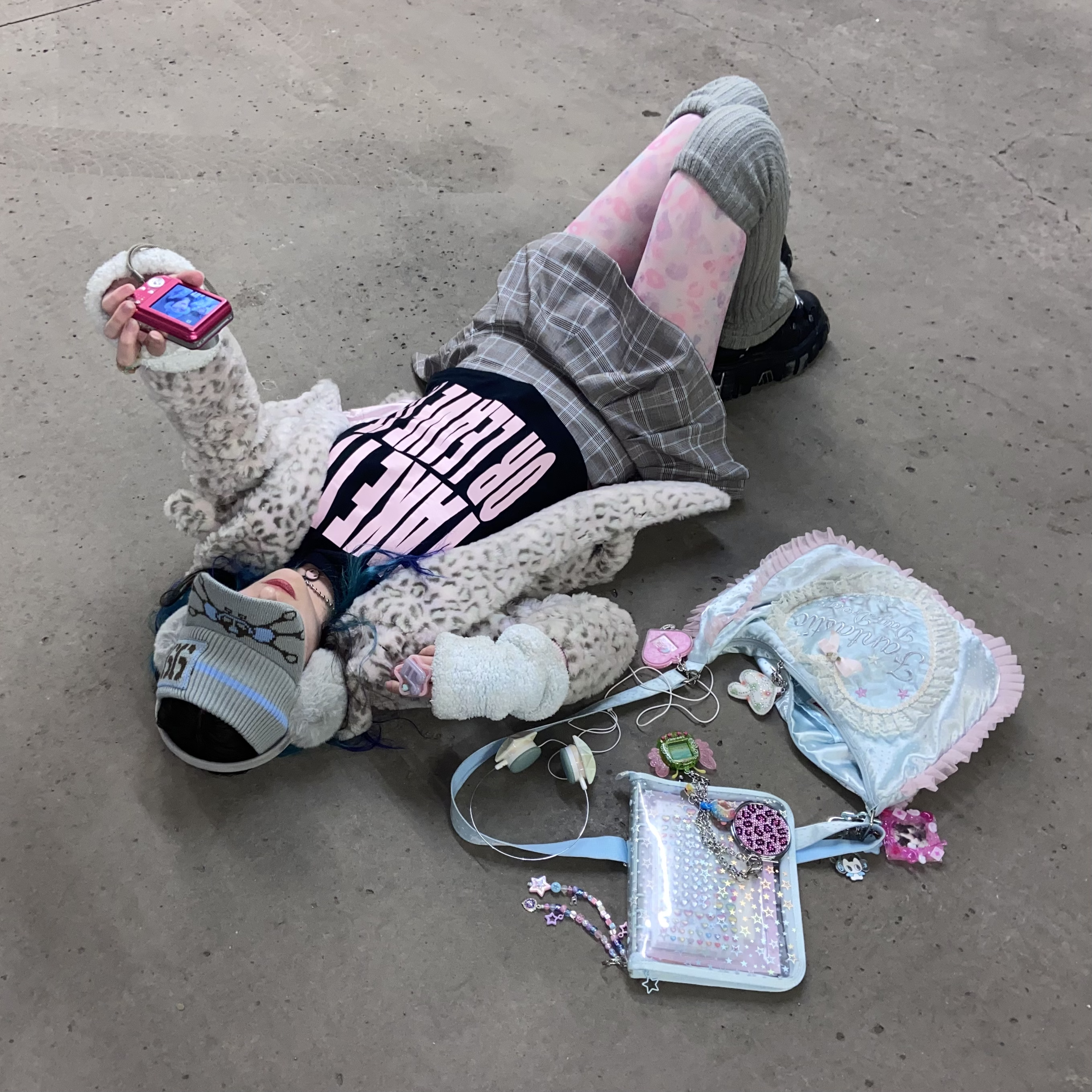
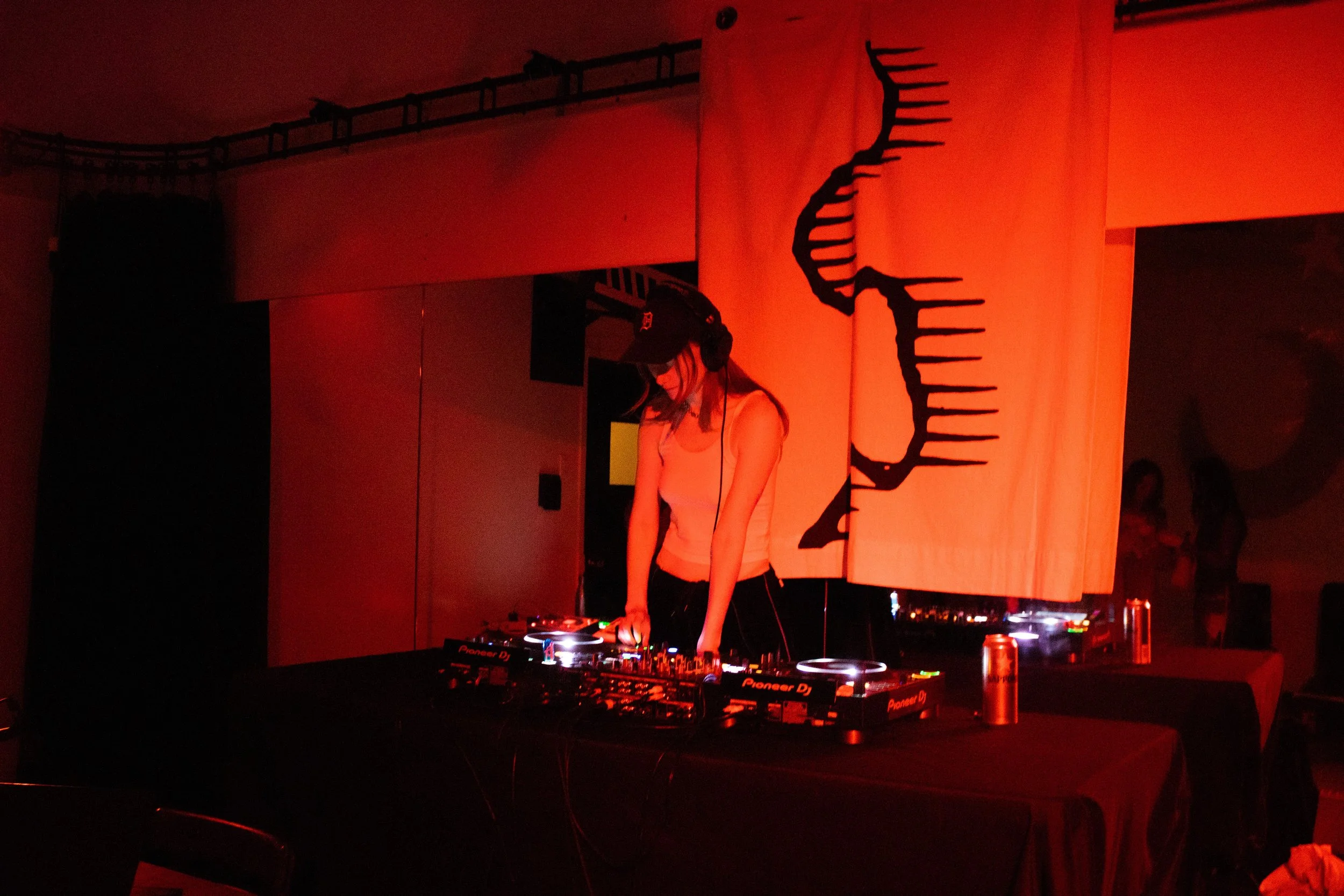
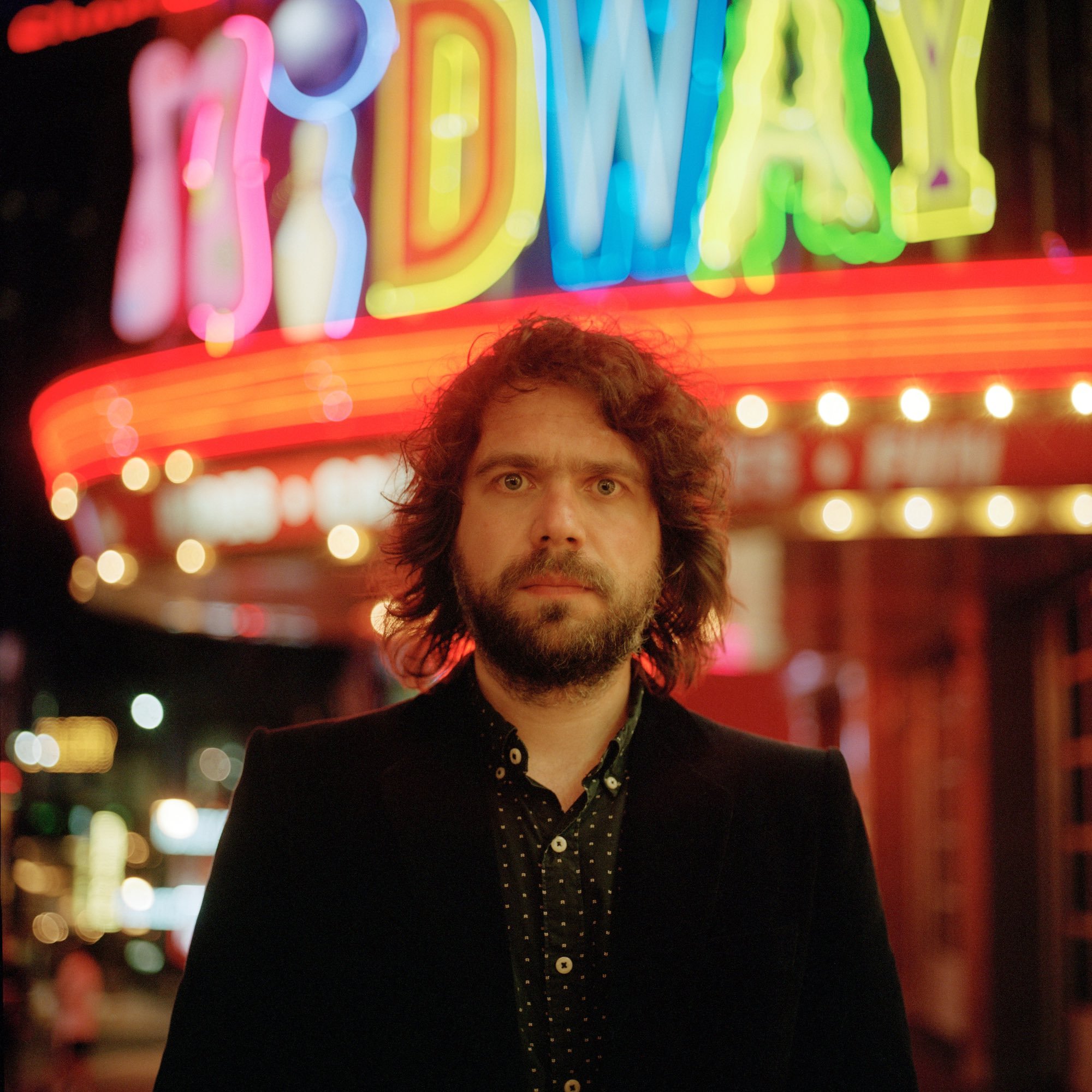
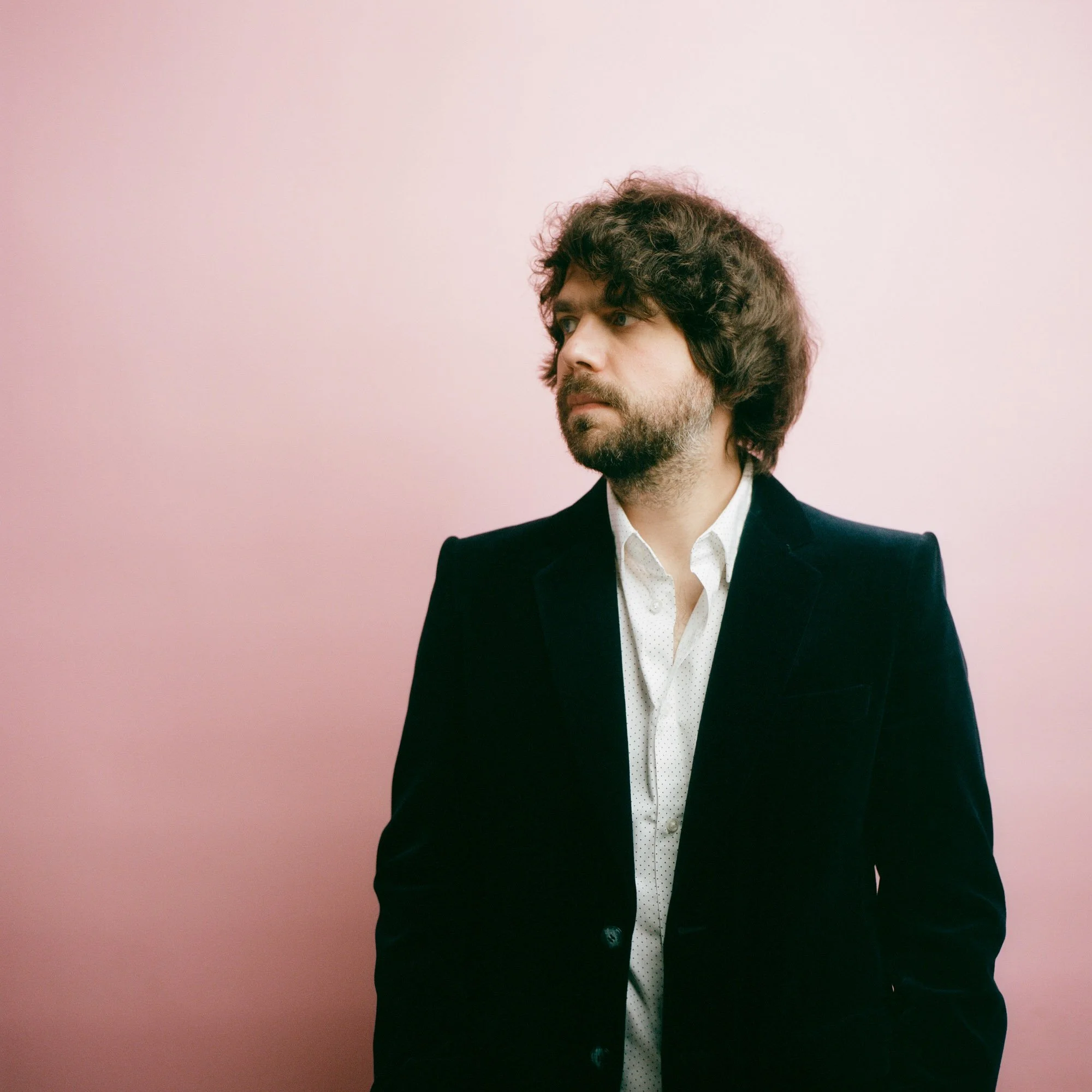
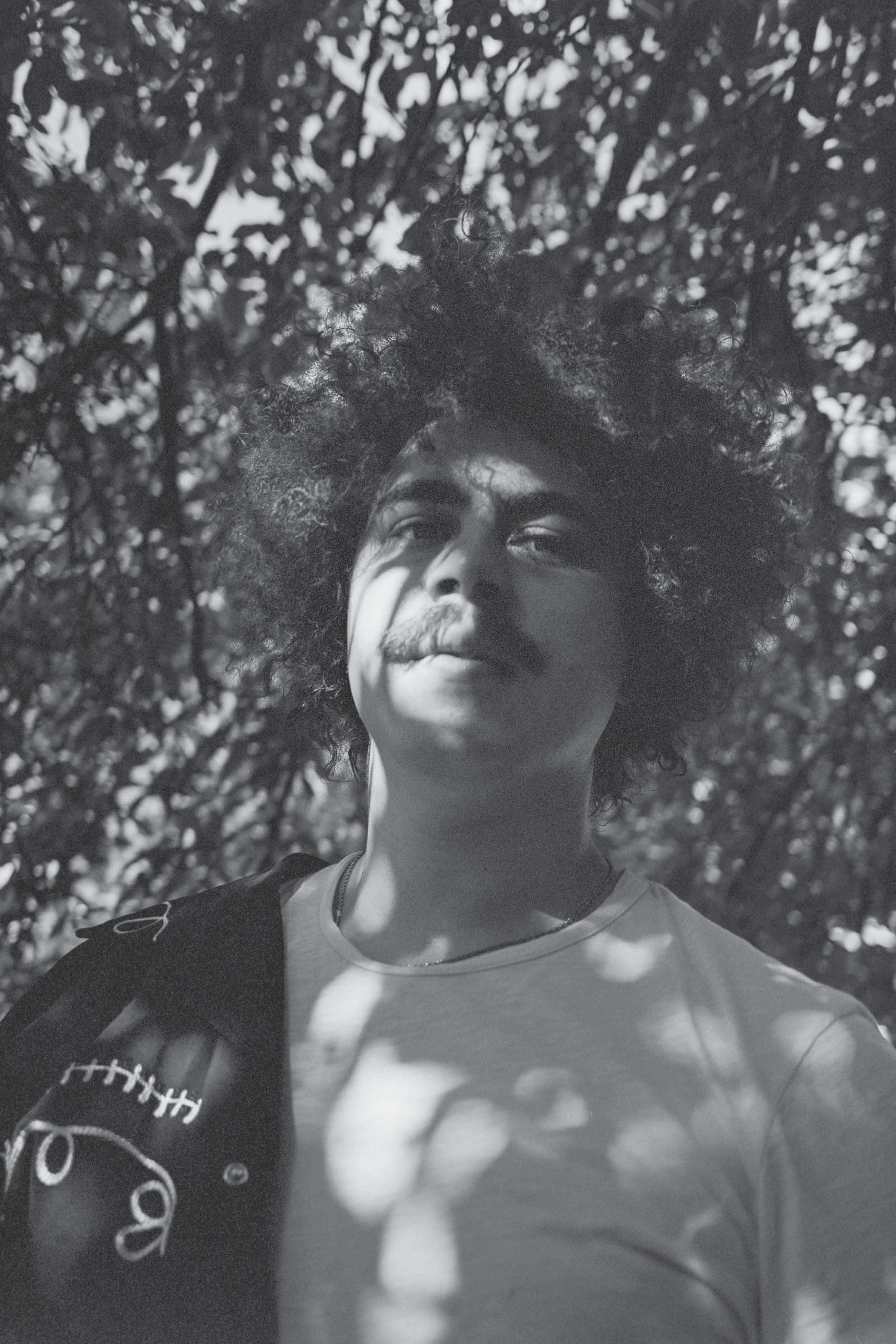
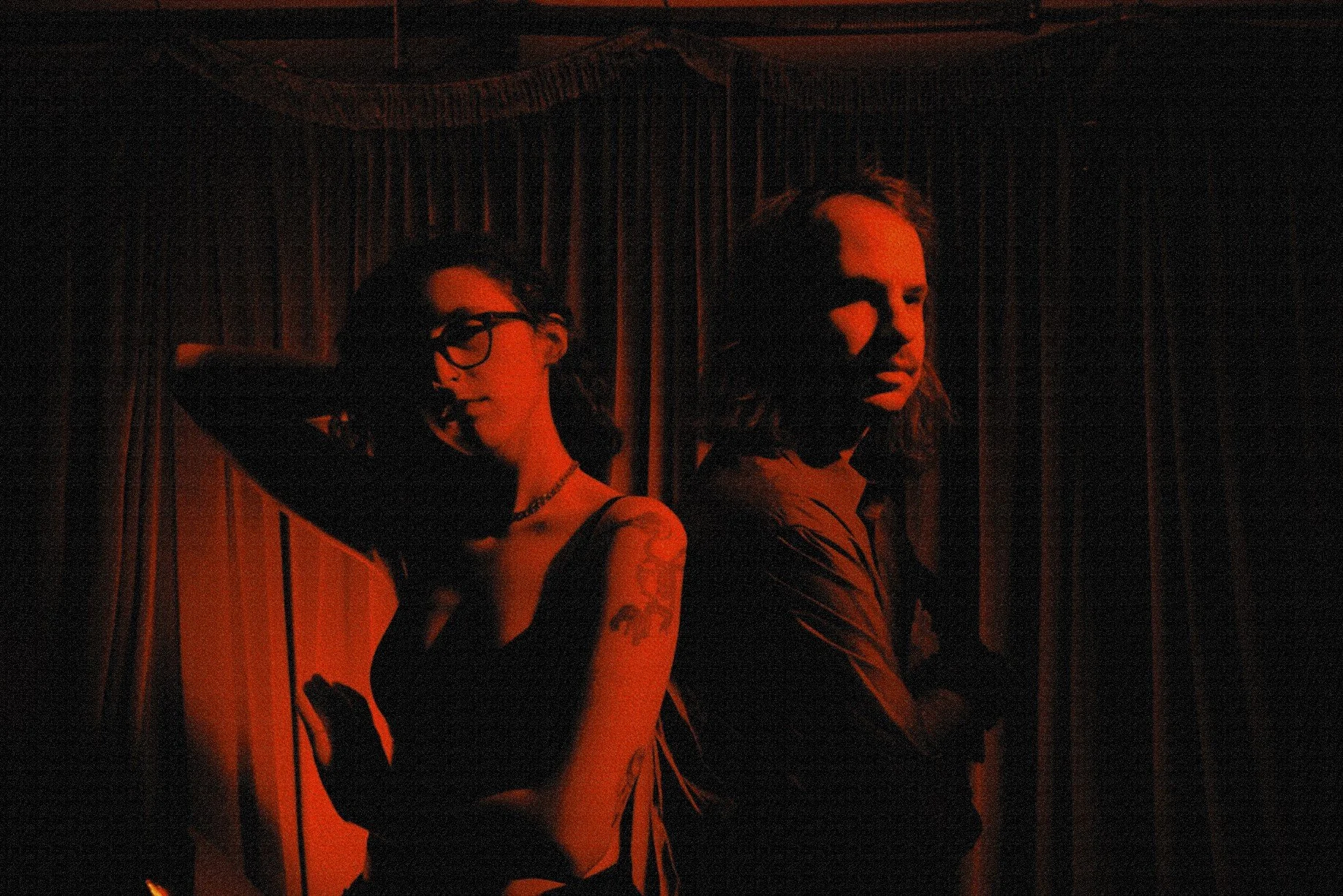
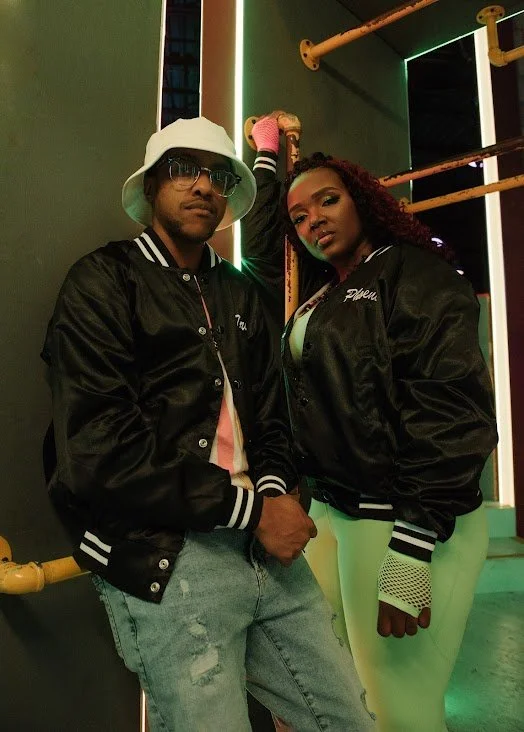
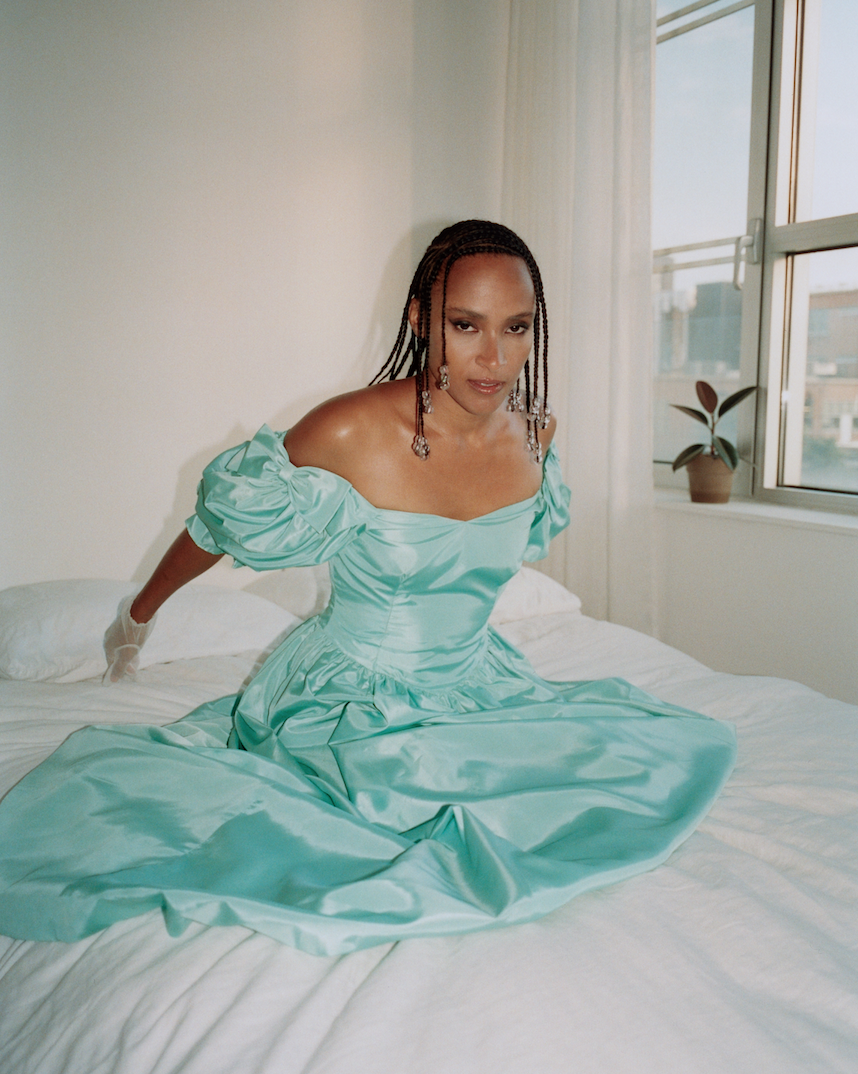
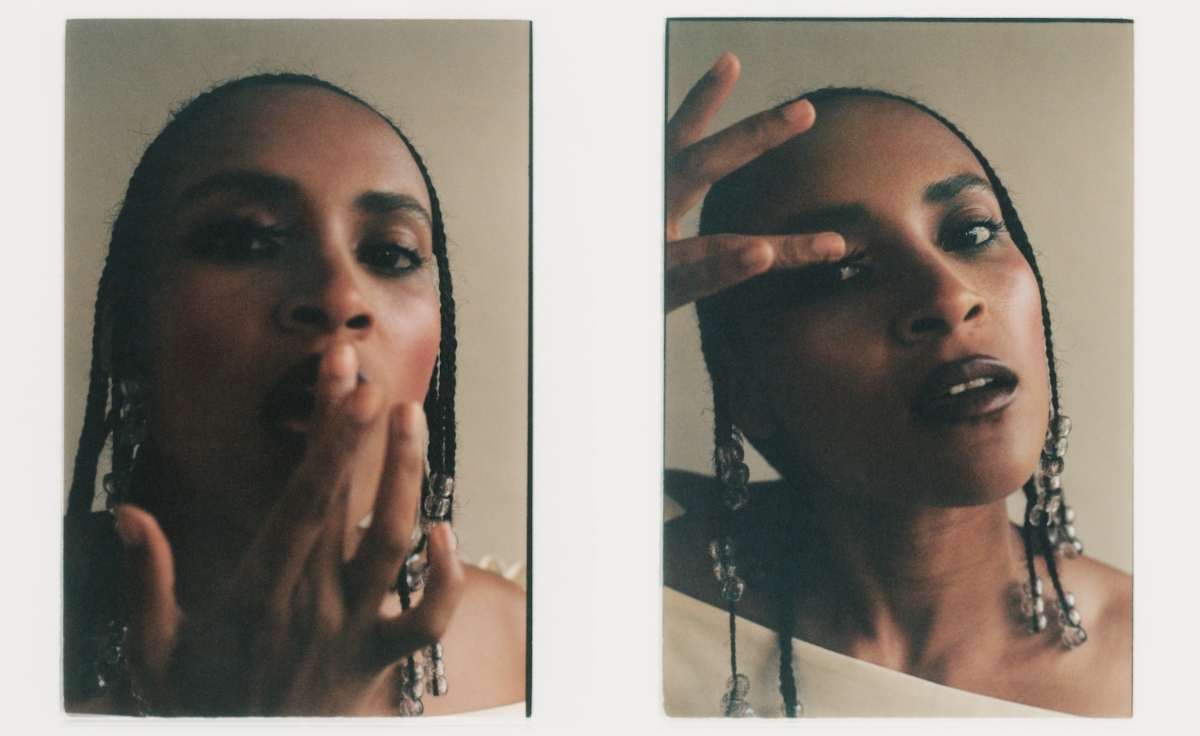
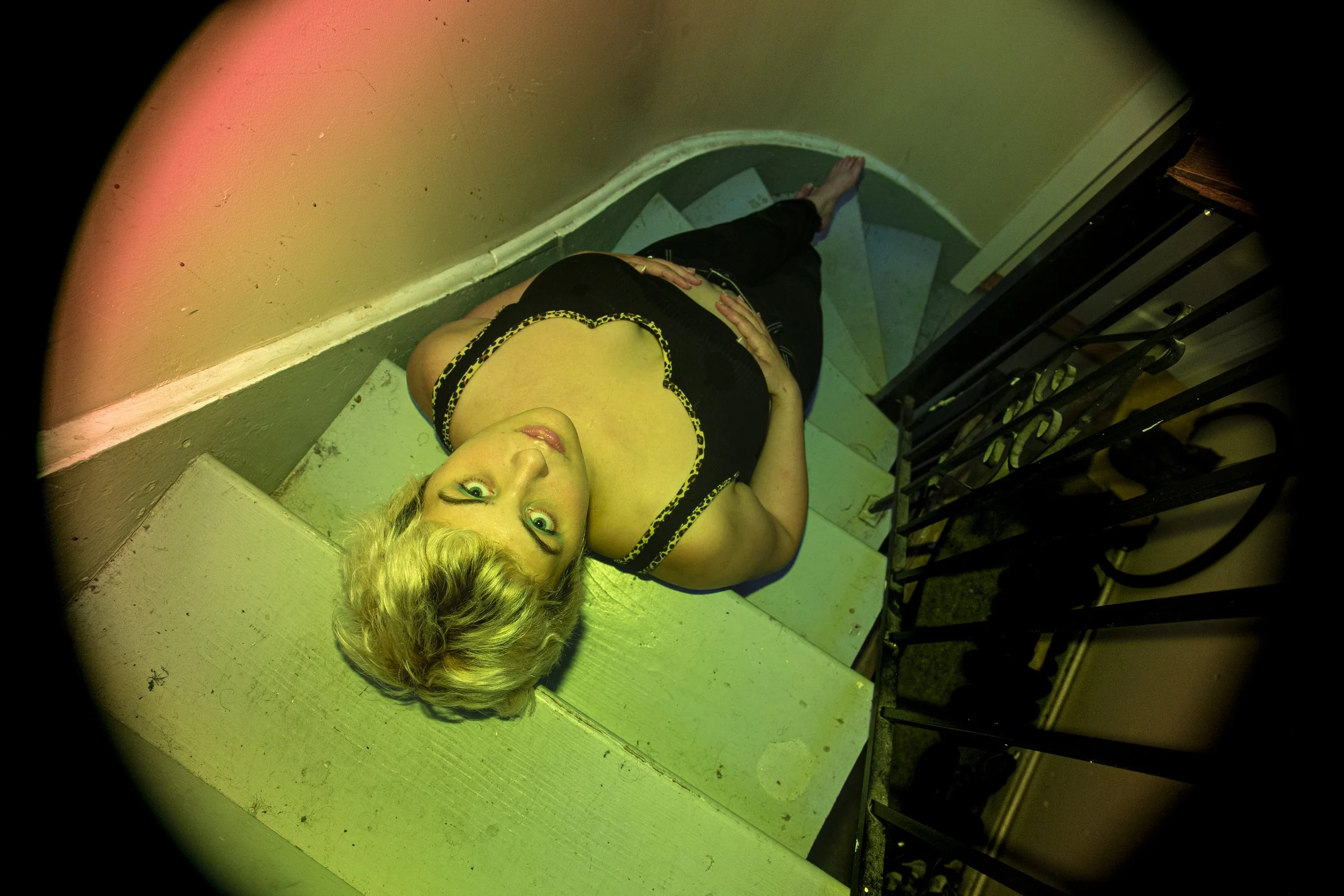
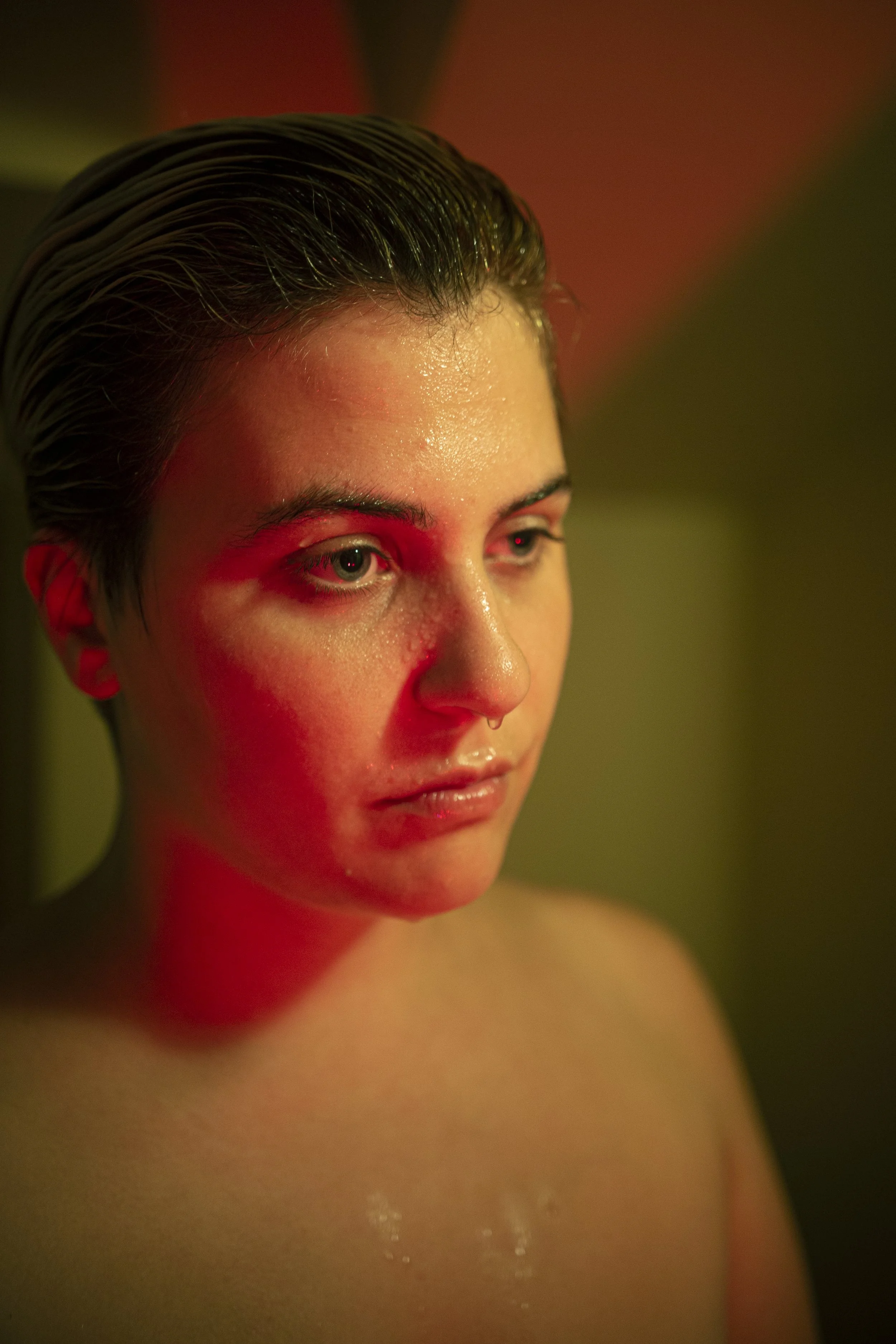
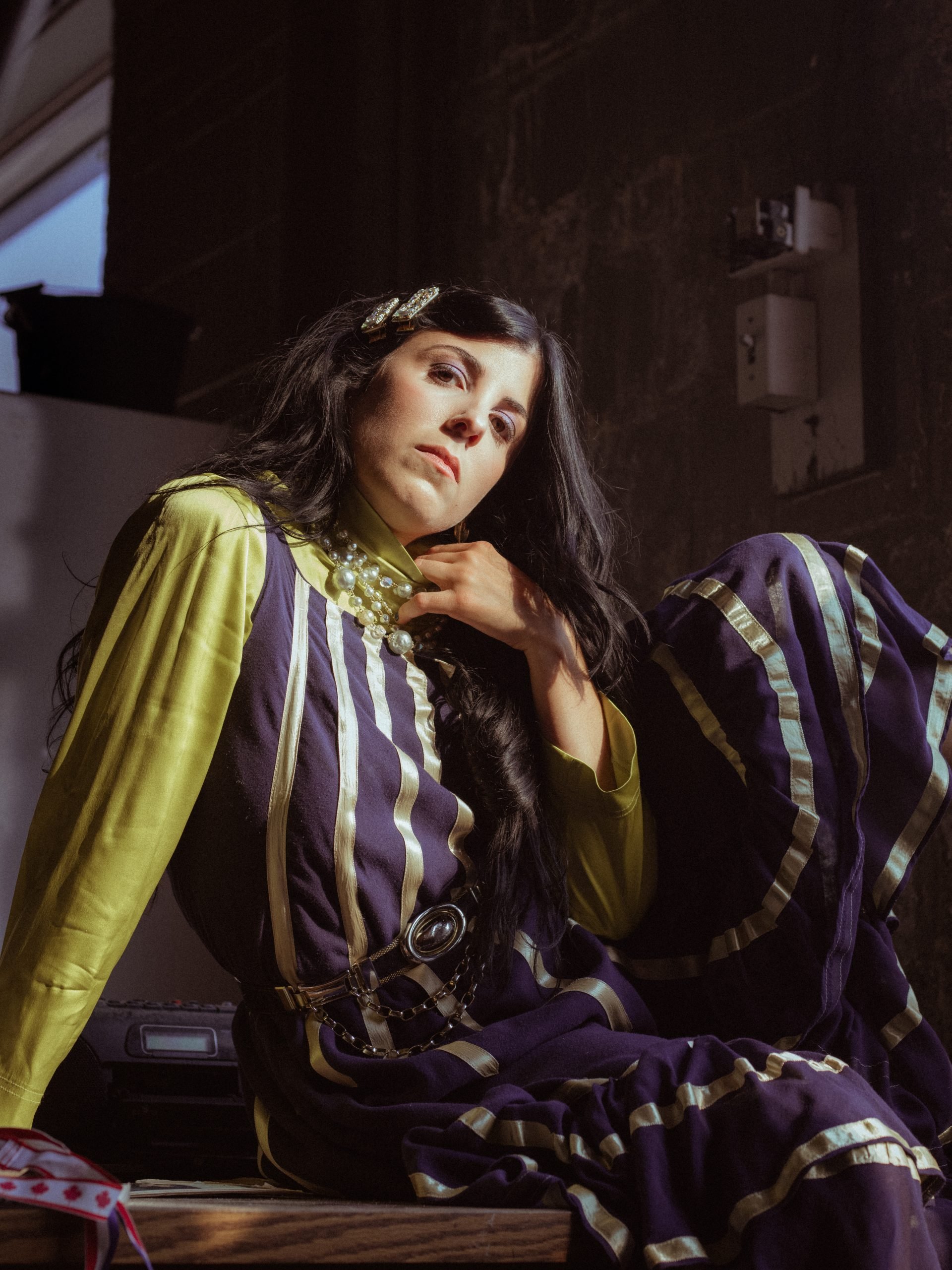
Aura, photo courtesy of Ana Maria Hernandez

From Providence to beyond, the artistic multiverse of Aura Moreno promises to rock your world. Boasting a catalogue that stretches visual and musical disciplines, the restless creative—better known simply as Aura—has cultivated an image that is both limitless in its references and grounded in its truths. Aura’s self-proclaimed “DIY empire” hosts stylistic impulses with a consistent respect; taking notes from Y2K, trip-hop, rap and metalcore, her multimedia creations aim to heal and provide a place for complexity.

Fresh off the release of her music video for “C U There”, Aura has doubled the pace and drops her latest independent mixtape A Love Story later this week. The tape is now available on Soundcloud, with its Bandcamp release tomorrow and full release on streaming services next week. She describes this newest venture as a “life-affirming musical collage”, a reflective and confident celebration that showcases sounds of pop and reggaetón.

In this first-half of our conversation with Aura, we peruse what led her up to this moment: the impacts of suburbia, the tools in her arsenal, and what it means to step into who you really are.
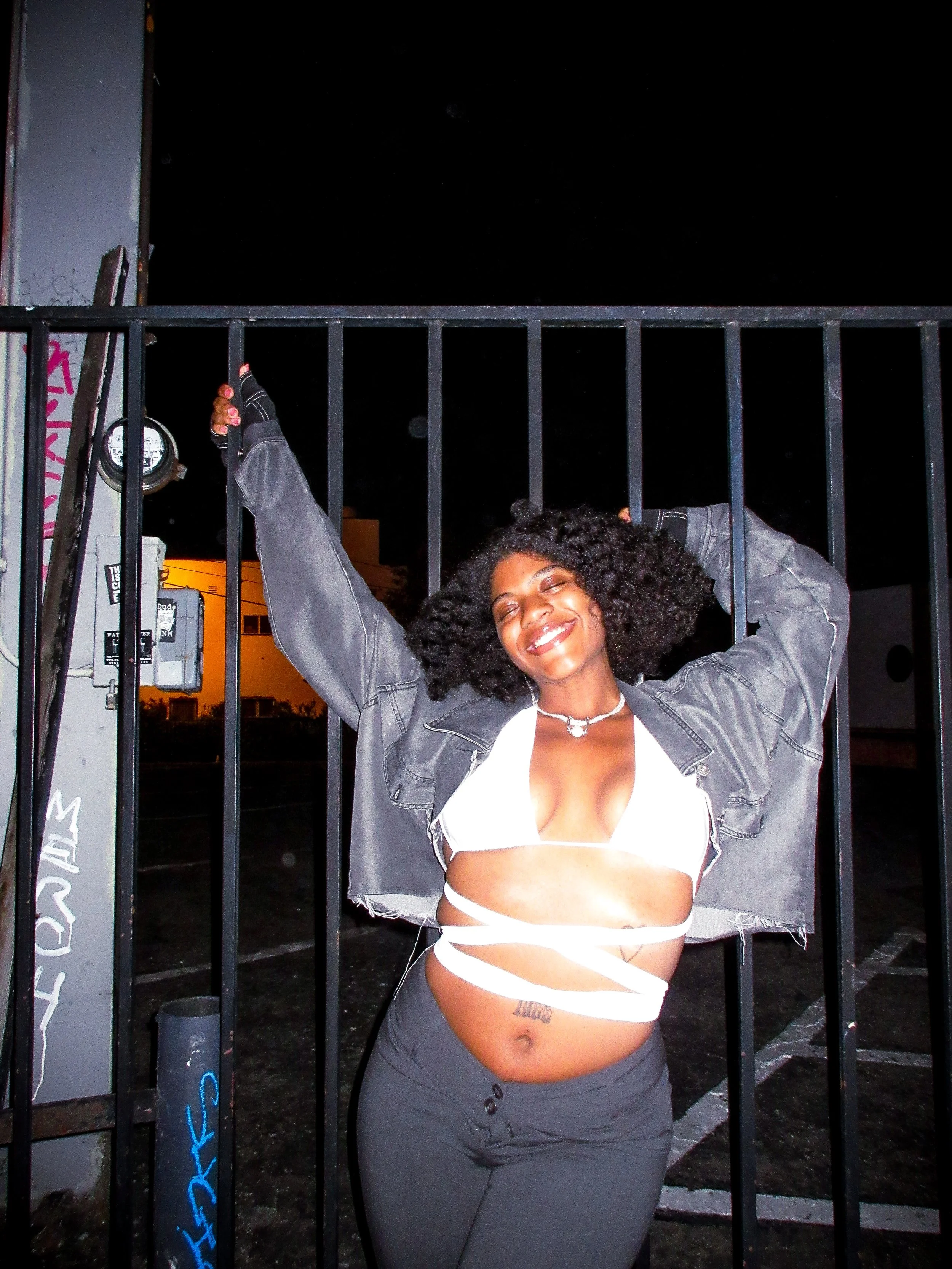
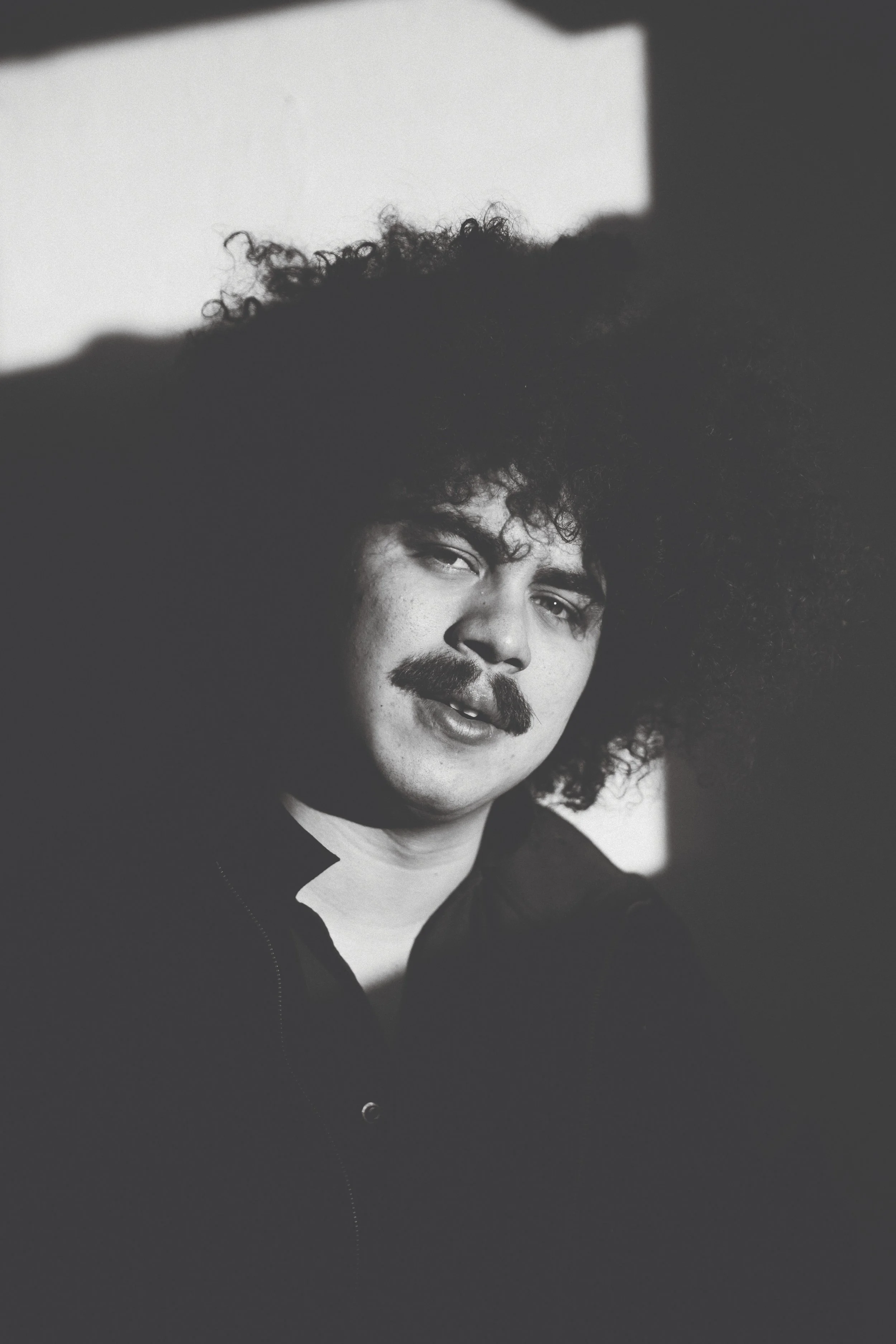
Aura, photo courtesy of Ana Maria Hernandez

Rebecca L. Judd for Also Cool Mag: Your creative portfolio is expansive, with an exemplary spread ranging from singing and songwriting to digital art and fashion design. How have you established this “DIY empire”, and what are its foundational pillars?

Aura Moreno: I think it all came together organically. I’ve been songwriting since I was a kid, but I never really established that I was songwriting — I was just “writing”, you know. I would also do things like tear up my dad’s old pants and sew them into bags. I’ve always been creative in that way, but how it’s all tied together now goes back to when I started making music. 

As a teenager, I produced for a few years before writing to and hopping on my beats. And then, I mean… I was broke, so I quickly realized “I have to take my own photos and videos and learn how to edit them.” I did that with my first music video. I directed it with an old friend, Ryan Cardoso, and we raised $400 to shoot it. With that budget, I hired an editor—Rasheed LaPointe—who taught me how to edit step-by-step on Adobe Premiere Pro. At the time, I thought you could only make a music video with money; it made things easier, of course, but that wasn’t actually true. I’m grateful we were able to raise that, but I learned afterwards that I could’ve been more nifty. 

Coming up in the scene, I held shows all the time, and the fliers weren’t up to par so I started designing them myself. Back then I was using BeFunky, which I found by googling “free online graphic editor” *laughs*. From there, I began designing my own merch using Microsoft Paint and free online tools.

I was even making nameplates and keychains, after my friend Lara taught me how to use a laser cutter. I was all over the place — and little by little, all of these things folded in together because I’m an independent artist. Luckily, we have this resource here in Providence called AS220, and they help emerging DIY artists. I went lots when I was younger, learning all of these different skills like screen-printing, vinyl and laser-cutting, etc.

Aura’s latest visual, the official music video for “C U There”.

Also Cool: So this lifestyle as an independent artist, for you, came down to self-sufficiency and necessity. From there, you’ve become your own creative director, and you now have both hands on your brand. Do you see that formative time of having to craft your own vision with such hard work as being definitive? 

Aura: Yeah! And you know, my music was already crazy unique, so having and wanting to be hands-on with everything else created this fresh new world. That’s what my “DIY empire” is — it’s this thing that grew because I had to make art for my music. Everything is super distinctive, because that’s who I am and have always been. The vibes will continue to develop, but what’s been really cool about the groundwork I’ve already laid is that my collaborators build off of it. For example, the Pushback 5 Remix video was my aesthetic as seen by the director Eugene Puglia.

AC: Of course. And the more you get comfortable with those mediums, the more you keep in your back pocket. It’s special to know that you didn’t have to compromise to get where you are — you can do it without having to conform or sacrifice.

Aura: For sure. And the plan is to keep that originality and authenticity as I grow. I’ve always despised conformity! And all these mediums have leaked into one another. I truly breathe every facet of design — I would make myself jewelry all the time when I was younger, and I just released an earring line made of upcycled sterling silver. I’ve also just released my first 1 of 1 constructed top.

Getting back to what you said, as great as it was that I did all my own things that way, when I started collaborating with people, it was a little difficult. I was so used to just having myself. I’m still learning how to be a great collaborator now; so much of it is communication, but at first I’d always be thinking “I don’t know if you get me, I don’t know if you’re going to do it right…”

AC: Have there ever been any examples where it felt comfortable to surrender? Can you recall where you saw something unexpected come out of trusting the process?

Aura: Yes, but it wasn’t an experience I had right away. As I was getting into collaborations, I had to remind myself: “We’re here because I love their work, and I trust we can create something beautiful together… so let’s just see what happens.” I had to really loosen up.
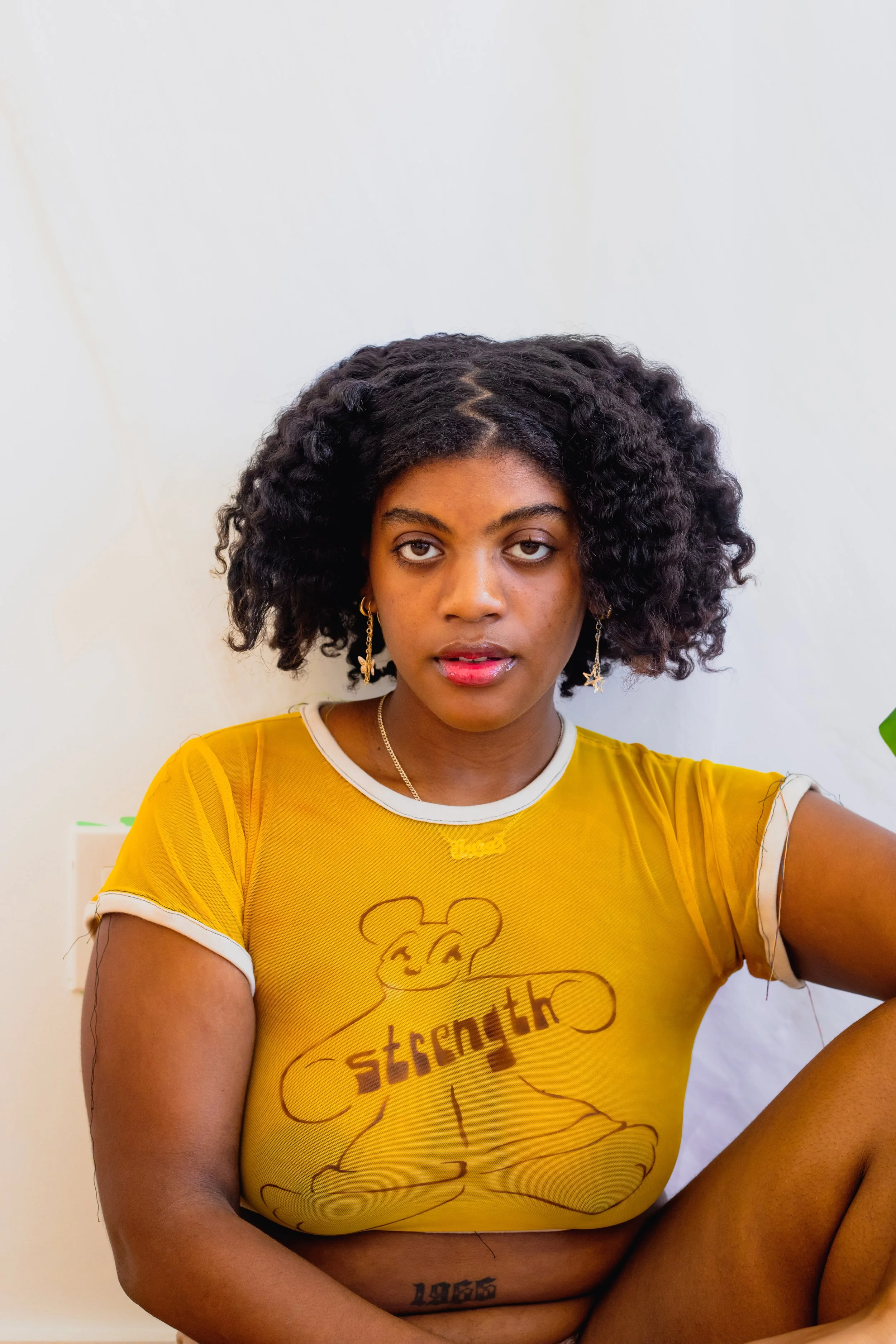
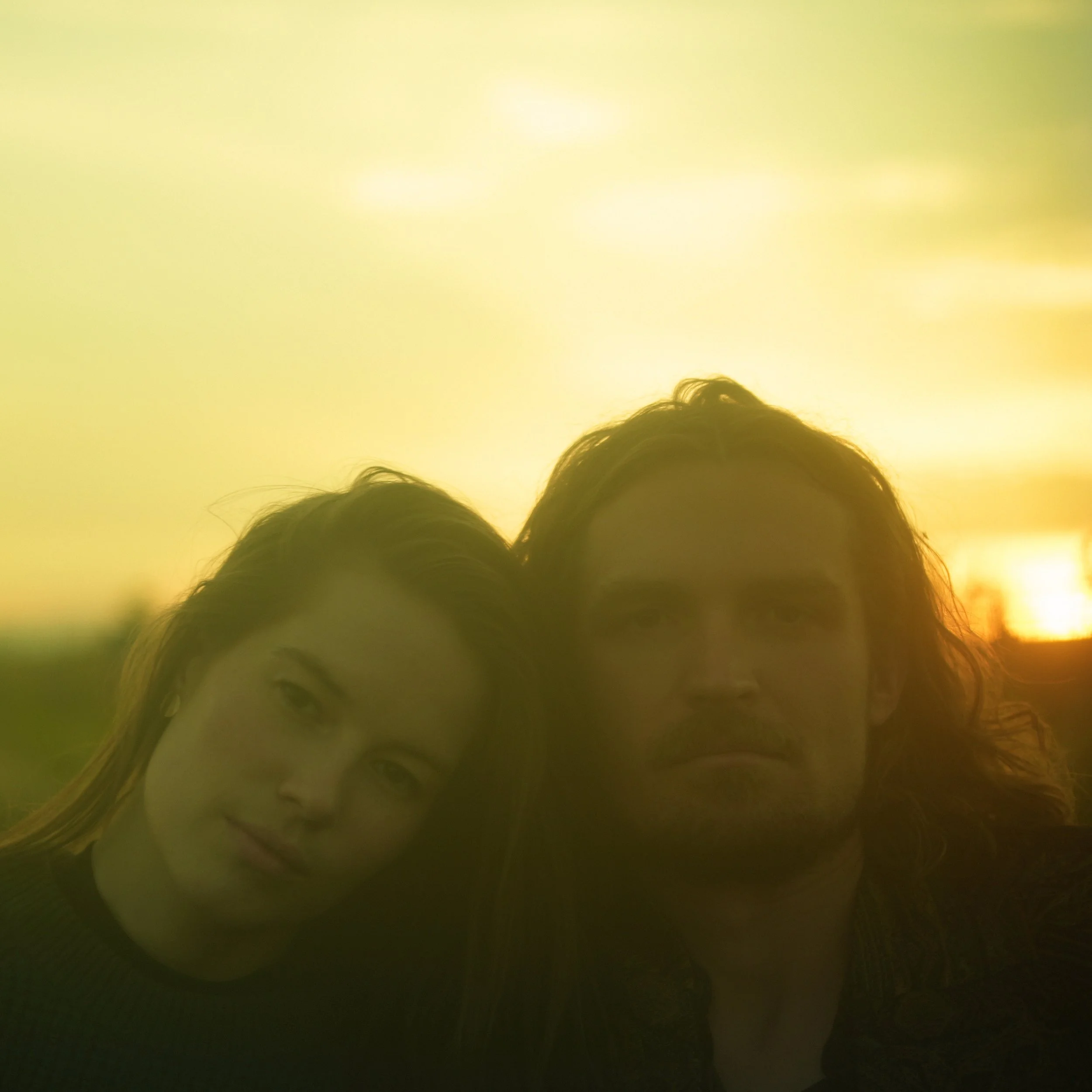
Aura, photo courtesy of Ana Maria Hernandez

Also Cool: You grew up in Providence, RI, and previously identified this as your “basic bitch” phase. How did this coming-of-age impact your artistry? What is it that you still carry from this time in your life?

Aura: Growing up in Providence is interesting, because it’s such a small town. I feel like I’ve experienced a lot of different “eras” of this city — it’s much more creative than when I was younger, which is why I felt like I was a basic bitch. Those days, I only spent time partying and shopping because I didn’t want to stick out as an artist. There wasn’t a single day in school or by cousins, where I wasn’t told I was weird; having that trauma already, I didn’t want to further it. Now, I’m just comfortable and confident in my strangeness. What I still carry with me from those days is… I’m still very much a party girl! I don’t know if that’ll ever change. *laughs*

AC: I feel like that’s a universal experience for many creatives — it’s unfortunate to bear that trauma from our early years, because weirdness ultimately does become one’s strength. Going with who you are, it becomes powerful.

AC: You are super versatile in your influences. Growing up, what were you listening to? Which scenes did you explore?

Aura: I wish I could remember my first connection with music. There are so many timelines! Being Dominican, at every family party we’d have bachata, merengue, and reggaeton blasting. My parents both loved this local station, Lite Rock 105.1, which only played the greatest hits of the 80s and 90s — artists like Madonna, Fleetwood Mac, Sade, Tracy Chapman... 

My mom moved around a lot too, so for a while before Providence, I lived in a suburb called Johnston. There, we would listen to Myspace-esque tracks like “Fersure” and “Babycakes”, and I remember having 50 Cent’s “Ayo Technology” on repeat. I’d visit my family in Fort Lauderdale often, where I was introduced to house and EDM. After school, I’d throw on the Music Choice EDM channel and discover music for hours. I really liked rock and metal during high school too — bands like Asking Alexandria, A Skylit Drive, Kings of Leon… and of course, I got ready for school every morning to whatever was on MTV Jams and MTV Trés! I knew all the words to each Gucci Mane, Lil Wayne, Max B and Nicki Minaj song there was. And after my first time playing GTA San Andreas, whew… I studied early hip-hop for years! Slick Rick really taught me how to tell stories. I would just blast all this music in my headphones each day, from AM to PM, in and out of school. My friend reminded me recently that when we first started going to parties in high school, I would put my headphones on and not be at the party. 

AC: That’s hilarious — being in your own little world and thinking “I’m here for the vibe”.

Aura: Exactly. I brought it back this year, just for myself. When I’m out, I don’t always want to interact — sometimes I like being at the club, throwing my headphones on, and enjoying the energy of the environment while being in my own zone simultaneously.

AC: As you were forming your sound and your vision, you were also experimenting with presentation. Before leaning into your identity as Aura Moreno, you released music as Iris Creamer. I’m interested in exploring your shift from a stylized character to becoming authentically you — what does it mean for you to present yourself to the world?

Aura: Honestly, within my healing, it was very necessary. Iris Creamer was a very sexual era for me, and I feel like that’s because I couldn’t access any depth within myself apart from that. I began to notice that I was put in a box because of that, and thought to myself, “If I really adore making music, and this is what I want to do with my life, I have to move forward as myself.” I’m evolving as a human being, so if the music is going to do the same thing, then we need to be together in that way.

Check back in to read part 2 of our conversation with Aura Moreno!


A Love Story

Out June 6th, 2022 via all streaming services (Soundcloud version out June 1st, Bandcamp version out June 3rd)

  1. OUF! (snippet)

  2. A Love Story

  3. flip phone freestyle

  4. guesss nottt

  5. Culo de Oro

  6. Canvas

  7. fuck off (demo)

  8. Su Música Suena (demo)

Produced by Jay Almeida, Kris Fame, Black Surfer, eqobKING, Cassius Cruz, Nestro, MasterJo, playshado, Tompsy, and Aura

Mixed by CR3AMER

Additional lines on track 5 by Debra Brito

All music written by Aura, with additional writing by eqobKING (track 4) and Kufa Castro (track 6)

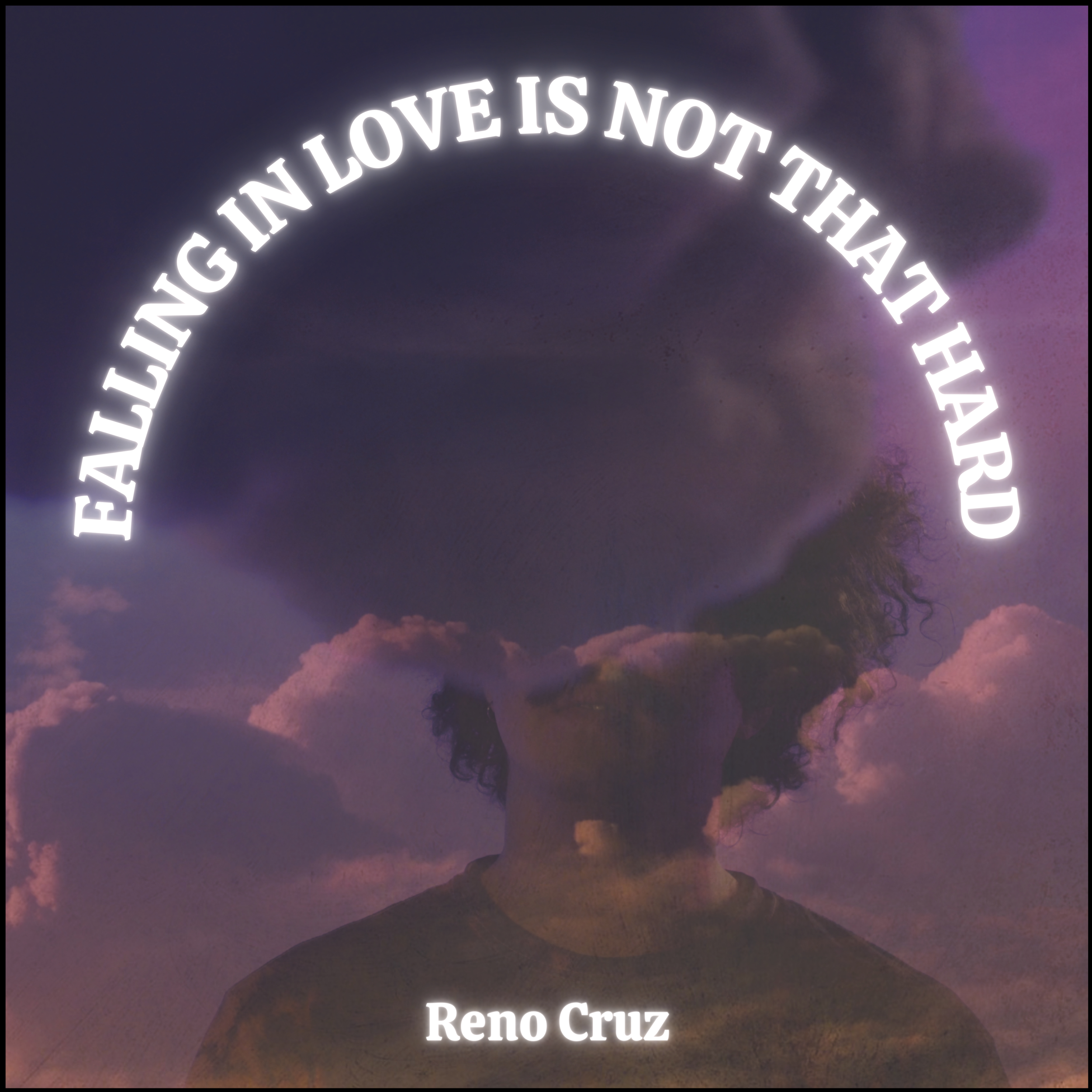
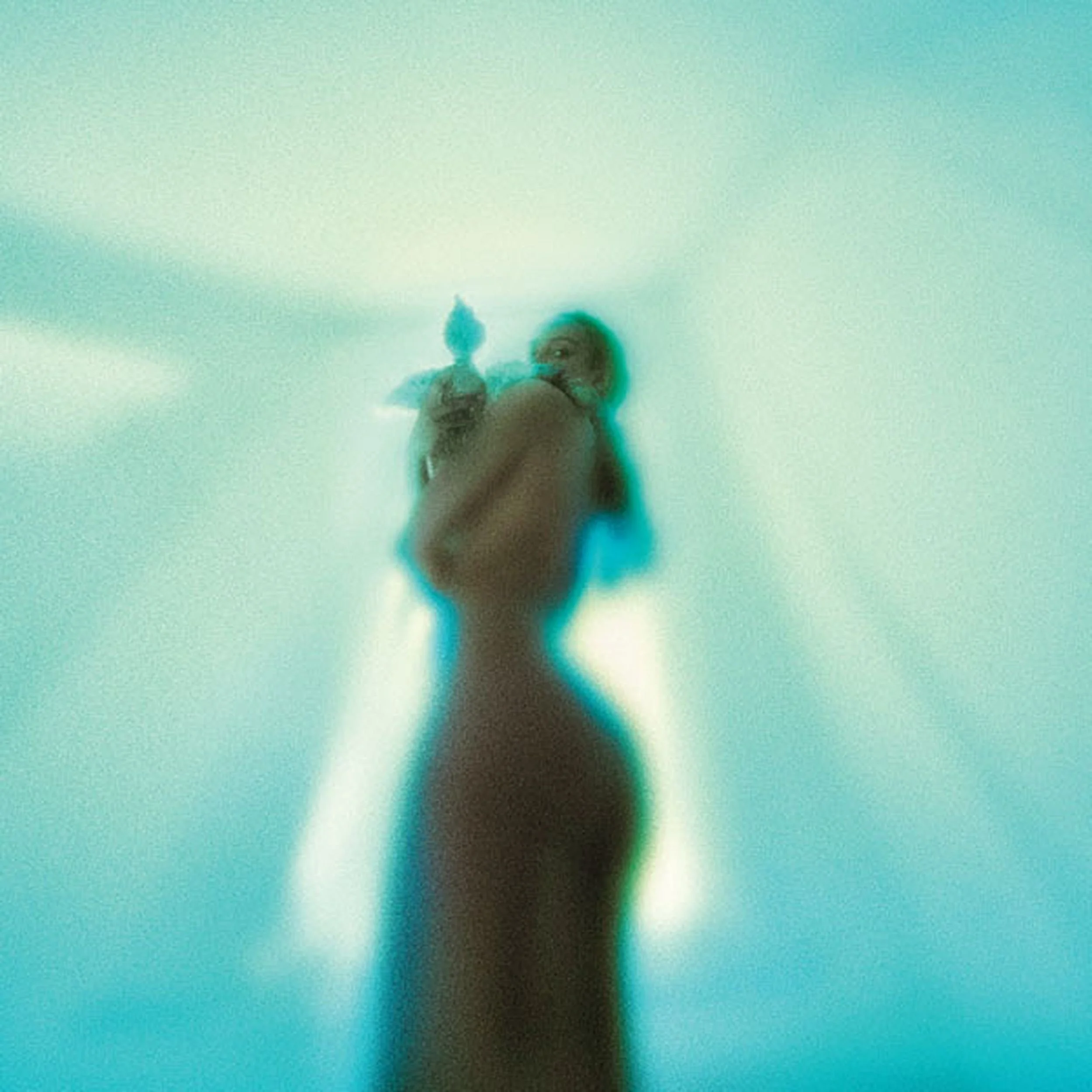
Cover image by Ana Maria Hernandez

NYC Also Coolers can check out Aura’s mixtape release party this Sunday, June 5th at Pianos NYC from 8 to 11 PM! Take a peep at the flyer below (made by Aura!) for more info.


Aura

Instagram | Bandcamp | Spotify

YouTube | Apple Music | Twitter | Soundcloud | TikTok

Rebecca Judd is the features editor of Also Cool Mag.


Related Articles
 

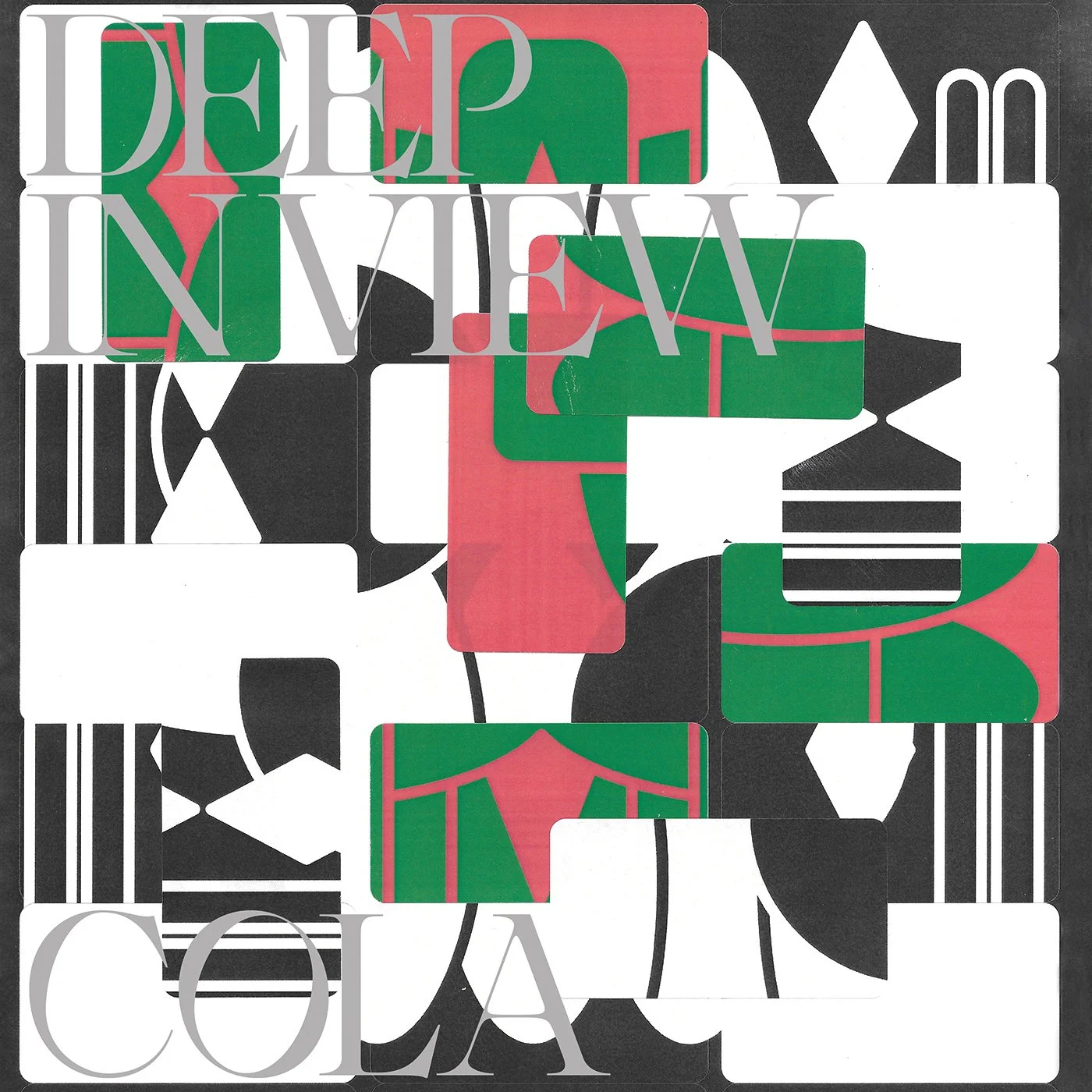
Take a Sip of Cola's Post-Punk Debut "Deep In View" (Fire Talk)


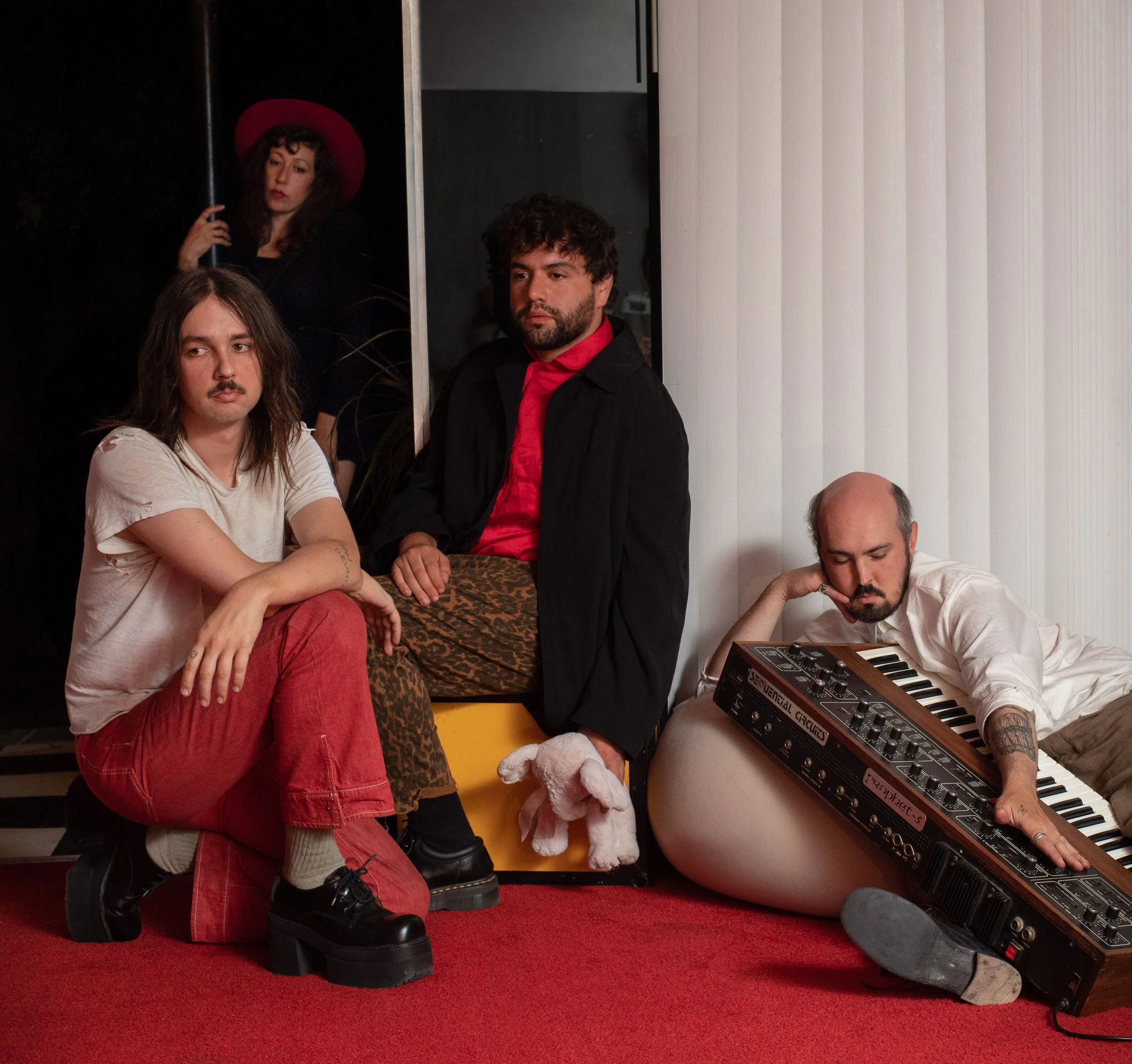
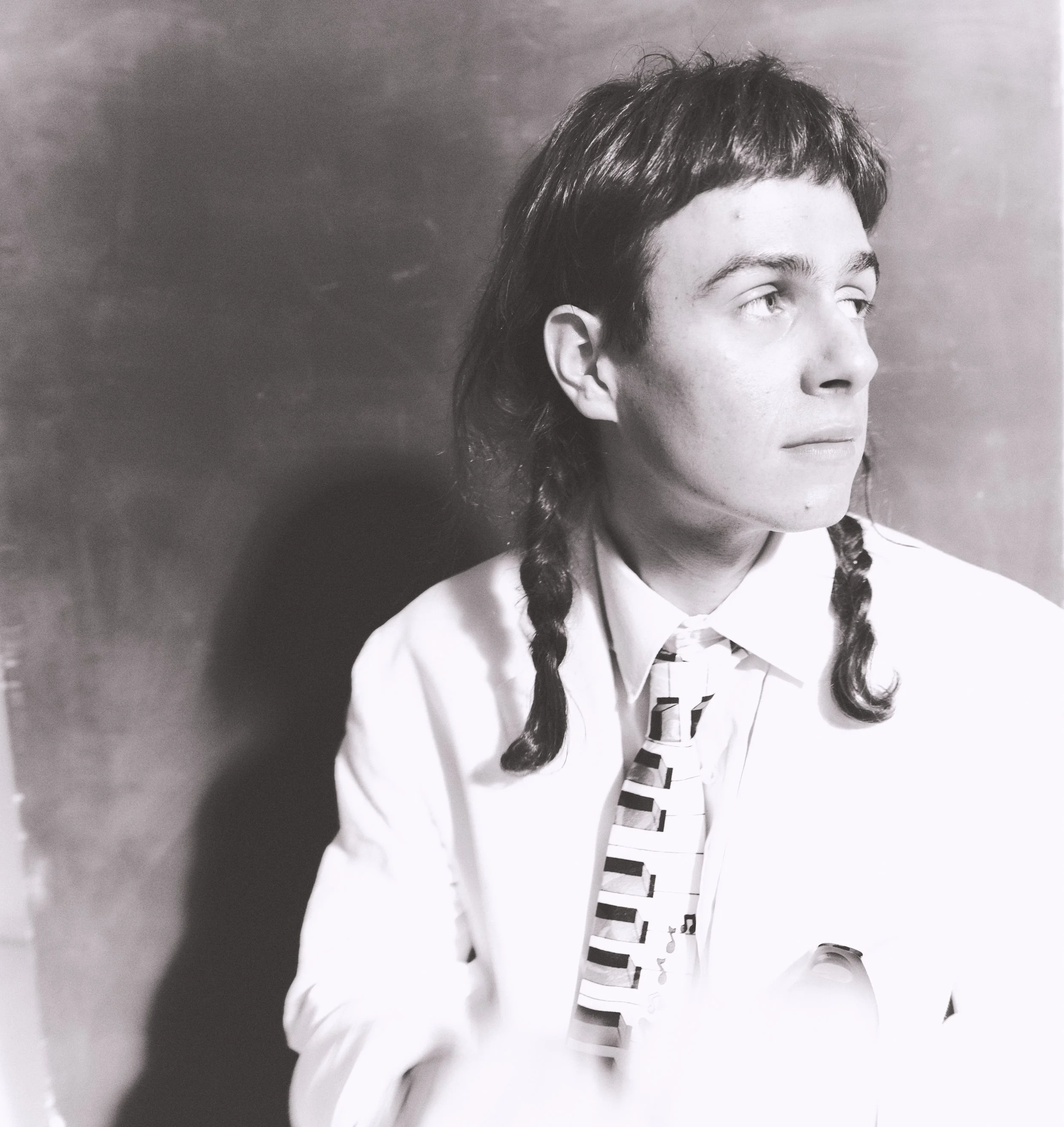
Cola’s Tim Darcy (left), Evan Cartwright (middle) and Ben Stidworthy (right) by Colin Medley

Amidst our post-truth media landscape ablaze with sensationalism, bound by the tirelessness of superficial consumer culture, arrives Deep In View, the debut LP from Canadian three-piece Cola, out this Friday via New York label Fire Talk Records.


Composed of long-time collaborators Tim Darcy and Ben Stidworthy —formally of beloved Montreal band Ought— and Evan Cartwright of U.S. Girls/The Weather Station, the locally-star studded post-punk outfit is void of artificiality, despite its name.


Rather, Deep In View relishes in poetic revelations in a era of lukewarm takes. With an observational tone akin to David Byrne’s commanding Talking Heads personas, coupled with direct, yet animated, guitar-bass-drum arrangements reminiscent of early works by The Strokes, Cola strikes political conversation on modern life with refreshing sincerity.

Chatting with Cola, lead singer and guitarist Tim Darcy attributes the band’s “triumphant honesty” as an outcome of working as a three piece.


“The writing process for this record was pretty nimble and we could workshop things readily,” explains Darcy. “Ben and I have been writing together for a long time, and though there were elements that we wanted to bring into this new project, there were major structural differences; like working with Evan who has such a singular touch, and writing songs separately during periods of on and off isolation,” he adds. “We wanted to keep the band a three piece and see what we could do melodically with sparse instrumentation.”


Since 2019, the trio draws inspiration from each other, whether through in-person sessions or building upon demos sent back and forth during the creation of Deep In View. Drummer Evan Cartwright says the nature of Cola’s experimentation is a welcomed change.


“There is a level of trust in this project that I don’t have in most creative situations. We all give each other so much agency to be able to redirect and change what we’re working on, which doesn’t happen in every band,” he shares.


“I don’t feel an impulse to control. I actually want [Tim and Evan] to change what I’ve written!” adds Stidworthy.


“Mechanically, it’s part of the definition of a band; a chemical reaction that happens when people bring their own idiosyncrasies to the table. What makes Cola Cola is everyone’s individual contributions resulting in this record,” elaborates Darcy.

Cola by Colin Medley

Sonically, Cola’s collaborative patterns aim to compose “worlds or moods that are difficult to pin down emotionally,” explains Stidworthy. Part of guiding audiences through an intentionally off-kilter listening experience is largely driven by Cola’s lyrics, which are often introspective, unfettered and sometimes irritable – yet always graceful.


“I did lean into a personal lens much more on this record than with Ought,” says Darcy. “I tapped into lyrical mindsets and characters as vehicles for my perspective as a writer.”  

Darcy’s arresting performance on Deep In View comes from adopting a more traditional “front-man” personality - quintessential to the band’s post-punk roots.


 “[The vocals] do have a more singer-songwriter, post-punk clunky-ness to them, (laughs). While the sound isn’t totally shocking, to us or people familiar with our past projects, listening to our songs feels different… Much more personal,” notes Darcy.

Rounding off our interview, Cola speaks of keenly of returning to touring and bringing their meditations to life.


“I’m excited to just get up and play our asses off!” beams Cartwright.


“We’re a guitar band and I think, we’ve made a good album of guitar songs. Hopefully people will experience joy and our songs will make someone feel something and experience a pivotal moment,” muses Stidworthy.


“Even when we played our first returning shows, they were amazing. It’s a lot to ask an audience to sit through a whole set of songs they’ve never heard before, but everyone who came out was great! So far we’ve been getting back into the flow and it’s like no time has passed. I hope that everyone gets to experience that very soon if they haven’t already,” adds Darcy.


Deep In View

Out May 20, 2022 via Fire Talk Records

Pre-order here

1. Blank Curtain

2. So Excited

3. At Pace

4. Met Resistance

5. Degree

6. Water Table

7. Gossamer

8. Mint

9. Fulton Park

10. Landers

Written by Tim Darcy & Ben Stidworthy

Supercollider, Guitar (“Blank Curtain”) & Drums by Evan Cartwright

Guitar, Vocals and Lyrics by Tim Darcy

Bass, Guitar & Keys by Ben Stidworthy

Recorded by Valentin Ignat

Mixed by Gabe Wax

Mastered By Harris Newman

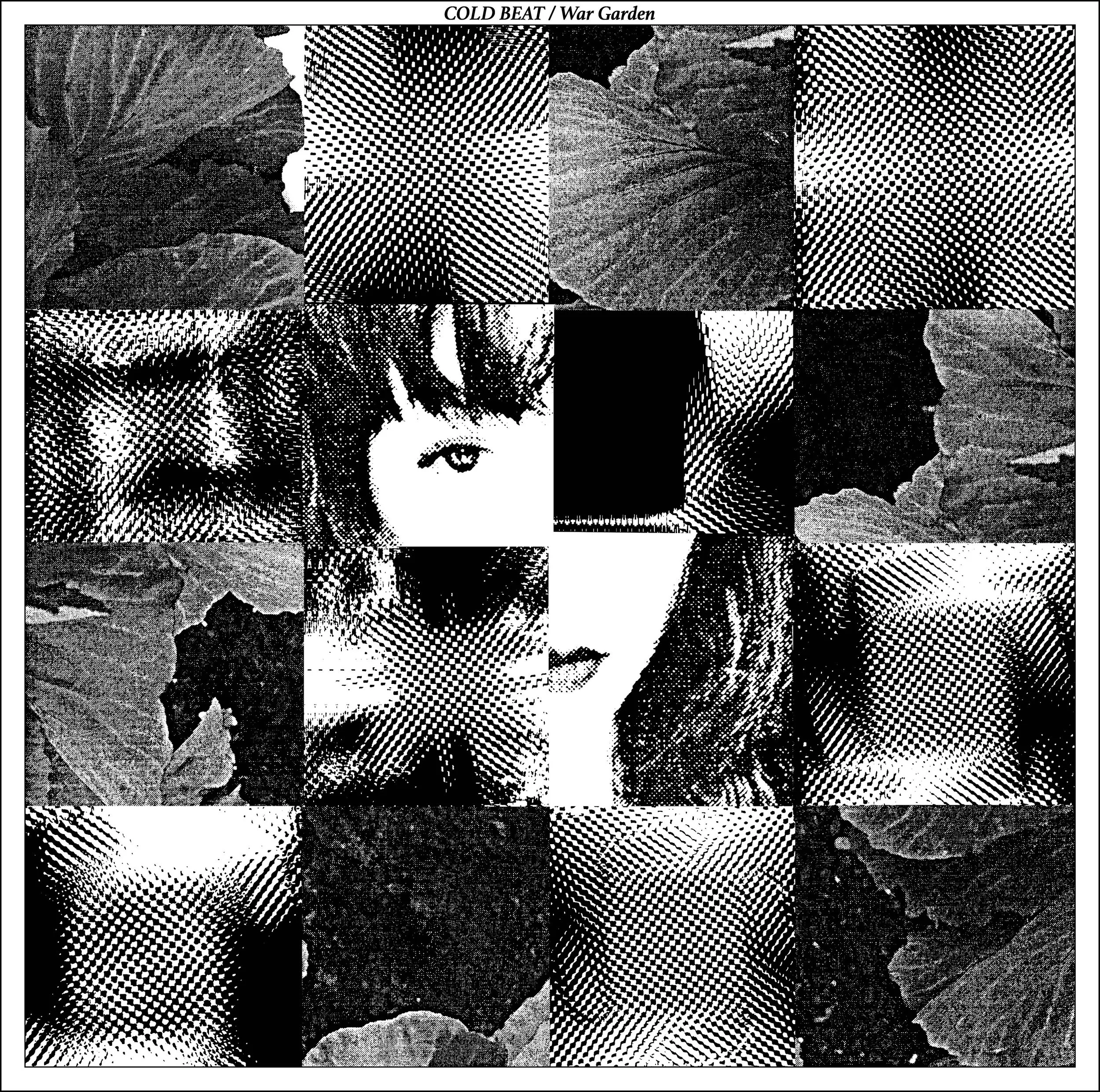
Artwork by Katrijn Oelbrandt


Cola

Instagram | Bandcamp

Zoë Argiropulos-Hunter (she/her) is the co-founder and managing editor of Also Cool Mag. Aside from the mag, she is a music promoter & booker, radio host & DJ, and a musician.


Related Articles


Interzone’s "Transcendental Cuisine" Marks an Exciting Comeback in the Electronic Scene


via Interzone

Translations of interviews in this article were done by its author.

The Transcending Experience of "Transcendental Cuisine"

After entering through a door located near the lively intersection of St. Laurent and St. Joseph, the participants descended a few short steps before arriving at the basement venue of La Sotterenea. They were greeted at the door for tickets in a small hallway lined with two doors that made up the space: the chill room on the right and the noise room on the left.

The April 29th show, titled "Transcendental Cuisine," was Interzone's first show back since the start of the pandemic – and it was remarkable. The show, which began at 8PM and finished at 3AM, featured six local artist sets ranging from live noise to techno and electro DJ sets. Throughout the night, you could go between listening to Kore, Wormhole of Doubt, Stan K, Nixtrove, Myfanwy, Neo Edo, and Matthew Raymond, and spending time in the chill room across the hallway where a bar, pool table, comfy sofas, warm light, and a merch table could be found.

The show hosted somewhere between 100-120 attendees, and both rooms were filled throughout the night. I spoke with several of the participants, organizers, and artists at the event to hear their thoughts on both the show itself and the broader collective. 

Playing for Interzone

I spoke with Jessy Myfanwy, who played her first-ever official DJ set at the Interzone show. As she explained, she had often played with her friends, but this was her first time having a curated set.

Jessy became involved in the electronic music scene in Vancouver at 18, attending underground disco and tropical house shows. She then oriented herself towards more experimental, "hard and weird" genres five years ago. 

When I asked Jessy if she had any specific musical intentions in her mixing. She explained that she liked to play "Very chaotic mixes that still have some sort of accessibility to the general population."

"I really like playing electro remixes of bangers and a lot of industrial music. [I'm] getting a bit more into techno now. I've always been really into industrial music and industrial kinds of techno. I want to experiment with genres like opera… I'm really into contemporary opera."

Jessy loved her experience playing her first show at Interzone. "They did such an excellent job organizing it," she explained. "I love when there's a mix of live sets and DJing.

[It was] my first time being to Sotterenea since before the pandemic, and I forgot how much I loved the space. Having a chill room is really important, outside of the music, because it gives space. You can be involved in different layers of participation which I really like." 

Along with the space's disposition, Jessy was happy with the turnout, which she described as a "mixed crowd" of participants coming from different scenes.

Who is Interzone – What is Interzone?

With no fixed origin, Interzone emerged out of inspirations tracing back to the European industrial scene and Tunisian upbringings. I got the chance to speak with Ghazi Bena, one of the co-creators of the collective, who described the collective – active since 2018 – as being a product of the kind of musical and artistic drives he and co-creator Habib Bardi experienced prior to their arrival in Montreal. 

Interzone also grew out of a desire to break out of the increasingly commodified rave and electronic music scene of Europe, explained Ghazi. The European electronic scene had, at that point, reached a kind of "saturation," a nearly "unreachability in which you could no longer do anything innocent and pure," he said. "It was like a structure already made, too deep-seated, too commodified."

Upon arriving in Montreal, Ghazi and Habib grew to appreciate the "kinds of territories which weren't devoured by the 'business' side we now see in the scene."

Fluid, in movement, spontaneous, explosive, absolute chaos – Interzone seeks to embody a space in which artistic expression may emerge without being submitted to the rigidity of capitalism. The very structure – or perhaps, lack thereof – of the collective illustrates its philosophical underpinnings. 

One of Interzone's significant motives is, as described by Ghazi, a kind of "effective urgency," an urgency to "organize, to create that kind of space, that space of existence." He wanted to clarify that this motive did not stem merely from the organizers. "The core of the artistic drive does not come from us; it comes from the artists' performances [who] are doing incredible things. It's the people who attend and who have a particular interest in music and performance in general…it is those who make art and music live."

The organizers were pleased with the event, agreeing that it was their most successful one. "The party was a great pleasure, [to get to] see this energy which emanates from the people and the artists…to see that people are still excited, still here." 

Ghazi noted the fun they had organizing and experiencing the event, which is crucial to what they seek to create. Although they maintain some level of artistic exigency, they seek to minimize the 'seriousness' of their collective. "There is some form of seriousness to have, but at the same time…[we aim to] not transform the serious aspect into something hermeneutic and opaque which does not accept difference.

We had so much fun…it is something which makes us live, not materially speaking…but in an existential sense."

Playing with Interzone

I also spoke with Willliam Humphrey, who describes himself as "a filmmaker and an editor" who likes "helping out wherever needed." 

William attended the event and has been involved with Interzone for several years. He described the fluid structure of Interzone: "There's this ability for everyone to take a small role or even just be present." For William, the event reinvigorated a sense of excitement regarding the artistic scene after two years of pandemic-ridden slumber.

With the impressive number of new collectives emerging into the scene, I asked William what he thought made Interzone unique. "I think what makes each one unique is their sensibility," he explained, "They're willing to take risks and incorporate local musicians with international musicians."

One example he cited was an event they organized in 2019 when they invited the England-based Giant Swan to play at a loft rave. William explained that the collective thought to themselves, "Giant Swan has never played in Montreal. Let's book them. Let's get them from the U.K. to Montreal and have them play a show with a ton of great local acts."

"It's not an easy one to do," he continued. "Financially, it's hell. But it's the exhibitions and events that they host that are so worth it."

William is equally excited for what's to come – parties, shows, and events all summer in the hot Montreal weather. As these things come back to life, I wanted to know what William would like to see change or happen in the electronic scene. "More windows [and] air circulation," he noted. "But I think more than anything, utilizing the outdoors as a space to hold events, whether it be on the mountain or in the bushes or maybe off the islands."

Interzone, the Scene, and What's to Come

As pandemic restrictions diminish and the Montreal artistic and electronic music scene comes back buzzing, there is a new horizon of possibilities to create new kinds of spaces, movements, and collectives. Interzone is coming back strong: alongside this past show, the collective officially launched their label in March, and with it released three tapes by Habib, Stan K, and a live set of Lier Lier. 

"Other than the shows that allow these brilliant people to express themselves on stage, this label has been the crystallization aspect of those expressions."

For Ghazi, it is essential for the collective to not project too much into the future. By seeking to create new existential territories of artistic expression, he explained, the spontaneity which comes with not over-projecting is vital to maintain. 

That being said, there are projects in the works, and Interzone will have more events and artistic productions for those who missed the last event. They are looking to sustain the same energy from the last event. "It is an energy that should not end."

Ghazi expressed some worry about the increased competition and business model absorbed by the Montreal techno scene. The kinds of artistic spaces or sites of expression Interzone seeks to create, strive to exist "outside of the entire system of capitalist value in which we live," explained Ghazi. "Many movements around go against this vision of art and artistic expression. They are more in a business kind of mood…they put their intentions in there."

"We are just striving to do things as…innocent as possible, without wanting to walk on the feet of others, [or] on other collectives who are doing excellent work, [with] many people who are truly brilliant and do incredible work."

 "It is in the most uncontrollable chaos and the least tangibility possible, there are things which leave their frame, which leave our conceptions, our system of values, our ways to see things, and this is what drives us, that is the drive we are looking for."

Soline Van de Moortele is a Philosophy student at Concordia/insatiable feminist, raver, and writer. 

Instagram | Wordpress


Related Articles

Enter Panther Modern: NFTs, Community-Building & Half-Life (Sextile / HEAT)


LA2022 cover by Panther Modern

Picture yourself in a dark room, lasers filtering through the smoke machines. The bass cuts through the noise of the crowd and you see a group of people you think you know dancing across the room. Your body is filled with warm static, and the sensory dream of dancing with strangers takes over.

This is the world of Panther Modern, the electronic project of Brady Keehn, an NFT-savvy artist from LA. You know we love community-oriented musicians who make us feel like we’re in a dark room dancing the night away, so we reached out. 

We spoke with Brady about the elusive world of NFTs, his creative career and how he’s been building virtual communities since the 90s. 

Press photo via Panther Modern by Nedda Afsari

Brady is a singer-songwriter in the band Sextile and Panther Modern, his solo project. He explains it as, “experimental in the way that [the project] tests the algorithms of Facebook and Instagram by creating virtual avatars to see how far I can push them. I make dance music, and in the same way, it’s an experiment to see what people will dance to.”

After touring and performing on a stage extensively with Sextile, Brady became frustrated with the power dynamics that exist between audiences and performers, which is partially what led to the creation of his online avatars, JA and JB. Wanting to break that barrier, Brady now only brings a sampler with him to live shows and immerses himself within the crowd so that everyone can sing and dance with him. “It’s way more fun than being on a stage by myself. It freaks me out, it makes me feel like a monkey on a stage saying, ‘Look at me dance!’ I don’t like that vibe, I’d rather be with everyone else.”

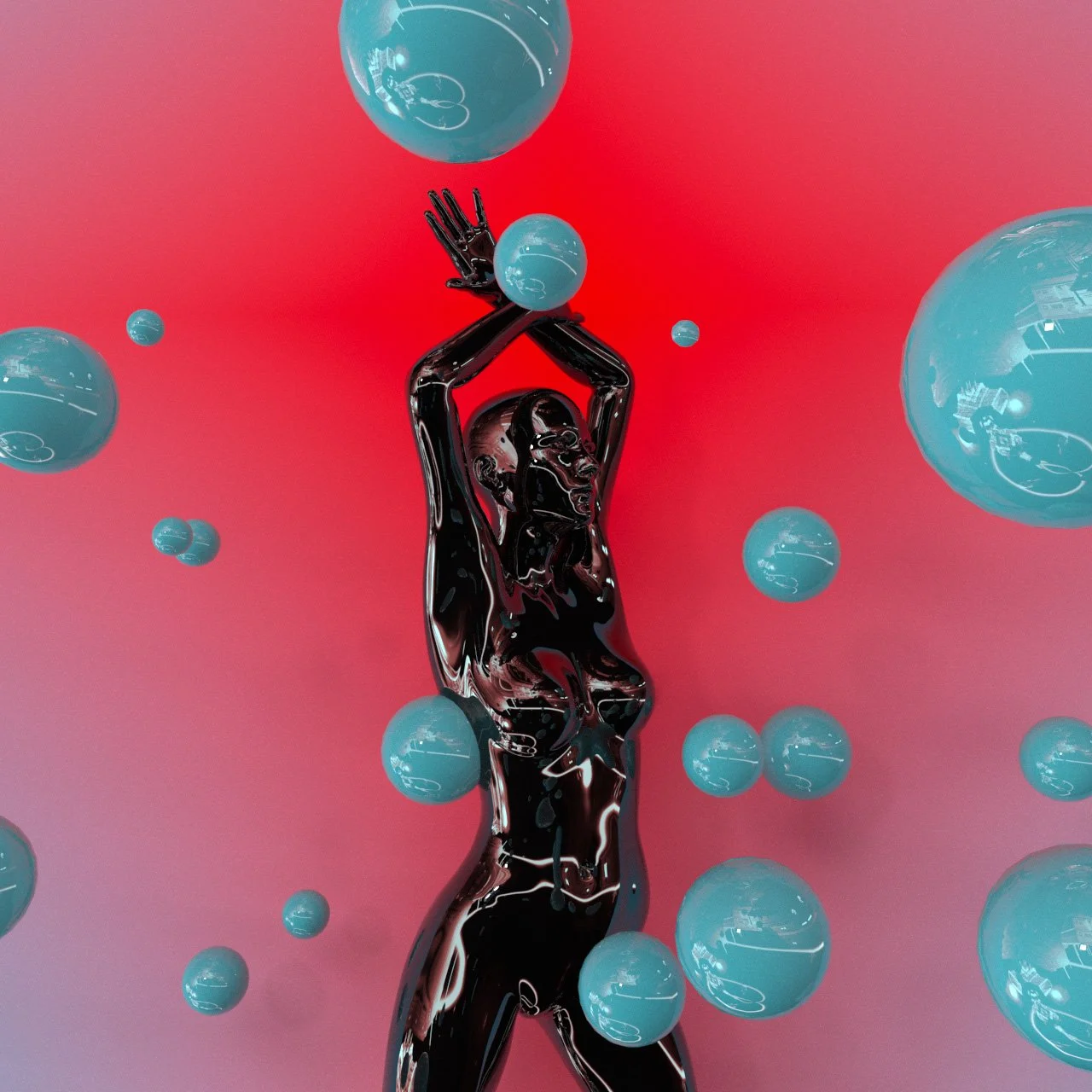
Artwork by Panther Modern

These avatars allow Brady to access alternate identities in the virtual world. JB, for example, doesn’t sing, but he might make techno music; while JA does sing and acts more like Brady. Both are trained with all of his movements using MOCAP (motion-capture) technology. According to Brady, it’s all an experiment, while trying to disrupt the status quo. (He’s also been doing some very cool MOCAP work with Reggie Watts -- check it out here.)

To consciously push the algorithm is refreshing, especially when we can easily feel so helpless; trying to appease the robot overlords so that our followers are actually able to see the content they signed up for.

On that note, Brady expands, “The more we appease the robot, the more eyes we get, all to hopefully sell vinyl or a t-shirt. It’s exhausting and unsustainable.” And so the question remains: How can I be myself on the Internet in a way that will work for the algorithm, and won’t burn me out?

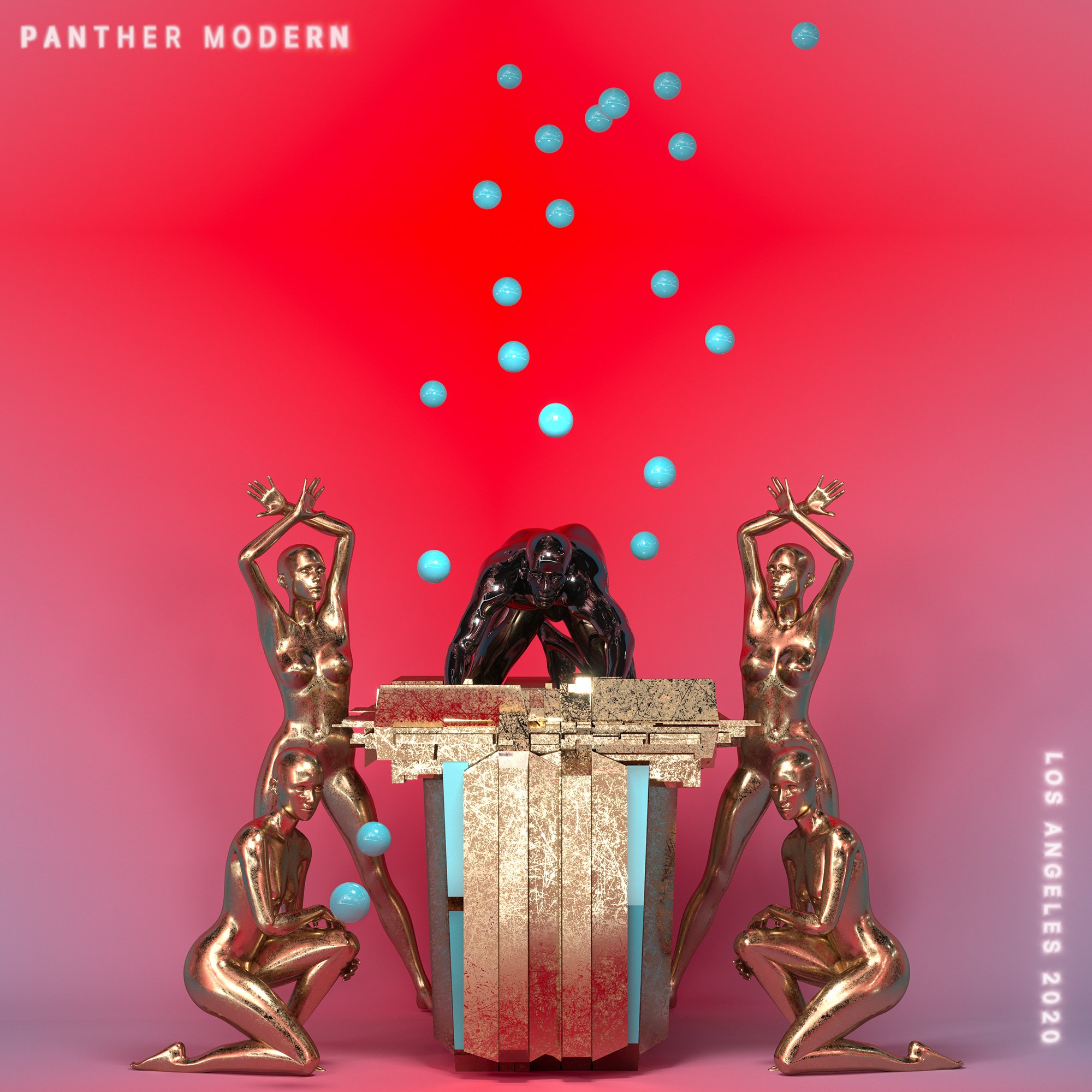
Los Angeles 2020 Artwork by Panther Modern

Going back to Brady’s roots, he has always been searching for different ways to expand his reality and to find community via the World Wide Web. Growing up in the suburban farmlands of Virginia, Brady got his first taste of escapism via online chat rooms, and through a video game called Half-Life. Already a fan of sci-fi, Brady started designing his own levels and avatars in the game, gaining interest in 3D animation and world-building. However, Brady’s futuristic escapism was cut short when he was sent to military school, and then Catholic school, and worst of all… art school. (Just kidding, but not really) 

Despite these suffocating environments, Brady looked for alternative ways of being every step of the way. It was difficult for him to accept his reality, which he says made him a big futurist, and developed his appreciation of other people who question systems of value, commerce, and power. 

And so began our conversation around NFTs. We established that the world of crypto is dominated by tech bros and financial experts, who aren’t always willing to share their knowledge with anyone outside their Bitcoin and Ethereum-fuelled worlds. The hoarding of resources and information allows a select few to control this emerging digital space, a practice which Brady is adamantly working against. 

He believes that with any new tech sphere, it’s important for artists and marginalized peoples to get in early to be able to shape their future. Brady has been sharing resources on his Twitter, giving talks with other NFT-savvy artists, as well as his process of creating and minting his own NFTs. 

Drawing from his personal experience with labels, contracts, and their meager trickle-down of funding models, Brady knows firsthand that Spotify cheques are not paying anyone’s rent. This is why he decided to release his music independently with Panther Modern, selling each track individually as an NFT. 

While he’s only recently been selling his songs as NFTs, it’s already proven to be a more viable source of income, rather than waiting for Spotify streams to roll in. Along with his collaborator Cameron Michel, the two have been able to use their income from NFTs to lease a large warehouse space that will act as a home for upcoming Panther Modern, Sextile, and other projects, including an NFT dance-centric company called HEAT. 

When I ask Brady what exactly could be an NFT, he explains that any original work can be an NFT and that you don’t need to be a huge artist to start making them. 

“It doesn't even have to just be digital. For example, say you make a painting. Take a picture of that painting, and then turn that into an NFT. Then, when that NFT is purchased, you could send the painting to the buyer.” 

The NFT market is still largely experimental, and Brady has been working with HEAT to turn dance moves and other unique sets of motion data into NFTs with the help of his MOCAP technology. This could be one way that viral dance moves (on TikTok for example) could be attributed to the original creator, and could secure income for them when those dance moves are replicated by huge artists in their music videos. The examples that come to mind, of course, are the countless Black artists who created viral dances on TikTok, only to rarely receive the credit they deserve. The technology would also allow these dances to be licensed to major video games and uploaded to your avatar there, all while still paying the original creator.

Another NFT avenue could be video game music. According to Brady, video game companies often don’t want to pay for music licenses because it’s too expensive, so they end up making their music in-house, leaving musicians completely out of that market. So, how do musicians get in? One idea he had was to mint loops to video game companies. They would then be able to use the loop (a drum beat, for example) to create their own music, and then mint that music. That way, everyone’s getting paid, and everyone samples each other. 

Then comes the potentiality of buying digital land with Ethereum. Brady actually has his own digital venue that people can explore, and when you click on his merch or NFTs, it takes you directly to his Bandcamp or NFT platform to buy that work. Big brands like Nike have begun to create their own metaverses, while other artists like Skawennati have used the ability to buy digital land in games like Second Life to reclaim stolen land and tell Indigenous histories through that platform. 

Brady got into making NFTs shortly after he started making video flyers for his shows on Instagram. Understanding that the algorithm pushes short video content, Brady took his knowledge of 3D rendering and ran with it, teaching himself everything off of YouTube tutorials. He now uses tools such as OctaneRender, Blender, Marvelous Designer, Substance Painter, After Effects, and his MOCAP suit to bring his creations to life. 

If you’re looking for an entry point to the world of NFTs, he suggested checking out Zora, Rarible, and Foundation. Brady explained that a majority of the crypto-convos happen on Twitter and Discord. He also wanted to emphasize that although the space can be intimidating, the best way to get into NFTs is to start making them yourself, especially if you’re not seeing the representation that you want to see in those spaces. While tech bros unfortunately dominate the news cycle surrounding NFTs, it doesn’t mean that communities that prioritize artists and marginalized groups don’t exist.  

“Start following the people who are creating NFTs, educate yourself, get involved in the communities. Zora requires an invite via an artist (like Clubhouse), so it's not like OpenSea, which is like a whenever, wherever, Walmart of NFTs. It’s not curated at all, which makes it hard to find good work. Marketplaces like Zora and Foundation incentivize members via invites, which then builds the community around the platform. It also reduces the cash grab schemes from investors.” 

And so, in a strange digital cycle, Brady has once again returned to the online community-gathering and world building he thought he had left behind for military school in the 90s. 

If you’re not in the NFT world, you can support Panther Modern by buying one of his very limited-run vinyl, t-shirts, or posters. He has also just released LA2022, a remix EP of his 2019 release Los Angeles 2020, which is available on all streaming platforms.

Panther Modern

Website I Twitter I Instagram I Tiktok

Foundation I Spotify I Bandcamp


Malaika Astorga is the Co-Founder & Creative Director of Also Cool. She is a Mexican-Canadian visual artist, writer, and social media strategist currently based in Montreal.


Related Articles


Convulse, Groove and Exercise Your Demons with Gus Englehorn’s "Dungeon Master" (Secret City Records)


Gus Englehorn. Photo courtesy of Ariane Moisan

What’s the secret to fashioning tunes that veer from traditional genres? Watch cult classics with your guitar in hand. Having reified reveries from the eclectic fusion of Britpop and film, Gus Englehorn’s Dungeon Master gives organized existence to Dadaism’s deliberate irrationality.  


The album is the second to come from post-art rocker Englehorn and Estée Preda—the project’s drummer and Englehorn’s life partner. Its first single, "The Gate", was released late last year, within which a first-person narration of Hitchcock’s Rebecca is brought to life. The tune’s mélange of gasps inaugurates an eye into the surrealist content that exists throughout the remainder of the album. 

Disguised in what could be a nursery rhyme, the duo’s latest single “Run Rabbit Run” brims with playful alliterations and arcane matters. After a cacophonous fury of first-person narratives, the track slows down, allowing Englehorn’s vibrato to take center stage. The track’s accompanying video parades an endearing compilation of the twosome’s home videos—have a watch and take a ride with them down to Texas!


Expect bright strumming patterns resemblant of Blur’s Britpop years, vocal theatricality, and manic, oblique lyrics in the album’s surplus of nine tracks. Disguised in the most avant-garde of metaphors, a constellation of themes are canvassed in Dungeon Master: the lunacy of songwriting, a fictitious night spent on the Sunset Strip, and parasitism. 


For fans of Oasis, Daniel Johnston, Beck, David Lynch, and a counter to traditional artistic values, Englehorn’s sophomore Dungeon Master is for your ears. Gyrate, shuffle your feet and get lost in an idiosyncratic farrago of eccentricities as freakish as a demon themself.

CJ Sommerfeld for Also Cool Mag: First off, thanks for your time today with Also Cool and congrats on the new album! I'm interested in this transition from a professional snowboarding career to that of music – had you been making music or songwriting during your snowboarding years? What forces were responsible for this change in careers?

Gus Englehorn: Thanks for having me! I had been writing songs for years and years, pretty much the whole time I was snowboarding. I really thought it out when I was very young. I imagined a day when I would be too old to snowboard professionally, and I thought to myself that that would be a very sad day. But I also thought that if I could learn how to write songs, I could do that thereafter until the day I died. So I took songwriting very seriously the whole time I was snowboarding, and I spent all my free time trying to master the craft.

Also Cool: A few of the tracks on Dungeon Master, notably “The Gate” and “Exercise your Demons”, were inspired by different cult classics. Is film the main space where you draw songwriting inspiration from?

Gus Englehorn: Film certainly is a huge inspiration to me. I often sit with a guitar and watch movies; I’ll pause to play some guitar, and watch a little more, and then pause, and then play a little more. I guess it’s the storytelling that intrigues me,  and the way that great movies can suck you into their universe and give you a new perspective to write from. 

AC: The strumming patterns, instrumental motifs and simple vocals heard throughout Dungeon Master reminisce those revered in the alt-rock subgenre, Britpop. Which artists and albums did you draw artistic merit from when putting together Dungeon Master

GE: I love Britpop, and people don’t usually see that influence in the songs. But I love Blur AND Oasis! Especially Oasis. Some other big influences for the album were Roy Orbison, The Germs, The Pixies, Daniel Johnston, Beck, The Meat Puppets, Nirvana, Ennio Morricone, The Butthole Surfers and the song structures on Sgt Pepper’s.

AC: “Ups and Downs” puts forth a narration of the human condition. Can you tell us more about how this one came about, specifically what ‘evidence’ signifies in the verse: “Evidence is on the ground / evidence is all around / evidence is on the dot / evidence--it’s all we got”?

GE: I wanted the music to recreate the experience of writing songs: the burnouts along with the productive periods of mania right before you burn out, and the intoxicating triumphs and soul-crushing defeats. You’ll think a song is done and then the next day you will throw it away and start all over again. It’s an emotional rollercoaster, to say the least. The evidence is just all the little objects that go along with songwriting that are usually strewn about the place when I find myself writing – picks, empty tea cups, crumpled-up T-shirts, journals, books, cables.  These exist as the evidence that you’ve been working, but if you aren't getting anything done, then that's all there is…jJust the evidence. That’s one thing that is the hardest about writing songs, is that you aren’t guaranteed to get anywhere even if you work everyday for a year straight. But when something comes together, there’s nothing quite like it! 

AC: I would love to hear more about “Sunset Strip”. Is this tune a portrayal of a tripping and falling event you experienced, or is this West Hollywood mention a metaphor?

GE: To be perfectly honest, most of the songs are just plucked out of my imagination and don’t have a whole lot to do with myself – or anything else from reality, for that matter. This is one of those songs that I just dreamed up out of nowhere, seemingly. It tells the story of somebody's terrible night spent on the Sunset Strip: being kicked out of parties, bloody noses, falling downstairs, social anxiety, and almost being hit by a bus. I had never even been to the Sunset Strip when I wrote it.

AC: A reverbed and roomy guitar breaks into heavy percussions in the track that wraps up Dungeon Master –  “The Flea”. The tune’s dramatic qualities provide a fitting outro to the album. I can’t help but interpret this one as a quarantine track, which makes me wonder if it is directed towards society; most notably in the line “I’ve been your flea for years”. Who is the ‘you’ in this tune’s direct address?

GE: While it was written during quarantine like the rest of the album, “The Flea” tells the tale of a parasitic romantic relationship. I wrote it about all the years Estée (my wife who plays drums in the band) supported me while I was transitioning from snowboarding into learning how to write songs, so I’m the flea. Stylistically, we were inspired by Roy Orbison’s “Pretty Woman” and “In Heaven” from Eraserhead by Peter Ivers and David Lynch. There is something that keeps me mashing up early rock and roll riffs with subversive little stories time and time again! Lots of fun to be had doing that, for some reason. 

AC: Thanks for your words and time, Gus! Aside from your upcoming album drop, do you have any other creative endeavours coming our way?

GE: I remain entirely obsessed with songwriting for the moment, and I’m hoping I can finish a third album before too long.


Dungeon Master

Releases April 29th, 2022 via Secret City Records

1. The Gate

2. Ups and Downs

3. Exercise Your Demons

4. Sunset Strip

5. Oh Well Unwell

6. Tarantula

7. Lips

8. Run Rabbit Run

9. Terrible Horse

10. The Flea

Produced by Gus Englehorn and Estée Preda

All songs written and composed by Gus Englehorn

Recorded and mixed by Alex Ouzilleau

Mastering by Marc Thériault at Le Lab Mastering

All tracks recorded at Le Magnétophone in Québec City, QC in 2020

Published by Secret City Publishing


Gus Englehorn

Instagram | Bandcamp | Spotify

YouTube | Apple Music | Twitter | TikTok | Facebook | Website

CJ Sommerfeld (she/her) is a Vancouver-based freelance writer with a particular interest in the convergence of language, art and society. When she is not writing, you can find her experimenting with harmonic minor progressions on her keyboard.


Related Articles


Mitch Davis Ditches Hibernation on Sunny Debut LP "The Haunt" (Arbutus Records)


Mitch Davis by Richmond Lam

A trip around the sun has passed since we last touched base with Montreal multi-instrumentalist and do-it-yourself aficionado Mitch Davis.  In the meantime, Davis has tied a bow on his debut LP The Haunt and returned to the stage, in both in Montreal and at Austin, Texas’ SXSW music festival. Out April 29th, 2022 via Arbutus Records, The Haunt manifests a spectrum of mediations in both sound and spirit.

Realizing some compositions that predate Davis’ relocation to Montreal, The Haunt celebrates Davis stepping into his own with an entirely solo production: writing all the songs and playing all the instruments on the album, as well as recording much of the work on self-built equipment in his home studio. The result is a soulful and playful blend of jazz, funk and beaming pop; adorned with rhodes, clavinet, synth and drum machines. An album-long ode to themes of isolation and loneliness, as well as looking for love in the dawn of the COVID-19 pandemic.The Haunt achieves both breeziness and brevity for a class-act spring listening experience.


Speaking with Davis leading up to his album release, I asked him how the final product came to be, knowing that The Haunt has been years in the making. We started first by chatting about how Davis knows when a song is complete.


“It’s a feeling that comes over me once I’ve obsessed over a song. Eventually, I won’t have anything else to add or take away. When I don’t know what to do next [in production], I try to keep at it. I have a lot of friends who will move on to another song in the meantime, but more often I’m obsessively working on one song for like, a month straight, and never putting it down; never stopping, listening to it day and night. Once it starts to lose its novelty and sound like mush, I’ll take a break for usually one day or so.”


“Do you have any rituals that you do to get back on track when this happens?” I wonder.


“Hmm, I don’t know about rituals,” smiles Davis. “But, once I get sick of a song and I’ve heard it too many times, to the point where it sounds like nothing, I’ll adjust the pitch, up or down. It triggers something in part of my brain —hearing my song in a different key— and that helps me to look at it fresh again.”

With self-reliance being at the core of The Haunt, I wanted to know where Davis finds inspiration when working alone. Unsurprisingly, he is moved by other jacks of all trades.

“I’m inspired by people who, like me, play all the instruments, record themselves, things like that,” he brims. “Though I try to not have influences be a conscious thing and act on creativity in the moment, there are important, multifaceted soloists throughout music history that influence me, like Stevie Wonder, Todd Rudgren and Sly Stone.”


On the note of his debut being entirely self-directed, Davis then told me about the narrative structure of The Haunt.


“It’s funny, years ago I was trying to get myself to create an album and nothing was working. I imagined having a set of literal hats, or characters in my mind, to embody and portray the thoughts and ideas I was trying to put into music. Nowadays, I don’t have to do that as much and I’m able to just be me. That said, I do feel inspired by holding and interacting with different instruments. Even if there are just drums down on a track, or some scratch guitar. Or, I’ll play bass for 12 hours until I get it just perfect… and then I’m done being the ‘bass player’ forever, and can move on to being someone else.”


“Do you have a particular relationship with any of your instruments?”


“I have the closest relationship with the piano, one of my first instruments. I never used to be much of a bass player, but now I feel really connected to it. I do feel the most inspired by piano because it’s where I can most easily express chords and experiment.”


With the unveiling of The Haunt, Davis looks forward to sharing his music in a live context. To conclude our conversation, he told me about rediscovering the energy of playing with a band and the direction he plans on taking with the project.


“Playing with a band opens up the door to a lot of improvisation and extending my songs in a natural way, which is something I can’t do alone. There are really nice surprises that come with a live setting because everyone brings their own tastes to it. I’m looking forward to bringing these experiences into my writing process. I only just started caring about recording… Normally, when I’m writing , half of the inspiration will come from going to shows and connecting with people, like the other bands I play with, like Marci and Sorry Girls. [The Haunt] is a weird record because it was spent in isolation, but I’m grateful that it kept me busy and got me through the tough, curfew-ridden Montreal winter.”  

The Haunt is out on April 29th via Arbutus Records and can be pre-ordered on their website.

Poster by Amery Sandford

Montreal: Don’t miss Mitch Davis’ album-release show at Brasserie Beaubien on April 29th at 9PM with local supporters Night Lunch and Alicia Clara. Pre-sale tickets are available here.

Mitch Davis

Instagram | Twitter | Bandcamp

Zoë Argiropulos-Hunter (she/her) is the co-founder and managing editor of Also Cool Mag. Aside from the mag, she is a music promoter & booker, and a radio host & DJ.


Related Articles


Crystal Eyes Release Soaring Indie Track "Don't Turn Around" (Bobo Integral Records)


Crystal Eyes. Photo courtesy of the band

Perfect for the pastel wistfulness of spring’s earliest days, Calgary-based psych-rockers Crystal Eyes offer you one simple message – “Don’t Turn Around”. This single marks the second to be released from the band’s upcoming album The Sweetness Restored, out on April 22 via Bobo Integral Records.

Gravelly and nostalgic, “Don’t Turn Around” soars with intensity, toying with notions of surrender overtop of a textural indie haze. The track warmly complements the guiding narrative of leading single “Wishes”, guaranteeing a sense of longing for what’s to come.

In the days following “Don’t Turn Around”’s release, vocalist and guitarist Erin Jenkins sat down with Also Cool to deconstruct her plethora of personal touches to the creative process, along with the stacked lineup of Canadian musicians who helped to craft its sonic depth.

Rebecca Judd for Also Cool Mag: This single packs a heavy thematic punch, and the upcoming record promises to as well – described as a "feel-good self-help record for the age of existential dread". Tell us more about the darker themes to "Don't Turn Around", and which external forces inspired this direction from Crystal Eyes.

Erin Jenkins of Crystal Eyes: My songwriting mostly comes from a subconscious place – so I guess this is inspired by whatever anxieties are secretly lurking down there *laughs*. I don't really set out to write songs about anything specific; I try to stay open to the possibility of what the song could be, and then analyze what it means later.

The songs on this record are equally inspired by external influences – the people I'm playing with, music I'm listening to, or music I've loved, aesthetics I'm trying to interpret as a melody or a rhythm. It's a very collaborative process that everyone contributes to. When I listen to “Don't Turn Around”, I think it's definitely about memories, the weight of years added up, how we measure our worth by what we build and the years by what they take. There is pain in caring too much, but there is beauty too.

Also Cool: "Don't Turn Around" marches forward with grungy vocals and a steady beat, harkening back to the indie rock grit of the 2000s. Which artists and projects influenced the makings of this single?

Crystal Eyes: To be honest, I wasn't necessarily thinking about early 2000s music when we were working on this, but I totally hear it now that it's been pointed out. It makes a lot of sense because I love music from that era – I grew up on it!

For “Don't Turn Around”, I was mostly thinking about stuff like Echo and the Bunnymen, The Chameleons and New Order – post-punk rock that is super pop, but still really organic-feeling.

Crystal Eyes. Photo courtesy of Walter E. Neuman

AC: Contrasting the depths of this track is the music video, featuring breezy vintage footage of parasailors on a beach. How did you put this video together? Was there any intentionality in choosing this footage to complement the sound?

CE: This is some old family footage I discovered one Christmas. I love home movies. I thought the footage really reflected the music, it just felt right. There's kind of a vulnerability in the video and a sense of it being a memory that seemed to work.

I took a stab at a first edit of the video, and then Joleen (Crystal Eyes’ synth player) came in and really sharpened it up and tightened the narrative because we really didn't have much footage to work with!

AC: This record marks your latest release since "Radical Softness" in 2019. How has the band evolved since then, and what more is to be expected from The Sweetness Restored?

CE: I'd say the band has evolved a lot since then, because I've collaborated with so many different people over the years. The recording process for The Sweetness Restored was really amazing. We went to Montreal and recorded at Breakglass Studios – this was shortly before the pandemic.

My friend Andrew Woods produced and engineered the record, and his spirit and vision brought everything together. There was just such an air of creativity and generosity – and silliness. Andrew got the idea to add a string quartet (we were thinking big), so he brought in Eve Parker Finley and Zou Zou Robidoux to add string arrangements to a number of the songs.

Basia Bulat was also a big part of the process, lending her wisdom – especially for the vocals. She sat in the studio while I was recording vocals and would run in between takes to shout suggestions – “try it like this!”. Monty Munroe played bass and just killed it, and is, like, the hardest working person ever. We also got to use some amazing instruments like a Therevox and a Hammond C3 with Leslie Speakers.

Past Crystal Eyes member Kenny Murdoch played drums, and current members Jordan Tettensor played lead guitar and Joleen Toner on synth. There's even a choir on one track (Hermitess and her Witch Choir on “No Heaven”). Mark Lawson mixed the record. We threw him probably 1,000 tracks to work with, and he was somehow able to wrangle it into a cohesive, really beautiful sound.

The album covers a lot of ground - genres, moods, etc., but I think it flows really well together. It's definitely something where I hope people can listen to the album as a whole.

AC: Thanks for your time – we're super excited for The Sweetness Restored to be released in all its glory! Aside from dropping this record, what else is in store for Crystal Eyes for the rest of the year?

CE: We have a couple upcoming festival shows at Big Winter Classic in Calgary and Winterruption in Edmonton. We're looking forward to playing a lot more shows and getting back to touring.

We're also writing a lot of new songs, and I anticipate we'll be starting plans to record more again soon. It's been a weird time to be a band, I'm just trying to be patient with myself and everyone else and do the things we want to do, not things we feel like we have to do. No need to force the universe.

Stream “Don’t Turn Around” below!


Crystal Eyes

Website | Instagram | Bandcamp

Facebook | Spotify | Apple Music

Rebecca Judd is the features editor of Also Cool Mag.


Related Articles
 

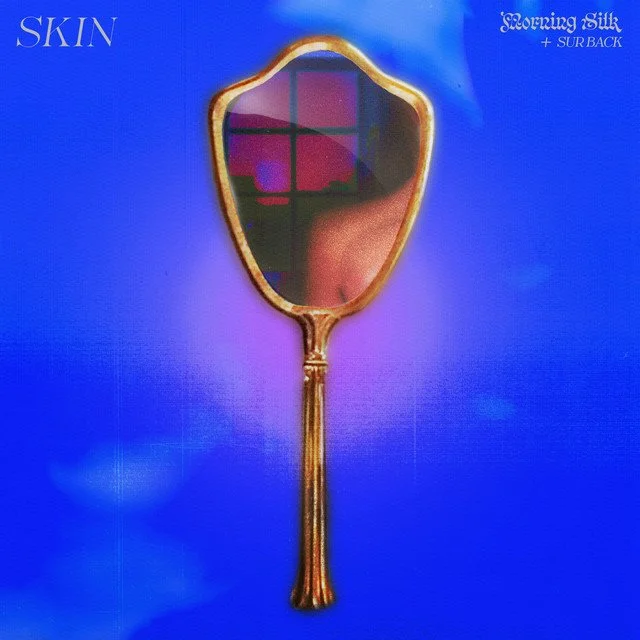
Morning Silk Talks NYC's Indie Pop Scene, "Skin," and Starting Their Own Studio


Lately, we've been spending our free time daydreaming about summer and curating soundtracks for our forthcoming main character moments. NYC-based alt indie-pop group Morning Silk fit the bill perfectly, with soft vocals and upbeat synthy instrumentals. 

Morning Silk's sound evokes the 2017-era indie pop/rock scene à la Clairo, Rex Orange County, & Her's. We chatted with the band about their experience with the scene in NYC, musical inspiration, and how they went from architecture school to indie pop.

Malaika for Also Cool: Hi! Nice to e-meet you. I'm curious what led you to music while in school for architecture. Do you think anything you learned in school affected your taste in music and aesthetics?

Frank Corr for Morning Silk: Hi! I never had much recording equipment growing up, but I was listening to a lot of bands that used DIY recording methods. Those bands helped me finish school, but then I thought, why can't I do what they did? So I began collecting some small recording gear with internship money I made. 

I was around a lot of painters, and used to be in painting myself. We were always tightly intertwined with listening to new music or just going to gallery shows/events where there was already some sort of music scene. A lot of punk bands played in Providence, so we were drawn to the idea of playing live and performing before we even had anything recorded.

Also Cool: What has your experience been like with the music scene in NYC? It seems like things have started to (slowly) open up again, and I'm interested to hear what you're looking forward to. 

Morning Silk: We are pretty new to the New York scene. I feel like I didn't really connect with a lot of music here or musicians until recently. Matt was saying that there are so many sub-scenes going on that you discover through playing shows here and whatnot. I recently started producing for a few artists, and now I finally feel like I've found my place in the city. We are finishing up our first record, so we are so hyped to play it for people! We just started playing shows with our friends and some of the artists I produce for, so we have created a little place for ourselves.

AC: How did you start your own studio? What was that process like, and what inspired it?

MS: Rob, Matt, and I would use this place called "The Tap Room" in Providence to rehearse/write and record. It wasn't really a studio at all, so we would have to lug Rob's drums from our apartment and set them up and break them down every single rehearsal. It was really exhausting, so we always dreamed of a place where we could leave things set up so we could record whatever we had on our minds right away. 

I started collecting some higher-end gear with a friend who was already in New York and just stored it with them. We would go to New York on weekends and record at a little practice space in Dan Bro. As Matt was saying, we eventually got tired of that, and Rob had found a new space. It was like a living room with a kitchen, but we could see a control room where the sink was, so we decided to try to make this the dream studio. 

We didn't have a lot of experience recording, but I was trained as an Architect, and Rob was an excellent builder, so we figured we would just figure it out as we go. Eventually, we partnered up with an audio engineer and made the space what it is today! It's very special, and we are so lucky we can record in our own self-funded/built space.  

AC: You've quoted MGMT as musical inspiration, but I'm curious if there are any local artists or friends who have helped inspire/influence your music as well.

MS: Matt was saying ever since we all started recording music, we mainly just listen to each other's demos now. Hearing what Rob and Matt are making is one of the most surprising and interesting things to hear. 

Same thing with our friends doing other things, like I am always inspired by whatever Sur Back is doing production-wise or what Richie Quake or Middle Part are working on. We are always working on each other's music now too. I guess that is a really nice way to learn/inspire each other. If I'm working a lot with a particular artist, it might bleed a little bit into the songwriting. For instance, my friend Michael is really into French House, so I might pick up a few jumping bass lines from that style here and there. 

Also, our friends Anna and Kristos are always putting us onto new things happening. In the end, I always run my ideas by Caroline (Sur Back) just to make sure I'm not making something completely insane or silly, haha. I am probably leaving out a lot of other people, but those are just some artists and producers, to name a few that we have been around as of lately.

AC: What can we look forward to from Morning Silk in 2022?

MS: I've been doing a lot of production for other people lately, so I am really looking forward to finishing and releasing our self-titled debut album. I've already started writing and recording the next album, so we plan to put out more than a few projects this year! Working on other people's projects has taught me to move faster and be more open to collaboration. We hope to make an EP this year between the two records I started recording, which will be a whole different vibe.  

Watch “Skin” by Morning Silk below

Morning Silk

Spotify I Instagram I Facebook I Bandcamp

Malaika Astorga is the Co-Founder & Creative Director of Also Cool. She is a Mexican-Canadian visual artist, writer, and social media strategist currently based in Montreal.


Related Articles


Carl Schilde Channels Lost California Sound on EUROPOP (Fun In The Church)


Carl Schilde. Photo courtesy of Colin Medley

For each of us, life seems to lead to experiences unexpected; it can shift us from one location or another, however much that may or may not be “part of the plan”. EUROPOP, the debut solo project from Toronto-based, Berlin-born Carl Schilde, is a subversion of the cumulative expectation of “making it” as we’ve been conditioned to think. Rather than focusing on the prospect and ruminating on what could’ve been, its tone seems to bask in the fantasy poolside in the Laurel Canyon heat, already at terms with what is.

The album was recorded following a relocation to Los Angeles, California, which eventually culminated in what Schilde describes as a “disappointing experience”. It’s also a love letter to the lost records and projects of the 70s, such as overlooked post-Pet Sounds projects by The Beach Boys and the sounds of country and folk demos.

“I had a bit of a music burnout and moved to Toronto to be with my wife. I took a year to work at a brewery and not focus on music, just to have that distance,” says Schilde. “I was feeling out of time and out of place myself, so I projected that into the music by sounding like some demo from ’78 that never got heard.”

Carl Schilde. Photo courtesy of Colin Medley

EUROPOP’s mood is dream-like, woozy and thick with atmosphere, featuring deep baritone vocals by Schilde recorded in their Toronto basement. In tone and sound, the record could be compared to contemporary artists such as the late Leonard Cohen, or sonically similar to Timber Timbre’s 2014 release Hot Dreams, which was also reminiscent of heyday 60s/70s Hollywood and the spaghetti Western soundtracks of the time by Italian composers. 

The album kicks off with “Top 40”, the lead single from the album. Croons from a steel lap guitar wax and wane against a constellation of synthesizer notes in the background mix. Schilde’s lyrics seem to speak to an unnamed friend, ruminating on success and its ethereal nature:“We heard your record did well in Germany / And what’s worked there must surely work here / Let’s see if it melts in the California heat / Like a candy in a wrapper / or an apple out of reach” .


‘“It’s definitely about disappointment and dealing with that in an ironic way,” says Schilde. “It’s an elevated version of myself and it makes fun of that ego, of wanting to be successful.”

During our interview, Schilde and I discussed his curiosity for “pop music trickery”, referencing the later releases by Brian Wilson and The Beach Boys, as well as Italian soft rock records. The album’s second track, curiously titled “John Stamos”, is a deep-cut Beach Boys reference, as the Full House actor is actually a current touring member of the reformed Beach Boys.  “I’m a big Beach Boys and 70s music fan. Their sound fascinates me; [it’s] rooted in 50s doo-wop harmonies.”

EUROPOP is Schilde’s first time singing lead on a project and producing their own vocals. They remark the greatest challenge they had during the recording process was adapting their production style to fit their own vocal range. 

“The process of recording was very intertwined with the writing. You find your zone where a limited voice [range] does work and try to capture spontaneous moments. Everything I have [in my home studio] is set up for spontaneous workflow.”

Carl Schilde. Photo courtesy of Colin Medley

Schilde is the primary producer of the record, with some assistance from bandmates on backing instruments, and supporting vocals from Schilde’s partner that harmonize with his own. 

“Roadworn'' is a great example of Schilde’s ability to layer sounds and stack textures: phased filtered guitar tones harmonize through a cloud of static and feedback. See also “Landline” parts one and two; the latter is an instrumental highlight of the album, featuring well-stacked vocals like one long exhalation that relieves the weight from your shoulders. 

“Even two-part harmonies, like Simon and Garfunkel, there’s definitely a magic there,” says Schilde, “I think it can change meaning to the lyrics if there’s another harmony.”


The album does eventually reach cruising altitude in the latter half by the track “Phase”, which brings some welcome grand piano chords and more aggressive drums into the mix before eventually dissipating before the ephemeral ballad track, “The Master Tape”.

Schilde is well aware of the irony of the album’s title, considering the project grew from an experience in and was produced in North America. “It's definitely an ironic title. People talk about how ‘Europop is euro-trash’ … as if to say it's not real music. The record doesn’t sound like a Eurodance record [from the 70s].

Schilde also remarked how audiences and communities perceive musically differently in Europe compared to North Americans. “There’s a different sensibility,” says Schilde. “Living in North America now, I realized the only kind of music I can make is Europop, in a way. 

“I’ll always be myself […] even if it doesn’t sound like that.”


EUROPOP

Released on February 4th, 2022 via Fun In The Church

1. Top 40

2. John Stamos

3. Roadworn

4. Soft Dads

5. Landline Pt. I

6. Landline Pt. II

7. Phase

8. The Master Tape

9. Blue Rinse

10. Credits

All tracks written, arranged and produced by Carl Schilde

Vocals, guitars, pianos, synthesizers, bass, percussion & drum machines by Carl Schilde

Additional vocals by Laura Gladwell

Drums by James Yates

Recorded and mixed by Carl Schilde at home in Toronto, Canada

Drums recorded by James Yates at Majetone HQ in Newhaven, UK

Mastered by Dave Cooley at Elysian Masters in Los Angeles, USA

Vinyl cut by Sidney Claire Meyer at Emil Berliner Studios in Berlin, Germany

Artwork design by Sebastian Schäfer

Illustrations by Judith Holzer

Super 8 footage by Carl Schilde


Carl Schilde

Website | Instagram | Bandcamp

Facebook | Spotify | Apple Music

Gabriel Lunn is a writer, multimedia journalist, and pop music enthusiast based out of Victoria, BC. When he isn’t trying to decipher the human condition, he can usually be found going for long runs or collecting vinyl records he really doesn’t need.


Related Articles


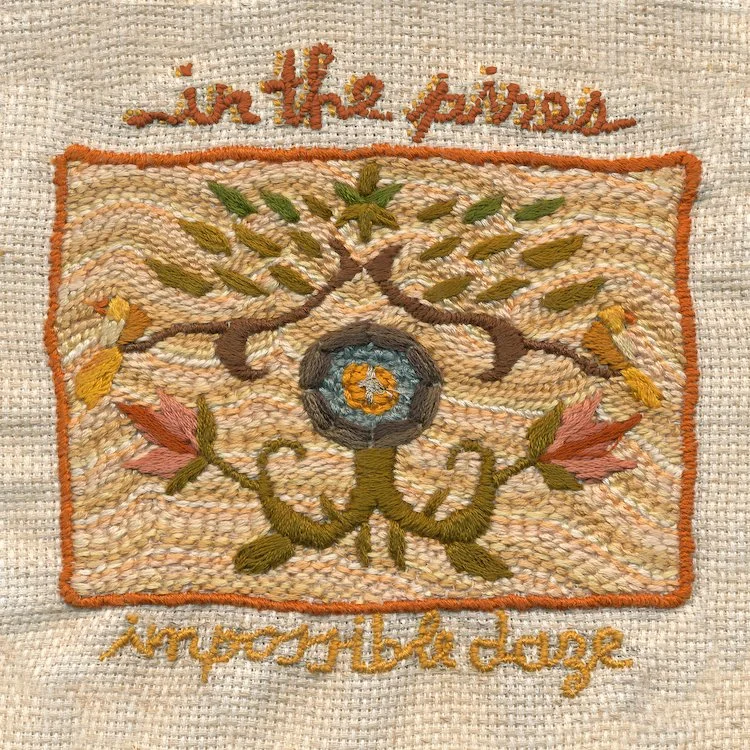
In The Pines Invites You to Manoeuvre Young Love and Pandemic Melancholy with "Impossible Daze" (Soul Step Records)


Michael Shular, Charlie Horn, Pat Zopff and Alex Dungan of In The Pines. Photo courtesy of the band

The raw feels of In The PinesImpossible Daze will transport you to the Golden Age of Radio, when live bands were broadcasted over the air. Don’t expect the sterile, radio-ready music that replaced many of those old gems; instead, anticipate a constellation of lyrical authenticity, plaintive progressions and intermittent phonographic imperfections. 

With this album, ITP veers from the psych-y Laurel Canyon feels heard on Slow Blink to explore a trad-folk sound further consistent with the narrative around the band’s name. While having turned the reverb down a notch, their new 11-track album remains true to the band’s familiar bare-boned and blurred ambient sound. Tape cassette, lo-fi qualities and innocent nostalgia are the names of the game for this quartet, hauling its listeners through what could very well be an Americana music history class. 

On Impossible Daze, ITP invites you to manoeuvre love alongside the four of ‘em. The album opens with “Bird Song”, a tune about moving on from an unfathomable reality. Maintaining the same direct-address-POV, “Indifferent” enters head strong. A bluesy guitar riff leads the way, reminding the listener that ITP had begun as a blues band. “Avoid Myself” is for pensive days, as is the track that follows, “In My Dreams”. This one haunts me, beginning with vocals reminiscent of Elliott Smith – but don’t be fooled, this soft tenor whisper soon gets washed away with an intricate cacophony of dream folk guitar progressions and an oppositional outro. 

Egg shakers will welcome “Well I’ll Be” to the stage, followed by a tune which showcases the band’s first lap steel guitar appearance, “Brother”. A melancholic “I Don’t Mind” follows, and a starry organ melody seamlessly closes the door to this one. The grainiest track of the bunch, “Jeez Louise”, sports hazy acoustics and atmospheric vocals, while the lyrically spacious and sonically calming “Runnin’ 2 U” wraps up the record. This one reads poetically and leaves the listener pensive: “Can you tell grey from yellow? / Do you hear my hello / My hello / My hello / What will you do when no one comes for you?” 

If you're looking for a myriad of what-you-see-is-what-you-get lyrics melted into a complexity of dreamy Americana textures, this album is for you.

In The Pines. Photo courtesy of the band

CJ Sommerfeld for Also Cool Mag: Congrats on the new album, and thanks for your time today.

Before we chat about Impossible Daze, I have to know – does the band’s name relate to the classic folk tune of the same name? If so, what was it about this song that made the troupe name your band after it?

Michael Shular for In The Pines: Thanks for having us! We get this question all the time, and yes, there is a relation to the Lead Belly tune. There is, however, nothing about that song that made us name the band after it, other than the fact that it's a classic blues tune, and we wanted to be a blues band at the time.

Also Cool: Do you have a preference: Lead Belly’s version or Nirvana’s?

Michael Shular: Lead Belly for sure.

AC: A notable transition from 60s psychedelia to Americana is heard between your earlier albums and Impossible Daze. What forces were responsible for this leap?

MS: I think really it comes down to a combination of wanting to do something new and the influence of what we all were listening to or inspired by at the time. We had just finished this sort of progressive psychedelic record that took entirely too long, and we kind of entered a weird stand-still where we were like, “what do we do now?” From there, we went on our way and started writing as we usually do, and a couple of really cool tunes hit the table. We liked where it was going, so we rolled with it.

AC: Rolling with it definitely worked! Were there any prominent Americana / folk albums from which the band drew inspiration when putting together Impossible Daze?

MS: I wanna say John Prine’s self-titled record? I mean, it’s just so good – I remember listening to “Pretty Good” over and over and over again. He's the man. Around the time we were writing the record, we were also listening to a lot of Neil Young, Michael Hurley, Dr. Dog, & Rose City Band.

AC: This is the first In The Pines album in which we don’t hear sax – was this concurrent with the band’s change in sound, or were there other reasons for this instrumental change?

MS: There were other reasons, mostly just wanting to move on and write stuff we never have before.  

AC: The sax seems to have been replaced by lap steel guitar in one of your tracks. Was this for the sake of remaining true to the Americana direction in which the band was headed? Or did the idea to create a folkier album occur after having first incorporated lap steel guitar?

MS: Our guitarist Charlie Horn had the idea for the part in “Brother” for a while; we just didn't know anyone who could play! We ended up meeting this guy Jeff Jackson through our engineer on the record; he came to the studio, laid down the part in a couple of takes and up and left *laughs*. It was very fast, but when we heard it on the track it was like a loose end on the record had just been tied.

AC: I love the theme of manoeuvring love heard throughout Impossible Daze. Was this lyrical content taken from the band member’s specific experiences, or was it used simply for its relatable qualities? It’s a component we frequently hear in folk music.

MS: *laughs* I think we all were kind of going through it at the time, you know? We were in lockdown, and everyone—including us—was going through it physically and mentally. All the songs and all of the lyrics you hear on the record are very true, very real feelings, from each one of us.

Manoeuvring the vast landscape that is love and heartbreak definitely has relatable qualities, and it’s because whoever it was that was writing that song at that specific moment in time, they were going through it too! And you can feel that kind of thing when you listen to it. You know it when you do, because it hits that soft spot somewhere in you, because you’ve been there before too. Real human experience and taking it as it is and not what we think of it to be, letting it all go like a leaf in the autumn breeze. That's what most of these songs are about.

AC: Lastly, how is everyone feeling with the folksy route the band has taken? Do you think it’ll remain in future albums, or do you think In the Pines will revert to their earlier psychedelic sounds?

We all enjoy playing these songs and writing songs in that sort of style, it’s a large part of what we all are inspired by. So, yes, I do think there will always be hints of folk and Americana-sounding stuff on future records, but it’ll always be something new.

I say it’s a large part of our inspiration, but it is really only a fraction. I see no boundaries when it comes to writing music in this group. No idea gets turned down, and everything is given an equal amount of consideration. I can guarantee you that our next record will sound like nothing we’ve done before.  It’s very important I believe, as an artist or any creative person, to go outside of your comfort zone. Comfort is like the killer of creativity! And you are responsible for developing your craft. I don’t want to be bound by any genre, because what’s the fun in that? 

Thanks again CJ for having me for this interview, it was a blast!

AC: Thank you again for your time! It would be rad if ITP made their way to the Pacific Northwest in the near future…


Impossible Daze

Released January 28th, 2022 via Soul Step Records

1. Bird Song

2. Indifferent

3. Sweet Darlin

4. Avoid Myself

5. In My Dreams

6. Well I'll Be

7. Brother

8. I Don't Mind

9. Sylvan Island

10. Jeez Louise

11. Runnin 2 U

Recorded, mixed, and mastered by Patrick Stolley with the assistance of Ion Harris at Future Apple Tree Studio in Rock Island, IL. All music written and performed by In The Pines.


In The Pines

Website | Instagram | Bandcamp

YouTube | Facebook | Spotify | Apple Music

CJ Sommerfeld (she/her) is a Vancouver-based freelance writer with a particular interest in the convergence of language, art and society. When she is not writing, you can find her experimenting with harmonic minor progressions on her keyboard.


Related Articles


Helsinki's Treemer Serves Up Growling Post-Punk with "Paper Cuts / Eyewitness" (Soft Monsters)


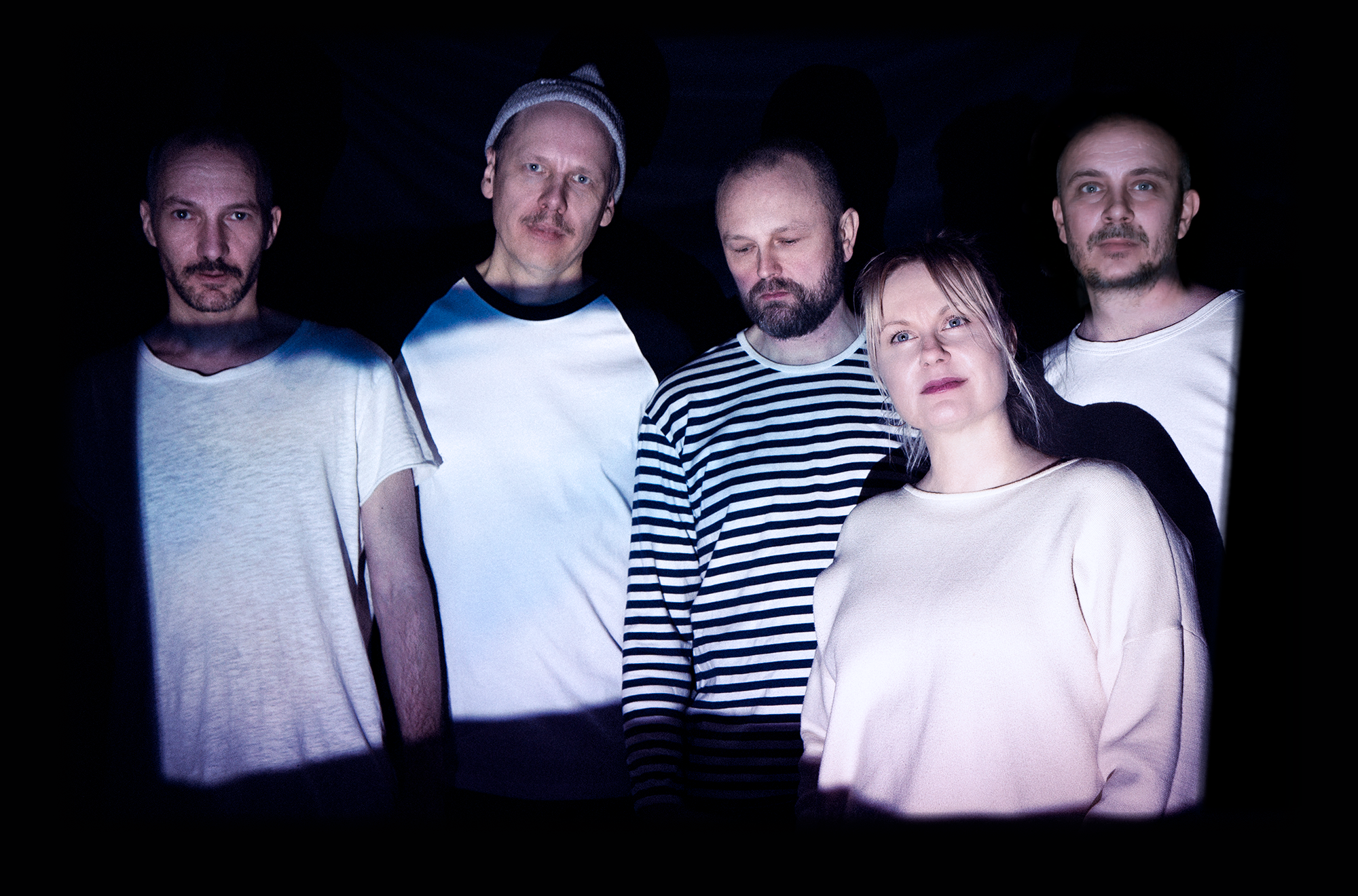
Sam Shingler, Joakim Schonert, Marko Haikonen, Mia Keurulainen, and Tommi Lehtonen of Treemer. Photo courtesy of the band

Forged across ever-evolving decades and soundscapes, the work of Helsinki-based indie quintet Treemer has come to a snarling head. Their latest double A-side, “Paper Cuts / Eyewitness”, is now out via Soft Monster. Punctuated by sinister guitars and boisterous percussion, these expressive garage-rock tracks showcase two perspectives of conflict: that of the wounded, rising from abuse with something to say, and that of the ordinary human uncovering darkness within themself.

Following the release of “Paper Cuts / Eyewitness”, we caught up with Treemer’s Mia Keurulainen to peel back the histories that have constructed this latest project: the band’s plethora of sonic references, their creative methods and approaches, and the lasting friendships that have facilitated their vulnerability.

Rebecca L. Judd for Also Cool Mag: Hello there Treemer, thank you for speaking with Also Cool! I'm curious to know more about the formation of the group, and how it's evolved since Chickenpotpie and The Pansies. Tell us more about your origin story, and the ebbs and flows along the way.

Mia Keurulainen for Treemer: Thank you, Also Cool! It all began in the early 1990s with four small-town-guys (Marko, Tommi, Sam and Joakim). They found mutual interest in mostly Brit-based pop and rock music, digging such bands as The Cure, Ride, Slowdive and early U2. They put up a band of their own and called it Chickenpotpie (a word picked up from a Thrasher Magazine comic strip, BUT also a dish served at Twin Peaks’ Double R Diner – this TV series has had a major impact on our identities and on our music, by the way.)

Chickenpotpie fell apart, but the music didn’t stop there. I joined in and brought along my own influences. These were a bit different from what the guys thought of as acceptable, such as Depeche Mode and The The. Soon after, The Pansies (featuring me, Sam, Tommi and Marko) was formed. Quite accidentally, we happened to hit the Britpop wave as it rolled over the continents, with bands like Blur and Suede on the front cover. We got a record deal, made four albums and between 1995–2000 toured Finland, Northern Europe and even Japan.

To nearly make it – I think that was what really wore The Pansies off. On the other hand, band members started to marry and have children. It was only natural to let that phase go, in mutual understanding. And still, the music continued to flow. Sam, Joakim and Tommi started Montevideo and, in my interpretation, moved from an indie sound to take on a more Coldplay-kind of approach. I made a solo album under the artist name Mia Darling in 2007, paying homage to my early female singer-songwriter idols such as Suzanne Vega, Juliana Hatfield and Polly Jean Harvey.

In 2019, Marko came out of the closet with some new songs he’d been working on. It was an honour, and the timing was perfect for me to start composing vocal melodies and lyrics to his songs. It didn’t take us long to ask our dear old friends to join us, and so Treemer was born. What took us long, however, was to come up with a name for the band that suited everyone (laughs). The first song Treemer released was “The Great Void”, followed by the Meeting EP. So far, we’ve released a total of 12 songs.

Also Cool: Your music pulls from many directions, with these songs lying somewhere on the fringes of shoegaze and hard rock. Which musical influences have inspired the band, particularly on this release? Did your time apart have any impact on the formation of Treemer's present sound?

Treemer: Yeah, the roots grow deep. From Bowie, Beatles, Neil Young and Pink Floyd to this day.

It’s funny that you mentioned hard rock. It seems that in Finland, every other kid goes through that heavy metal / hard rock period in early puberty. I, for example, was a huge Def Leppard fan at 13. Then there was the hip-hop phase: Salt’n’Pepa, Public Enemy and Run-DMC. At the same time, the likes of Midnight Oil, Sinéad O’Connor and Tracy Chapman also awoke me to socially significant matters through their music. Tommi, Joakim and Sam even had a hip-hop trio at some point… what was is called, Groovy Sound Crew?

As a child, most of us took classical music lessons. I played the piano for 6 years, so surely the music of, for example, Sibelius, Satie and Khachaturian play at least an unconscious role in my personal take on making music.

The 1990s was a melting pot of sound and genres, and we welcomed them all! It seems to me, one wasn’t perhaps as dedicated to a certain musical style as young people today are? Or maybe this is just me getting old. There was grunge, obviously. Then there was shoegaze, trip-hop, Britpop, dub, electro, R&B…echoes from the 60s psychedelia and soul could be heard in the sounds of, say, Primal Scream, The Charlatans and Stereolab. The USA hit back with the cool of Beck and Sonic Youth, the inwards-turned art school pop of R.E.M. and Radiohead, and the NY garage-pop of The Strokes. Meanwhile in Scandinavia, an Icelandic woman called Björk was doing her own thing, Denmark gave us a progressive gem called MEW, Sweden had a new sweetheart with The Cardigans and drama in the form of Kent, and Norway an endless list of talented, folk-ish (and dare I say nerdy!) singer-songwriters coming up.

Treemer’s latest release, “Paper Cuts / Eyewitness” does definitely recline on the garage-rock end of our influence scale. Pixies, Hüsker Dü and even Pavement come to mind. I personally am a fan of Mac DeMarco and, somehow, some of the more recent Treemer material makes me feel connected to his music. A good kind of couldn’t-care-less-attitude is present.

AC: On one-half of your double A-side is "Paper Cuts", a distorted post-punk rebellion against abuse and mistreatment. Can you unpack the inner workings of this evocative single?

Treemer: Evocative – that’s nice, thank you! When I first heard Marko’s demo (in early 2020) I immediately thought it very different from the earlier Treemer stuff. It had speed and rage. At that moment, I was personally going through a rough patch in life, so the lyrics turned out to be more straight-forward and personal than usual.

The song took many forms (fast/slow, minimal/profuse, rough/polished) before finding its final shape during the recording sessions last summer. I love the crazy instrumental in-between part, very punk-art-garage-what-have-you-pop. It was just improvised on the spot, and for the first time ever I got to play my mini-saxophone on the record!

AC: "Eyewitness" takes a more aggressive stance, cautioning an ill-fated spectator against consequences. Coupled with this sinister song is an intriguing video that you produced, where viewers observe the witness' frightened journey and—ironically—assume a similar role. From your perspective, what is the story being told here? Who is this eyewitness, and what is their fate?

Treemer: Marko’s Eyewitness demo on the other hand sounded just, I don’t know, secretive somehow. The word “eyewitness” started to ring in my head, and I was thinking of old Hitchcock movies and other classical thriller scenes where someone (usually a child) is peeking through a key hole and seeing something terrible… Judicial terms such as “prosecutor” and “witness” came to mind, and I started to build up a story around those words without a distinct plot or design. It was more about the atmosphere. Joakim’s bass lines play a significant role here – a growling synth-bass line of the A-part turns into a progressive passage come along the verse.

The idea for the music video came to me in a dream. Originally, in the dream, there was an androgynous skateboarder in brightly-coloured hair and clothes rolling around the streets of what looked like Venice Beach in LA. They were being chased by us Treemer members, lurking behind corners wearing black sunglasses. Visually and stylistically, the dream reminded me of the Smashing Pumpkins’ “1979” music video or Larry Clark’s Kids.

Instead of sunny LA, the music video shooting took place in Helsinki on a windy, rainy August day. I asked my friend, the young and talented dancer Kaisla, to star in the video and I’m happy she agreed. Together, we immediately understood that the “eyewitness” is escaping nothing but something in themself. To witness something unattractive or gloomy in ourselves is hardly light or fun, so it can easily become a fight-or-flight situation. The video has a happy ending though, as the eyewitness makes peace.

AC: Despite the dark connotations to "Paper Cuts / Eyewitness", they were recorded over a session you folks describe as "summer camp", complete with camaraderie and laughter. I'm interested in the sense of liberation that you found in writing these particular songs during this breezy experience. What does it mean for you all to use your music as a form of empowerment?

Treemer: At least one of us is usually tired or on a bad mood when we arrive at the rehearsal room, but I don’t think anyone has ever left it feeling that way!

Empowerment, freedom to do whatever, self-expression – definitely vital elements to keep the Treemer machine going. And I point out that it is the doing and being there together, in the moment, that matters. Whatever happens next—recordings, releases, gigs—is a bonus. This is not to say that we weren’t disappointed or frustrated when, for example, our gigs in Finland and Germany got cancelled in 2020 due to COVID. For me, Treemer represents a creative and safe environment to test and work on my own artistic ideas whilst being inspired and wowed by those of the others.

Also Cool: Thanks again for your time, Mia! Let's end this on a high: what are your biggest dreams for 2022? What's next up for the band?

Treemer: Thank you! Hopefully we get to play some gigs! There are still 4 songs “under construction” from those last summer recording sessions. So there will be at least an EP at some point. Maybe even a vinyl version, who knows. We are also working on some completely new material. The main thing is to stay healthy and have fun though.

My personal dream is to play a gig at an open-air summer festival somewhere (probably not happening in 2022 though). I can picture it – it’s late in the evening, bright lights split the sky, there’s love and confetti in the air.

Stream “Paper Cuts / Eyewitness” below!


Treemer

Website | Instagram | Facebook

Spotify | Apple Music | Twitter | YouTube

Rebecca Judd is the features editor of Also Cool Mag.


Related Articles
 

It Took Reno Cruz A Lot of Retrospection to Make "Falling In Love Is Not That Hard"


Reno Cruz. Photo courtesy of Sam Fuehring

In Reno Cruz’s debut album, Falling In Love Is Not That Hard, he draws on an essential truth that we have likely all grasped at some point during the pandemic: isolation and togetherness are not mutually exclusive, and it is easy to feel alone while in the presence of loved ones.

But unlike most, the Chicago-based folk artist didn’t learn about the fusion of these conflicting feelings in the midst of COVID-19. His upcoming project consists of countless years of retrospection, taking listeners back to the time when he first moved to Chicago in 2017.

“I ended up here in a kind of roundabout way,” Cruz tells me over Zoom. “I was acting in a film that was shooting in Wisconsin, but then staying in Chicago on my off-days.” Originally from Los Angeles, Cruz initially came to the Midwest for acting school in his late teenage years. “I was like a little nerdy 19 year-old coming into Chicago on the weekends, and trying to find any cool culture that I could,” he says.

Although Cruz felt happy with the energy that he put into the film, he had a quick change of heart and decided to brace the music industry head-on. “I suddenly realized that this was not what I cared about,” Cruz says. “I really wanted to be a songwriter, but I wasn’t writing songs. The experience of moving to Chicago—and the many things that I discovered about myself between 2017 and 2019—were what really shaped the record.”

Reno Cruz. Photo courtesy of Jacob King

Cruz wants to make it clear that while Falling In Love Is Not That Hard focuses on relationships, “...it’s really about anxiety, and the narrative that we tell ourselves in relationship to other people.” He tells me that the man pouring out his soul in many of the songs off of Falling In Love Is Not That Hard is not the same Reno Cruz that I’m interviewing through video chat, but instead represents a different version of himself. “It’s the version of me that I was in January of 2019. Fucking heartbroken, lying on the floor and thinking, ‘Oh God, what is this!?’” He mentions how contradictory his emotions were at this moment of his life; although he was depressed from trying to recover from a breakup, he was also excited to be living in a new city, taking on the music industry and making cool and talented friends with each passing day.

Cruz shares with me that the word he came across which helped him to conceptualize these feelings was ‘ambivalence’ – meaning two strong opposing emotions being felt at the same time. “That’s not my experience with any particular relationship, that’s my experience of life,” he says. 

“Life is not simple; relationships are not simple. We live in an extremely complex, ever-changing world that brings up all kinds of feelings all the time. When it comes to feeling isolation and togetherness at the same time … You can feel that way in a romantic relationship, you can feel that way when you’re out at the bar with your friends, and you can feel intensely connected to people when you’re all alone in your bedroom.”

Before leaving his home in California to pursue acting and songwriting, Cruz had already worked many odd jobs. This includes stints as a jewelry salesman, banjo boy, and even a cheesemonger (which he still does to this day). “I’ve had a weird life, and I’ve certainly sought that out,” Cruz informs me. “But when you seek something out enough, it also finds its way to you. Mostly I’ve just been saying ‘yes’ to whatever I have been offered … I’ve said yes to a lot of weird shit, and it’s definitely enriched my life.” 

Because Cruz has had to operate in a lot of different contexts, he feels conviction in his ability to relate and empathize with a broad array of humans across the world. “I’ve been in acting, but I would also consider many of my experiences in customer service as acting, as well. It’s an emotional labour, if you have to speak to someone who is being rude and unreasonable to you. And it’s a skill that I don’t believe people who haven’t worked in that field often think about.” 

Reflecting on these experiences, Cruz explains how this kind of emotional labour has impacted his life as a songwriter as well. “In the song ‘Everybody,’ I sing about how ‘everybody wants to be my baby,’ and ‘everybody needs a piece of me.’ In many ways, it’s about me feeling like I’m doing customer service in my regular life.”

Reno Cruz. Photo courtesy of Sam Fuehring

For musicians looking to release their debut works into the world, Reno Cruz offers two pieces of advice based on his own experiences: be honest with yourself, and take your time. “Moving towards music wasn’t my plan … it was just, like, ‘I need to do this,’” Cruz reflects. “But it took a long time, because I was too locked up emotionally to become a songwriter. I learned how to play guitar, and I played music with other people for years and years and years before I got to a place where I was writing songs that I felt I could actually play in front of other people … you don’t have to be honest to write a song, but you have to be honest to write a good song.”

Cruz also emphasizes that “... [i]f you haven’t lived any life, then you can’t write a song,” and I am forced to think about all his odd jobs, heartbreaks, and the adventures that came to him upon moving from place-to-place. He believes in random bursts of creativity, but he also believes in the power of sitting down to refine his musical creations.

According to Cruz, these two methods live in symbiosis – you simply cannot have one without the other. “Sometimes it comes out all at once, and you’re literally looking at where you are, and what’s going on, and trying to get it as clearly and concisely onto the paper as you can. But sometimes you need to take a long time and just let it sit. We tend to romanticize that burst of creativity, but sometimes that’s not the best way to say it. You have to go back and be honest with yourself, edit, and show people how it’s working. It’s a balance of that super potent in-the-moment feeling, and later on, that healthy detachment from that emotion in order to make it as clear as possible.”

Listeners who enjoy Falling In Love Is Not That Hard can expect more Reno Cruz projects in the future, although they might be somewhat different from his debut release. He is currently finishing off an EP which serves as a follow-up to Falling In Love Is Not That Hard. This upcoming project explores some of the same themes, but with an expanded musical palette; more complex harmonies, additional instrumentation, and even a rap feature.

“I don’t know if I’m a folk artist, even though I love acoustic guitar and folk has had a huge impact on my life. But I had to make Falling In Love Is Not That Hard because of who I was at a certain time in my life. I’m really excited to put it out and move past it, because even though I love this record, I know that there is more to the story.”


Falling In Love Is Not That Hard

Released January 21st, 2022

  1. F.I.L.I.N.T.H.

  2. Wild Geese

  3. Love Is A Wave

  4. Around U

  5. Everybody Wants

  6. Your Love

  7. The Problem

  8. Heart Is A Window

  9. Barnacles!

  10. I'd Do It All Again

  11. Love Is A Wave (Demo)

All tracks produced by Reno Cruz

Track 9 co-produced by Hunter Davidson

Mixed and mastered by Brok Mende at Friends of Friends Recording

Vocals on Tracks 1, 4, 5, 9, and 10 by Hannah Maverick-Cruz

Vocals on Tracks 6 and 10 by Danielle Strautmanis

Vocals on Tracks 9 and 10 by Wyatt Waddell

Vocals on Track 9 by Ariella Granados & Izzy Ortiz

Drums on Tracks 1, 7 and 10 by Sam Subar

Bass clarinet on Track 1 by Jacob Slocum

Bass on Tracks 4, 6, 7 and ambience on Track 2 by Jake Hawrlyak

Violin on Track 5 by Noelle Viard

Tenor saxophone on Track 7 by Eric Novak

Tenor saxophone, clarinet, flute on Track 6 by Kenneth Leftridge

Drums on Track 6 by David Blair Jr.

Trombone and trumpet on Track 6 by Chris Misch

Flutes on Track 10 by José Guadalupe Flores


Reno Cruz

Instagram | Bandcamp | Spotify

YouTube | Apple Music | Twitter | Website

Spencer Nafekh is a tireless reader, writer, editor, and advocate for the written word. With an undergraduate degree in Concordia's English and Creative Writing program imminent, he plans to pursue a Master's specialization in journalism so that he can fully realize his career path. When Spencer is not working away, he is probably listening to experimental music while lost in the world of a science fiction novel.

Instagram


Related Articles


"Carved Into Stone" and The Enchanting Artistry of Isaac Symonds (Crystal Math)


Isaac Symonds and Loryn Taggart. Photo courtesy of Samuel Woywitka

For multi-instrumentalist Isaac Symonds, the past year has brought ample opportunities to redefine his creative vision and create his very own orchestral paradise. “Since my departure from Half Moon Run in early 2020,” he says, “I’ve spent most of my time honing in on songwriting, producing and recording.”

Symonds is not lying; on October 14th, the psychedelic, cinematic music video of “Carved Into Stone” (in collaboration with Loryn Taggart) was released on YouTube. The video features musicians from acts such as Barr Brothers, the Franklin Electric and Teke Teke––among others––doing what they know and love best during a recording session at Montreal’s Mixart Studios. Viewers are immersed in Loryn Taggart’s heartfelt voice as it coats the 50s-inspired instrumentation like warm honey, and Symonds diligently orchestrates a variety of instruments.

I was delighted to catch up with Symonds over Zoom, where he guided me through the world of "Carved Into Stone" and left some breadcrumbs of the magic he’s preparing.

Cover image for “Carved Into Stone” by Isaac Symonds & Loryn Taggart. Photo courtesy of Samuel Woywitka

Symonds explains that after he and Taggart wrote “Carved Into Stone,” they decided that it only felt right to fully fund the orchestral arrangement themselves. “It costs some money hiring all the musicians, but we just felt that we needed to do justice to this song.” 

He elaborates by saying that upon finishing the lyric writing, he and Taggart tried executing a multitude of versions of the song. “It’s kinda like covering yourself,” Symonds explains. “You have this song, and you want to stay true to the lyrics and the song form. In my eyes, it’s the hardest part… and the most important.”

After finally landing on the orchestral version and seeing their project take form, Symonds reflects on the experience, saying that it has renewed his belief in studio magic. “Once I realized that kind of sound was possible, it really opened up my mind for other possibilities in the future… It makes me think to myself, ‘holy shit, I’m capable of doing that!’ It’s crazy.” The fact that this was Symonds’ first musical creation with barely any effects involved, aside from a bit of reverb on a select few instruments, makes the experience all-the-more remarkable to him. “It’s unbelievable how everything glued together so easily,” he says.

When asked about the meaning behind the lyrics in “Carved Into Stone,” Symonds notes how Taggart brought up the word “sondering” in a brainstorming session. “I really liked the sound and the vibe of that word, but I didn’t know what it meant at the time.” After finding out that ‘sondering’ is a term used to describe feeling one has when they realize that the lives of those around them are equally as vivid as their own, Symonds and Taggart agreed that this should serve as the basis of their song. “We wanted to combine a classic love song with this idea of sondering,” Symonds explains. “When we were songwriting we were imagining the idea of being on a metro, or a bus, and catching eyes with a beautiful person and having a slip[ping] moment of connection. It’s about really wanting to say hello, when all of the sudden the doors close, and you’re left wondering about all the things that could have happened.”

As he looks towards the future, the conversation veers in the direction of Symonds’ upcoming project, which he is very excited to talk about. “I’m not sure whether it’s going to be an album or an EP, but I’ve booked all the same musicians [that appear in ‘Carved Into Stone’] and I’ve basically written all the songs and lyrics.” 


The multi-instrumentalist has now booked a chalet Airbnb just an hour north of Montreal, and is looking forward to having no distractions. “I live on Saint-Denis in Montreal, and the ongoing sound of traffic is very unforgiving.” In terms of the process, Symonds aims to bring his musical ensemble to his Airbnb retreat, flesh out the skeleton of his music, and then conjure some more studio magic back in Montreal’s Mixart Studios. This, according to Symonds, will be a process which revolves around trimming and perfecting more than anything else. “I probably have twenty songs right now, but only seven of them will push through… or maybe more, or maybe less. I’ve been writing this for two years, so I need to think to myself, ‘is this gonna live on my hard drive, or is this gonna live on Spotify?’ I’m giving it my best to one day let it live out in the open, but music is like a fruit, and I wouldn’t want to release anything that isn’t ripe.”


Reflecting on his career up until this point, Symonds has two useful pieces of advice to give to musicians who want to take their personal practices further: to experiment with many instruments, and to hold back from publishing music until you’ve perfected it. “Being a multi-instrumentalist is always an asset,” Symonds emphasizes. “If your band can ‘switch roles,’ it’s always interesting, both for the listener and for your own experience as well.”


Speaking to his second point, Symonds urges musicians to “...just focus on the song. Maybe people will say I’m wrong, but I don’t think you should promote stuff on social media unless it’s your best material… Write tunes that you’re proud of and know are good, and then move onto promoting it.” Too often, Symonds says, musical artists try to ‘luck out’ and generate a huge buzz by marketing their personalities online rather than their actual content. But people enjoy listening to good music, Symonds says, and talented artists can always rely on letting the music speak for itself. “If you let the music do the work, everything else will become easier.”

I left my conversation with Symonds feeling inspired and revitalized; even through our respective computer screens, his sense of excitement and creativity was palpable. After creating the beautiful arrangement of “Carved Into Stone,” he seems to think that anything is possible, and quite frankly, I believe him. I’m really looking forward to the new music he and Taggart put out, both together and as solo artists. Regardless of whether their future projects manifest as albums or EPs, these musicians are destined to continue the spark behind this latest magical release.

Stream “Carved Into Stone”, the enchanting instrumental version, and the psychedelic remix “Searching in Sonder” below!


Isaac Symonds

Instagram | Facebook | YouTube

Twitter | Spotify | Apple Music

Spencer Nafekh is a tireless reader, writer, editor, and advocate for the written word. With an undergraduate degree in Concordia's English and Creative Writing program imminent, he plans to pursue a Master's specialization in journalism so that he can fully realize his career path. When Spencer is not working away, he is probably listening to experimental music while lost in the world of a science fiction novel.


Related Articles


Dayton Swim Club’s Debut "Hangman" Invites You to Rage With Them (Perpetual Doom)


Nick Flessa and Dominique Matelson of Dayton Swim Club. Photo courtesy of Mario Luna

A rager takes place in some unspecified, sprawling Southwestern desert. Visualize Wim Wender’s Paris, Texas’ opening scene, except noir. Dayton Swim Club are playing for the party-goers when a mob of zombies overwhelm the space. These zombies look familiar; they are not corporeal revenants, but instead a tyrannized social cult. 


Fresh from American indie label Perpetual Doom, Dayton Swim Club’s debut Hangman offers a soundscape for pensive days. Its seven hypnotic tracks will rouse thoughts about sinister social norms as the sequel of a tormented history. Nick Flessa’s droned lead vocals are reminiscent of a late-70s shoegaze mood; together with Dominique Matelson’s ethereal voice and Mario Luna’s fuzzy, reverb-soaked guitar riffs, Dayton Swim Club’s concoction of space and distorted atmosphere(s) are magnified.


Melodic, lo-fi guitar riffs hint towards 60s psychedelia, setting the stage in “Pillow Talk.” As these riffs darken into an ambient sparseness, a collection of Me Too realities and other familiar authoritative perversions are confronted. Flessa and Matelson spiral between direct address, first, second and third person POV, alluding to the twisted yet very real nature of the track’s themes. “Night Breed” is a “Pillow Talk” season 2 of sorts: here, the sun sets and the mood dampens. Backing vocals evocative of female screams haunt an arid town where street lamps flicker. A rhythmically dark guitar persists, reminding us that here, days are as sunless as the nights.  


An eerie mélange of strings pierces the hovering gloomy clouds in "Landers”. The remote, Californian desert community that the track was named after renders a multifarious conceit for issues related to individualism and destruction. The track’s motif “Be your own man / Be your own hang / Be your own hang, man”  is chanted by Flessa and, paralleled with Matelson’s operatic vocals, induces an artful abstraction of social terrors. Dayton Swim Club have wrapped resentments of the ruinous Manifest Destiny and other deteriorating effects of political ideologies in shoegazed, Western-noir packaging.   

We caught up with Flessa just after the release of “Landers” to chat about the (pandemic-induced) means of recording and mixing the album, tonal and lyrical inspirations, and the bar featured in the “Landers” video.

Dayton Swim Club. Photo courtesy of the band

CJ Sommerfeld for Also Cool Mag: Thanks so much for taking the time to chat with Also Cool today, and cheers on the new album!  What forces were responsible for Nick Flessa Band’s conceptual and sonic transition into Dayton Swim Club? 

Nick Flessa for Dayton Swim Club: Thank you! I guess the main force behind the transition is my collaboration with guitarist Mario Luna, who took over composition and production duties. Mario has a strong and focused vision for the project. He’s also responsible for a lot of our visual presentation – flyers, band photos, etc. So far in Dayton Swim Club I’ve mostly been a lyricist and frontman, as well as the de facto manager.  

Nick Flessa Band hit a stride in 2019 with a lineup including Dominique Matelson, Jessica Perelman and Kirsten Bladh. At the beginning we were playing songs from my previous solo releases. Once this band became a regular unit, and we started writing new material together, it began evolving into its current form. Without having released anything, we played three shows as Dayton Swim Club in late 2019/early 2020 shortly before the shutdown. 

Also Cool: Dayton Swim Club is a collaborative ensemble between numerous L.A.-based musicians. Were you acquainted with these artists prior to creating music together, or did you get together for this project? 

Nick Flessa: We mostly knew each other in some capacity. It’s funny because Mario and I went to CalArts at the exact same time but didn’t cross paths until later, through music. Then we kept running into each other at Kaldi Coffee in Atwater Village and became friends. A few years later I also met Dominique at Kaldi, where she was working at the time. Greg Marino, who plays sax on the record, works there too. Mario, Jessica and I have all played in another project called Fragile Gang. Kirsten is an old friend from Cincinnati, where I’m from originally. J.D. Carrera (pedal steel on “Predatory Drift”) and I have collaborated a bunch and were roommates for a long time, and Pauline Lay (strings on DSC) is another art/music friend. 

Most of the players we’ve worked with are people I've been familiar with already – knowing so many excellent musicians is a huge perk of living in Los Angeles. The current iteration of the band includes our friends Daniel and Scarlett (on bass and synth, respectively), whom I met for the first time at a practice a few months ago. Mario brought them in and they’ve been doing great work – our live show feels stronger and more cohesive than ever.  

AC: Hangman was written during the pandemic – what was it about that time that encouraged the creation of this project? 

NF: Like many, I needed a project to hold me together during that time. At first it was a challenge to try to coordinate everything remotely, but Mario and I developed a workflow where he would send me song ideas and I would write lyrics in response, then record vocals and send them to him for mixing – Postal Service style. We found ways for our other collaborators to contribute parts remotely, and developed some pre-pandemic demos into full-fledged songs. 

Working on the record helped create structure to combat the general isolation of that period. The stakes of life itself felt raised, and since I had the freedom to focus solely on writing lyrics, I tried to take the day-to-day as a prompt to explore my thoughts and feelings about the past few years as we collectively bore the bizarre brunt of American history – a nightmare from which I'm still trying to awaken. I took a break from drinking, sharpened the focus of my reading and writing, and went on long walks. Making this record was part of surviving and processing that time and the years that led up to it, fueled by some distant hope that we’d eventually be able to finish, share and perform the project.  


AC: The locations where [the video for your track] “Landers” was filmed —Landers and Palm Springs—reflect the death cult that the United States has become. Can you tell me a little more regarding what it is about these communities that represents both a history and present state of self-destruction? Can you elaborate on the track’s lyrical motif “Be your own man, be your own hang-man"

NF: I spent much of 2020 in Palm Springs at my partner Chloe’s dad’s house, right next to a public golf course. It was a huge luxury to be in a relaxed environment with a swimming pool and plenty of space to walk around. It felt like I was hiding out on a permanent vacation during the apocalypse. I walked around the golf course frequently, and thought a lot about how many resources went into maintaining it. 

Those thoughts led to more thoughts about Western expansion, “Manifest destiny”, and the US as a colonial superpower; how the pandemic laid bare so many structural failures, but how control is always prioritized here. American individualism came full circle in 2020, a sort of ouroboros where the self-made head eats the tail of its own self-destruction — the anti-mask movement and nationally sanctioned super-spreader events being examples. “Be your own man, be your own hang-man” refers to this, and also to the isolation of having to be one’s own “hang” during the pandemic.  

Landers is a remote community in the high desert near Joshua Tree. It’s beautiful, isolated, and the site of a lot of extraterrestrial and UFO sightings. We performed there one night in 2019 a few days after the death of the late, great David Berman. It was a heavy and heady trip. Jessica’s drum kit got run over by a drunk driver in the parking lot of the venue. There had just been a rainstorm, which caused our ill-equipped cars to get stuck in the sandy dirt roads on the way in and out. The night had an enchanted and cursed quality to it. This experience was also a tonal and lyrical inspiration for the song. The venue we played at was called Landers Brew, it’s also featured in the video. Just a few weeks after we filmed there, it was bought by a developer and shut down. I learned this via Instagram when I announced the video premiere.

AC: The remainder of the album carries strong socio-political concerns. Much has changed between when you wrote this album to now. In what ways do you think your next album will reflect this social change? 

NF: One concrete change is that we’ve all been able to gather together and perform live shows, now that there’s a vaccine. That’s been very new and exciting, but also a big moment of adaptation.  As a group we are hoping to have the opportunity to record in a studio together. We are gunning to make a very deliberate record that is conceptually thought through with an arc from start to finish. There's a sense in which Hangman is a cut-up record in terms of its structure, and I think that’s a strength, but I also think a more focused follow-up is in order.  

As much as the 2020 election was a pivotal moment, things aren’t great here. There’s a point, politically, where you can never go home again. As much as the attempt at a sanitized return to the Obama era has been a reprieve for some, I think there is much worse to come unless the Left can consolidate in a meaningful way.  

Our music speaks to a popular resentment. It’s valid to feel resentment at the way things work in the US, and that feeling is potent; ideally this is a power that can be harnessed to fight injustice rather than enforce it. While there are plenty of things to be optimistic about, even the most seemingly progressive of our elected politicians are doing more to appease Republicans than represent their own constituents. Corrupt city councilmen abuse the unhoused with impunity. Military budgets continue to inflate. The charade can’t be kept up forever, though. People are savvy. We can all see it happening in real time. Climate change, too, promises big catastrophes soon. This will continue to change the world we live in, and by necessity my writing will reflect that change.  


AC: Thank you again for your time, I’m loving this album and am looking forward to your future projects. What can we expect to see next from Dayton Swim Club? 

NF: Thank you so much! We have a few new things coming up, including a video by our brilliant friend Will Wiesenfeld (Baths) for our track “Predatory Drift”. We’re also doing a TV theme song cover for Perpetual Doom’s Stay Tuned compilation.  

Several DSC members have solo projects with upcoming shows and releases. Mario, Scarlett and Daniel are all playing in Daniel’s project Dearly Departure at Substance Festival in November. Dominique has a solo record she’s been working on concurrently with this one, coming soon. I'm working on a cover of a song by our friend and labelmate Austin Leonard Jones, also coming soon.  

We’re DJing labelmate Grady Strange’s residency at the Echo on November 1st, ahead of a short hiatus before one final 2021 show in December. Once we wrap these, then it’s back to the drawing board. 


HANGMAN

Released September 17th, 2021 via Perpetual Doom

1. Darker Moves

2. Pillow Talk

3. Night Breed

4. Landers

5. Predatory Drift

6. Rage All Night

7. DSC

Produced and mixed by Mario Luna

Contributors include Jessica Perelman, Kirsten Bladh, Pauline Lay, Greg Marino, and J.D. Carrera


Dayton Swim Club

Website I Facebook  I Bandcamp 


CJ Sommerfeld (she/her) is a Vancouver-based freelance writer with a particular interest in the convergence of language, art and society. When she is not writing, you can find her experimenting with harmonic minor progressions on her keyboard.


Related Articles


Toronto R&B Duo TRP.P To Share New Track at M for Montreal


TRP.P (pronounced "trippy") is an R&B/hip-hop duo hailing from Toronto, comprised of Truss (producer, singer-songwriter) and Phoenix (singer-songwriter). The pair met in 2015 and have been “collaborating in music and life” ever since, all while enchanting audiences with their soulful, old-school sound. Truss and Phoenix made waves with their 2019 debut 2TRP.P, where they tackled injustice and oppression in their lyrics, while also celebrating queer love and empowering their communities. This effort remains intact with TRP.P’s latest offering “Never Leavin,’” out tomorrow (November 19th, 2021) and to-be-performed at the Hot Tramp Showcase at M for Montreal.

Leading up to their set at L’Esco with Janette King, Maryze and Witch Prophet, we had the chance to connect with the duo on what inspired “Never Leavin’” and how it fosters grounds for growing as collaborators.

Zoë Argiropulos-Hunter for Also Cool: To start, can you tell me about the origin story of your new single “Never Leavin’”?  

TRP.P: We originally wrote this song while composing music for a TV show. Although it didn't work out for the show, it worked out perfectly for our album and complimented the new direction we want to take with our music. Once we started to record and perform the song, the message resonated with us more and more. It really is an anthem for communities that have faced displacement, especially during this pandemic. Through that same sense of community, we have met so many amazing people, including the roller-skating community right here in Toronto. You might even see them in the upcoming music video for the song!

Also Cool: Has "Never Leavin'" brought about any realizations for TRP.P? Whether it be learning something new about how you work together, your individual artistry or something you'd like to foster as a group in the future? 

Truss: That's actually a really good question. For me, it made me realize just how broad our spectrum of sound truly is. Although we both grew up influenced by R&B, gospel and hip-hop, there's an underlying influence of pop and house-inspired music in the song.

Phoenix: For me, it made me realize just how impermanent everything is and how fleeting time and existence is. The song is called "Never Leavin,'" but yet by the time the song is released, three new business will close down, one condo will be built, and a million dispensaries will pop up. It’s almost like the most defiant title we could choose in a time like this. In terms of working together, there isn’t a better team than us! We love and dislike everything we do at the same time. Our goals are always two halves of a whole when we are creating. 

Phoenix (left) and Truss (right) of TRP.P, photo courtesy of the artists

 AC: What does the next chapter hold for TRP.P? 

TRP.P: Album number two! It’s a summertime release and we are really looking forward to this one. We didn’t get to tour our first album due to the pandemic. We want to actually go on tour, see the world and play stages in places we could only dream of. Every show we play, we gain new fans and listeners. We are really excited to keep doing that, as safely and as soon as possible.


AC: What can we expect from your performance at the Hot Tramp showcase at M for Montreal? 

TRP.P: We just want to have a good time! We are honoured to be playing with Janette King, Witch Prophet and Maryze. Being only our second show since the easing of live music regulations, it may be a little awkward… But the awkwardness will pass and will be followed by some smooth R&B vibes, with a hint of bars! Everyone will leave saying it was a good show. And we can't wait to prove it to you!

Photo courtesy of the artists

Catch TRP.P at the Hot Tramp Showcase at M for Montreal on November 19th, 2021.

TRP.P

Website | Instagram | Spotify

Zoë Argiropulos-Hunter (she/her) is the co-founder and managing editor of Also Cool Mag. Aside from the mag, she is a music promoter & booker, and a radio host & DJ.


Related Articles


Hannah Lew Shares Inspiration for Cold Beat's Album "War Garden" (via Like LTD)


Driving late at night, blasting your obscurely named Spotify playlist to fit the mood, Cold Beat's new album "War Garden" makes the perfect soundtrack. Hannah Lew's poignant lyrics float about airy synths as she contemplates grief, the afterlife, and rebirth.

The album (released via Like LTD) was made over the pandemic via Zoom calls. "Exploiting the technology for how it could connect us" is how Lew describes Cold Beat's collective embrace of technologies that could potentially alienate otherwise.

We spoke to Hannah about the album, finding closure in dreams, and gardening.

Malaika Astorga for Also Cool: Can you tell us a bit about who you are and where you're from?

Hannah for Cold Beat: Half of us live in the Bay Area, half in LA. The project started back in 2013 with Kyle & I, but when Sean and Luciano joined a few years back, the band really became what it is today, a more collaborative practice with more varying songwriting and less a glorified solo project.

Also Cool: What was it like growing up there? Was there a creative/DIY scene, or is music something that you were drawn to independently?

Hannah: I grew up in a very different SF than the one that stands today. The cost of living was a lot lower, and it was just more accessible. Because of that, there were a lot of people making art and music. 

We all more or less met through the DIY scene in the Bay Area. We had all played shows together before Cold Beat formed. Sean actually played on the Cold Beat demos back in 2012 before it was even called Cold Beat. We've always been music buds, even though he didn't officially join the band until later. Kyle and I had played a few shows together with our respective bands before I asked him to play with me. Luciano worked at Amoeba SF with my husband, Andrew. I kind of eyeballed him for years before approaching him to play synths in the band. 

Though we definitely all came from a scene here, I don't really feel like the band has ever necessarily been part of a community here. We've always been doing our own thing kind of. 

AC: Now that the regular PR questions are out of the way, we can get a bit weirder. 

One of your lyrics, "In a dream, I don't like you," made me think a lot about how dreams are spaces for closure when it's not possible IRL, especially after this year or so in isolation. What's your experience with processing emotions while dreaming? Can you tell us about a favourite dream you've had?

Hannah: I think that dreams definitely offer a place to work out things that might be unattainable within the confines of the conscious mind. I think songs can serve that same purpose. 

For example, that song Weeds you're referencing was a song that Sean had sent as a demo, and I basically wrote the lyrics immediately upon hearing it. I think I sent vocals back 45 minutes after he sent the music. 

Sometimes you tap into this automatic writing where you're channelling directly from your subconscious. Melodies and sounds have a way of describing emotion in a post-lingual way that is often way more expressive and accurate than anything literal explanations can offer. Language just falls short, whereas a song can completely take you over and make you feel less alone. 

My favourite dream is one where I knew I was dreaming, so I decided to fly. It's only happened for me once or twice, but it felt really amazing.

AC: Throughout your music, there's a theme of both accepting and initiating change. What has your experience been like in this cycle of change and rebirth, and how does it tie into processing grief?

Hannah: Songs have always been a format where I like to work out narratives to help me cope with the inexplicable. We've all gone through many changes and dealt with deaths, births, breakups, all the stuff. Music-making has definitely saved my lifetime and time again by giving me a tool to process these things. 

AC: One thing I've learned from the pandemic is the ability to be highly intentional with who I give my energy to, especially in times of deep loneliness. I'm curious to know how you were able to maintain and nurture your friendships (and this album) over the pandemic and what you've learned from it. 

In other words, what have you learned about friendship over the past year and a half or so?

Hannah: Yeah, I hear that. I think many people have had a reckoning with their work and interpersonal worlds, hopefully reaching higher ground going forward. 

Sometimes, when I'm going through periods of heavier depression, I tend to retreat. Sadly, I think I did a lot of that during the pandemic and lost touch with many people. Thankfully we as a band maintained a songwriting practice that had us Zooming once a week and sending song files pretty constantly. That connection has been so vital for me. It kept me synthesizing my feelings and maintaining a close bond with people I love, regardless of how deep in despair I might have been any given day. 

One of the hardest parts of my isolation was losing access to my people, and thus a part of myself nurtured by those friendships. I was in a bubble with my family and only getting to experience myself within my family dynamic. At the same time, the part of my identity I've been fostering for the past 20 years or so since I started playing music was a bit starved. 

I think I really took stock of how important a collaborative process is to who I am as a person. It's been such a relief to be together again, practicing for our upcoming shows. Lots of PCR tests, but so worth it.

AC: What have you learned from gardening? What have the plants taught you that you practice in other areas of your life?

Hannah: Gardening has been such a humbling experience during this time. Watering dirt day after day and not seeing immediate results, yet still pushing on. It's also a somewhat private endeavour, not tied to any social validation. I'm not a naturally patient person, so it's humbled me quite a bit. 

It took almost a whole year to grow this one cauliflower, and I just harvested it and shared it with the band after practice last week. It was very satisfying.

It's optimistic to focus on plants. They lean toward the light and definitely forced me outside a lot, and kept me grounded.

AC: You've spoken a bit about rituals and the practice of being immediately present. Do you have any rituals or practices that you could share with us? 

Hannah: I think the only time I'm truly happy is when I'm in a flow state. Not thinking about the future or past, not looking at my phone while in company, not fractured in my attention span. 

Music-making, gardening, cooking are all things that keep my hands busy and in that flow state. I've been working with ceramics lately, too. It's similar to gardening in that there's a lot of room for error, humility. It requires your body to be in the moment, totally present. I like doing things I'm 'bad' at for that reason. I like to try new things and maintain a beginner's mind.

Cold Beat

Instagram I Spotify I Twitter I Bandcamp

Malaika Astorga is the Co-Founder & Creative Director of Also Cool. She is a Mexican-Canadian visual artist, writer, and social media strategist currently based in Montreal.


Related Articles


Amsterdam Indie Quintet The Klittens Talk Humble Beginnings and Growing Closer with New Single "Canned Air"


The Klittens by Megan Bruinen

Indie Amsterdammers The Klittens have won us over with their latest single “Canned Air.” Premiering October 15th on So Young Magazine, “Canned Air” and its accompanying music video is the quintet’s first release since their 2020 debut Pigeonhole. “Canned Air” was written by the band’s lead guitarist and backing vocalist Winnie Conradi after a heavy breakup in search of catharsis through the comfort of friends. In her own words on the track, Conradi explains:

“The song builds up around a single note and gets more and more dramatic as the song progresses. The vocals fight for a moment in the spotlight and find togetherness in the choir, only to get distorted by a raw and loud break. In a way it follows some kind of 6-stage plot structure, as it ends in completion; an aftermath.”

Charmed by the outfit’s knack for frankness and writing our new favourite breakup song, we chatted with 3/5 Klittens —Kat, Laurie and Michelle—about growing closer together through the realization of “Canned Air.”

Zoë Argiropulos-Hunter for Also Cool: To start, can I ask about the origin story of your band?

Kat: Yaël and Winnie were sitting on a bench after school. I wasn’t there, but I can picture it. I’ve heard this story so many times; it’s almost like an old family tale. They came up with a band name, “The Klittens,” yet they didn’t have a band to name. I remember getting a call from them around that moment: Hello, we are starting a band and you are in it. We’re called The Klittens. And so it began.

Laurie: I bumped into Winnie at a concert and she knew through her roommate that I used to take drum classes in the past. After the concert, she walked up to me and asked if I wanted to join her not-yet-existing band for a few jam sessions. I was like, Sure, we’ll do some jam sessions and then awkwardly let our early friendship fade away. But, it turned out to be so much fun to play music together! These jam sessions got a little bit out of hand though.

Michelle: Winnie and I go way back because our parents are friends. She had told me about The Klittens and I remember thinking how cool it was that she had started a band. I’d always wanted to be in one, but it never really found people at the same level. Most of my friends who were in bands had been doing that since secondary school so they were much more skilled and comfortable jamming. When Winnie told me The Klittens were looking for a bass player, I had just started picking up guitar lessons again and thought to give the bass a try. Playing with them —as musicians at a similar level, but also and most of all as friends— has always been great fun and we grew a lot together.

AC: You've just released your brand new single "Canned Air,” congratulations! In your own words, what significance does this track hold for the band?

M: For me it’s a very emotional song, for several reasons, but partly because I think it was the first song we wrote that features all five of us singing. Developing it into the song it finally became was a process that has brought us closer together, especially through the way we explored combining our vocals.

“Canned Air” stil by Kilian Kayser

AC: Can you describe your band dynamic and creative process when it came to writing "Canned Air"? 

L: Winnie wrote this song at home. After finishing the song, she sent the demo to us and it was our turn to adjust and complete the song. Although the structure and melody of the song already were something that we all really liked, I had to spice up the GarageBand drum sample and Yaël tweaked the lead vocals. Every time we write a song it’s a different process; sometimes someone makes a demo, sometimes we just jam. 

M: In the original song, Winnie imagined the main vocals to be more spoken-word-like, but that developed into a melodic singing with Yaëls input. The two styles created a different atmosphere. When we were recording the song in the studio, we got Winnie to speak the lyrics and Yaël to sing them at the same time. So it became more layered in the process.

Also Cool: I’d love to know more about the music scene in Amsterdam! Are there any particular venues or local bands that you love?
L: There are loads of cool bands and there is a very dense and supportive indie scene in Amsterdam, but also in the rest of the Netherlands. A band we love is Personal Trainer, a project by Willem Smit, who has supported us as a band since the beginning. I think my favourite venue is Cinetol. It’s a beautiful building and the programming is very diverse. It’s really accessible to play Cinetol as an emerging artist, which makes it a very interesting breeding ground for talent. 

M: And then there are a couple of cool emerging post-punk/art rock bands, like Global Charming and a fungus. Venues that are worth paying a visit if you’re in town would be Garage Noord, Skatecafé, De Nieuwe Anita, and the former church Paradiso.

“Canned Air” still by Marc Elisabeth

AC: On a more present note: What does the future look like for The Klittens? How can we keep up the momentum surrounding this release and support you going forward?

L: We hope we have a bright future. We are trying to get back on track after not being able to play live shows and going abroad due to the obvious reason. It would be great to go back on tour in Europe or the UK again and play shows, meet new people and discover new cool places. We would love to go back to the UK, but it’s going to be tough due to Brexit. The best way to support us is by ending Brexit! In all seriousness, though, I think the best way to support us is listening to our music and recommending us cool record shops, radio stations, magazines, venues and festivals throughout Europe, and maybe even worldwide, so we can reach the audience we want to reach. 

M: What Laurie said, and… If you’re looking for a cool t-shirt, we have merch too! 

Watch the music video for “Canned Air” below!

The Klittens

Instagram | Bandcamp | Spotify

Zoë Argiropulos-Hunter (she/her) is the co-founder and managing editor of Also Cool Mag. Aside from the mag, she is a music promoter & booker, and a radio host & DJ.


Related Articles


Ouri's "Frame of a Fauna" Offers a Treatise on Bodies in (Com)motion (Born Twice / Lighter Than Air)


Ouri. Photo courtesy of Kane Ocean

Sharp utensils carve through metaphysical auras. Jagged ribs pierce muted whispers. After much anticipation, the inimitable Ouri is ready to guide you through her life cycle. The multi-instrumentalist, DJ and producer has released debut LP Frame of a Fauna – out now via Born Twice and Lighter Than Air. 

A revered fixture of Montreal’s underground rave scene, Ouri has long captivated with her nuanced approach to orchestral experimentation. Frame of a Fauna stands as the artist’s second release of the year; Hildegard, the transcendent duo comprised of herself and Helena Deland, dropped their self-titled debut in June (which AC had the pleasure of diving into).

Marking the latest notch in Ouri’s belt, Frame of a Fauna carefully wields experimental and classical curiosities to seek deeper truths between the bars. The artist reinforces her aptitude for the sonically-transformative as she dissects the exchanges between intangible forces and corporeal forms. The album is guided by life itself, etched with Ouri’s personal losses and awakenings. Birth, death and rebirth are arranged on a seafoam platter, their bones exposed for all to pick.

Album highlights include the hauntingly beautiful “Ossature”; "Intact Alef" by PTU furnishes Ouri’s auditory playground, enhanced by breathy vocals and disfigured percussion. “Grip” offers tender reflections over a lethargic beat, coupled with a stirring video of Ouri undergoing brain surgery mid-performance. Her ambitious vision is not lost in this straddling of soundscapes, acting instead as a compass for each ethereal composition and grounding them in an inescapable reality.

Days before the release of Frame of a Fauna, we had the pleasure of speaking with Ouri about her creative pursuits, body oddity, and the merits to minimalism. 

Ouri. Photo courtesy of Kane Ocean

Rebecca Judd for Also Cool Mag: I'm really interested in the kind of [creative] work you do and the trajectory that you've marked. You fuse the classical with the experimental, carving new folds into the parameters of electronic music. How did you lean into this thirst for transformation? How did you realize that that trajectory could be possible?

Ouri: I feel like I started in classical music, and then stopped and jumped into electronic music and the more experimental approach to [that genre]. At some point, I wanted to reconcile everything; I always saw [the situation] like [picking] one or the other, either an advantage or disadvantage, and I just wanted to bring everything in. 

It was super exciting to create a new fusion in general. I feel like there's a lot of schools, a lot of ways to do things, and I wanted to prove to myself that it was possible to do something else.


Also Cool: You’ve been involved with many different projects, including the critically-acclaimed duo of Hildegard (who we previously chatted with at Also Cool); your career is inspiring with this relentless pursuit of skill and expression. How do your different creative projects meld into each other – do you conceive of them as separate chapters, or do they all play into your greater story? 

Ouri: I think they're all part of my story, and they're not like the end of a chapter. I don’t think, because I was DJing a lot and now I’m DJing less, that that makes me want to DJ less [in general]. I want to keep doing everything that I do, and it’s like all [these skills] inform everything – the way I do music, the way I think about music, the way I discover new things in compositions. [They] change the way I DJ, the way I dig and research and find new music to mix together, my compositional techniques and singing. 

I feel like having a diversity of projects, it was a little bit draining at first, but now I feel like I’m confident enough that I can bounce off each one in a very dynamic way.

AC: That’s a wonderful way to look at it – the synergy you feel, it sounds like that really helps you identify yourself and your passions, and express all those different sides to you.

AC: Speaking to [debut album] Frame of a Fauna, I’m fascinated by its artistic philosophies. You explain it as an album which explores “how emotional hardship can imprint, and in turn deform the skeleton”. The sensations you describe are viscerally-stimulating, etched in textures and suspensions all around – how did this direction for your debut album come about? 

O: [This theme], it was just one of my current obsessions that was troubling me. I was touring for the first time in 2019, and I was seeing a bunch of different people with different stories. There were first impressions, and then learning about their life experiences and comparing how those changed for them. 

This made me realize that I was obsessed with human beings, with [the body as] our vessel. It’s a great machine, but it’s also a very dysfunctional machine and absurd sometimes. I wanted to express that in my music.

I don’t know if it’s as present in the [lyrics of Frame of a Fauna], I feel like those are more of an expression of the moment that came naturally. But the music, it was really important to me to have that feeling of a natural, but deformed, but natural [state of being]. We all feel deformed, even when we’re less than someone else. I wanted to translate that into the music. 

AC: Something I read is that, coupled with these vivid sensations and experiences of rebirth are snippets of your own life, sewn into the seams of each passing genre and sound. What has the journey of this project taught you about yourself and your artistry? How does music help you to process your own experiences?

O: This project started when my sister had her son – I’m so close to her, and we’re almost the same age, and we have parallel lives. I wanted to be [with her], I wanted to be close enough that I could visit her often, so I decided to settle in London for a month. [When I was there], I was researching a lot, and I decided not to go to any social activities. I would go to record shops to listen to music and discover the city, and just observe without existing or interacting. I received a lot of inspiration.

Then I went to Berlin for a month, where I was recording more. I was meeting a [few] more people, but I was still a bit distant. By that time, I had a bunch of recordings, and I was really like – I don’t know. I feel like, in the female experience, there’s so much shame, and I wanted to really transcend that and see what I was ashamed of and do it, the best I could. And so that’s what I did [with my music]. I wanted to break down all the mental constructions that were in my way. Now, I feel more confident. I’m accepting what I’m doing. 

In the past, sometimes I feel like I was [preoccupied with the idea that], you know, you don’t know what type of success you want and you don’t know how far you want to go – instead of just being in the present moment. I have no idea where this whole adventure is going to lead me, but I know what I want to experience now. I know exactly which experiences are helping me become more focused and more precise and happier.

Ouri. Photos courtesy of Kane Ocean

AC: Tomorrow isn’t promised, so in that regard you must put yourself out there the way you want to at that moment and deal with the rest later. [Creating is] all about that natural state of being and what feels right. 

O: And, also, to practice – to just isolate yourself to practice your skills, and then come back and refine your vision, not [losing] yourself in what you think people will understand or expect from you.


AC: Is [isolation] an approach that you think you’d take to your future creative work, or was that just an exercise for the time being?

O: It was an exercise that I pushed to the extreme, but I definitely think that isolation helps the creative process a lot. It can be two months, a week, a few days, a year. I don’t know what I will need in the future, but I will need some isolation for sure.


AC: Describe the environment you want to curate with your Frame of a Fauna shows, physically speaking or otherwise. What do you try to convey in your performances, and what do you want conveyed back to you?

O: I really want to convey the energy that I feel inside of me. I want to show a softness while balancing the intensity that I feel inside of myself. I really want to do something musical, but I don’t really want to do a visual show – right now, that is not what I’m trying to do. 

I want to feel a strong dynamic between me, the musicians on stage, and the crowd. I want to feel that exchange of energy. [My shows] will not be unidirectional. I want to stop time, accelerate it, and play with all the parameters.


AC: That [description] kind of relates to the overall themes of the album as well. [Frame of a Fauna] is about all of these vivid human sensations that you can’t describe, this “more than words” type of energy. So the idea is, then, that it’s going to be very minimalistic and people are going to be transformed by the musicality?

O: That is really what I want! I feel like there is so much going on visually [in the world]. Since COVID, I’ve spent so much time on my phone––seeing things, trying to grab information from visuals––but sometimes I feel like I receive too much information visually, and it goes too fast and doesn’t make sense anymore. 

Music can really help change that, jumping between completely new perspectives and new worlds of sensation. I want to take advantage of that. This is what I do, I’m a musician, so I’m focusing on the music.


AC: We are looking forward to whatever you’re up to next. Is it too early to ask about next steps? How are you hoping to transform in the months to come?

O: Absolutely. I’m going to do a couple of shows after this one [in Montreal on October 27], and I’ll also be launching my own imprint with this album––it’s called Born Twice––so I’m already working on the next project that I’m going to release. I’ll be continuing to forge the sound of that.

I’m really curious to observe people’s reactions to my album. In the past, I feel like I was running away from reactions because I was afraid they would be negative, but now I just want to see how people react to this because it’s going to give me a tip on what to pursue next. 

I want to have solid pillars for my different approaches, musically, to Born Twice. I’m already [working on a pillar]; maybe the reaction to Frame of a Fauna is going to be another pillar, and a new collaboration is going to be another one. We’ll see!


FRAME OF A FAUNA

Released on October 22nd, 2021 via Born Twice and Lighter than Air

1. Ossature

2. The More I Feel

3. Two

4. Odd or God (ft. Mind Bath)

5. High & Choking Pt 1

6. Fear of Being Watched

7. Fonction Naturelle

8. Wrong Breed

9. Chains

10. En Mon Doux Sein

11. Shape of It

12. Too Fast No Pain (ft. mobilegirl)

13. Felicity (ft. Antony Carle)

14. Grip

All songs written by Ouri (except 'Odd or God' also written by Mind Bath and 'Felicity' also written by Antony Carle)

Produced by Ouri

Engineered by Ouri

Mixed by Ouri, additional mixing by Francis Latreille

Mastered by Enyang Urbiks

Synth programming by Pulsum and Justin Leduc-Frénette

Samples from Kelly Moran, Tati au Miel, Zach Frampton, PTU (Song: “Intact Alef”, courtesy of Trip Recordings), Aphex Twin (Song: “minipops 67”, courtesy of Warp Records)

Artwork: Photo by Derek Branscombe, layout by Jesse Katabarwa


Ouri

Instagram | Facebook | Bandcamp | YouTube

Soundcloud | Spotify | Apple Music

Rebecca Judd is the features editor of Also Cool Mag.


Related Articles
 

NYC's Lily Konigsberg Crafts Relatable Pop Reflections on Debut "Lily We Need to Talk Now" (Wharf Cat Records)


Lily Konigsberg by Chloe Carrasco

NYC’s Lily Konigsberg has announced the arrival of her long-anticipated full-length, Lily We Need to Talk Now, out this Friday, October 29th, on Wharf Cat Records. Since 2016, Lily has been chipping away at her plainspoken pop debut, all while learning to find lightness in life’s most trying moments. Leading up to her release, we had the chance to connect with Lily and chat about her evolution as an artist, writing from her heart, and making a name for herself in New York’s underground music scene.

Zoë Argiropulos-Hunter for Also Cool: To start, I'd love to know what growing into your first proper full-length LP has been like since its beginnings in 2016? 

Lily Konigsberg: It's funny because I've made so much music throughout my life, but I’ve never released a full-length. I'm somewhat of a perfectionist I guess… This album had around five song orders and many rejected songs. It's actually something I'd like to work on because I admire artists that have frequent releases. This being said, I'm really excited to share this album with people, I am proud of it. 

Also Cool: Branching off of that, how have your past musical endeavours informed this release, Lily We Need to Talk Now? Say, in comparison to writing music with your band, Palberta, or other projects?  

Lily Konigsberg: Palberta taught me how to collaborate and how to perform confidently. I am forever grateful for the friendships I formed with Ani and Nina and the confidence we built together. Working with Matt in Lily and Horn Horse allowed me to hone in and work on my melody writing. My past solo work prepared me for writing a set of bangers with the intent of having them all be as good as each other. This of course didn't happen because there are always favourites. Being in these projects educated me as a writer, performer, and friend. I wouldn't be where I am without them. 

AC: You’ve spoken about how your album commemorates heavy moments in your life, but with an intentional effort to not take yourself too seriously. How do you find humour or lightness in vulnerability and translate it into your music? 

LK: Humour is a big part of sadness and pain for me. I feel a lot all of the time so it's a way I've learned to cope. Some might say it's a tactic of distraction, but I think it's the most human and relatable reaction to pain. Humour and vulnerability come through mostly in my lyrics. In one song, I'll go through moments of relatable sadness, absurd concepts, sass, and back to pain. It's just how my brain processes emotion. I live for dark humour. For instance, in a song with my new band, My Idea with Nate Amos, I wrote, Why so sad bitch, depression's a conspiracy theory? It's an insane line, but I feel it really hard. It's me throwing my hands up in one of those moments of realizing that nothing matters at all. 

AC: Given that the album is such a personal work, has it been strange to see it being dissected by bigger publications like Pitchfork and the FADER
LK: I mean, yeah! It's okay because I put it out for people to dissect and interpret. Loss is a completely universal feeling. This album is mainly about a breakup for me, but the songs can apply to many different instances of loss. I am most excited about hearing what my listeners think. 

Lily Konigsberg by Chloe Carrasco

AC: On a different note, I'm curious to know about your coming-of-age —in both real time and as a musician— in NYC. How have you forged your path in the New York scene to be where you are now? What advice would you give to others trying to stay afloat in such a coveted artistic hub? 

LK: Well first of all, I was born in Brooklyn in an upper-middle class neighbourhood. I was encouraged to pursue music when I expressed interest in it, and I had the opportunity to begin performing at the age of 14. Many people do not have most of these privileges growing up. Mix privilege with unique talent and you are going to get a certain amount of attention.

Through music, I met friends I still have today and developed a presence in the music scene. Music was great for me as I was a pretty shy kid, and it enabled me to have a reputation instead of having to prove my worth through my personality. After that, it was all meeting other musicians and relating to them, meeting Palberta, meeting Wharf Cat and on and on. Things organically grew from there. Only now do I have a manager for one of my projects; it was pretty DIY until now. It's hard to give advice considering this but I would say to try not to be discouraged by the music industry. It's inherently racist and sexist like every industry and doesn't recognize talent a lot of the time. Keep making music and meeting like-minded people. 

AC: To end off, how do you plan on celebrating this release and what are your plans for the future? 

Hmm… I'll probably drink a Gingerale and stare at a wall with a smile on my face. Maybe I'll have some Twizzlers. Then I'll play my release show on November 14th at Union Pool. More info for that will appear on social media soon enough. Maybe I'm trying to get sponsored by Gingerale and Twizzlers? I guess that would kind of contradict my previous rant! Next up for me is my debut album with my new band My Idea on Hardly Art. I'm so excited! 


LILY WE NEED TO TALK NOW

Out October 29, 2021 via Wharf Cat

1. Beauty
2. I Can Make You Sweat Forever
3. That's The Way I Like It
4. Alone
5. Don't Be Lazy With Me
6. Proud Home
7. Hark
8. Bad Boy
9. Roses, Again
10. Goodbye
11. True

All songs written by Lily Konigsberg

“Bad Boy” written by Lily Konigsberg and Nate Amos
Engineered, mixed, produced and mastered by Nate Amos

Tracks 3, 6, 9, and 11 engineered by Sasha Stroud and Nate Amos


Lily Konigsberg

Instagram | Twitter | Bandcamp

Zoë Argiropulos-Hunter (she/her) is the co-founder and managing editor of Also Cool Mag. Aside from the mag, she is a music promoter & booker, and a radio host & DJ.


Related Articles
 

Ada Lea's "one hand on the steering wheel the other sewing a garden" Chronicles Montreal with Folk-Pop Ballads (Saddle Creek)
 

Standing on Parc and Bernard, wondering whether you should move back home for a while, Ada Lea's one hand on the steering wheel the other sewing a garden becomes the perfect soundtrack for your trying-to-make-it-work-in-Montreal life crisis. The introspective folk/pop songs walk with you through the process of finding your identity and losing it again to someone who's not worth it, daydreaming about life in other cities, and wondering when to go home again. 

Inspired by personal experience, daydreams, and Elena Ferrante's Neapolitan novels, Ada Lea's lyrics center storytelling on a bigger scale. The experience and emotions of a year are communicated through Levy's vignettes of city life. Her prose wanders through St. Denis in Montreal, conjuring memories from local haunts like Fameux, La Rockette, and Quai des Brumes in rearview reverie. 

We spoke with Ada Lea about her new album, favourite memories, and of course, Montreal.

Ada Lea by Kristina Pedersen

Malaika Astorga for Also Cool: Your songs chronicle your life in Montreal and the city itself. How has your relationship with the city changed over the years? Can you tell us about a favourite memory or two?

Ada Lea: It's definitely sad to see many of the spots shut down over the years, and hideous buildings take their place, rent increasing, friends moving out of Montreal. Having lived some time in the States, I've come to appreciate the higher standard of living, accessibility to medical services, and overall feasibility of Montreal. 

It's hard to name a favourite memory, but the ice storm of '98 was quite memorable. I was pretty young, and the images of that time are fragmented and magical. 

Also Cool: How have you felt the music/art scene in Montreal shift over the years? What has your experience navigating the scene been like?

AD: Either the DIY scene has dissolved, or I am just not aware of what the scene looks like now - I'm not totally sure - all I know is that all the venues that were important to us back in the day have shut down, and I haven't heard of anything new popping up to replace them. Those spots were instrumental to my musical development and the growth of my peers and bands newly forming around that time. It felt like a really strong community of musicians that had the time and space to explore new sounds and the ability to afford these experiences.

AC: Your lyrics tell the stories of your memories, but almost like you're reminding yourself of what happened so that you don't forget. How has your relationship changed with the art of storytelling? 

I know you were inspired by Elena Ferrante's Neapolitan novels, and I'm wondering how that impacted your writing.

AD: It feels like I have a better sense of what I'm after, what matters in a story, or maybe I'm quicker at identifying when I'm not touching on anything. There's also less of a desire to be awkwardly "poetic." When I was just starting out, I felt like I needed to embellish everything, to make it more abstract, or how I thought things ought to be said in a poem. These days I feel more confident in reaching for the concrete, adopting a conversational tone, or being open to the change of direction in a story. There is a whole range of different song types, too, and I'm just starting to explore which ones interest me most. 

I wrote the album as I was finishing the Neapolitan Quartet. I think her writing is something that I'll never grow tired of investigating. I became inspired by her character development, which will likely be explored in my third album, more so than this second one. 

“Hurt” Artwork by Monse Muro

AC: In your songs, you go through many cycles of change, acceptance, and release. What have you learned about this perpetual cycle of release in relationship with your own personal growth?
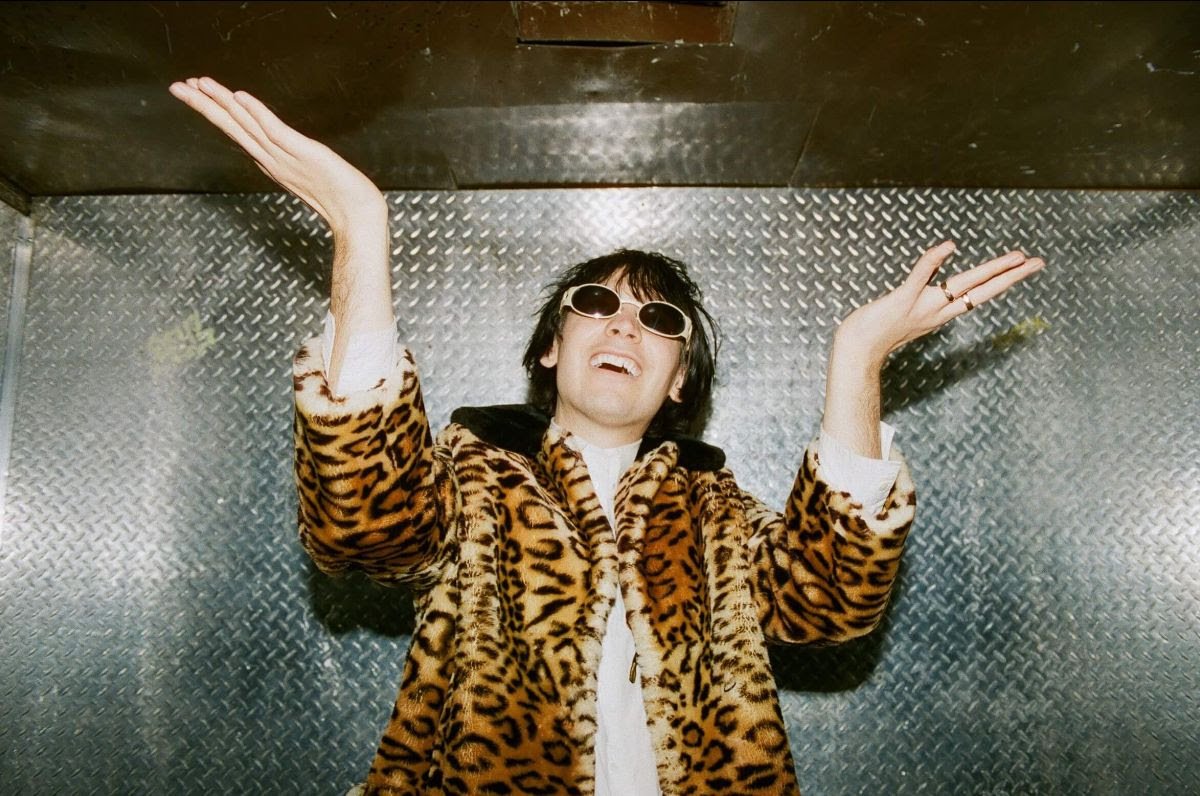
AD: Acceptance is everything! I feel most resistant to change when I'm not willing to accept it. Only in the past few months have I applied this to my own life, but what a difference it has made.

AC: What would your advice be to someone who had just moved to Montreal?

AD: Work at a cafe. Start a punk band. Be in an open relationship. 

Listen to one hand on the steering wheel the other sewing a garden below

Ada Lea

Instagram I Twitter I Facebook I Website

Malaika Astorga is the co-founder of Also Cool. She is a Mexican-Canadian visual artist, writer, and social media strategist currently based in Montreal.


Related Articles