Pearly Drops Trace the Glitches of Perfection on "The Voices Are Coming Back" (Music Website)
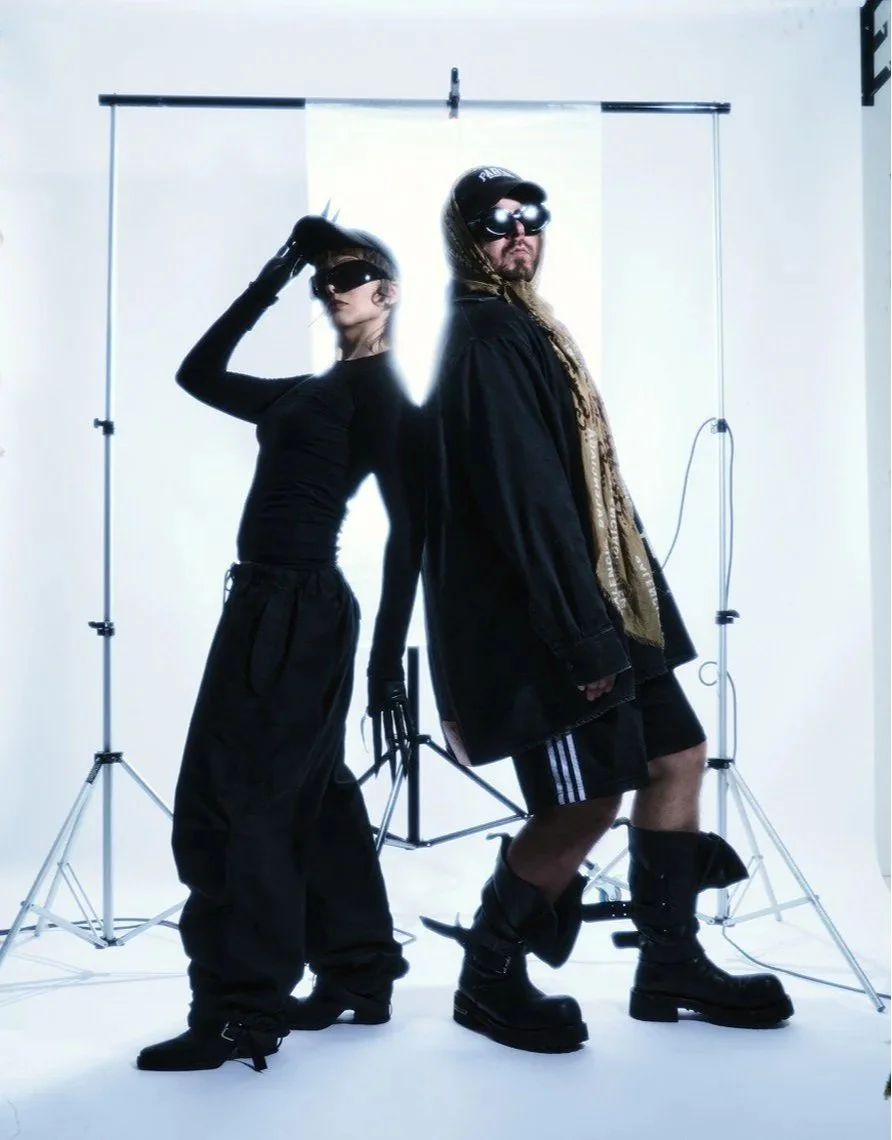
 

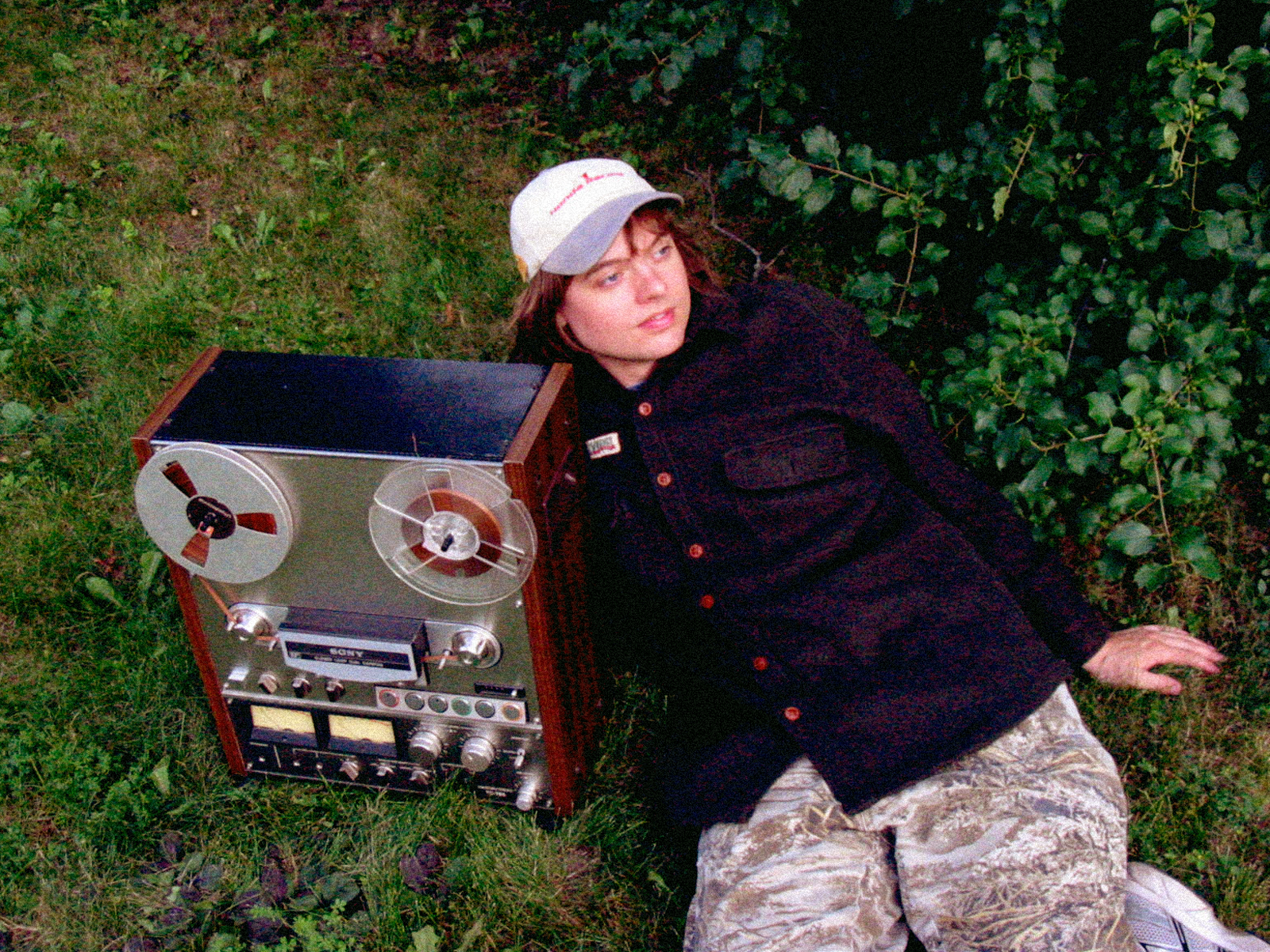
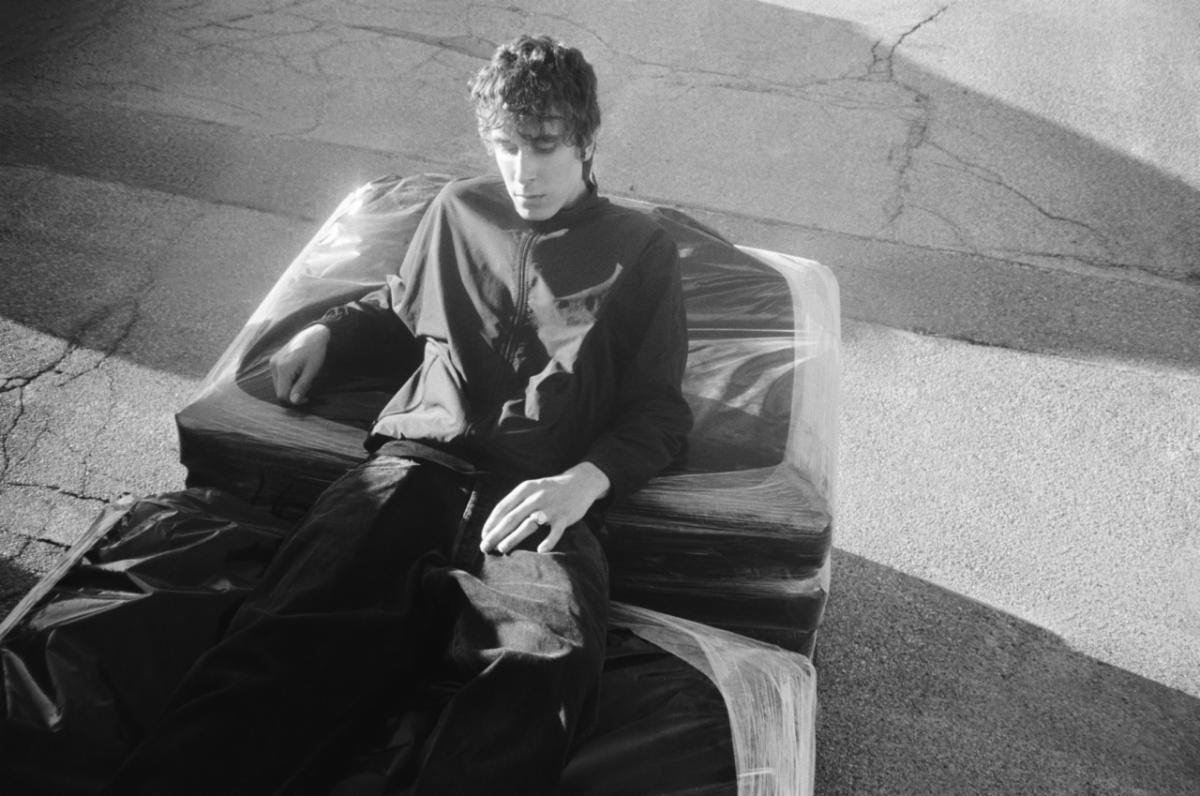
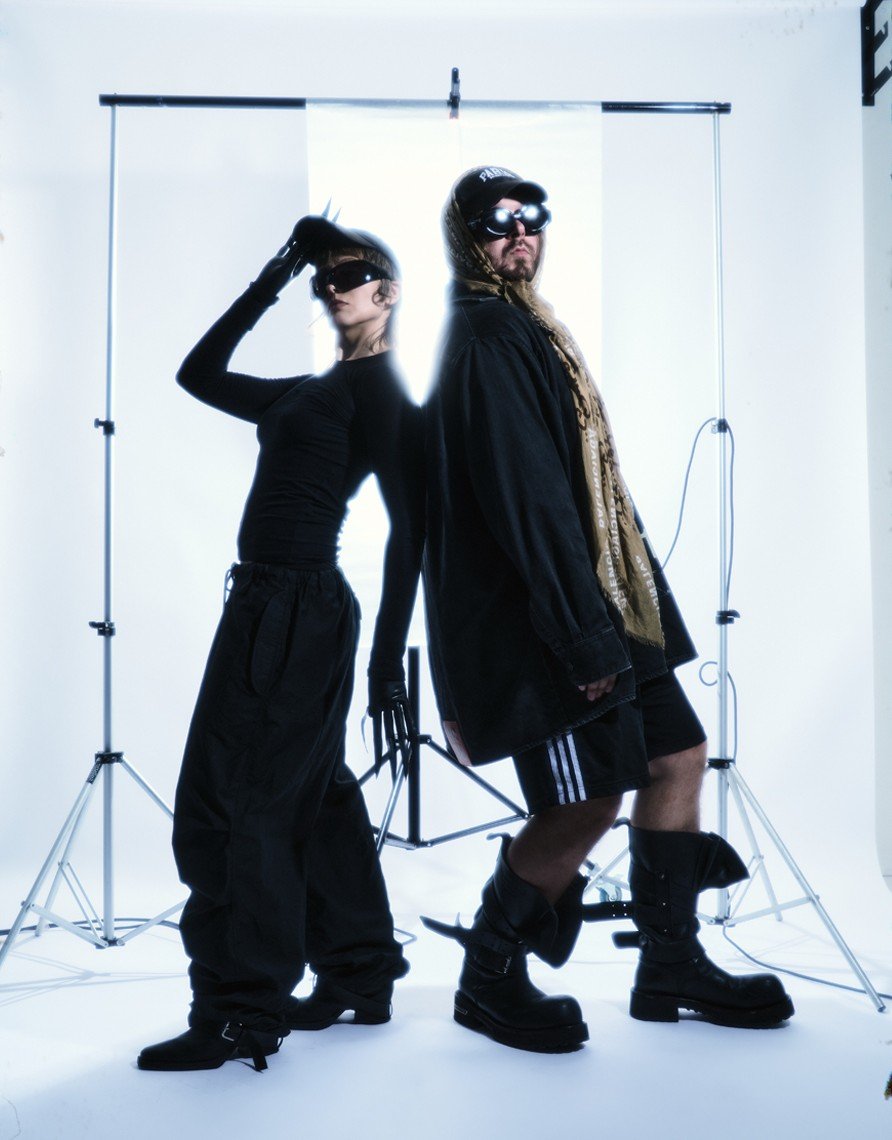
Sandra Tervonen and Juuso Malin of Pearly Drops by Morrigan Rawson

“For some people, LA can be an influencer world,” Juuso Malin notes, joining me with bandmate Sandra Tervonen over Zoom from Tervonen’s apartment in Helsinki. “A lot of yoga mats, iced lattes, palm trees, and Erewhon. There’s nothing wrong with that… but our idea of LA is probably dark.”

That darkness is the current running through The Voices Are Coming Back, Pearly Drops’ third full-length album (out now via Music Website). Here, Los Angeles isn’t glossy or benevolent; its seduction closes in on you, reflecting back the tarnishes you’d rather not look at.

Across the album’s eleven tracks, Pearly Drops build an impressionistic pop realm steeped in their delicate yet slightly macabre tradition. Tervonen’s marbled cooing swells and tenses, ruminating with an air that is equal parts anguished and curious. The songs move with the steady pulse of alternative rock, lit from within by an almost-sacred electronic glow. Described by the band as a piece of “autofiction,” The Voices Are Coming Back braids idealism with the mundane, folding the Hollywood dream into something more psychological – the narrative becomes less about a destination than an emotional mirage, its story shaped by a tormented exchange of fantasy and fear.

When I ask how the city first struck them in person, Tervonen answers with candour: “Los Angeles feels like a place – when you go there as a musician or an actor, there's this feeling of all [these] possibilities, and you can really make it big, but on the other hand, you can fail miserably. That contrast is everywhere.”

Their tone borders on mythic when they describe Los Angeles, but the curiosity is fitting when you consider the duality. While America is vast, and many people profess their own visions of reinvention, Finland exists on a different spiritual plane – its community safety, its social programs, its steadiness. There is much to love about this framework, but also much to long for: Tervonen and Malin note that, for all its charm, Finland is imbued with a sense of modesty and contentment, which, as artists, can be quietly limiting.

It is LA’s sweltering industriousness, its frantic contortion, that breeds dynamism – anxieties about connection, career, and the state of the world find it harder to lay dormant. Getting outside of their own backyard became the opposite of an escape: it revealed a different version of themselves, one that was expressive, mildly turbulent, and awash with possibilities.

Carrying this version home induced limitless inspiration, but also introspection – for the parts of the city they chose to believe in (and to obscure) each signified different pieces of what they were moving through. “I think that place can be a vessel,” Tervonen contemplates – a way of holding whatever they are too overwhelmed to articulate outright. 

Stitching together film scenes and half-remembered feelings, the duo became compelled by the idea of reinvention, but with enough distance to poke at it – for the Hollywood they encountered was nothing like the one on screen. At least, not the polished version most people imagine. If anything, their experience echoed a different cinematic truth entirely. “It really felt like we were inside Mulholland Drive,” Malin remarks – not starry-eyed, but suspended in the atmospheric oddity that the auteur so expertly cultivated.

Beneath the ambitions of the city lay a more destabilizing truth: the high hopes, the harrowing beauty standards, the burnout that breeds malaise. Pearly Drops lean into this tension by letting the fantastical edge of Los Angeles slip into actual fantasy – the siren-like spiral of “Mermaid,” the taunting undercurrent of “Ratgirl,” the moments where dreams don’t just shape the setting but rewrite it entirely. “We are really aware that this LA that we are painting in the album is both the real place—and how we felt there—but also the place that we have always imagined,” Tervonen clarifies.

Another thematic anchor that permeates The Voices Are Coming Back is a little more universal: beauty, and the instinct to disturb it. While augmented by the album’s conceptual location, preoccupations with beauty and the luxury it affords are always on Pearly Drops’ minds as an inseparable beast of the music business. The angsty “Pillow Face” and fuzzed-out “Demonlover” spell this out quite plainly, but almost every song deals with inner discontentment.

Musically, Pearly Drops have curated a strand of "smudged pop” indietronica that enlightened previous releases Call for Help and A Little Disaster. Here, on a record that fumbles around the desire to shapeshift, it would seem that philosophy is even more important. Tervonen underlines a central question: “Where is the place where I can sort of put this little glitch here or there that makes it ugly at the same time?” She is somewhat joking, but the sentiment reads as embedded in their creative process. To a band—a scene—that values grit over gloss, too much beauty could become a liability.

“It comes quite naturally for us to infuse some distortions into music,” Malin elaborates. “I feel like I have to do something.” This friction permeates both lyrics and instrumentation: the fear of collapsing under one’s desire, the connections that disintegrate as a result of, well, human nature. Their songs shimmer, but there is always a twist – the sprite-like curdle of Tervonen’s voice, the murky guitar underbrush, or the overheated synth.

Sometimes, that twist comes in the form of a vapourous wail. Such is the case for Tim Nelson of Cub Sport, who contributed vocals to “Mermaid.” For nearly half of the track, his agile plea emerges with a clean, uncanny precision. “I think [what made it to the song] is the first take,” Malin says. “It’s a really ethereal moment. Obviously, we could have done something more refined or a feature with words, but it just felt right at that moment.”

There are also the arresting voice memos of Tatiana Bruening (or illumitati) which punctuate “Shallow,” “Demonlover,” and “Cocoon & Tatiana’s Lament.” The photographer/musician dwells on a myriad of relatable issues—depression, belonging, and the artist’s peril of creative distaste—and adds a depth of intimacy to the record’s quiet unraveling.

The pair clarify that these striking additions already existed on Bruening’s phone: “They were her diary entries,” Malin recalls. “For me, it comes from the tradition in rap culture where you have the spoken word ‘skits’ on your albums. It just felt interesting to have her on the album doing something she has never done.”

Tervonen also ties Bruening’s vantage point directly to the album’s fixation on appearance: “She’s photographed some really famous people. She has another view of the same theme, and that brought some realism to the album.”

It’s worth noting that Malin and Tervonen don’t try to decode every lyric between them; part of their process is leaving space for mystery, for things that make intuitive sense. Evidently, these remnants from Nelson and Bruening exist less like features and more like echoes of Pearly Drops’ emotional frequency – the muted torment, the subtle pull.

The Voices Are Coming Back will be followed by Pearly Drops’ first headlining tour across North America in 2026. The duo are particularly looking forward to exploring the live architecture of these songs, seeing as how they have only been performed once in London. Tervonen describes the pull of connecting with the audience: “The songs I like [the best] are the most simple ones. I love when I go into a trance, like a shaman. It's easier [for songs where] the lyrics are quite repetitive and I see people feeling it. As an introvert, it's quite hard to go into that place where you can be in front of many people on a pedestal and be comfortable doing it.”

Malin paints a celebratory, almost communal picture of what the tour will entail: “This new album—and the previous albums—translate in a different way because [the songs] are not as ‘closed off’ as on the album. They are more…I wouldn’t say listening parties…but they are parties where we all experience the music together. It's more interactive.” He likens the energy to that of Snow Strippers – charmingly frenetic, an exercise of discovery. 

As Pearly Drops continue to sculpt the pensive collection that is The Voices Are Coming Back, the album feels less like a closed chapter than the opening of something stranger. Even now, they hint at music that didn’t make the cut – thoughts that fester like unfinished dreams. “There's definitely some tracks that were left off, or at least quite a lot of lyrics and ideas,” Malin hints. “I feel tied to this album still.” 

With another release quietly forming and an era of live exploration ahead, The Voices Are Coming Back doesn’t fade – it lingers, unsettling and luminous. “We’ve realized that we just want to enjoy the show ourselves,” Tervonen smiles. “Life is too short.”


The Voices Are Coming Back

out now via Music Website
1. Delusional On Sunset Blvd

2. Ratgirl

3. Mermaid (feat. Cub Sport)

4. Shallow

5. End Credits

6. Demonlover

7. Deep-fried

8. Pillow Face

9. Cocoon & Tatiana's Lament

10. Silver Lake Mystery Forest


Written and produced by Pearly Drops

Mixed by Juuso Malin at Studio Pearly Drops

Mastered by Joe LaPorta at Sterling Sound

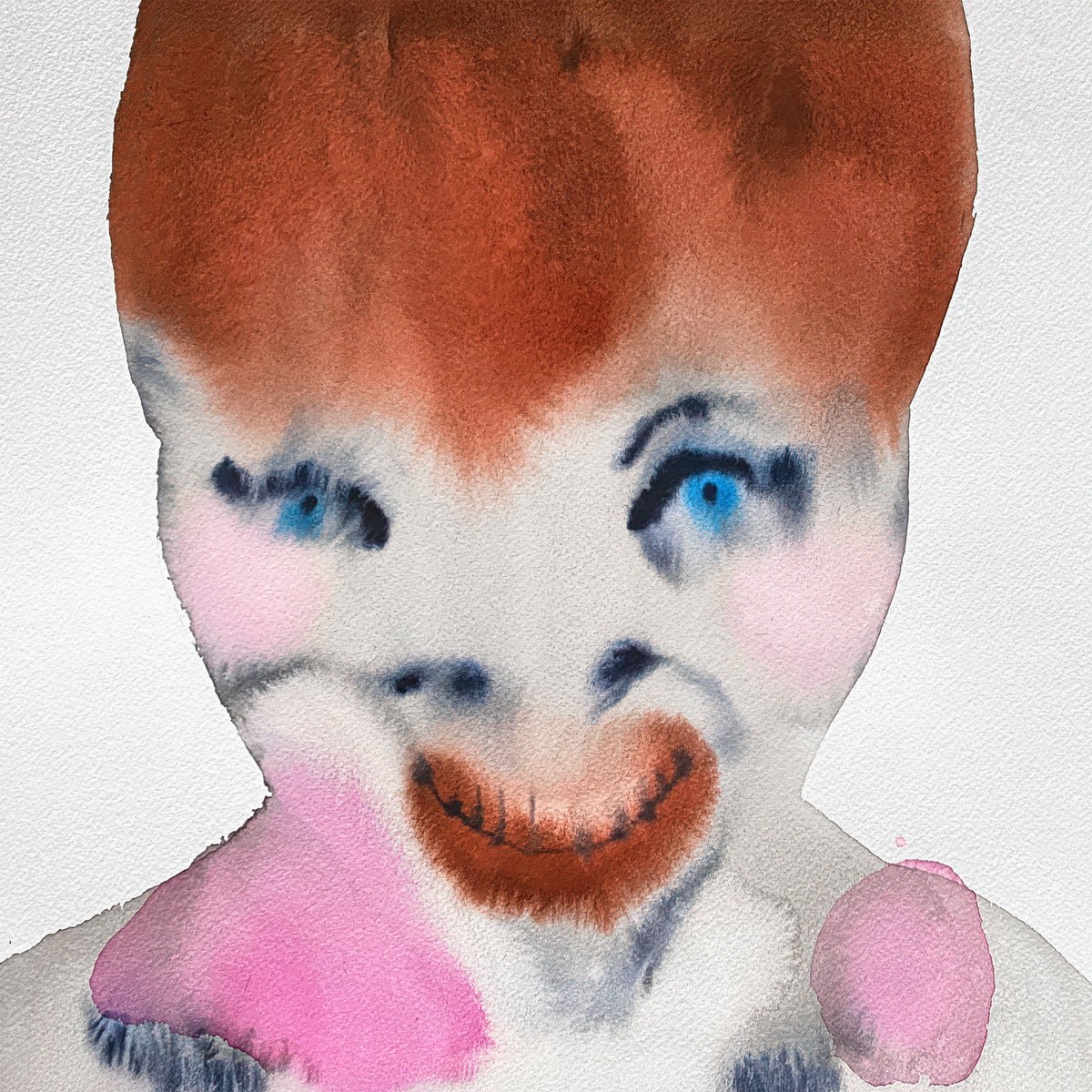
Artwork(s) by Sandra Tervonen at Studio Pearly Drops


Pearly Drops

Instagram | Bandcamp | Spotify

Rebecca Judd is the Editorial & Operations Lead of Also Cool Mag. She is currently based in Ottawa.


Related Articles
 

Helsinki's Treemer Serves Up Growling Post-Punk with "Paper Cuts / Eyewitness" (Soft Monsters)


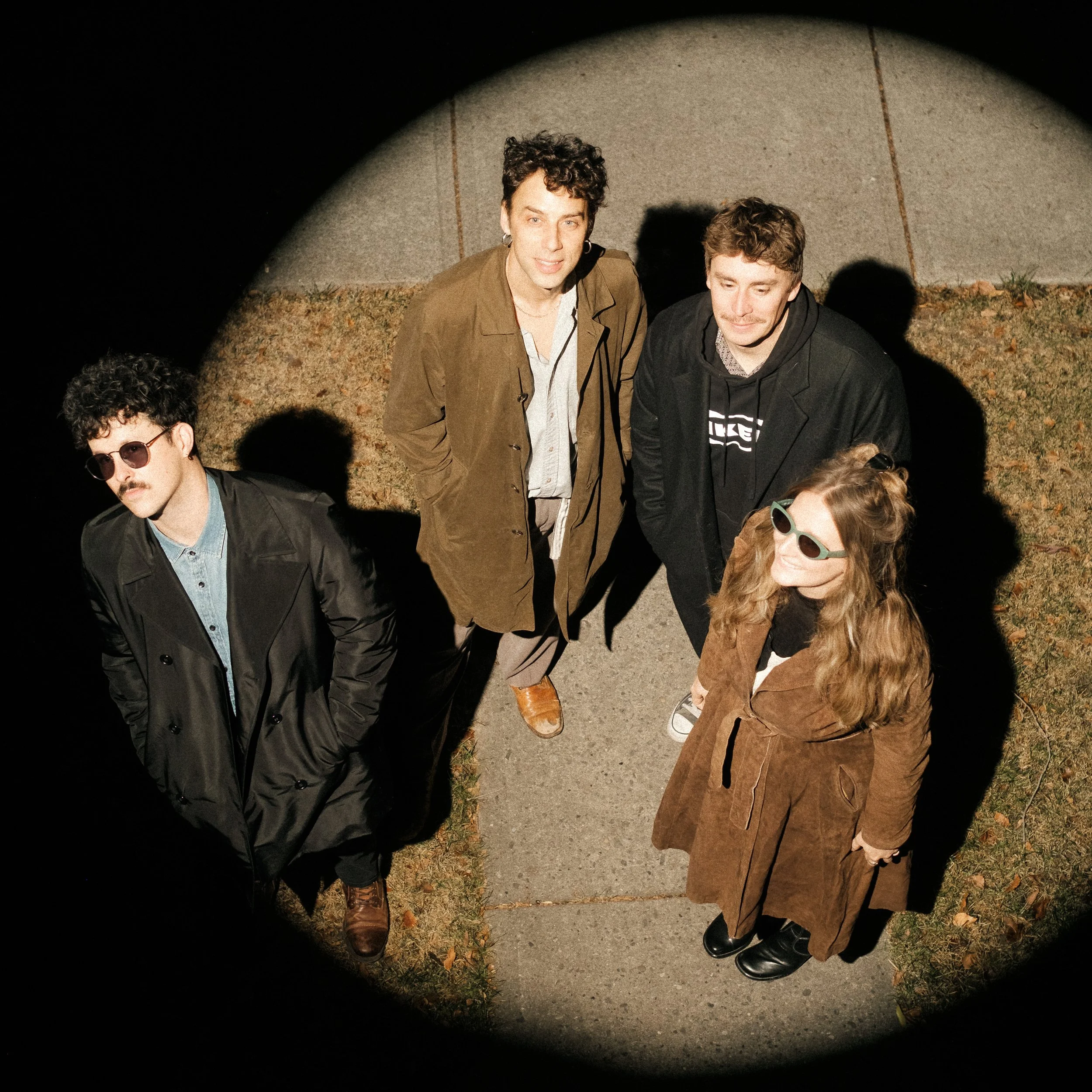
Sam Shingler, Joakim Schonert, Marko Haikonen, Mia Keurulainen, and Tommi Lehtonen of Treemer. Photo courtesy of the band

Forged across ever-evolving decades and soundscapes, the work of Helsinki-based indie quintet Treemer has come to a snarling head. Their latest double A-side, “Paper Cuts / Eyewitness”, is now out via Soft Monster. Punctuated by sinister guitars and boisterous percussion, these expressive garage-rock tracks showcase two perspectives of conflict: that of the wounded, rising from abuse with something to say, and that of the ordinary human uncovering darkness within themself.

Following the release of “Paper Cuts / Eyewitness”, we caught up with Treemer’s Mia Keurulainen to peel back the histories that have constructed this latest project: the band’s plethora of sonic references, their creative methods and approaches, and the lasting friendships that have facilitated their vulnerability.

Rebecca L. Judd for Also Cool Mag: Hello there Treemer, thank you for speaking with Also Cool! I'm curious to know more about the formation of the group, and how it's evolved since Chickenpotpie and The Pansies. Tell us more about your origin story, and the ebbs and flows along the way.

Mia Keurulainen for Treemer: Thank you, Also Cool! It all began in the early 1990s with four small-town-guys (Marko, Tommi, Sam and Joakim). They found mutual interest in mostly Brit-based pop and rock music, digging such bands as The Cure, Ride, Slowdive and early U2. They put up a band of their own and called it Chickenpotpie (a word picked up from a Thrasher Magazine comic strip, BUT also a dish served at Twin Peaks’ Double R Diner – this TV series has had a major impact on our identities and on our music, by the way.)

Chickenpotpie fell apart, but the music didn’t stop there. I joined in and brought along my own influences. These were a bit different from what the guys thought of as acceptable, such as Depeche Mode and The The. Soon after, The Pansies (featuring me, Sam, Tommi and Marko) was formed. Quite accidentally, we happened to hit the Britpop wave as it rolled over the continents, with bands like Blur and Suede on the front cover. We got a record deal, made four albums and between 1995–2000 toured Finland, Northern Europe and even Japan.

To nearly make it – I think that was what really wore The Pansies off. On the other hand, band members started to marry and have children. It was only natural to let that phase go, in mutual understanding. And still, the music continued to flow. Sam, Joakim and Tommi started Montevideo and, in my interpretation, moved from an indie sound to take on a more Coldplay-kind of approach. I made a solo album under the artist name Mia Darling in 2007, paying homage to my early female singer-songwriter idols such as Suzanne Vega, Juliana Hatfield and Polly Jean Harvey.

In 2019, Marko came out of the closet with some new songs he’d been working on. It was an honour, and the timing was perfect for me to start composing vocal melodies and lyrics to his songs. It didn’t take us long to ask our dear old friends to join us, and so Treemer was born. What took us long, however, was to come up with a name for the band that suited everyone (laughs). The first song Treemer released was “The Great Void”, followed by the Meeting EP. So far, we’ve released a total of 12 songs.

Also Cool: Your music pulls from many directions, with these songs lying somewhere on the fringes of shoegaze and hard rock. Which musical influences have inspired the band, particularly on this release? Did your time apart have any impact on the formation of Treemer's present sound?

Treemer: Yeah, the roots grow deep. From Bowie, Beatles, Neil Young and Pink Floyd to this day.

It’s funny that you mentioned hard rock. It seems that in Finland, every other kid goes through that heavy metal / hard rock period in early puberty. I, for example, was a huge Def Leppard fan at 13. Then there was the hip-hop phase: Salt’n’Pepa, Public Enemy and Run-DMC. At the same time, the likes of Midnight Oil, Sinéad O’Connor and Tracy Chapman also awoke me to socially significant matters through their music. Tommi, Joakim and Sam even had a hip-hop trio at some point… what was is called, Groovy Sound Crew?

As a child, most of us took classical music lessons. I played the piano for 6 years, so surely the music of, for example, Sibelius, Satie and Khachaturian play at least an unconscious role in my personal take on making music.

The 1990s was a melting pot of sound and genres, and we welcomed them all! It seems to me, one wasn’t perhaps as dedicated to a certain musical style as young people today are? Or maybe this is just me getting old. There was grunge, obviously. Then there was shoegaze, trip-hop, Britpop, dub, electro, R&B…echoes from the 60s psychedelia and soul could be heard in the sounds of, say, Primal Scream, The Charlatans and Stereolab. The USA hit back with the cool of Beck and Sonic Youth, the inwards-turned art school pop of R.E.M. and Radiohead, and the NY garage-pop of The Strokes. Meanwhile in Scandinavia, an Icelandic woman called Björk was doing her own thing, Denmark gave us a progressive gem called MEW, Sweden had a new sweetheart with The Cardigans and drama in the form of Kent, and Norway an endless list of talented, folk-ish (and dare I say nerdy!) singer-songwriters coming up.

Treemer’s latest release, “Paper Cuts / Eyewitness” does definitely recline on the garage-rock end of our influence scale. Pixies, Hüsker Dü and even Pavement come to mind. I personally am a fan of Mac DeMarco and, somehow, some of the more recent Treemer material makes me feel connected to his music. A good kind of couldn’t-care-less-attitude is present.

AC: On one-half of your double A-side is "Paper Cuts", a distorted post-punk rebellion against abuse and mistreatment. Can you unpack the inner workings of this evocative single?

Treemer: Evocative – that’s nice, thank you! When I first heard Marko’s demo (in early 2020) I immediately thought it very different from the earlier Treemer stuff. It had speed and rage. At that moment, I was personally going through a rough patch in life, so the lyrics turned out to be more straight-forward and personal than usual.

The song took many forms (fast/slow, minimal/profuse, rough/polished) before finding its final shape during the recording sessions last summer. I love the crazy instrumental in-between part, very punk-art-garage-what-have-you-pop. It was just improvised on the spot, and for the first time ever I got to play my mini-saxophone on the record!

AC: "Eyewitness" takes a more aggressive stance, cautioning an ill-fated spectator against consequences. Coupled with this sinister song is an intriguing video that you produced, where viewers observe the witness' frightened journey and—ironically—assume a similar role. From your perspective, what is the story being told here? Who is this eyewitness, and what is their fate?

Treemer: Marko’s Eyewitness demo on the other hand sounded just, I don’t know, secretive somehow. The word “eyewitness” started to ring in my head, and I was thinking of old Hitchcock movies and other classical thriller scenes where someone (usually a child) is peeking through a key hole and seeing something terrible… Judicial terms such as “prosecutor” and “witness” came to mind, and I started to build up a story around those words without a distinct plot or design. It was more about the atmosphere. Joakim’s bass lines play a significant role here – a growling synth-bass line of the A-part turns into a progressive passage come along the verse.

The idea for the music video came to me in a dream. Originally, in the dream, there was an androgynous skateboarder in brightly-coloured hair and clothes rolling around the streets of what looked like Venice Beach in LA. They were being chased by us Treemer members, lurking behind corners wearing black sunglasses. Visually and stylistically, the dream reminded me of the Smashing Pumpkins’ “1979” music video or Larry Clark’s Kids.

Instead of sunny LA, the music video shooting took place in Helsinki on a windy, rainy August day. I asked my friend, the young and talented dancer Kaisla, to star in the video and I’m happy she agreed. Together, we immediately understood that the “eyewitness” is escaping nothing but something in themself. To witness something unattractive or gloomy in ourselves is hardly light or fun, so it can easily become a fight-or-flight situation. The video has a happy ending though, as the eyewitness makes peace.

AC: Despite the dark connotations to "Paper Cuts / Eyewitness", they were recorded over a session you folks describe as "summer camp", complete with camaraderie and laughter. I'm interested in the sense of liberation that you found in writing these particular songs during this breezy experience. What does it mean for you all to use your music as a form of empowerment?

Treemer: At least one of us is usually tired or on a bad mood when we arrive at the rehearsal room, but I don’t think anyone has ever left it feeling that way!

Empowerment, freedom to do whatever, self-expression – definitely vital elements to keep the Treemer machine going. And I point out that it is the doing and being there together, in the moment, that matters. Whatever happens next—recordings, releases, gigs—is a bonus. This is not to say that we weren’t disappointed or frustrated when, for example, our gigs in Finland and Germany got cancelled in 2020 due to COVID. For me, Treemer represents a creative and safe environment to test and work on my own artistic ideas whilst being inspired and wowed by those of the others.

Also Cool: Thanks again for your time, Mia! Let's end this on a high: what are your biggest dreams for 2022? What's next up for the band?

Treemer: Thank you! Hopefully we get to play some gigs! There are still 4 songs “under construction” from those last summer recording sessions. So there will be at least an EP at some point. Maybe even a vinyl version, who knows. We are also working on some completely new material. The main thing is to stay healthy and have fun though.

My personal dream is to play a gig at an open-air summer festival somewhere (probably not happening in 2022 though). I can picture it – it’s late in the evening, bright lights split the sky, there’s love and confetti in the air.

Stream “Paper Cuts / Eyewitness” below!


Treemer

Website | Instagram | Facebook

Spotify | Apple Music | Twitter | YouTube

Rebecca Judd is the features editor of Also Cool Mag.


Related Articles