I Got Broken Up With So You Don’t Have To: Reflections on Noise, Heartbreak, and the Unmanageable Self
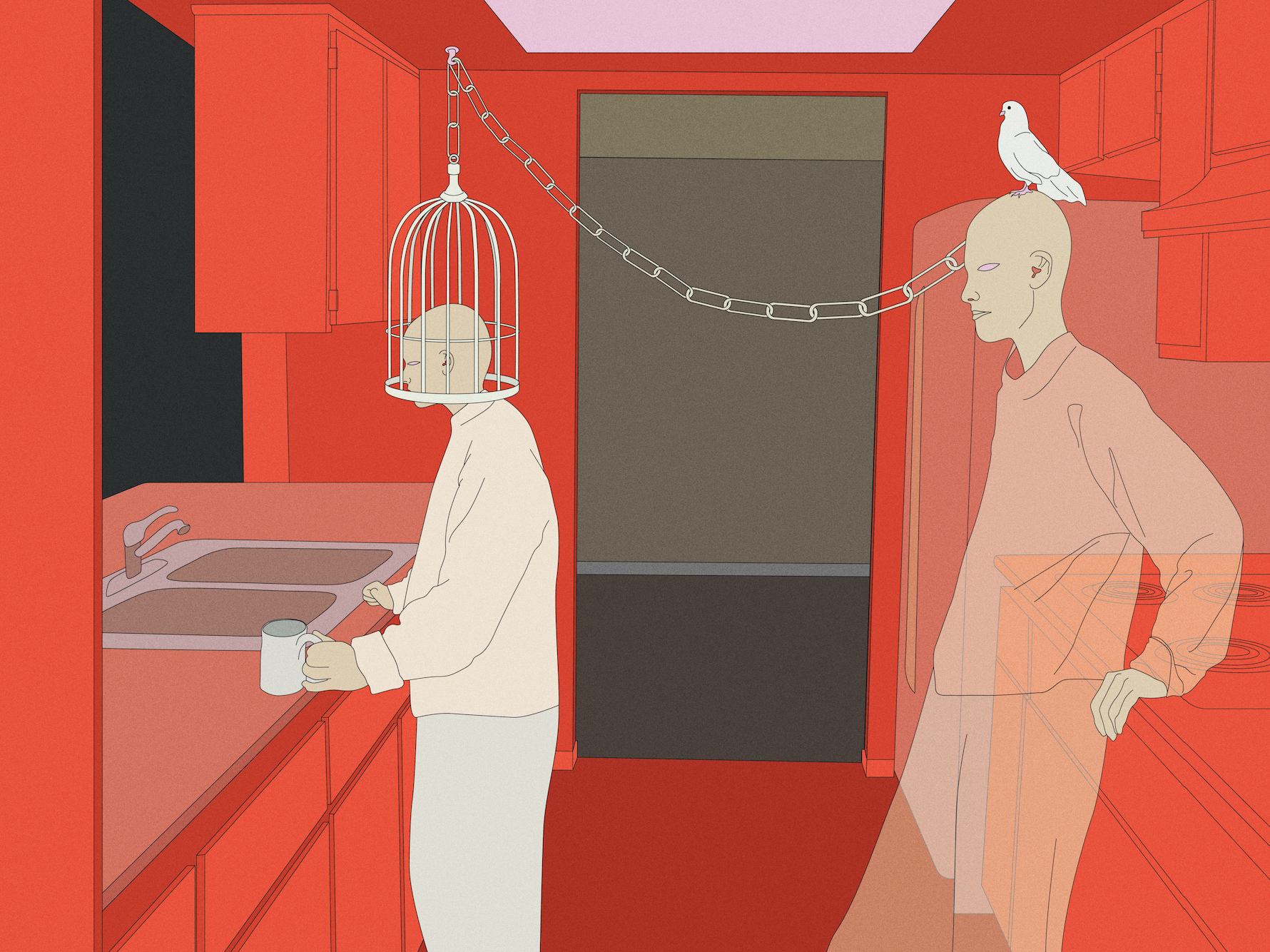
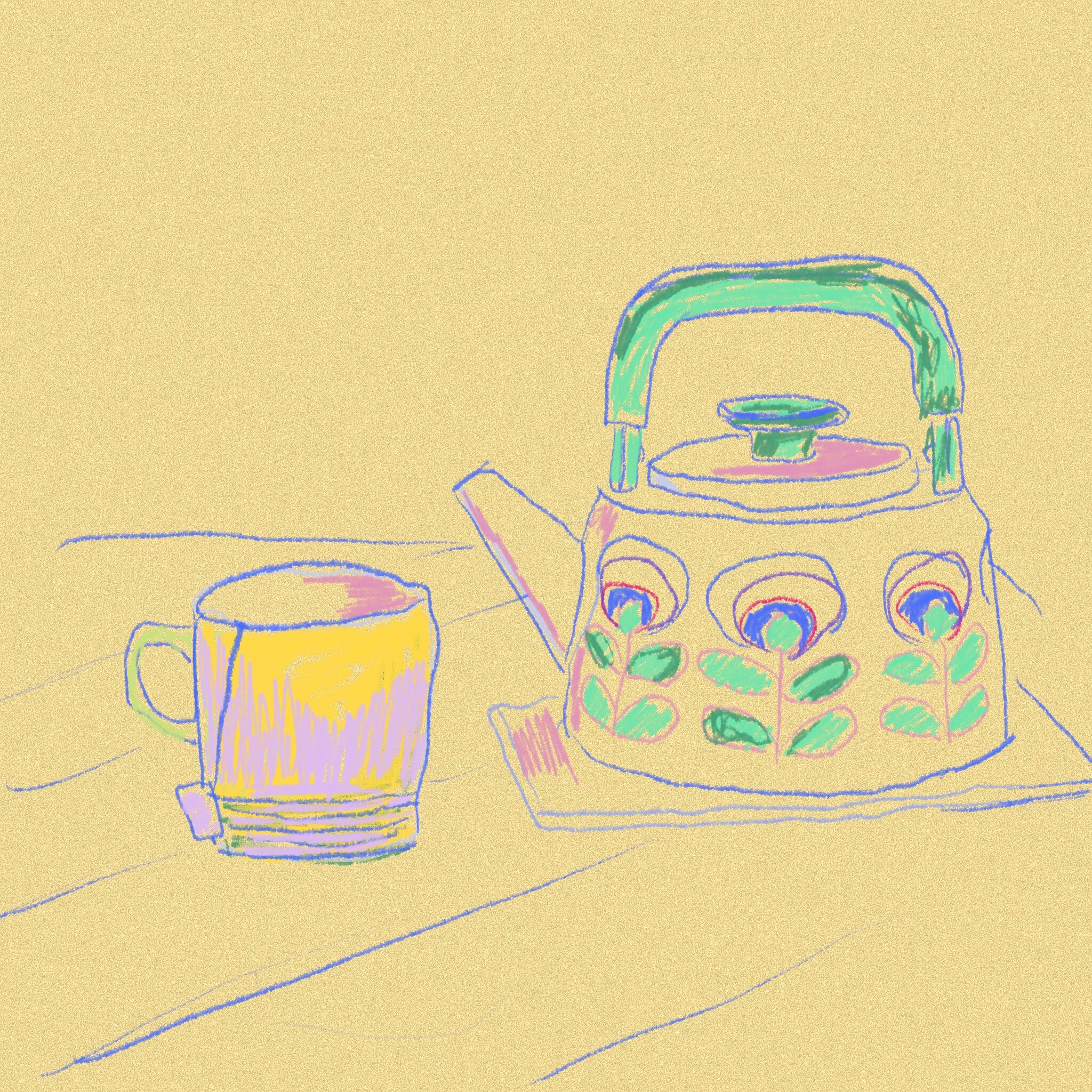
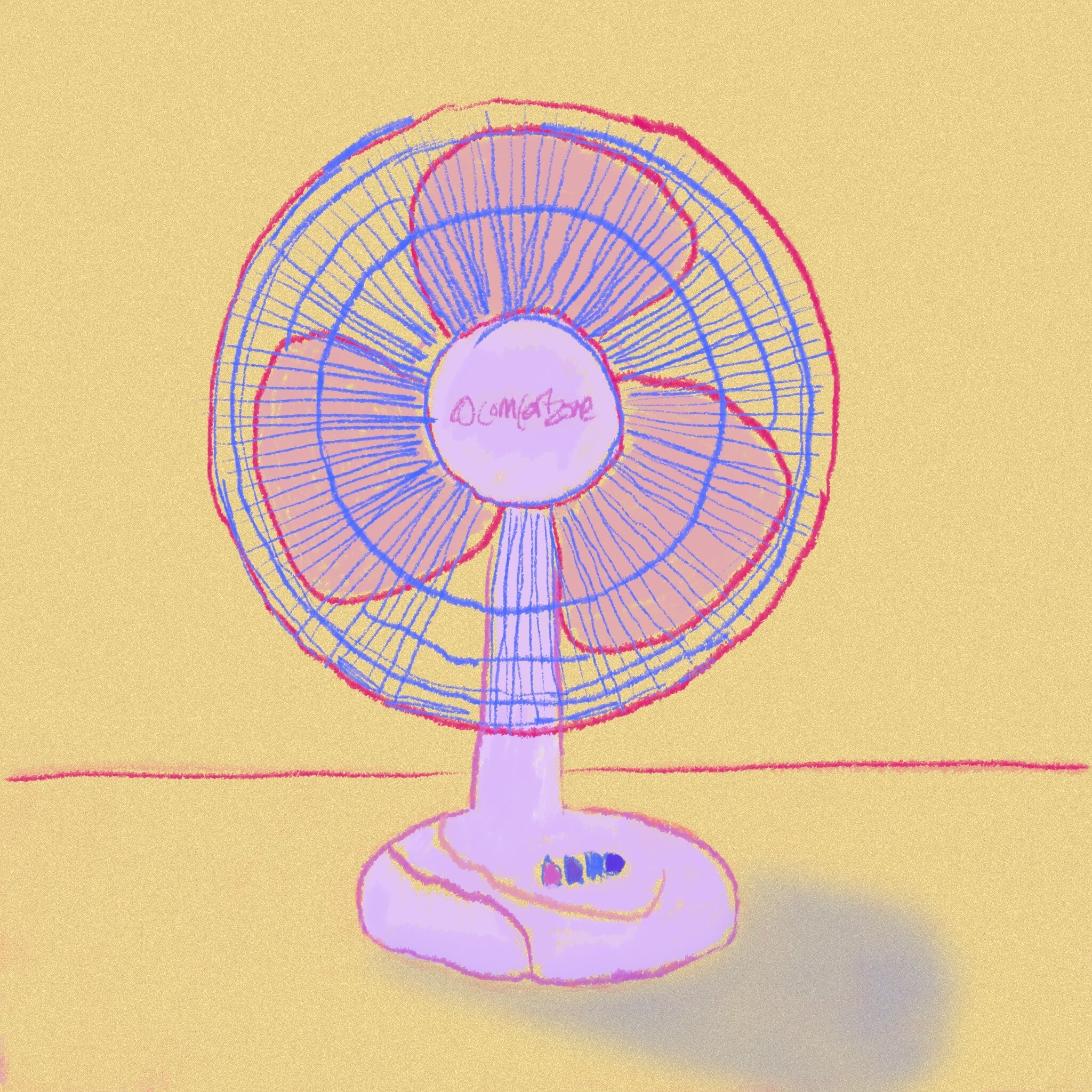
Illustration by Eli Cesarone
Note: This essay has been condensed for the web.
The hum—the sonic note emitted from your phone as texts arrive in an endless stream —is loudest when a relationship begins. As it dissolves, you are left with the phantom feeling of a buzz in your back pocket: an imagined chime of a notification coming through. Where there was once a symphony of communication, there are now noiseless pictographs, static conversations in which you can relive your performance of lust, love, and heartbreak.
It is this noiselessness that reshaped my relationship with technology and exposed me to my unmanageable self. The “irrational, unmanageable neoliberal self,” as described by Ilana Gershon, emerges as a byproduct of our technological ecosystem. This self is revealed through the affordances of our phones: the ability to communicate impulsively and the reliance on the hum as others act just as impulsively.
There is no end to the humming distraction. So when a person who once provided an endless stream of communication leaves your life, you must get creative. This is a reflection on breakups for all the text givers and receivers of the world. Drawing from my life post-breakup and from scholarship on mediated communication, I ask: what becomes of the unmanageable self when there is no longer the hum?
Part 1: When the Hum Is Loud
I rang in 2025 with a mini bottle of Prosecco in one hand and my phone in the other, texting a guy I had been seeing in Ottawa. We had gone on three dates before I left for Toronto over the holidays. Separated for just over a week, we texted incessantly. Apparently, we texted enough to justify entering a relationship five days after I returned.
At the same time, I was starting the final semester of my undergraduate degree and taking a class called The Networked Self. We were reading A Networked Self and Love, edited by Zizi Papacharissi, and I was thrilled to discuss love now that I had so much to say about it.
When I began writing this piece, I wanted to examine how one manages communication with an ex as a new partner enters one’s technological environment. While feeling brand new in my relationship and semester, I was still entangled in a complicated friendship with an on-again, off-again ex of two years. I struggled to balance the stream of texts from my new boyfriend and my former partner. It seems clear to me now—as it likely did to everyone else—that no such balance can be struck. The fantasy of balance is part of the problem. I now have two exes, and a phone bill I pay not to receive texts from either of them, to prove it.
At the time, however, I was well intentioned. Two weeks into our relationship (and roughly one week before it would end), texts asserting devotion and detailing our daily minutiae furiously came through in a beautiful hum. Through texting, we had constant access to each other. We learned how the other moved through the world in real time. It is both the mundanity and the frequency of these exchanges that create intimacy so quickly. Love mediated through technology is not only grand declarations but also a steady stream of micro-contacts that sustain connection in the absence of physical presence.
Sometimes it is the lack of physical presence that intensifies intimacy. One evening in January, I was on a couch watching reality TV with closest friends—in a state I would never have let my new beau see—when a text came through. In the moment between vibration, reading, and comprehension, I was transported from my physical reality into a state of fear and bliss: he wants me to meet his father. I have the text to prove it. That must mean he really likes me.
Part 2: When the Hum Dries Up
A few days later, I met his father. It went well, and my phone buzzed as usual. But here is the double-edged sword of the hum: the constant, enticing buzz of communication can also provide relationship-altering information at any time and place.
One morning, a text came in from my boyfriend saying he felt anxious. It arrived the day after I had my ex over to watch a movie (which, upon reflection, is a decision that is difficult to defend in retrospect). That hum felt different. With each vibration came a message: he knew he shouldn’t care, but he really does.
Less than a week later, our relationship ended. Ten texts and two face-to-face conversations later. The hum dried up.
Part 3: Creatively Manufacturing the Hum
The hum is loudest when a relationship begins. Because my relationship was so short, all I experienced was its beginning. I had grown accustomed to a steady vibration that was abruptly taken away, and the silence was deafening.
The initial hurt of a sudden breakup can distract you from your new quiet reality. I’ve learned from times of great sorrow comes higher screen time. I coped through hours of scrolling Reels and watching zany sitcoms. But when daily life resumes and your body is still from the lack of technological hum, there are ways you can manufacture the hum to fill the void!
One: Revisit Old Sources of Hum
Those who you cast aside when you were deep in your relationship can be a reliable source of hum. This is why it is wise never to burn bridges with your “reply guys.” They provide attention ambiguously and casually, without accountability. In returning to the familiar, you soothe your bruised neoliberal self with predictable reward, without exposing the more bruised, insecure parts of yourself. You are guaranteed a fill for the attention you’ve been craving.
Two: Redownload Hinge
Redownloading a dating app is an act of creating hum for hums sake. Here, you access the sweet escapism usually reserved for activities like drinking. You turn to Hinge, or the dating app of your choice, to control your self-presentation when you can’t control your feelings. If you present well enough, you will experience the stream of matches affirming that you can still manage the self.
Three: Take It to the Story
When you inevitably delete the app after a week because starting over feels nauseating, you realize the hum you crave is from someone specific. So you post. A selfie. You out with friends. The project you’re working on. Each time you see that he has viewed your story, you feel the hum. You are vindicated: he sees you at your best. On your birthday, three weeks post-breakup, you post a photo of drugstore candles reading “23” atop a cake your best friend made. You spend that birthday waiting for the hum that never comes.


Part 4: Reflections of a Hum-Less Girl: Coming to Terms with the Unmanageable Self
In the weeks after my breakup, I altered several online signifiers of my relationship status. I removed Instagram posts. I unfollowed (and then followed again). Yet I could not bring myself to delete our texts. I reread conversations, searching for signs of the fracture. The texts remained static, untouched by the transformation of our relationship.
I stewed over our conversations for hours reliving my expressions of lust, love and heartbreak. These expressions of affection or hurt occurred in opposition to what Gershon describes as the idealized neoliberal self. The self that is always manageable and always able to be improved. The affordances of texting provide perfect fodder for anxiety, allowing you to act before you think. This version of self has a boundless lifespan. It thrives on the archive of conversations, with past versions of yourself frozen, preserved and available for endless self-scrutiny.
When attention disappears, the idealized self is believed to be lost. Breakups expose what neoliberal selfhood tries to hide: that you are not, in fact, fully manageable. You are contradictory. You are needy. You are slow. You are attached. It has now been a year since that breakup, and I have experienced many states of hum. It would be misleading to say I have ever been fully hum-less. I can always cultivate new technological distractions. I have abandoned some of the worst media habits I had in those weeks, only to recreate them in new relationships.
Things move quickly when you have access to technology that both enables and hooks constant communication. Just as quickly as things grow, they can break. It is easy to blame yourself. To cringe at the sappiness. To judge your cravings.
This is the neoliberal self at work: scrutinizing you for your inefficiency in cutting ties. The ability to delete someone into static oblivion should make you feel better at being heartbroken. There is no space for feelings in technological efficiency.
In the pursuit of an authentic self, one that does not fit neatly into the marketplace, we must move more slowly. I regret knowing about my ex’s most recent breakup before he told me. I regret how much happened in such a short time. I regret the moments I broke down and texted him. I regret his lackluster responses. It is all deeply embarrassing. However, regret produces the same outcome as efficiency; shame for failing to be your most idealized self.
What I miss most about the hum of my ex’s texts is not the texts themselves. It is the knowledge that he was once in my life. That can’t be replicated through any form of mediation. It is nice to have a partner. It is nice to have someone to share the nonsense with. Even the nonsense matters.
So, I will leave you with a plea: embrace moving slowly. Revel in silence. These are both coping strategies and refusals. They are ways of stepping outside the demand to always be available, always responsive, always manageable. These are the only ways you can finally break up with the hum.
Natalie Hall
Natalie Hall is a young writer and sometimes radio host living in Montreal. She is currently completing her Master’s in Media Studies at Concordia University. Her research interests include archives, infrastructure, materiality and machine intimacies.
Illustration by Eli Cesarone
Eli Cesarone is an artist based out of Ottawa. His primary mediums are digital, gauche, and coloured pencil. He also loves his two cats, Mac and Pepper.
Related Articles