Dutch Fashion Label Elzinga Talks Growing Up in the DIY Music Scene & Feminist Fashion Inspiration & More
Via Elzinga
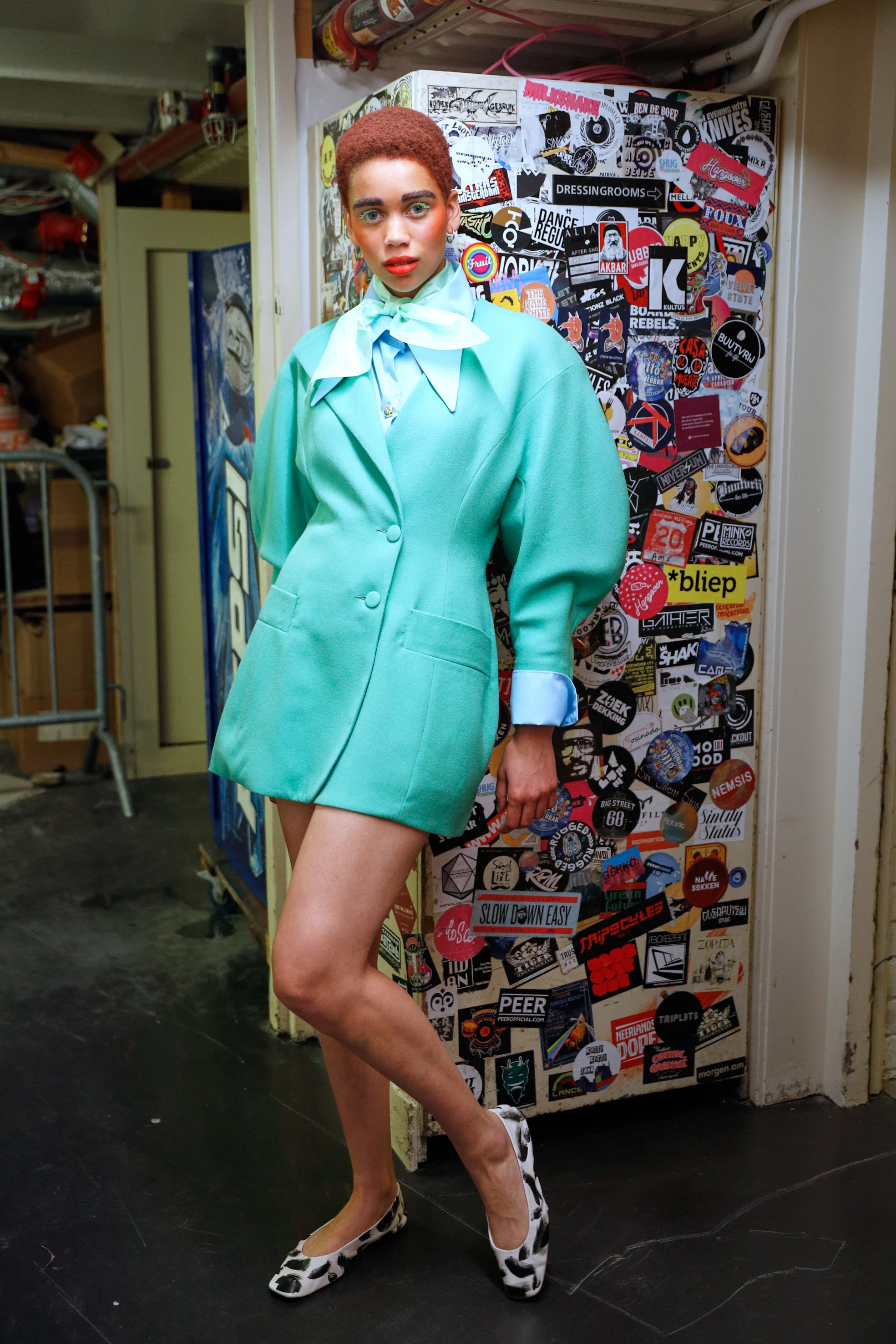
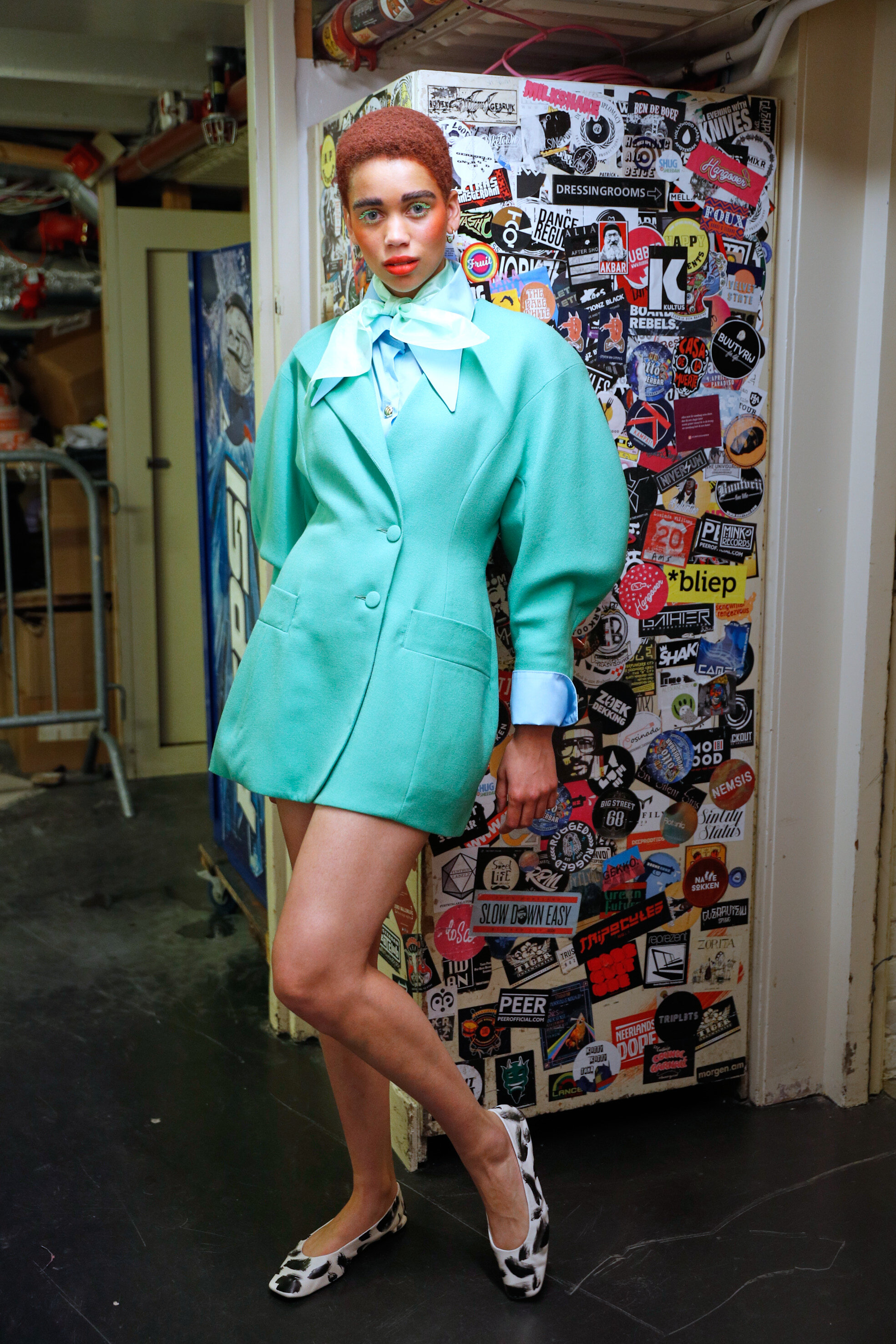
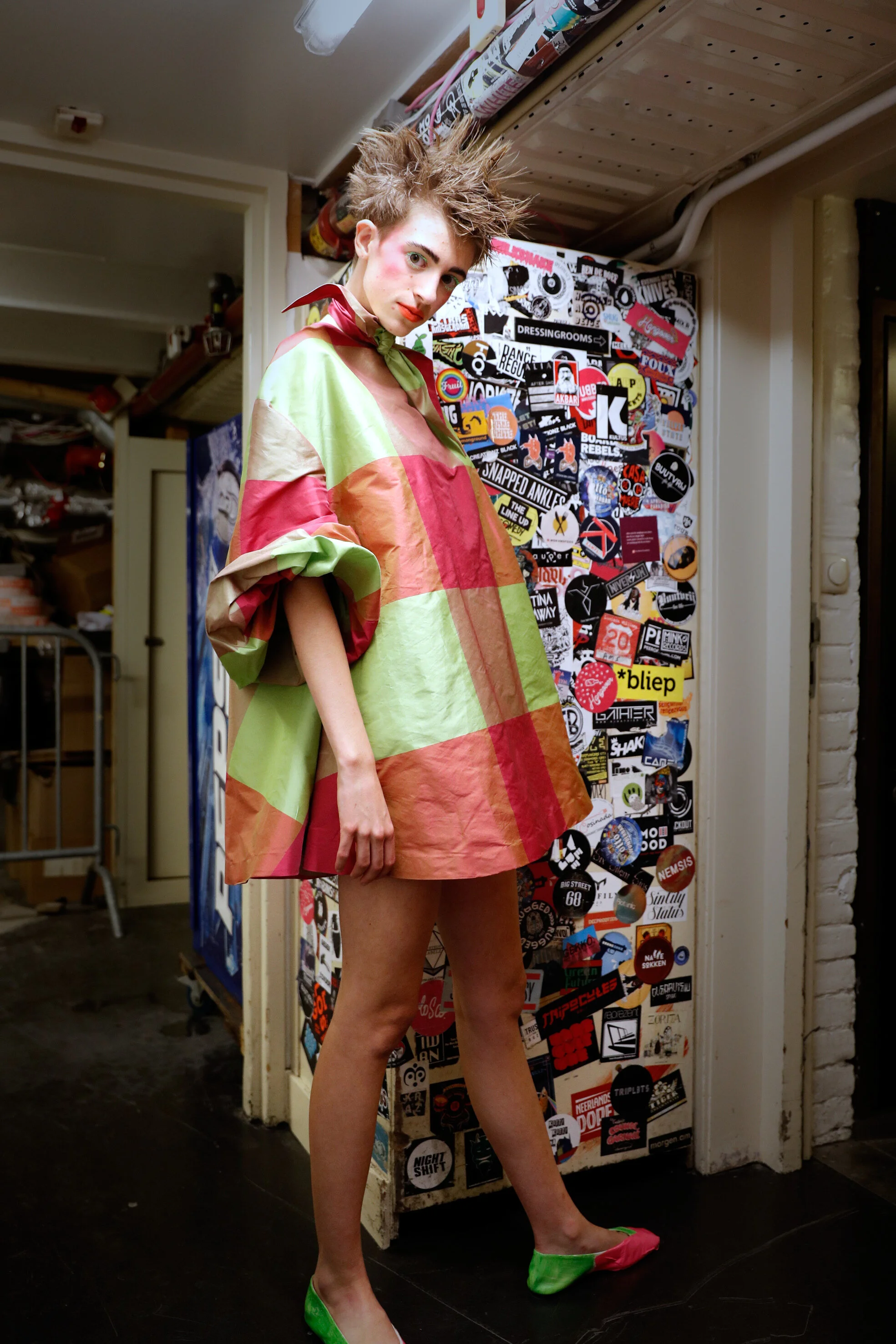
Elzinga is an up-and-coming Dutch fashion label that recently took over Paradiso during Amsterdam Fashion Week. They debuted their latest collection on the all-girl punk band The Klittens, catching the attention of Forbes and many others. The collection speaks to and honours the nightlife scene while simultaneously reflecting the "silence" with this collection's simpler shapes.
We spoke to Lieselot Elzinga, Co-Founder & Creative Director of Elzinga, to get to know more about the brand.
Via Elzinga
Malaika for Also Cool: Tells us a bit about Elzinga. How did it start and how has it evolved over time?
Lieselot Elzinga: We started the brand Elzinga together back in 2018. Miro and I had just graduated from the Rietveld Academie in Amsterdam. Following the great response to our graduation collection, we decided to start a brand together. We got in touch with Parrot Agency, a design sales agency based in Amsterdam. They coached us through translating our grad collection to a more sellable product with the same rock-’n-roll energy and spark.
Now after releasing a few collections on MatchesFashion I feel like we have learned to work and reach our clientele. Our designs are definitely influenced by our experiences with our buyers and our clients.
Via Elzinga
Also Cool: What's the fashion and music scene like where Elzinga is based? How has that affected the label creatively?
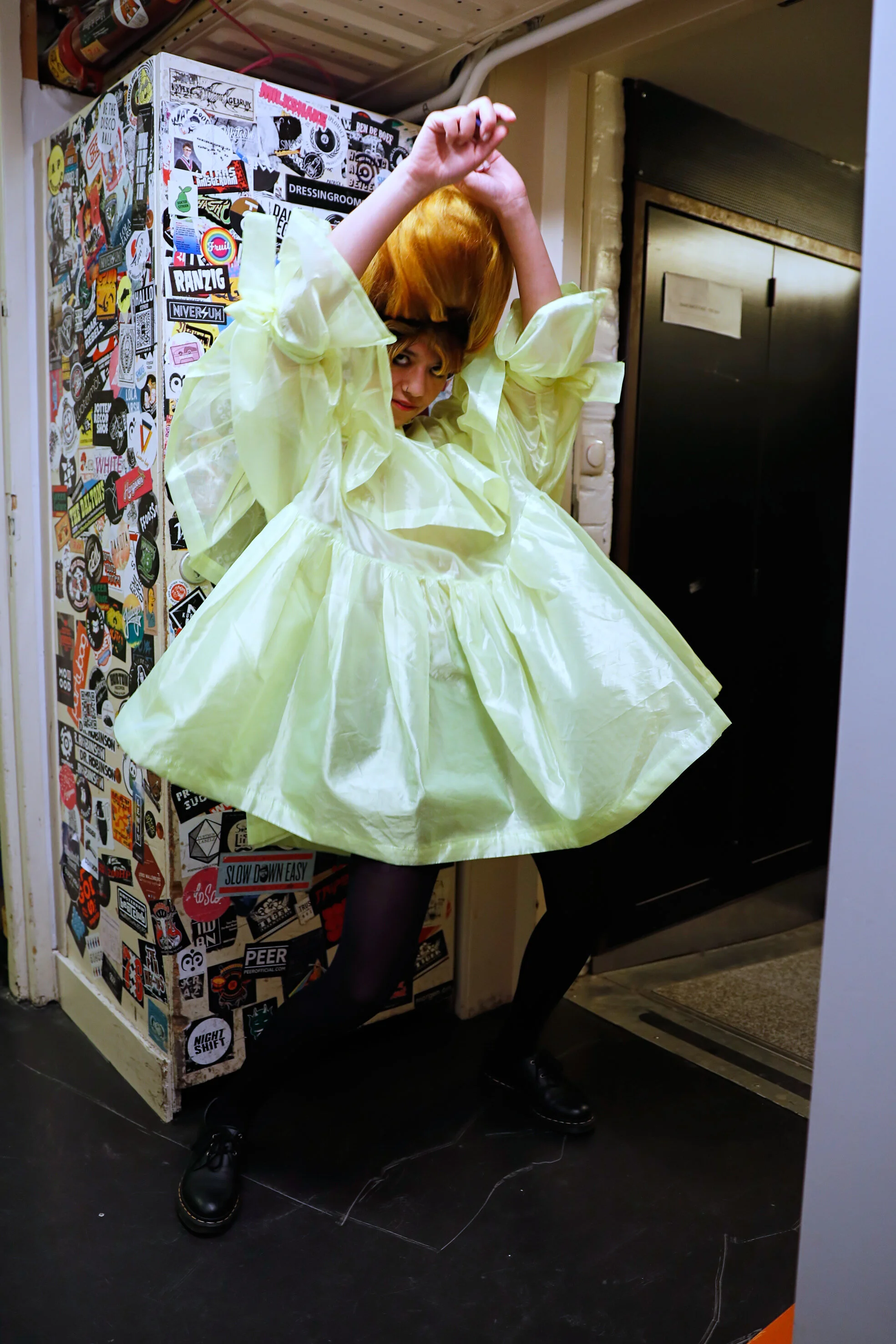
Elzinga: Elzinga is based in Amsterdam. I was brought up in the middle of the music scene in Amsterdam. It's basically the core of the brand. The music scene in Amsterdam is small, but there is a lot of variety. Many bands are always sprouting from this tiny scene, and that is very inspiring to me as a designer.
I used to play a lot around the Netherlands from a very early age with my teenage girl band Fuz . As a girl group, we really figured out how to use fashion as a tool to gain more confidence and power on stage. If you are on stage, you want to convey a very direct and clear message. You want the moment you walk on stage to be powerful and you want the audience to react. This is basically our brand ethos; we want our designs to be simple and direct in shape, but still extravagant and a little rough around the edges.
Via Elzinga
AC: How did Elzinga decide to pair up with The Klittens for this show?
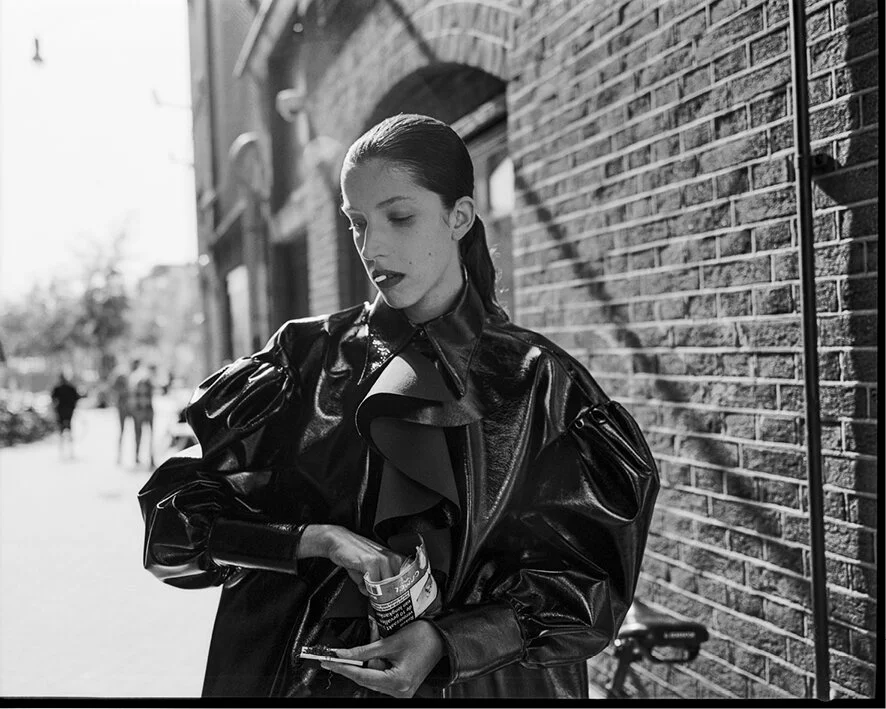
Elzinga: With our last show, we wanted to highlight the importance of live music and individual expression in today's society. We did our presentation in the legendary music venue Paradiso in Amsterdam, a place where big bands and performers took the stage (pre corona). It is also a place that nurtures the local music scene, a scene that has been hit hard by the coronavirus.
We choose The Klittens to play during our presentation first because we love their music, but second because they are a young all girl group that really needs to be supported in a man's world like the music industry. I have experienced first hand what it is like to be an outsider in the music industry and I really feel like we need to push for diversity as a brand.
Via Elzinga
AC: What are some of the label's inspirations? Musically and visually?
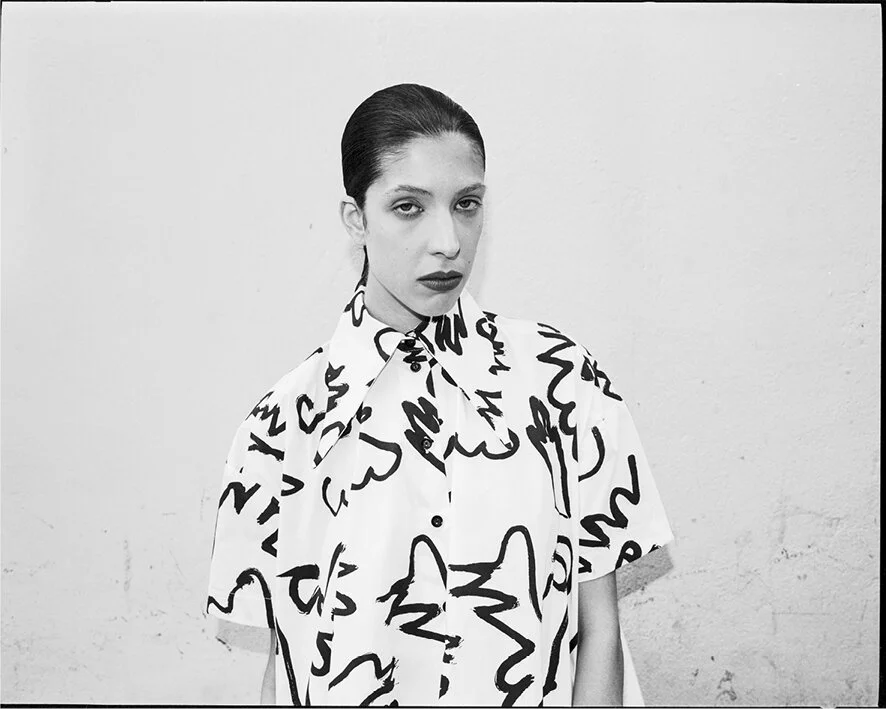
Elzinga: As a brand we are extremely inspired by different influences. Early garage music like Suicide and bands like the Cramps and the Breeders are a huge inspiration to us. We really find the DIY element in our aesthetic extremely important in our visual identity.
Visually I feel extremely inspired by artists such as Cleas Oldenburg, especially his early performance work he did in NYC called 'The Store' I also find inspiration in artists such as Keith Haring and Penck.
I like simplicity and direct expression when it comes to visual art, which also shows in our use of simplistic prints and shapes.
Via Elzinga
AC: What's something unexpected about the world of fashion that Elzinga had to learn along the way in order to succeed?
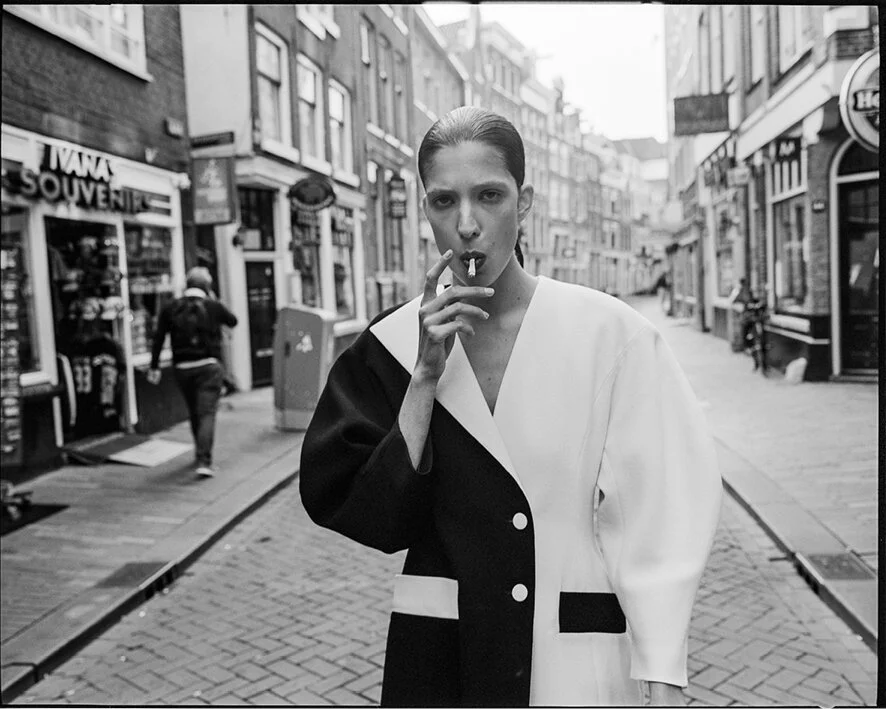
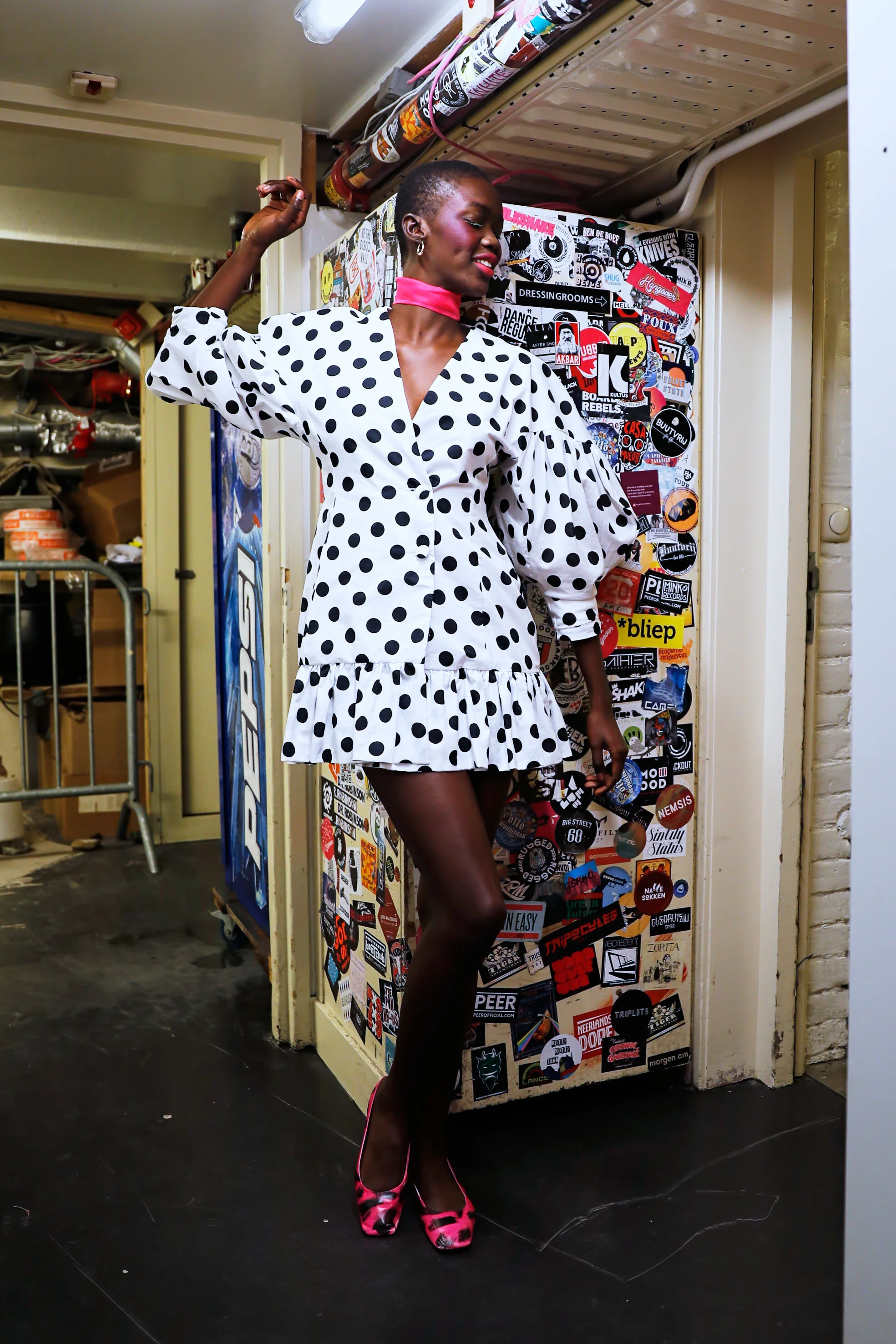
Elzinga: Something you definitely don't learn in art school is to think about your clients and the people who will buy your brand and will support you as a designer. We find it so interesting to listen to our clients feedback and in that way pin point what the Elzinga woman is about and how her life is and what she want to look like and radiate to the outside world.
Via Elzinga
AC: How can we best support Elzinga right now?
Elzinga: It's so important to support small brand and labels at this time. Like any other small brand, follow what we are up to, check out our new collections and projects and maybe consider buying one of our products in the future :)
Elzinga
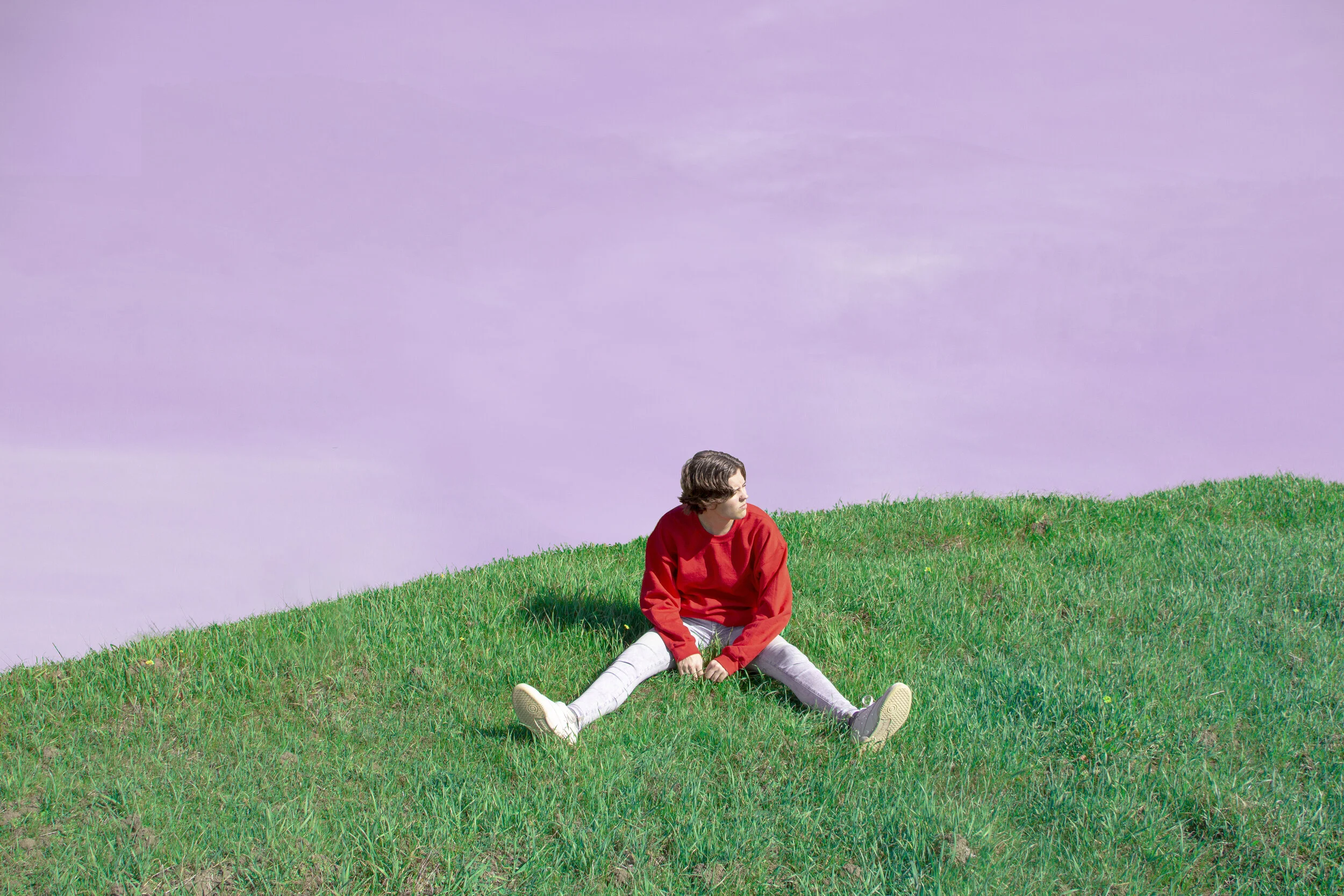
Artist Spotlight: Reilly Webster
Get to know Oakland-based graphic designer Reilly Webster
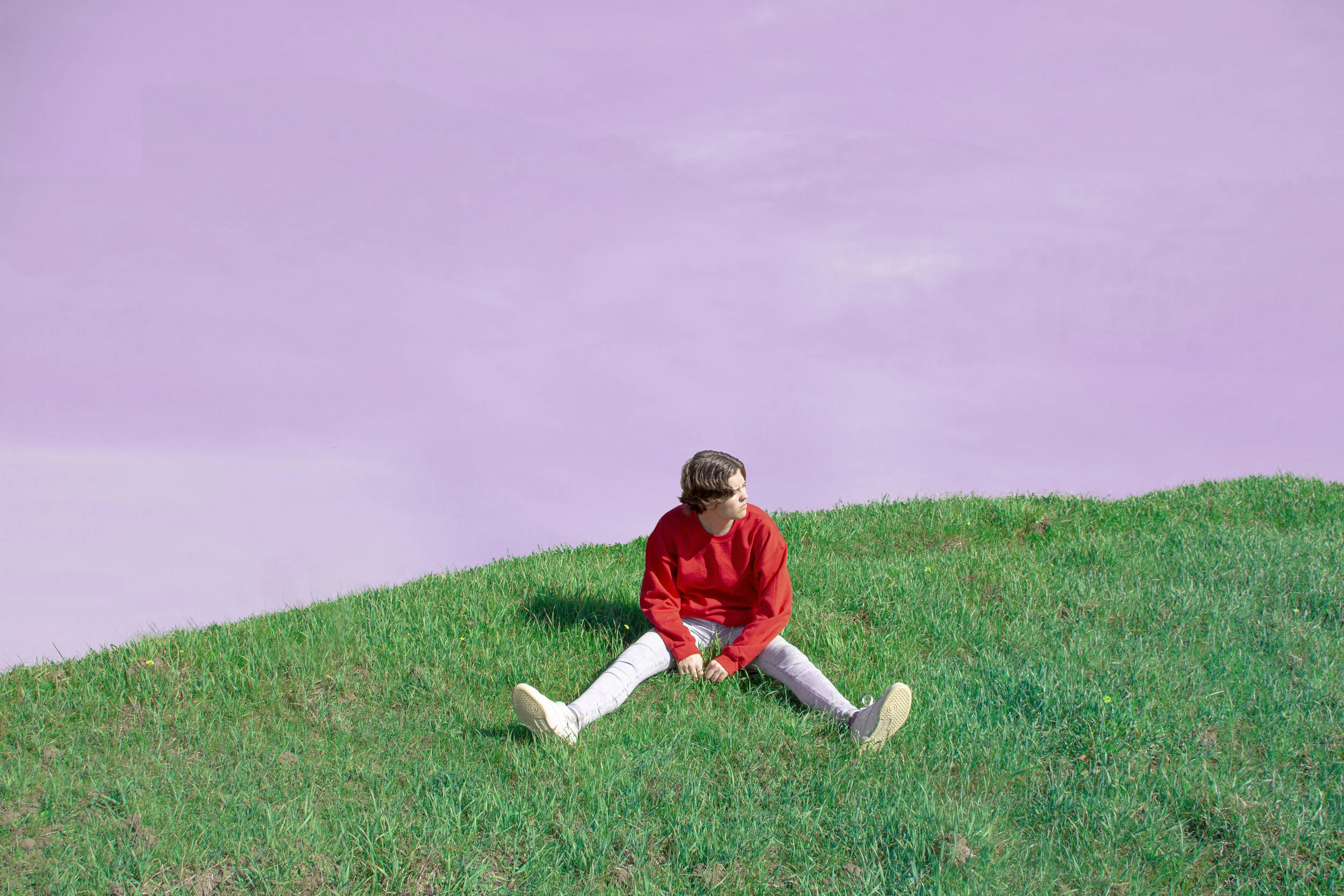
Via Reilly Webster
Reilly Webster is an Oakland-based graphic designer and artist, and is the latest artist in our series of spotlights. We first found her through her eye-catching and colourful work on Instagram, and just had to know more about her process and inspirations.
Also Cool Mag: Why don’t you start by telling us a bit about who you are and what you do?
Reilly Webster: Hello, yes! My name is Reilly, I’m a 22 year old visual designer and artist living in Oakland, CA. I recently graduated from Colorado State University in Fort Collins this spring, and now I’m honestly just trying to get my feet under me as a working creative. At the moment I’m currently jumping between some short term contract gigs in identity/branding, illustration, and graphic design in general. I’ve gotten the opportunity to work with close friends of mine on some projects they’re passionate about, spanning from movie making to music journalism, which really gets me excited as a designer. I definitely thrive working with other creatives, there’s so much passion that gets wrapped up in bringing something new into the world and I totally feed off of that energy.
Only downside – I need to pay rent! Unfortunately, though I have a great working relationship with all of my clients, working on smaller passion projects hasn’t proven to be a sustainable business model for me just yet. I’m sure this is something that a lot of people, especially artists, have gone through. So I’m currently trying to navigate balancing my own art practice and passion projects with a design job that can help me, you know, eat.

Via Reilly Webster
Also Cool: How did you get in graphic design? Has art always been a part of your life, or did you find it through school?
Reilly: I’ve actually been drawn to design since I was a little kid. My grandpa was a designer his whole life, and I think that this opened my eyes to design as a practice from a really young age. I remember, in 2008 I used Microsoft Word to design a tee shirt for my fifth grade class’ graduation. From then on I’ve pretty much been seeking out any opportunity to create work for people. For most of my life now, I’ve been pursuing a career in branding and visual identity, and that’s a mindset I took with me when I started college in Colorado.
My exploration into my identity as a fine artist has been a much more recent endeavor, which has been fostered by my time pursuing my BFA. From the get go, my program threw me into the studio space, where I was encouraged to conduct research as well as experiment with material processes. In tandem with my design curriculum, I also pursued a concentration in Electronic Art, which ended up having a major impact on how I now view myself as a creative. In my design courses I was honing a skill that had been an interest of mine since I was young, which was definitely valuable, but at the same time fairly predictable and majorly career-driven. In my E-Art classes, I was experimenting with technology and creative processes that were entirely out of my wheelhouse. If you check out my Vimeo you’ll see I made some really bizarre videos. So though we acquired some “job-ready” skills such as coding and web development, we were largely making art and visual experiments for the sake of making ...art! It was awesome. This experimental, hands-on approach is a mindset I’ve started to work into my design practice, and though I’d still like to design professionally for hopefully a long time, I’ve discovered that I’d ultimately love to pair that role with my own art practice.
Via Reilly Webster
AC: How would you define your style? How do you think it’s evolved since you began?
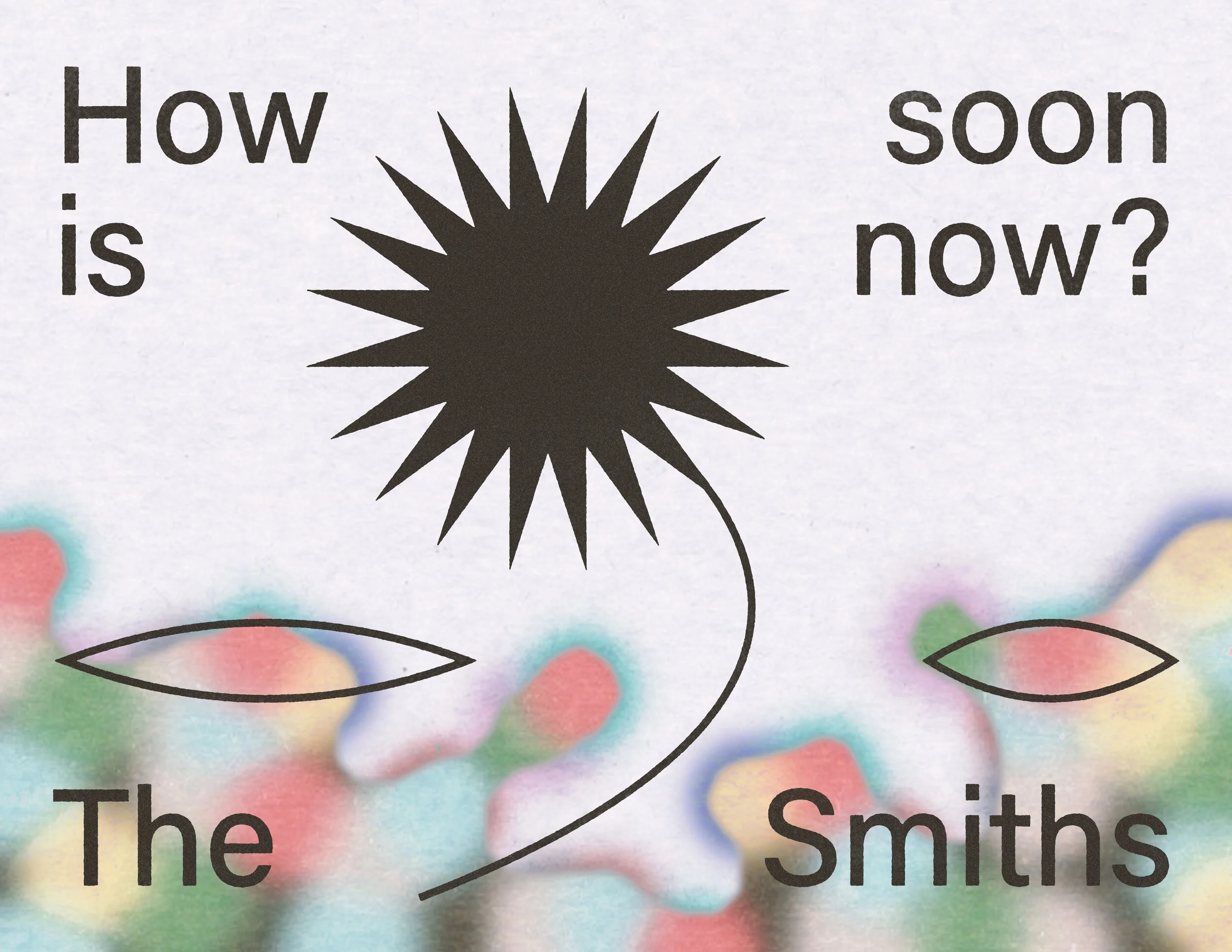
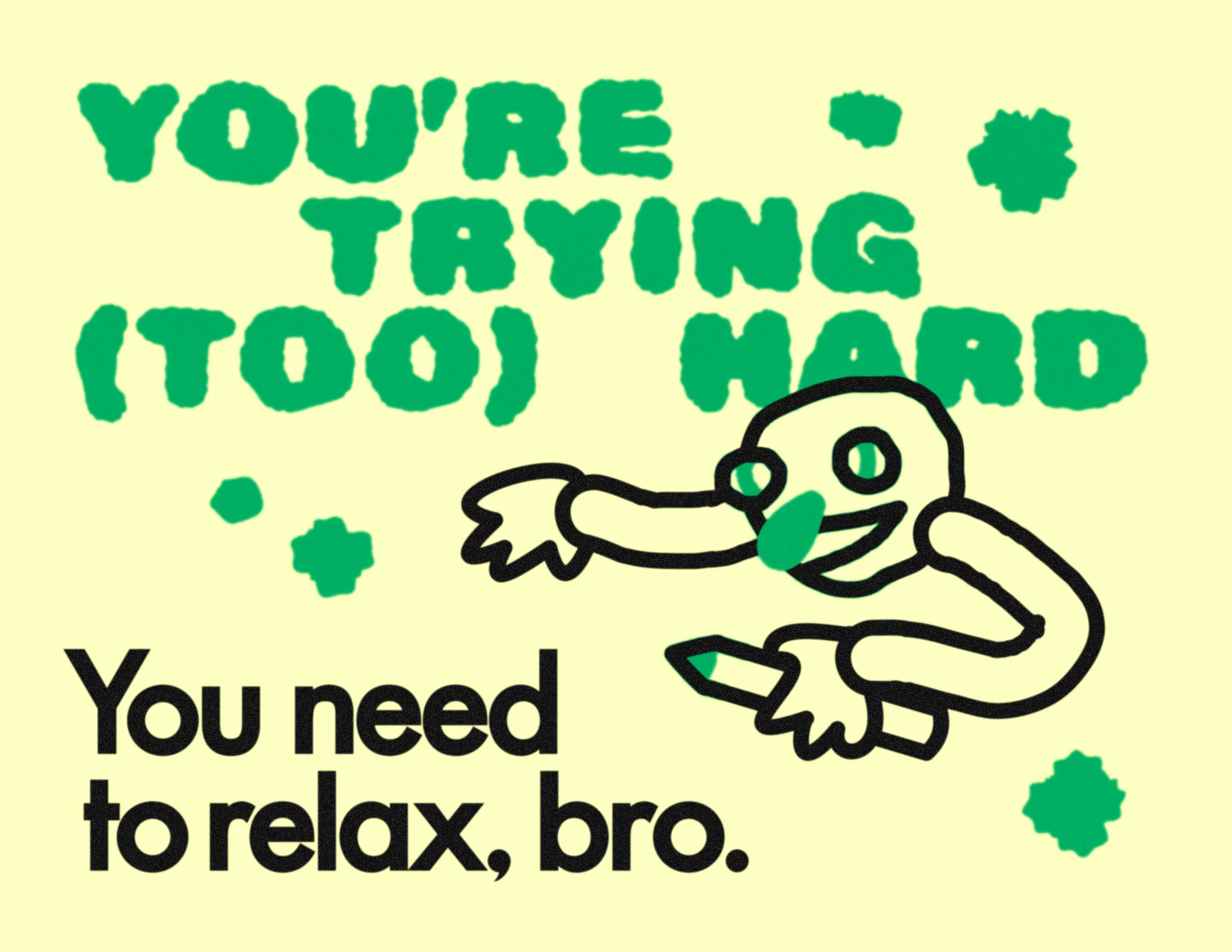
Reilly: The manipulation of typography paired with bold color palettes is currently at the base of my work. Though I don’t shy away from integrating my own illustrations, photography, and mixed-media experiments, I think that my unique messaging is ultimately the engine behind my projects. I like to think that my work often has a poetic quality to it. I am an absolute fiend about taking notes in my phone and on paper – I’m always keeping track of random sentences and odd word combos to work into my projects. I like to find that intersection between how a phrase looks physically on the page with how it sounds and feels.
When I started out, I felt this burden that everything I created needed to have a purpose external to myself. To make a design, I needed to start with some relevant content - a band poster for a friend, an event at school, things of that nature. I was always pulling my messaging from somewhere. Now, I think I’m starting to embrace creating designs and artwork that exist merely for the sake of my own visual and personal exploration. This approach has really helped me to deconstruct all of these design “standards” I was previously forcing myself to adhere to.
Via Reilly Webster
AC: What are your go-to programs for design? Is your work purely digital, or do you incorporate some analog work into your process as well?
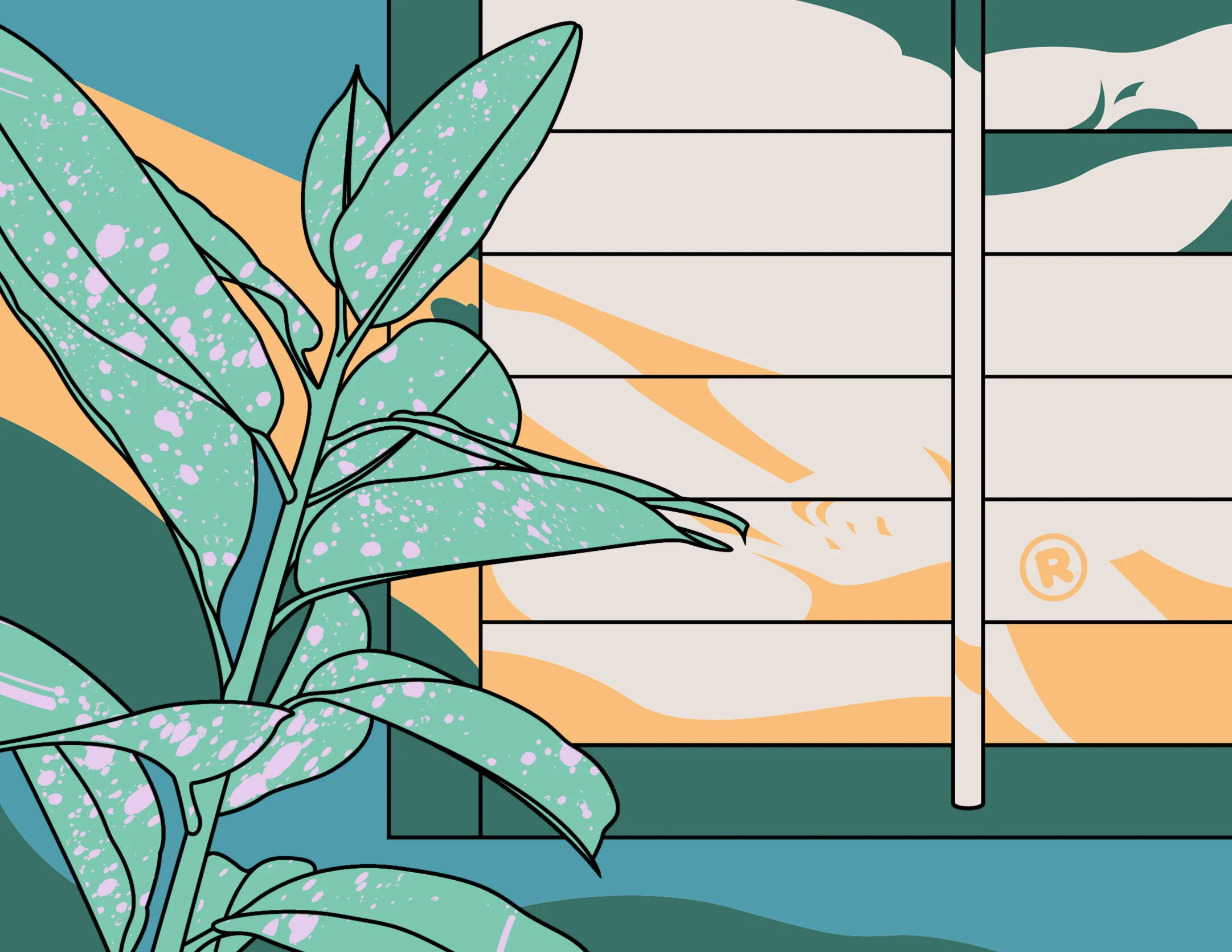
Reilly: I still only use Microsoft Word. Just kidding! I am totally an Adobe Creative Suite kid. Illustrator is definitely my go-to, but I also love to work with Photoshop, especially for creating textures and photo effects. I’ll also pop into After Effects and Premiere here and there to add motion to things I’ve created.
I am a lover of layers in both the digital and analog space. My process is very iterative in that I’ll often start with an illustration or typographic drawing on paper, and then use tracing paper to redraw and redefine the form over and over. From there, I’ll bring a photo of my sketch into Illustrator or Photoshop and continue the process there. I duplicate my artboards nonstop, and that helps me to test out all sorts of stuff and pinpoint what is starting to work in the design. There are instances where I’ll jump straight onto the computer and pound out the design mouse-only, but more often than not I like to start out on paper.
Via Reilly Webster
AC: What’s one tip/hack you've learned along the way that’s made your process a lot easier?
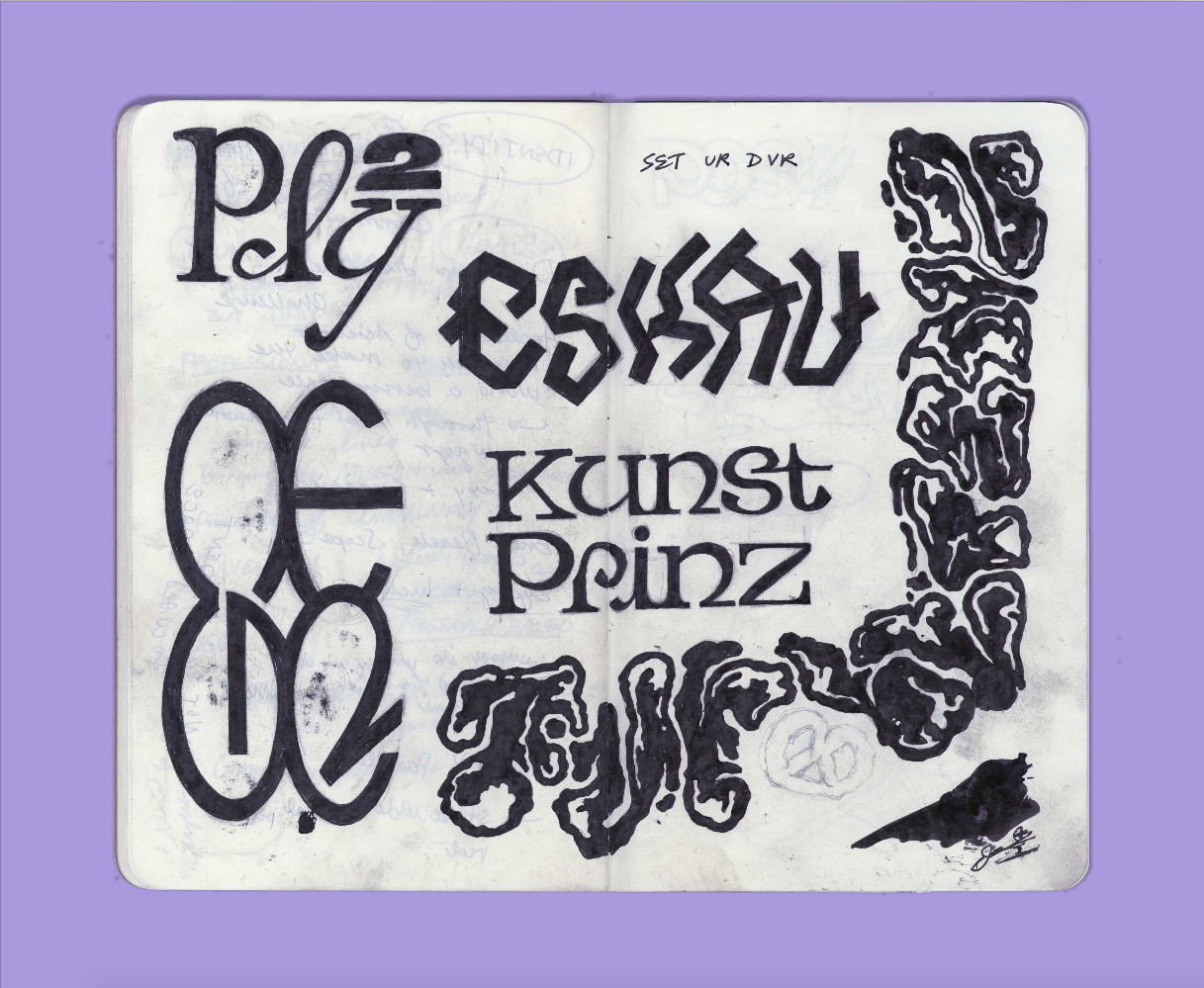
Reilly: I’ve overcome my sketchbook perfectionism! I used to be so particular about how I structured my sketchbooks and journals, to the point where it actually prevented me from getting any of my ideas down at all. I was so wrapped up in making each page look nice that I forgot what the point of a sketchbook is in the first place. Now, I have a collection of small Moleskine notebooks that I proudly treat like trash. They’re a chaotic repository of doodles and phrases. I throw grocery lists in there, dream fragments... I think it’s essential to be uninhibited in the brainstorm phase, and keeping a notebook with you (that you aren’t afraid to use!) is a great way to start. I was so proud of myself the first time I filled one up, and now I always have one on me.
Via Reilly Webster
AC: Who are some of your inspirations? Visual or otherwise?
Reilly: Oh wow, so many people. I am majorly inspired by kickass women in the design industry – Susan Kare and April Greiman were pioneers in digital design and I’ve always been drawn to their innovative spirit. I also love artists who blur the line between art and design, like Eric Timothy Carlson, Bijan Berahimi, Paula de Álvaro. Other fascinations of mine include avant garde comic artists like Max Baitinger and Anna Haifisch, and good old fashioned logo guys like Aaron Draplin and the late Saul Bass.
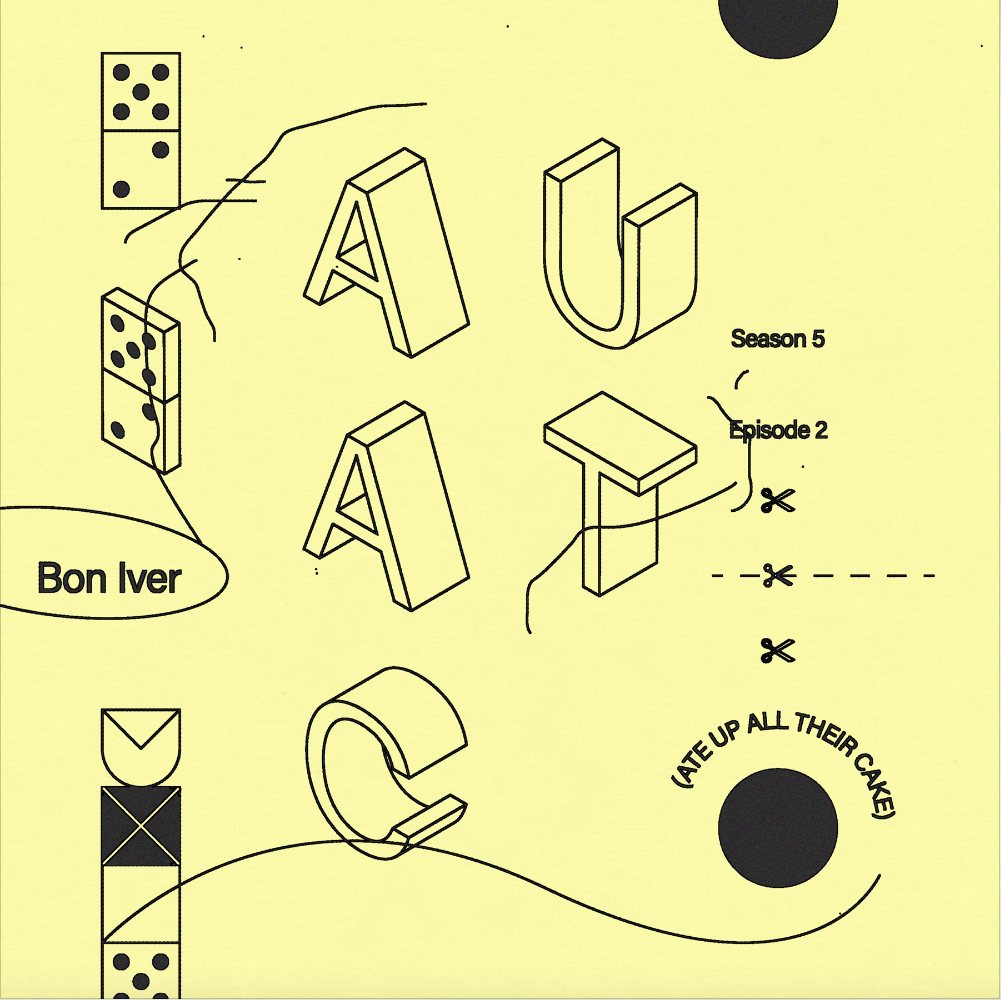
I also love The Talking Heads, Caribou, Radiohead, Bon Iver… music is a massive part of my creative flow. One of my ongoing personal projects has been creating album art for playlists that I put together on Spotify. It’s become this sort of ekphrastic exercise, creating a visual counterpart for the tone that is built throughout the playlist. I would love to specialize in making album art and affiliated creative projects for musicians. That’s definitely a dream job of mine.
Via Reilly Webster
AC: How can we best support your work, and do you have any exciting projects coming up?
Reilly: First of all, thank you so dearly for this interview opportunity! It feels so awesome to be getting my name out there, especially in what seems to be a really supportive and uplifting creative community. To support my work, I would start by giving a follow to my Instagram account, @by.reilly. This is where I post all sorts of graphics as well as updates on my projects.
I do have some things in the works, namely: Issue 3 of my magazine, Cicada Creative Magazine, is currently accepting submissions and is slated to release this December. If you get a chance, definitely check it out at cicadacreativemag.com. It’s free to submit! I’ve also just finished up some branding for @mostleymusic and @monstrousfemmefilms, and I would urge you to check them out as well!
Otherwise, I am available for contract work! So if you are need of any identity development, illustrations, or have any other inquiries I welcome you to email me: reillyweb24@gmail.com Thanks again!!
Stop Asking for Permission: An Interview with Multi-Media Artist sunnie
Sanaz, also known as sunnie, considers herself a performance artist above all else. We sit on the rooftop of her modern minimalist apartment building. She prefers a more in-depth dwelling, although this is home for now. The sun scorches as we settle into the only semi-shady outdoor seats. sunnie fans me with her portfolio, tucked into a duotang, and casually lights a smoke. I pull out my cell phone, which doubles as a recording device. As I press record on a voice memo, I ask sunnie what inspires her as a handpoke artist working out of a private studio in Vancouver.
- - -
After rambling on about how “tattooing is the only thing [she is] good at,” we stop recording, pausing the voice memo. With the permanence of documentation no longer looming over, we talk about her course of life and self-perception. She divulges into how “even in this moment, i respond, am being responded to. i learned it - have a checklist of diverse ways of responding to surroundings. Some of it is how society wants us to respond. [Others are] how we want to respond to things. We are acting.” She assures me that “acting does not mean that it is fake.” sunnie refers to herself with a lowercase i - an indication of her humble nature.
sunnie’s story begins in Montreal: the city Vancouver residents move-to to fill the void. She pursued the Cell and Molecular Biology program at Concordia University. Her parents expected her to become a surgeon and purchase stability in the form of a single-family dwelling in Coquitlam. However, she felt a magnetic pull towards inducing paradigm shifts through the freedom and flexibility of analysis and creativity. “i am still a scientist!” she corrects.
sunnie graduated with a joint major in Art History and Studio Arts. In the same month of she graduated, she unexpectedly lost her studio apartment. After couch-surfing for weeks, a room was offered to her in a time of desperation, to temporarily sublet. This space would end up changing her life forever. “i fell asleep more on the living room couch than my temp bed /on that couch i got my first handpoked tattoo--on that red couch/ i did my first tattoo.” After sneaking a glance at a top-secret sketchbook, her roommate Lawrence identified her artistic potential in insignificant scribbles. While most aspiring tattooists begin by practicing on oranges and potatoes: he believed in her ability to such an extent that he offered his skin as a canvas. Although Lawrence was not the first person to encourage her to tattoo them; he was the first to succeed in convincing sunnie to experiment on human skin.
After graduation, sunnie continued to work in Montreal until being dismissed. The unexpected news instigated her to express a declaration of rage by meticulously smearing black-tar charcoal on pearl-grey paper. Stumped on how to pay bills amid unemployment, she put a portfolio together, priced her pieces, and decided to make handpoking her main hustle: “i could not go back to the red couch, i tattoo on a red bed now.” At that time, she had just moved out of her roommate's into a work-live studio. This space served as a liminal zone to strengthen her skills, while preparing for her eventual move to Vancouver.
As an Iranian immigrant, sunnie grew up isolated from the culture of tattooing. She didn't even know you could make a career in handpoking, and had internalized her parents’ disapproval of tattoos. That being said, the support and love she received from the handpoking community prevented parental perception from sabotaging her practice. sunnie emphasizes, “[these people] embrace, teach, and correct instead of criticizing me. [They] validate me, [and] check up on me. It is honestly other people that keep me going; people believe in me. i am blessed.”
sunnie started tattooing with a machine gifted to her by her roommate. However, the machine was too quick; a distraction that prevented her immersion into the present moment. sunnie explains that she simply “softly erases the skin,” to reveal art that has always been hiding underneath the surface through handpoking. Although she had no idea at that time, tattooing would not only give her financial stability, but also end up nudging her to take up other artistic practices, such as painting and poetry. She could easily stay in her room for days, allowing her abstractions to surface. As a tattooer - connecting with people was a necessity because it pushed her beyond her introverted inclinations. sunnie shares: “i connect with people, their secrets and essence — physical and philosophical — ink is accepting of me and others, of our space and taste. Tattooing is perhaps saving me from extreme self-isolation.”
When her time in Montreal adjourned, she moved to Vancouver due to her love for sushi and proximity to family and friends. When she first landed in Vancouver, she lacked the connections and funds to secure a tattoo space. Handpoking had become more than a career at this point; a way to stay sane while settling into a new environment. sunnie is grateful for the trust people had and have in her. Sharing how “[they] started inviting me to their space, for me to tattoo them/ i operated mostly by word of mouth/ same strangers would invite me to social things to talk tattooing/ now i am very shy.” To ensure hygienic protocols, she would thoroughly inspect the cleanliness of the space before beginning the procedure; packing her tattoo equipment into a grey and gold suitcase. She speaks fondly of an experience tattooing a client called Sean, in a van by the Spanish Banks. A year ago, she was invited by Vasia, an established handpoke artist, to join her studio space: an invitation she gracefully accepted. Stepping outside of her observant zone to socialize was worth the stress that came along with the interactions. From time to time, she still tattoos out of her client’s chosen space.
sunnie has been tattooing for three years now. Although she found her path in the arts, she considers herself “still doing surgery — although a little less bloody, i still heal — truly i work systematically/ i research — i’m thorough.” As a tattooer, sunnie approaches every project with pristine precision by first taking time before responding to every email, ensuring the subject aligns with her values and vision. Then, above all, she makes sure she feels intuitive inviting them into the ethereal space they will potentially co-create.
sunnie has learned a lot over the past three years. More than anything that she no longer needs anyone’s permission to pursue her passions - especially not her superiors. She considers her cultural background, “creating dissociation of identity/-- simultaneously cast aside and celebrated.” In the future, she hopes to tattoo more Farsi scripts on people - specifically قر, pronounced ghuur - “when your body subconsciously moves to the music/ we call that ghuuur! it’s magic!.” sunnie declares, “i am iranian/ i am a woman -my entire existence is political/ my art is an act of resistance towards/within the patriarchal system we live in- everything i do/call it art or not- this interview is an act of resistance -i am claiming my space, physical and philosophical, as an Iranian immigrant - a woman.”
sunnie
Alexis Zygan